Can You Use Acids & Exfoliants With Rosacea? Safe vs Risky
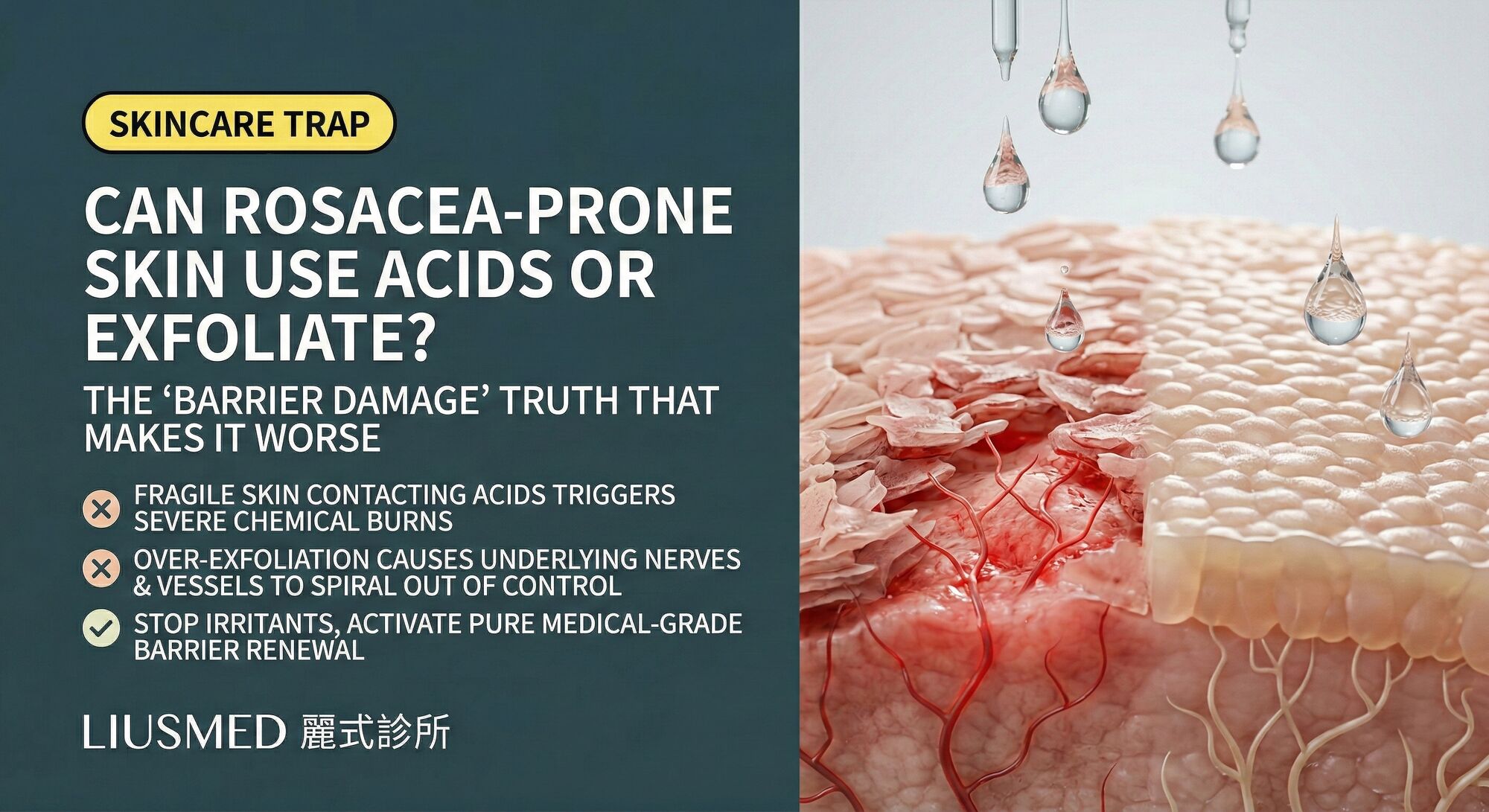
The skincare influencer's routine sounded so convincing: a glycolic acid toner for texture, a retinol serum for turnover, and a vitamin C in the morning for brightness. Within three days of trying it, your face was on fire. The burning, peeling, and angry redness that followed were not a sign of a "normal adjustment period." They were your rosacea skin screaming that its already-compromised barrier had been pushed past the breaking point. The relationship between acids, exfoliation, and rosacea is far more nuanced than the beauty industry acknowledges.
Table of Contents
- Why Rosacea Skin Responds Differently to Acids
- The Acid Spectrum: From Dangerous to Potentially Beneficial
- Physical Exfoliation and Rosacea: The Verdict
- Recognizing Acid-Induced Barrier Damage
- Recovery Protocol After Acid Damage
- Safe Approaches to Managing Texture in Rosacea
Why Rosacea Skin Responds Differently to Acids
Rosacea skin is not simply "sensitive skin" that needs a gentler version of normal skincare. It has a fundamentally altered barrier architecture that changes how it interacts with topical acids at every level.
The stratum corneum in rosacea skin contains reduced levels of long-chain ceramides, particularly ceramide 1 linoleate, which is essential for maintaining the lamellar lipid structures that prevent water loss and block irritant penetration. This ceramide deficiency means that acid molecules penetrate deeper and faster than they would in intact skin, reaching the viable epidermis at concentrations that are irritating or damaging rather than therapeutic.
Transepidermal water loss (TEWL) measurements in rosacea skin are consistently elevated compared to healthy controls, indicating that the barrier is already operating in a compromised state. Adding an exfoliating acid to this equation is analogous to sanding a wall that is already down to bare wood: the thinning effect is disproportionate to any potential benefit.
Furthermore, the pH environment of rosacea skin is often disrupted. The healthy acid mantle maintains a surface pH of approximately 4.5 to 5.5, which regulates enzyme activity, supports barrier lipid processing, and inhibits pathogenic microbial colonization. In rosacea, the surface pH tends to be elevated, which paradoxically makes acid application more damaging because the buffering capacity that would normally moderate acid penetration is reduced.
The neurovascular hyperreactivity characteristic of rosacea adds another dimension. TRPV1 (Transient Receptor Potential channels) and TRPA1 ion channels on sensory nerve endings are upregulated, meaning that chemical stimuli that would be imperceptible on healthy skin trigger pain signaling and neurogenic inflammation in rosacea skin. The stinging and burning from acid application is not merely uncomfortable; it represents active neurogenic inflammatory activation that worsens the underlying disease.
The Acid Spectrum: From Dangerous to Potentially Beneficial
Not all acids carry equal risk for rosacea skin. The following classification reflects current evidence and clinical experience, ranging from agents that should be categorically avoided to those that may actually help.
| Acid / Exfoliant | Risk Level for Rosacea | Mechanism of Concern | Potential Benefit | Clinical Recommendation |
|---|---|---|---|---|
| Glycolic acid (AHA) | High | Small molecule, rapid deep penetration, strong pH disruption | Minimal for rosacea | Avoid, especially above 5% |
| Lactic acid (AHA) | Moderate-High | Similar penetration to glycolic, slightly larger molecule | Mild humectant properties | Generally avoid; very low % may be tolerated by some |
| Salicylic acid (BHA) | Moderate | Oil-soluble, penetrates follicles, anti-inflammatory | Follicular clearing, mild anti-inflammatory | Cautious use at 0.5-1% in select cases |
| Mandelic acid (AHA) | Moderate | Larger molecule, slower penetration | Less irritating than glycolic | May be tolerated at low concentrations |
| Azelaic acid | Low | Anti-inflammatory, anti-keratinizing, antioxidant | Direct rosacea therapeutic benefit | Recommended at 15-20%; FDA-approved for rosacea |
| Polyhydroxy acids (PHAs) | Low-Moderate | Very large molecules, minimal penetration | Gentle surface exfoliation, humectant | May be tolerated; patch test essential |
| Retinoids (tretinoin, retinol) | Variable | Increases cell turnover, initially disrupts barrier | Long-term barrier improvement possible | Low-dose retinaldehyde may be cautiously introduced after barrier stabilization |
Glycolic acid deserves special emphasis as the most commonly encountered and most problematic acid for rosacea patients. Its small molecular weight (76 Da) allows rapid penetration through even intact barriers. On compromised rosacea skin, it reaches the viable epidermis almost immediately, causing direct keratinocyte damage and triggering inflammatory cascades. Professional glycolic peels in rosacea patients have been documented to cause severe flares lasting weeks to months.
Azelaic acid stands apart as the one acid that is genuinely therapeutic for rosacea rather than merely cosmetically beneficial. It inhibits reactive oxygen species production, normalizes keratinization, reduces cathelicidin-related inflammation, and has mild antiparasitic effects against Demodex. It is available by prescription at 15% (gel) and 20% (cream) concentrations and is considered a first-line topical treatment for papulopustular rosacea.
Physical Exfoliation and Rosacea: The Verdict
Physical exfoliation encompasses scrubs, brushes, microdermabrasion devices, muslin cloths, and similar mechanical approaches to removing dead skin cells. For rosacea skin, the verdict is straightforward: physical exfoliation carries substantial risk and minimal benefit.
Mechanical abrasion on rosacea skin causes direct physical trauma to an already thin and fragile stratum corneum. The friction generates heat, which is itself a rosacea trigger via TRPV1 channel activation. The microtrauma can damage the walls of superficial dilated blood vessels, potentially worsening telangiectasia. And the inflammatory response to physical injury compounds the existing rosacea inflammation.
Specific concerns by exfoliation method include the following. Scrub particles with irregular edges (ground walnut shells, apricot kernel fragments) create micro-tears visible under magnification. Rotating brush devices apply sustained friction that elevates local skin temperature. Dermaplaning with a blade removes the protective vellus hair that helps trap moisture at the skin surface. Microdermabrasion combines suction with abrasive particle delivery, stressing both the barrier and the vasculature simultaneously.
The one exception where very gentle physical exfoliation might be considered is in rosacea patients with significant textural irregularity from phymatous changes (thickened skin). However, this should only be performed by a physician experienced in rosacea management, using controlled techniques in a clinical setting.
Recognizing Acid-Induced Barrier Damage
Acid damage to rosacea skin can present acutely or develop insidiously over weeks of low-level exposure. Recognizing the signs early allows prompt intervention before the damage compounds.
Acute Signs (appearing within hours to days of acid exposure): Intense burning or stinging that persists beyond the application period. Visible erythema extending beyond the usual rosacea distribution. Edema, particularly around the eyes and nasolabial folds. Sensation of heat radiating from the skin. Desquamation (flaking or peeling) beginning 24 to 72 hours after exposure.
Subacute Signs (developing over days to weeks): Increased reactivity to previously tolerated products, including moisturizer and sunscreen. New-onset stinging from water contact. Sensation of skin tightness that does not resolve with moisturizer application. Development of papules or pustules in areas that were previously clear. Visible increase in telangiectasia density.
Chronic Signs (developing over weeks to months of continued acid use): Persistent elevation in baseline redness. Skin that appears thinner or more translucent than before. Increased frequency and severity of flushing episodes. Food and temperature triggers that are now more potent than previously. Moisturizers and sunscreens that previously worked well now cause stinging.
The insidious pattern is particularly concerning because patients using acids at low concentrations may attribute the gradual worsening to their rosacea progressing rather than recognizing the acid as the cause. Any acceleration in rosacea symptoms coinciding with the introduction of new skincare products warrants critical evaluation of every ingredient.
Recovery Protocol After Acid Damage
Recovery from acid-induced barrier damage in rosacea skin requires systematic barrier rehabilitation combined with strict avoidance of further insults.
Immediate Phase (Days 1-7): Damage Control. Strip the skincare routine to absolute essentials: a gentle cream cleanser, a ceramide-based barrier repair moisturizer, and mineral sunscreen. Nothing else. No treatment serums, no toners, no essences. If the barrier damage is severe enough that even these basics sting, plain petrolatum can serve as an occlusive while the acute phase resolves.
Stabilization Phase (Weeks 1-4): Barrier Rebuilding. Continue the minimal routine. Introduce a dedicated ceramide or cholesterol-dominant barrier repair product if not already using one. Apply moisturizer to damp skin to enhance absorption. Avoid hot water, which further depletes barrier lipids. Monitor TEWL indirectly by assessing how quickly the skin feels dry or tight after washing.
Reintroduction Phase (Weeks 4-8): Cautious Expansion. Once stinging from basic products has resolved completely, individual products can be reintroduced one at a time with a minimum of five to seven days between additions. If any product causes stinging, burning, or increased redness, remove it immediately and wait for stabilization before trying alternatives.
For patients whose acid damage has been compounded by underlying rosacea neurovascular dysfunction, topical barrier repair alone may be insufficient. The inflammatory signaling activated by the barrier breach can perpetuate neurovascular dysregulation in a self-sustaining cycle. Rosacea Injection Treatment targeting the neurovascular component can break this cycle and accelerate barrier recovery by reducing the inflammatory burden that impedes healing.
Safe Approaches to Managing Texture in Rosacea
Rosacea patients often desire smoother skin texture, and the impulse to reach for acids is understandable when every skincare advertisement promises transformation. However, safer pathways to improved texture exist.
Azelaic acid at prescribed concentrations (15-20%) addresses both inflammatory lesions and textural irregularity through normalized keratinization. Unlike other acids, it is genuinely therapeutic for rosacea and can be used long-term under medical supervision.
Gentle enzymatic exfoliation using papain or bromelain-based products at very low concentrations provides mild surface-level protein digestion without pH disruption. These should still be patch-tested and used no more than once weekly.
Humectant-focused hydration with hyaluronic acid, glycerin, or polyglutamic acid plumps the stratum corneum, smoothing texture through hydration rather than removal. This approach improves the appearance of roughness without any barrier compromise.
Time and barrier repair. Perhaps the most underappreciated approach is recognizing that much of the textural irregularity in rosacea improves naturally once the barrier is optimized and inflammation is controlled. Patients who commit to a barrier-first strategy often find that the texture they were trying to exfoliate away resolves on its own over two to three months.
For patients with textural concerns that persist despite barrier optimization and inflammation control, in-clinic assessment can determine whether the irregularity stems from rosacea-related changes, post-inflammatory scarring, or early phymatous changes, each of which requires a different management approach.
Frequently Asked Questions
Q1: My esthetician recommended a gentle glycolic peel for my rosacea. Is this safe?
Glycolic acid peels are contraindicated in active rosacea regardless of concentration. The small molecular size of glycolic acid ensures rapid penetration through the compromised rosacea barrier, and the resulting inflammation can trigger flares lasting weeks. Even "gentle" concentrations (10-20%) that would be well-tolerated on healthy skin pose significant risk. If your esthetician does not recognize rosacea as a contraindication to glycolic peels, consider seeking a practitioner with specific rosacea experience.
Q2: I have been using a 2% salicylic acid wash for years without problems. Should I stop?
If you have genuinely experienced no worsening of rosacea symptoms over years of use, the wash-off format (which limits skin contact time) combined with low concentration may be acceptable for your individual skin. However, if you notice any gradual increase in reactivity, baseline redness, or trigger sensitivity, reconsider whether the salicylic acid may be contributing. A trial period without it, comparing skin behavior over four to six weeks, can clarify.
Q3: Is retinol completely off the table for rosacea patients?
Not entirely, but it requires extreme caution. Retinaldehyde (a less irritating retinoid precursor) at 0.01-0.05% concentration, introduced once or twice weekly after the barrier is fully stabilized, may be tolerated by some rosacea patients and can provide long-term benefits for cell turnover and collagen synthesis. However, standard retinol serums at 0.5-1% commonly sold in skincare lines are too potent for most rosacea skin. Start at the lowest possible concentration and increase frequency only if no reactivity is observed over two to four weeks.
Q4: Can professional chemical peels ever be appropriate for rosacea?
In very select cases of well-controlled rosacea with no active flaring, a modified lactic acid or mandelic acid peel at low concentration and brief contact time may be performed by a physician experienced in rosacea management. This is the exception rather than the rule and requires careful patient selection, pre-peel barrier preparation, and post-peel monitoring. Standard spa or clinic peel protocols designed for non-rosacea skin are inappropriate.
Q5: I damaged my barrier with acids and now even water stings. How long until this resolves?
The duration depends on the severity of the damage. Mild barrier disruption from a single acid exposure typically resolves within one to two weeks of strict barrier repair protocol. Severe or cumulative damage from prolonged acid use may take six to twelve weeks for complete barrier restoration. During this period, using only an emollient (such as a plain ceramide cream or even petrolatum) and lukewarm water for cleansing minimizes further irritation while the barrier regenerates.
Q6: Does azelaic acid count as an exfoliant, and will it thin my skin?
Azelaic acid normalizes keratinization (the process by which skin cells mature and shed) but does not aggressively dissolve the stratum corneum the way glycolic or salicylic acid does. It does not thin the skin. In fact, by reducing inflammation and supporting healthier cell turnover, azelaic acid supports barrier function rather than compromising it. This is why it is one of only a few topical agents that is both FDA-approved for rosacea treatment and safe for long-term use.
About the Author
Dr. Ta-Ju Liu is the founder of Liusmed Clinic, specializing in regenerative medicine and minimal incision surgery. His clinical experience includes treating numerous patients whose rosacea was worsened by inappropriate skincare regimens, particularly aggressive acid use. Dr. Liu advocates for a barrier-first approach to rosacea management, combining evidence-based topical strategies with targeted interventional treatments for comprehensive disease control.
Disclaimer
This article is provided for educational and informational purposes only and does not constitute medical advice, diagnosis, or treatment. Skincare product selection for rosacea should be guided by a qualified dermatologist or physician familiar with your specific condition. The acid tolerance levels described are generalizations; individual variation is substantial. Always patch-test new products and introduce them one at a time. No doctor-patient relationship is established through reading this content.

Specialties
Credentials
- Kaohsiung Medical University, School of Medicine
- Attending Physician, Dermatology, Kaohsiung Chang Gung Memorial Hospital
- Attending Physician, Aesthetic Center, Kaohsiung Chang Gung Memorial Hospital
- Visiting Physician, Dermatology, Xiamen Chang Gung Hospital
- Visiting Physician, Aesthetic Center, Xiamen Chang Gung Hospital
"For every surgery, I strive to achieve a good outcome through a small incision and refined technique. Minimally invasive surgery is not just a technique — it's a commitment of respect to every patient."
Recovery after any procedure needs peer support too


Want to learn more?
Schedule a consultation for professional evaluation and advice