
Full-Face Micro Sculpting
Thread lifting for structure · autologous fat for volume · integrated bidirectional designEvery face needs a unique balance of "lift" and "volume" — structural thread × multi-layer fat survival optimization
Three Core Strengths of Facial Sculpting

Structured Layers
Fat grafting and threads are designed in layers, not stacked in one spot.

Autologous Support
Autologous fat or absorbable threads rebuild skeletal support.

Repairable
Issues like pillow face and lumps are handled by the revision specialty.
Liusmed Clinic — Cross-Specialty Core Principles
From skin tumors to full-face sculpting, "structure before appearance, see clearly before treating" is the unifying creed across Liusmed. More threads ≠ better, fuller fat ≠ prettier — structural design and ultrasound guidance let us work precisely on every layer, avoid neurovascular bundles, and achieve "natural youth" not "puffy fillerface."


Structural Lift × Volume Restoration — Two Vectors, One Face


Does My Face Need Lift or Volume?
Thread lifting addresses laxity and ptosis; autologous fat addresses depressions and bony contours. Different vectors, complementary effects — most faces need both. The table is a starting point; the physician designs the lift + volume ratio at consultation.
| Your Concern | Starting Direction | Why |
|---|---|---|
| Deep nasolabial folds, drooping mouth corners, blurred jawline | Thread Lifting | Tissue ptosis primary: structural thread vectors lift diagonally upward, immediately rebuild lower-face contour |
| Sunken temples, bony forehead, deep orbital hollows | Autologous Fat | Bony depression primary: autologous fat rebuilds volume — the surviving fraction stays long term, without repeat injections |
| Flat malar cheek, deep tear trough, mid-face aging | Autologous Fat | Mid-face volume loss: fat + SVF rebuilds the "youthful triangle" of malar/tear trough/temple |
| Failed thread lifting — want removal or asymmetry revision | Thread Lifting | Thread revision requires familiarity with brand-specific structures and tension — structural thread specialty can remove, supplement, rebalance |
| Filler-overdone puffy face, want a permanent solution | Autologous Fat | Filler vs fat is different logic: fat is autologous tissue that stays once it survives, avoiding long-term "fillerface" from layered foreign material |
| Drooping brow tail and outer eye, a fold of skin at the outer eye | Temporal Lift | The outer brow has lost support and the laxity exceeds what threads and energy devices can handle: a temporal lift refixes the fascia through a hairline incision; lift the brow first, then decide on the eyelid |
| Both ptosis and depression — unsure which to address first | Both / Integrated | Bidirectional integration: "fat first to elevate skeletal framework → thread lifting to tighten contour" is the most common sequence; consultation determines ratio and timing |
* The table is a starting suggestion, not a diagnosis. Most middle-aged-and-up faces have both ptosis + depression; the best sequence is usually "fat first to elevate skeleton → thread lifting to tighten contour."
Bidirectional Structure + Volume Integration — the Hard Prerequisite for Natural Youth
Structural Thread Specialty
More threads ≠ better. Structural design focuses on anchor points and vectors — few precise threads outperform many floating threads. Removable, supplementable, revisable — not a one-shot deal.
Fat Survival Optimization
Autologous fat is not "inject and done." Nano-particle preparation, SVF/PRP integration, multi-layer zoned injection — these three determine 60%+ survival. Otherwise: inject and dissolve.
US-Guided to Avoid Neurovascular
Facial neurovascular bundles are densely packed — angular, facial, superficial temporal arteries, facial nerve branches. Continuous ultrasound guidance during thread/fat injection avoids danger zones — the hard defense against blindness/skin necrosis complications.
Standard Clinical Workflow
From facial assessment, lift + volume ratio design, treatment execution to follow-up + touch-up

Facial Assessment
Skeletal analysis, soft-tissue volume, skin tension, prior treatment history, photo comparison

Lift + Volume Ratio Design
Determine thread/fat ratio, sequence, and zonal allocation based on skeleton + soft tissue

Treatment Execution
Structural thread (single-pinhole multi-vector) / nano-particle multi-layer zoned fat injection, US-guided to avoid neurovascular bundles

Follow-Up + Touch-Up
Thread follow-up at 1/3/6 mo with supplementation as needed; fat survival eval at 3/6 mo with second-stage touch-up if needed
Why Liusmed Clinic Built Its Full-Face Sculpting Model on "Structural Thread × Fat Survival Optimization × US Guidance"
The most common failure in full-face sculpting is not "too few threads" or "too much fat" — it's "structure-volume imbalance." We start with ratio design, then decide execution.
Literature Support
- ·[Thread] Cogan 2024 SR (Systematic Review): PDO/PCL threads significantly improve GAIS (Global Aesthetic Improvement Scale) and BMI for lower-face laxity within 6 mo; absorbable threads have high biocompatibility, PCL lasts 12-24 mo.
- ·[Thread safety] Tavares 2017 / Vollmer 2024: structural design (multi-vector, deep anchor) significantly lowers extrusion (<5% vs floating 15-20%) and asymmetry rates.
- ·[Fat survival] Coleman 2006 classic / Khouri 2014: nano-particle (<2mm) + SVF/PRP + multi-layer zoning (<0.1mL/point) raises survival to 60-70% (vs traditional 30-40%).
- ·[Fat safety] Wang 2024 / Mojallal 2018: periorbital, nasolabial, temporal fat injection are high-risk zones (most associated with blindness); US guidance reduces retrograde ophthalmic embolism risk.
- ·[Integration] Chen 2023 / Park 2022: "fat first then thread" sequence for middle-aged faces with both ptosis + depression yields FACE-Q satisfaction significantly higher than monotherapy.
Dr. Liu — Clinical Observations
- ·We pick "the strongest evidence for your face," not "the trendiest thread or fanciest fat machine." Younger ptosis-dominant → structural thread axis; middle-aged depression-dominant → autologous fat axis; aging complex → fat + thread bidirectional integration. Clinical decision-making is the real service.
- ·Structural thread design logic: anchor in deep fascia (zygomatic ligament, masseter anterior border, SMAS) → diagonal upward vector → thread selection per tension (PDO cog short-term, PCL cog mid-long-term, ePTFE permanent adjunct). Few precise > many floating — the key to natural movement + revisability.
- ·Fat survival is process, not luck. From cannula, suction pressure, filtration, nanofat, SVF/PRP integration, layer zoning, per-point volume — every step has SOP. We track survival to 6 mo with second-stage touch-up if needed. "Inject and dissolve" is the biggest fat-grafting failure.
- ·We will not push thread + fat to delay necessary surgery. Severe jowl/platysmal banding → direct face/neck lift evaluation; severe volume loss with extensive skin laxity → surgery + fat adjunct. We honestly tell you and refer to plastic surgery.
Liusmed's full-face sculpting model — structural thread, fat survival optimization, US guidance — is what we consider the hard prerequisite for "full-face sculpting that is truly natural and safe."
Full-Face Sculpting · Structural vs. Volumetric vs. Thread Revision
Not just "lifting" — it's "skeletal-frame filling": structural full-face remodeling
Fat grafting + threads + revision · combination ratio by condition · quantitative tracking
Your Full-Face Sculpting Treatment Includes
Skeletal-frame structural classification
Filling strategy based on facial skeleton and fat loss patterns
Honest disclosure of fat-graft 50-70% retention rate
Coleman 2006 structural range · no "100% permanent" claims
Thread revision 3-stage strategy · 70% conservative treatment
Quantitative tracking · 6-month 3D volume comparison
Included and aftercare
- Suture Removal Included
- Photo Upload + Online Wound Care Advice
- 14-Day / 1-Mo / 3-Mo Follow-Up
- Post-Op Light Therapy Included
Select any item to see its full scope and exclusions
Not sure which approach fits you?
Send a few photos first, or book a consultation directly. How booking works
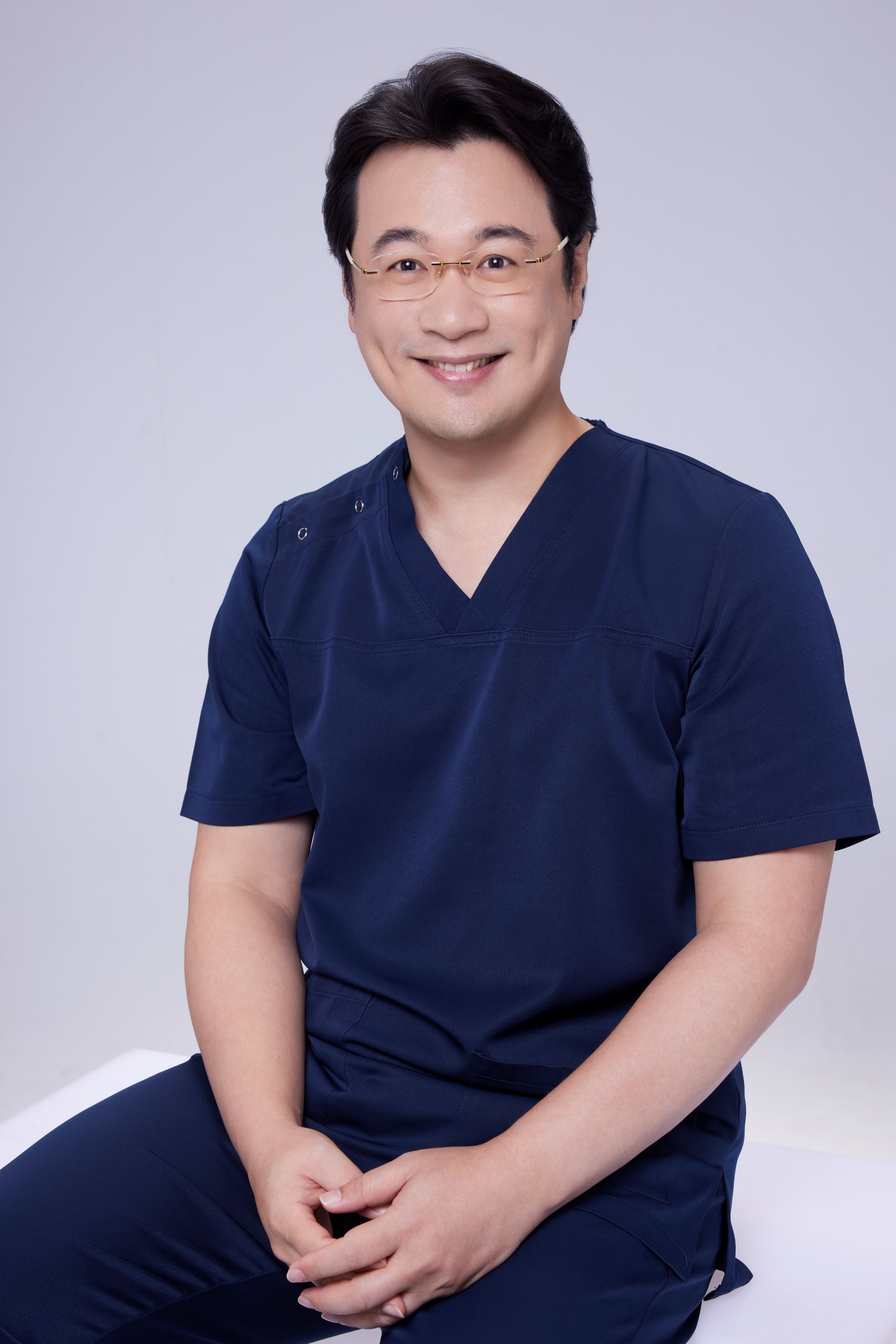
Dr. Ta-Ju Liu
Director, Liusmed Clinic · Over 15 years in minimally-invasive treatment
- Former attending dermatologist, Chang Gung Medical Center & Cosmetic Center
- Board-certified dermatologist · minimally-invasive surgery focus
- Advanced ultrasound-guided procedures · filler complication repair · complete apocrine gland clearance
"You can only treat what you can see" is the core belief running through every procedure I do. The subcutaneous world is intricate; what used to depend on experience and palpation now has a more reliable lens — advanced ultrasound. Seeing vessels, nerves, capsules, and glands first, then deciding where and how deep to cut — that is the standard every patient deserves.


Unsure Whether to Choose Thread or Fat? Let Us Analyze Your Facial Structure First, Then Decide the Ratio
Liusmed full-face sculpting specialty — structural thread, fat survival optimization, two paths and one creed: "structure + volume ratio design, US guidance to avoid neurovascular bundles."