
Joint Regenerative Injection
PRP × HA × Prolotherapy · all under ultrasound guidanceKnee · shoulder · elbow · hip · ankle | ESSKA 2024 endorses KL 1-3 knee OA
Precision · Evidence · Honesty
Ultrasound-Guided Precision
Blind knee injection accuracy is ~78%; ultrasound guidance reaches 95%+ (Berkoff 2012, PMID:22500117). With the same PRP (Platelet-Rich Plasma) or HA (Hyaluronic Acid), blind injection misses the joint space ~1 in 4 times — a core reason for "got the shot but felt nothing." All our joint regenerative injections use US guidance.

Evidence-Based Selection
PRP first-line for knee OA (Osteoarthritis) and frozen shoulder (Zhang 2024 RCT); PRP for tennis elbow; long-acting HA adjunctively for early-mid OA. The physician picks the best injectate based on your KL (Kellgren-Lawrence Grading) grade, age, and activity needs — never a "fixed package."
Scale Tracking, Honest Expectations
We track outcomes via WOMAC (Western Ontario and McMaster Universities Osteoarthritis Index), VAS (Visual Analog Scale), KOOS at 4 weeks, 3 months, 6 months. For severe degeneration (KL IV) we honestly recommend arthroplasty evaluation — we will not push PRP to delay necessary surgery. That is what a responsible physician owes you.
Liusmed Clinic — Cross-Specialty Core Principles
From skin tumors to joint regeneration, we hold to "you can only treat what you can see." Ultrasound guidance grounds every needle on anatomical confirmation rather than tactile guesswork.


You Might Be Experiencing
The traditional path for OA and tendon/ligament issues was just "NSAIDs → steroids → surgery." Regenerative medicine offers a fourth path: leveraging your body's own repair machinery to bridge "drugs no longer hold" and "surgery is too much."
- Knee weakness or catching when going up/down stairs
- Persistent lateral elbow pain (tennis/golfer's elbow)
- Frozen shoulder — difficulty combing hair or dressing
- Recurrent patellar tendonitis (jumper's knee)
- Old ankle injury — cannot fully run or jump
- NSAIDs/steroids tried but only short-term relief
PRP × HA × Ultrasound Guidance: Three Layers Working Together
Repairing a degenerative joint requires three things at once: "repair raw materials," "environment improvement," and "precise delivery." No single layer alone is complete; only the combination is the full answer.

PRP α-Granules: Cartilage & Tendon Repair Toolkit
High-concentration platelets centrifuged from your own blood release α-granules upon activation — packed with PDGF (Platelet-Derived Growth Factor), TGF-β (Transforming Growth Factor Beta), VEGF (Vascular Endothelial Growth Factor), IGF-1 (Insulin-like Growth Factor 1), EGF. They signal "get back to work" to chondrocytes, fibroblasts, and synoviocytes. Bensa 2025 meta-analysis shows clear dose-response: higher platelet concentration → stronger effect.

Hyaluronic Acid: Synovial Replenishment & Cushioning
In degenerative joints, high-molecular-weight HA (HMW-HA) in synovial fluid declines over time. Exogenous HMW-HA restores viscoelasticity, cushioning, and dampens inflammatory mediators. Long-acting cross-linked single-injection formulations are especially useful for busy patients. Taiwan NHI provides partial coverage under conditions.

Ultrasound Guidance: Seeing = Precision
High-resolution ultrasound shows joint cavity, cartilage, tendons, ligaments, vessels, and nerves in real time; the physician continuously monitors needle tip and lands the drug precisely. Knee blind 78% vs guided 95%+; the gap widens for deep, anatomically complex joints (shoulder, hip). "You can only treat what you can see" is Liusmed Clinic's cross-specialty creed.
What the Studies Say — What It Means for You
We surface 4 pivotal studies on "PRP × HA × ultrasound guidance," each with a "what it means for you" — translating academic numbers into the questions you actually bring to clinic.
PRP vs HA vs Prolotherapy vs Steroid
Each treatment has its place. This table consolidates Belk 2021, ESSKA-ORBIT 2024, AAOS 2022 so you and your physician share a common vocabulary.
| Item | PRP | Hyaluronic Acid (HA) | Prolotherapy | Corticosteroid |
|---|---|---|---|---|
| Mechanism | Growth-factor tissue repair | Lubrication, anti-inflammation, synovial replenishment | Brief inflammation triggering repair | Suppress inflammation, analgesia |
| 12-month outcome (knee OA) | ★★★★ (Belk 2021 superior to HA) | ★★★ | ★★ (weak-to-moderate evidence) | ✗ (short-term only, fades after 4 wk) |
| Taiwan NHI | Out-of-pocket | Knee OA conditional (others OOP) | Out-of-pocket | NHI covered (frequency-limited) |
| Common Side Effects | Transient swelling/bruising (5-15%) | Injection site reaction (1-10%) | Transient pain flare 24-72h (10-25%) | May accelerate cartilage loss (McAlindon 2017 JAMA) |
| Best For | KL 1-3 knee OA, frozen shoulder, tennis elbow, long-term solution seeker | KL 1-2 knee OA, fast onset preferred | PRP not applicable or unaffordable | Acute flare needing short-term relief |
Key Insight: Steroid feels better immediately but reverts at 4 weeks; HA wins on "fast onset" (2-4 weeks); PRP wins on "cumulative repair" (6-12 months). The best combination for most patients: 3 PRP injections to rebuild tissue foundation, then long-acting HA as adjunct if needed — like fixing a house foundation first, then adding sound insulation.
Why Liusmed Clinic Chose "PRP × HA × Ultrasound Guidance"
We do not pitch a single "magic bullet" — literature long ago told us individualized injectate selection + precision guidance is what makes regenerative injection truly work. The two axes behind our choice: literature support and clinical observation.
Literature Support
- ·Belk 2021 (18-RCT meta): PRP outperforms HA on 12-month WOMAC pain (MD = −2.83, 95% CI −4.26 to −1.39, p<0.001).
- ·Bensa 2025: PRP MCID achievement is high; dose-response with platelet concentration — higher concentration → stronger effect.
- ·ESSKA-ORBIT 2024: European arthroscopy society formally supports PRP for KL 1-3 knee OA (Grade B-C); ESSKA-ICRS: PRP appropriate for KL 0-III.
- ·Berkoff 2012: US-guided knee injection accuracy 95.8% vs 77.8% blind (OR 6.4, p<0.001); 48% less procedural pain.
- ·Park 2023 (46-RCT NMA): leukocyte-poor PRP has significantly lower AE rate than leukocyte-rich PRP (OR 0.51) — we choose LP or LR by site and lesion.
Dr. Liu — Clinical Observations
- ·Ultrasound guidance places every PRP needle precisely where cartilage defect is largest, and lets HA distribute evenly in the joint cavity. Same dose, same drug — "right placement" doubles the effect. "You can only treat what you can see" is Liusmed Clinic's cross-specialty creed.
- ·Clinically, patients who "tried PRP a few times without effect" often received too few platelets, or the injection never reached the lesion — Bensa 2025 shows a dose-response. So each session we record blood volume drawn, final volume, and leukocyte content (LR or LP), and adjust at follow-up, instead of quoting only "how many times concentrated."
- ·For KL IV severe OA, we will not "let's try PRP first" just to bill another session. We honestly tell you: cartilage is nearly gone, PRP will not bring it back; we recommend direct arthroplasty evaluation. That is our duty as physicians.
- ·Frozen shoulder is PRP's strongest shoulder indication (Zhang 2024 meta-analysis). If your shoulder is "frozen, cannot lift," steroid worked briefly then plateau — this is the prime PRP indication.
- ·We track via WOMAC, VAS, KOOS — not subjective "feels better." Updated each follow-up, turning progress into clear numbers — which patients themselves end up valuing most.
We did not pick the "newest, flashiest therapy" — we picked the combination with the strongest current evidence, alignment with our cross-specialty philosophy, and the potential for long-term resolution for you.
Treatment Process
From evaluation to follow-up, five stages ensuring precision and lasting effect

Clinic Evaluation
History + PE + X-ray KL grading

Ultrasound Assessment
Confirm cartilage/synovium/ligament

Individualized Selection
PRP / HA / Prolo / combo

US-Guided Injection
Needle tip continuously visible

WOMAC/VAS Follow-Up
4 wk / 3 mo / 6 mo
Clinical Evidence & References
PRP is performed under Taiwan's Special Medical Technology Regulations, limited to qualified institutions and personnel; our clinic complies. High-quality evidence (Belk 2021, Bensa 2025, ESSKA-ORBIT 2024, Berkoff 2012, Zhang 2024) continues to strengthen the clinical basis for joint regenerative injection. We track each patient objectively via WOMAC, VAS, and KOOS.
- [1]OCEBM 1a2021
Belk JW, et al.. Platelet-Rich Plasma Versus Hyaluronic Acid for Knee Osteoarthritis: A Systematic Review and Meta-analysis of Randomized Controlled Trials. Am J Sports Med 49(1):249-260.
18 RCTs (Randomized Controlled Trial), n>1,000: at 12 months, WOMAC pain MD (Mean Difference) = −2.83 (95% CI −4.26 to −1.39, p<0.001); stiffness and function also favor PRP; no AE difference.
PMID: 32302218 - [2]OCEBM 1a2025
Bensa A, et al.. PRP injections for the treatment of knee osteoarthritis: the improvement is clinically significant and influenced by platelet concentration: a meta-analysis of randomized controlled trials. Am J Sports Med 53(3):745-754.
PRP vs placebo: high probability of MCID (Minimal Clinically Important Difference) achievement on WOMAC and VAS; clear dose-response with platelet concentration.
PMID: 39751394 - [3]OCEBM 1a2012
Berkoff DJ, et al.. Clinical utility of ultrasound guidance for intra-articular knee injections: a review. Clin Interv Aging 7:89-95.
US-guided knee injection accuracy 95.8% vs blind 77.8% (OR 6.4, 95% CI 2.9–14, p<0.001); 48% less procedural pain, 26% higher 2-week response.
PMID: 22500117 - [4]OCEBM 1a2024
Zhang WB, et al.. The clinical efficacy and safety of platelet-rich plasma on frozen shoulder: a systematic review and meta-analysis of randomized controlled trials. BMC Musculoskelet Disord 25:718.
14 RCTs, n=1,024: PRP vs steroid at 1 month — passive abduction MD=3.91°, passive flexion MD=3.90°, disability SMD (Standardized Mean Difference)=−0.50; long-term (>3 mo) PRP outperforms steroid in durability and safety.
DOI: 10.1186/s12891-024-07629-1 - [5]OCEBM G2024
Laver L, et al.; ESSKA-ORBIT Group. The use of injectable orthobiologics for knee osteoarthritis: A European ESSKA-ORBIT consensus. Part 1—Blood-derived products (PRP). Knee Surg Sports Traumatol Arthrosc 32(4):783-797.
European ESSKA formal consensus: PRP is an effective non-surgical option for KL 1-3 knee OA (Grade B-C); standard protocol "3 injections, 1-2 weeks apart."
PMID: 38436492 - [6]OCEBM G2024
Kon E, et al.; ESSKA-ICRS. Platelet-rich plasma injections for the management of knee osteoarthritis: The ESSKA-ICRS consensus. Knee Surg Sports Traumatol Arthrosc 32(11):2938-2949.
ESSKA-ICRS: PRP is "appropriate" for patients ≤80 with KL 0-III after conservative treatment failure; "inappropriate" for KL IV.
PMID: 38961773 - [7]OCEBM G2022
Brophy RH, Fillingham YA. AAOS Clinical Practice Guideline Summary: Management of Osteoarthritis of the Knee (Nonarthroplasty), Third Edition. J Am Acad Orthop Surg 30(9):e721-e729.
AAOS 3rd edition: PRP "Limited/Inconclusive" (heterogeneous); HA "Strong against routine use"; steroids "Strong for short-term." Position differs from ESSKA, reflecting preparation/study heterogeneity.
PMID: 35383651 - [8]OCEBM 1a2023
Park YB, et al.. Are leukocyte-poor or multiple injections of platelet-rich plasma more effective than hyaluronic acid for knee osteoarthritis?. Arch Orthop Trauma Surg 143(7):3879-3897.
Network meta-analysis (46 RCTs): leukocyte-poor PRP (LP-PRP) has significantly lower AE rate than leukocyte-rich PRP (OR 0.51, 95% CI 0.32-0.81); we choose between LP and LR by site and lesion.
PMID: 36173473
Our Commitment to Honest Disclosure
Every procedure deserves your full understanding before deciding. The following summarizes common considerations and current research context; individual applicability is evaluated by the physician so you can proceed with confidence.
Contraindications
- •Active local or intra-articular infection
- •Severe coagulopathy, uncontrolled anticoagulant therapy
- •Allergy to injectate components (HA: avian-derived products)
- •Active malignancy, hematological malignancy
- •KL IV severe OA (direct arthroplasty evaluation recommended)
Common Side Effects
- •PRP: transient site pain, swelling, bruising (5-15%, resolves in 1-2 weeks)
- •HA: injection site pain or reaction (1-10%; rare allergy)
- •Prolotherapy: brief burning, transient 24-72h pain flare (10-25%)
- •Rare infection or vascular/nerve event (< 0.1%; US guidance markedly reduces risk)
Research Status & Clinical Observations
- •Guideline divergence: ESSKA-ORBIT 2024 (Europe) supports PRP for KL 1-3 knee OA; AAOS 3rd edition (US) still finds evidence inconclusive. We honestly discuss this divergence and analyze it for your individual case.
- •Individual variation exists by KL grade, age, weight, activity level, comorbidities. Bensa 2025 shows higher platelet concentration → stronger effect; we set the platelet dose and leukocyte content for each session according to your joint, rather than one fixed concentration multiple.
- •Scope of evidence: evidence supports PRP for improving pain and joint function in knee OA; MRI cartilage-volume change is mostly null in high-quality RCTs and remains an active research topic. We discuss the expected scope of improvement case-by-case on an evidence basis.
What Your Plan Is Made Of
| Item | How Cost Is Explained | Notes |
|---|---|---|
| Initial evaluation (PE + ultrasound) | Discussed case-by-case via LINE or in person | — |
| Single PRP injection (LP or LR chosen by site) | Discussed case-by-case via LINE or in person | ESSKA-ORBIT 2024 consensus is a 3-session standard course |
| HA joint injection (3-injection or long-acting single) | Discussed case-by-case via LINE or in person | Partial NHI coverage for eligible knee OA |
| Prolotherapy (hypertonic dextrose) per session | Discussed case-by-case via LINE or in person | Weak-to-moderate evidence; full disclosure required |
| Ultrasound guidance fee | Included in each treatment fee | — |
Actual pricing depends on individual symptoms, treatment count, and custom formulation — explained on a case-by-case basis via LINE consultation or in-person visit. The physician walks you through the treatment and the reasoning behind it for your individual situation.
FAQ
PRP vs HA for osteoarthritis — which is better?
Why is ultrasound guidance necessary?
Is PRP legal in Taiwan?
How many sessions and how often?
Is it covered by NHI?
Who should not have this treatment?
How long must I rest? What should I avoid?
My OA is already severe — am I too late for PRP?
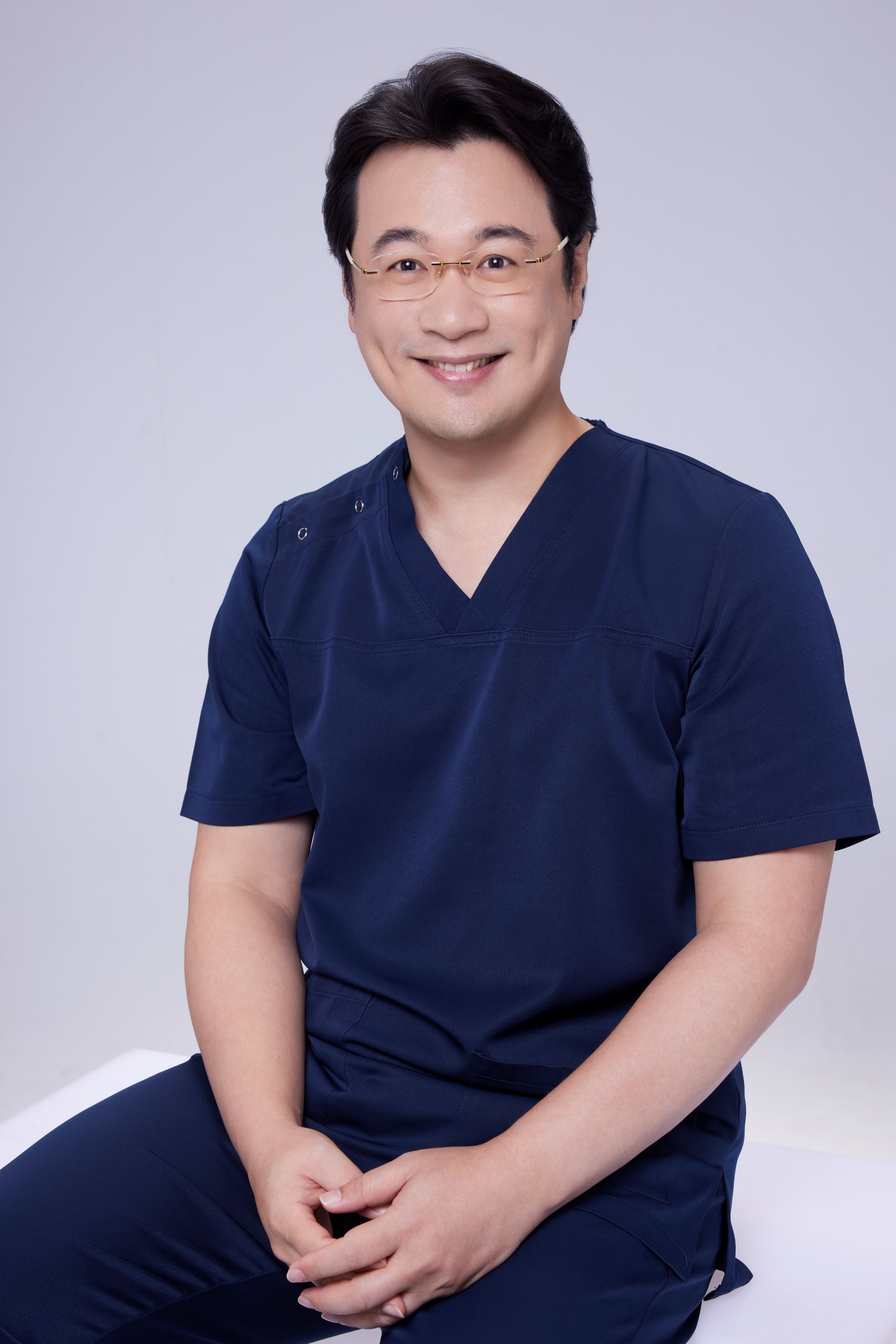
Dr. Ta-Ju Liu
Director, Liusmed Clinic · Over 15 years in minimally-invasive treatment
- Former attending dermatologist, Chang Gung Medical Center & Cosmetic Center
- Board-certified dermatologist · minimally-invasive surgery focus
- Advanced ultrasound-guided procedures · filler complication repair · complete apocrine gland clearance
"You can only treat what you can see" is the core belief running through every procedure I do. The subcutaneous world is intricate; what used to depend on experience and palpation now has a more reliable lens — advanced ultrasound. Seeing vessels, nerves, capsules, and glands first, then deciding where and how deep to cut — that is the standard every patient deserves.
One Joint, One Case — Let Us First See Clearly with Ultrasound, Then Decide
We do not push "fixed packages." Every PRP concentration, HA needle placement, and follow-up scale is designed for your individual case. Start with LINE consultation or book a face-to-face visit.
Knee · Shoulder · Elbow · Hip · Ankle · PRP × HA × Ultrasound
When meds aren't enough and surgery is too much — ultrasound-guided multi-joint regenerative injection
Belk 2021 / Bensa 2024 meta-analyses support PRP > HA for knee OA · adaptable to frozen shoulder, elbow, hip, ankle
Your Joint Regenerative Injection Includes
Ultrasound-guided precision injection · avoid vessels and nerves
PRP α-granules · cartilage and tendon repair
Cartilage repair raw materials · Belk 2021 RCT supports 12-month efficacy for knee OA
Hyaluronic acid · synovial replenishment and cushioning
Scale tracking · honest expectations (VAS / WOMAC / OKS)
Included and aftercare
Select any item to see its full scope and exclusions
Not sure which approach fits you?
Send a few photos first, or book a consultation directly. How booking works