
Hair Regrowth & Scalp Repair
Early intervention · PRP × Mesotherapy × Foundation TherapyAGA / FPHL / postpartum shedding / post-transplant maintenance | AAD 2024 foundation + PRP boost
Early · Integrated · Quantified

Early Intervention = Best Window
AGA (Androgenetic Alopecia, male-pattern hair loss) is a chronic disease; once a follicle fully atrophies, it cannot be reversed. Cervantes 2018 (PMID:30021129) shows PRP (Platelet-Rich Plasma, a concentrate of your own blood platelets rich in growth factors) works best for early-mid AGA where follicles are miniaturized but still alive. We do not endorse "let's observe" delays — "earlier intervention, more living follicles" is the consistent literature conclusion.

Medication as Foundation, Injection as Boost
Do not be misled by "PRP replaces medication" pitches. Adil & Godwin 2017 meta-analysis (PMID:28396101) shows the strongest evidence remains 5% topical minoxidil (a topical/oral hair-growth drug) and 1 mg oral finasteride (an oral anti-hair-loss drug). Our strategy: "medication as foundation, PRP/mesotherapy as additive." Injection-only protocols are possible — but with honest disclosure that expected outcomes may be lower.
Quantitative Tracking, Honest Expectations
We do not rely on subjective "does it look thicker?" — we use trichoscopy (shafts/cm²), shaft thickness, global photos, and pull test for formal 6-month quantitative evaluation. For patients with fully scarred follicles, we honestly tell you PRP cannot reverse this and recommend transplant evaluation — no pushing PRP to delay.
Liusmed Clinic — Cross-Specialty Core Principles
From skin tumors to scalp regeneration, we hold to "you can only treat what you can see, and only honesty earns long-term trust." Trichoscopic quantification + the strongest-evidence foundation + PRP boost — a middle path between "drugs not enough" and "let's just observe."


You Might Be Experiencing
On the hair-loss journey, two extremes are common: "let's just observe" (and watch follicles dwindle year over year) and "let's try every treatment" (with diluted results and emptied budgets). Regenerative medicine offers a third path: strongest-evidence foundation + literature-backed PRP boost — used while follicles are still alive.
- Noticeable shedding when washing or combing hair
- Receding temples / vertex thinning (M-shape, crown thinning)
- Postpartum diffuse shedding (3-6 months)
- Family history of AGA — wish to intervene "while there is still a window"
- Used Minoxidil for 6 months, results plateaued, want to add more
- Recently transplanted — want to protect new grafts and native hair
PRP × Mesotherapy × Finasteride/Minoxidil: Three Layers Working Together
Hair regrowth success requires three things at once: "repair signals," "nutrient supply," and "source suppression." No single layer alone is sufficient; only the combination produces meaningful change at 6-12 months.

PRP Growth Factors: Waking Dormant Follicles
High-concentration platelets centrifuged from your own blood release PDGF (Platelet-Derived Growth Factor, a cell-growth signal), TGF-β (Transforming Growth Factor Beta), VEGF (Vascular Endothelial Growth Factor, a new-blood-vessel signal), IGF-1 (Insulin-like Growth Factor 1, a growth/repair signal), EGF upon activation. These factors act on dermal papilla cells (the follicle base controlling hair growth) and follicular stem cells, pushing "telogen" (rest-phase) follicles back into "anagen" (growth-phase). Gupta 2019 (PMID:31403543) shows PRP significantly increases shaft and follicular unit density.
Mesotherapy: Customized Nutrient Cocktail
Mesotherapy (shallow micro-injection of nutrients and medications) formulations contain peptides (thymosin β4, copper peptides), vitamins (B-complex, biotin), hyaluronic acid, and minerals — customized per case. Particularly effective for iron-deficient, postpartum, or stress-related diffuse loss. Not a "pharmacy off-the-shelf" mix — it is adjusted to your trichoscopy and bloodwork.

Finasteride / Minoxidil: Strongest-Evidence Foundation
Finasteride inhibits 5α-reductase, reducing DHT (Dihydrotestosterone, the androgen hormone that shrinks follicles) damage to follicles; minoxidil prolongs anagen and increases follicular blood flow. Suchonwanit 2019 (PMID:31496662) shows low-dose oral minoxidil (0.25-2.5 mg/day) is effective for plateaued or topical-intolerant cases — requires prescription and BP monitoring.
What the Studies Say — What It Means for You
We surface 4 pivotal studies on "PRP × Mesotherapy × Finasteride/Minoxidil," each with a "what it means for you" — translating academic numbers into the questions you actually bring to clinic.
Finasteride vs Minoxidil vs PRP vs Mesotherapy
Each treatment has its place. This table consolidates AAD 2024, Adil 2017, Cervantes 2018 so you and your physician share a common vocabulary.
| Item | Finasteride (oral) | Minoxidil (topical/oral) | PRP | Customized Mesotherapy |
|---|---|---|---|---|
| Mechanism | Inhibit 5α-reductase, reduce DHT | Prolong anagen, increase blood flow | Growth factors wake dormant follicles | Local nutrient delivery |
| Evidence level (AGA) | ★★★★★(強) | ★★★★★(強) | ★★★★(中強) | ★★★(中) |
| Best For | AGA in men (not for women of reproductive age) | Both sexes | Early-mid AGA/FPHL/postpartum | Nutrient-deficient or stress-type diffuse loss |
| Common Side Effects | < 4% sexual (mostly reversible) | Itching, initial shedding increase | Transient site redness (5-10%) | Similar to PRP, varies by formulation |
| Recommended Strategy | Foundation (finasteride for men / minoxidil for both) + Boost (PRP ×3-6 active stage ± mesotherapy) | |||
Key Insight: PRP alone without medication often leaves patients feeling "no different" even after 6 sessions — because DHT is still damaging follicles faster than PRP can repair. The strongest combination is "source suppression (finasteride/minoxidil) + repair boost (PRP) + customized nutrition (mesotherapy)" — like turning off the faucet (finasteride), upgrading nutrients in the room (mesotherapy), then bringing in workers to patch holes (PRP).
Why Liusmed Clinic Chose "Medication as Foundation, PRP as Boost"
We do not pitch "PRP replaces medication" — the strongest literature evidence clearly points to "combination is the answer." The two axes behind our choice: literature support and clinical observation.
Literature Support
- ·Adil & Godwin 2017 (PMID:28396101, 14-RCT meta): 5% topical minoxidil and 1 mg oral finasteride are 2 of the 4 strongest-evidence foundations.
- ·Cervantes 2018 (PMID:30021129): PRP consistently outperforms controls on density, thickness, and pull test — most studies enrolled patients on concurrent foundation therapy.
- ·Gupta 2019 (PMID:31403543): PRP significantly increases shaft and follicular unit density; standard protocol every 4 weeks for 3-6 sessions.
- ·Suchonwanit 2019 (PMID:31496662): low-dose oral minoxidil is highly effective for topical-intolerant or plateaued cases — the most underutilized "upgrade option" in clinic.
- ·AAD 2024: finasteride (men), low-dose oral minoxidil (both), 5% topical minoxidil (both) are strong recommendations; PRP is an "adjunct option for AGA."
Dr. Liu — Clinical Observations
- ·Clinically, "PRP-only without medication" patients often underwhelm — not because PRP failed, but because DHT keeps damaging faster than PRP can repair. We discuss this honestly at first visit.
- ·For "6-month medication plateau" patients, the typical cause is "ceiling reached, strategy switch needed" — not increased dose, but adding PRP, switching to oral minoxidil (if topical), or adding mesotherapy.
- ·Most postpartum diffuse shedding (3-6 months) self-resolves; intervention is recommended if it persists past 6 months. We screen for endocrine, iron deficiency, and thyroid issues — without resolving these, PRP alone yields diminishing returns.
- ·For Norwood VI-VII (fully scarred) patients, we will not push PRP to delay — we honestly recommend FUE evaluation. For post-transplant patients, we strongly suggest PRP maintenance — see "Post-Transplant Follicle Maintenance" page.
- ·We use trichoscopy counts, shaft thickness, pull test, and global photos for formal 6-month quantitative evaluation — not subjective "feels thicker." Updated each follow-up — patients themselves end up valuing this most.
We did not pick the "newest, flashiest therapy" — we picked the combination with the strongest current evidence, alignment with our cross-specialty philosophy, and the ability to give your follicles a fair shot while they're still alive.
Treatment Process
From evaluation to follow-up, five stages of quantitative tracking supporting long-term management

Clinic Evaluation
History + Norwood/Ludwig grading

Trichoscopy Quantification
Baseline shaft count, thickness, miniaturization ratio

Individualized Protocol
Medication foundation + PRP/mesotherapy boost

Active-Stage Sessions
Every 4 weeks ×3-6

6-Month Formal Eval
Trichoscopy vs baseline + global photos
Clinical Evidence & References
PRP is performed under Taiwan's Special Medical Technology Regulations, limited to qualified institutions and personnel; our clinic complies. Finasteride and oral minoxidil are prescription medications requiring physician evaluation. High-quality evidence (Cervantes 2018, Gupta 2019, Adil 2017, AAD 2024) continues to strengthen the clinical basis for hair regrowth therapy. We track each patient objectively via trichoscopy counts, shaft thickness, pull test, and global photos.
- [1]OCEBM 1a2018
Cervantes J, et al.. Effectiveness of Platelet-Rich Plasma for Androgenetic Alopecia: A Review of the Literature. Skin Appendage Disord 4(1):1-11.
Pooling 17 RCTs (Randomized Controlled Trials, the gold-standard treatment-comparison study) and semi-objective studies: PRP consistently outperforms controls on density, shaft thickness, and pull test; no serious AEs.
PMID: 30021129 - [2]OCEBM 1a2019
Gupta AK, et al.. Platelet-Rich Plasma as a Treatment for Androgenetic Alopecia: A Systematic Review. Dermatol Surg 45(10):1262-1273.
SR (Systematic Review, a comprehensive evidence review) of 19 studies: PRP significantly increases shaft and follicular unit density; standard protocol every 4 weeks for 3-6 sessions.
PMID: 31403543 - [3]OCEBM 1a2017
Adil A, Godwin M. The Effectiveness of Treatments for Androgenetic Alopecia: A Systematic Review and Meta-Analysis. J Am Acad Dermatol 77(1):136-141.
14-RCT meta-analysis: 5% topical minoxidil, 1 mg oral finasteride, low-level laser, topical 5α-reductase inhibitors are the four strongest-evidence foundations; magnitude varies by baseline severity.
PMID: 28396101 - [4]OCEBM 1b2019
Suchonwanit P, et al.. Minoxidil and Its Use in Hair Disorders: A Review. Drug Des Devel Ther 13:2777-2786.
5% topical minoxidil is first-line foundation for both male and female AGA; low-dose oral minoxidil (0.25-2.5 mg/day) shows efficacy in plateaued or intolerant cases — requires prescription and BP monitoring.
PMID: 31496662 - [5]OCEBM 1a2010
Mella JM, et al.. Efficacy and Safety of Finasteride Therapy for Androgenetic Alopecia: A Systematic Review. Arch Dermatol 146(10):1141-1150.
12-RCT meta-analysis: 1 mg/day finasteride significantly increases total hair count (MD ≈ 9.4/cm²; MD = Mean Difference, the average gap between two groups) at 12-24 months and slows shedding; sexual side effects low (< 4%) and mostly reversible.
PMID: 20956654 - [6]OCEBM G2024
AAD (American Academy of Dermatology). Guidelines of Care for the Management of Androgenetic Alopecia. AAD Clinical Practice Guidelines, 2024 update.
AAD (American Academy of Dermatology) 2024 guidelines: finasteride (men), low-dose oral minoxidil (both sexes), 5% topical minoxidil (both sexes) are strong-recommendation foundations; PRP listed as "adjunct option for AGA" (conditional recommendation, evidence accumulating).
Our Commitment to Honest Disclosure
Every procedure deserves your full understanding before deciding. The following summarizes common considerations and current research context; individual applicability is evaluated by the physician so you can proceed with confidence.
Contraindications
- •Active scalp infection (cellulitis, severe folliculitis)
- •Active cicatricial alopecia (LPP, FFA, DLE)
- •Severe coagulopathy, uncontrolled anticoagulant therapy
- •Active malignancy, hematologic malignancy
- •Pregnant women (finasteride contraindicated; PRP safety data limited)
Common Side Effects
- •PRP: transient site pain, redness, mild scalp tightness (5-10%, resolves in 24h)
- •Rare post-injection headache or dizziness (< 1%, often tension- or hypoglycemia-related)
- •Minoxidil topical: scalp itching, irritant contact dermatitis, initial shedding increase (improves at 4-8 weeks)
- •Finasteride oral: < 4% sexual side effects, mostly reversible; very rare mood changes (report to physician)
Research Status & Clinical Observations
- •PRP preparation heterogeneity: concentration, leukocyte ratio, and activation differ widely across clinics — a key driver of inconsistent literature effect sizes. We prepare both leukocyte-rich (LR-PRP) and leukocyte-poor PRP (LP-PRP, PRP filtered to remove white blood cells for gentler inflammation), choosing by scalp condition; the concentration multiple is not fixed at a single value, and each preparation is recorded for comparison at follow-up.
- •Individual variation by baseline Norwood/Ludwig grade (Norwood-Hamilton Scale, the male-pattern hair-loss stage I–VII), age, follicular status, and concurrent foundation therapy. AAD 2024 lists PRP as "conditional recommendation," reflecting this reality.
- •100% regrowth is not realistic: for patients with fully scarred follicles (advanced LPP, FFA), PRP cannot reverse it and transplant feasibility should be discussed honestly — we deliver the strongest-evidence path to give your follicles a fair chance.
What Your Plan Is Made Of
| Item | How Cost Is Explained | Notes |
|---|---|---|
| Initial evaluation (trichoscopy + bloodwork if needed) | Discussed case-by-case after evaluation | — |
| Single PRP scalp injection (LP or LR chosen by scalp condition) | Discussed case-by-case after evaluation | Bundled pricing for 3-6 active-stage sessions |
| Customized mesotherapy injection (per session) | Discussed case-by-case after evaluation | Varies by formulation and protocol |
| Finasteride / Minoxidil prescription (one month) | Discussed case-by-case after evaluation | Varies by formulation and pharmacy source |
| 6-month formal quantitative evaluation (trichoscopy comparison, global photos) | Included in protocol | — |
Actual pricing depends on individual symptoms, treatment count, and custom formulation — explained on a case-by-case basis via LINE consultation or in-person visit. The physician walks you through the treatment and the reasoning behind it for your individual situation.
FAQ
Does PRP for AGA actually work?
Do I have to also take Finasteride or apply Minoxidil?
Is PRP scalp injection painful? How often?
How many sessions before results are visible?
Can women have PRP for hair?
Who should not have this treatment?
How long do results last? Will it revert if I stop?
Just had a hair transplant — can I do PRP?
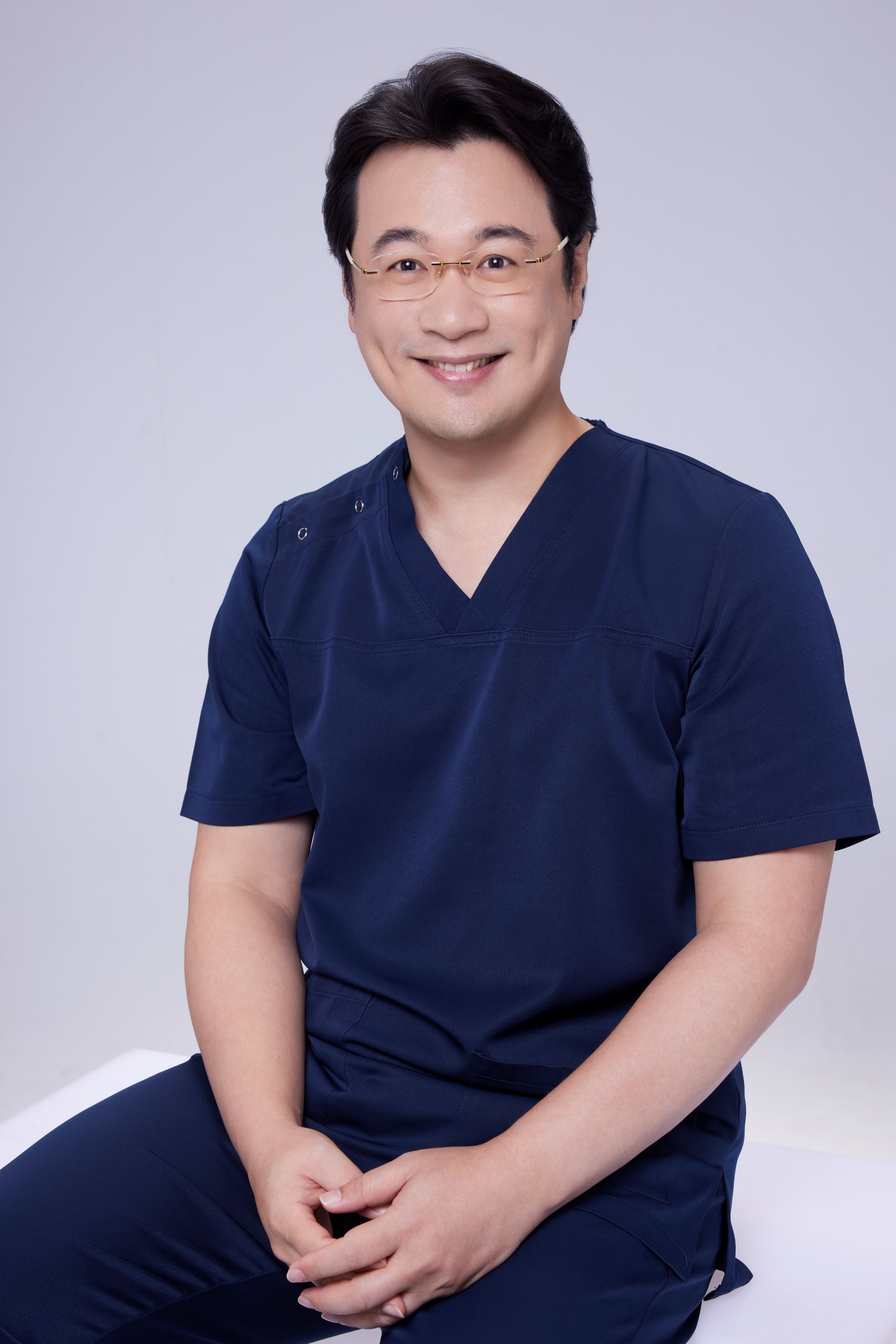
Dr. Ta-Ju Liu
Director, Liusmed Clinic · Over 15 years in minimally-invasive treatment
- Former attending dermatologist, Chang Gung Medical Center & Cosmetic Center
- Board-certified dermatologist · minimally-invasive surgery focus
- Advanced ultrasound-guided procedures · filler complication repair · complete apocrine gland clearance
"You can only treat what you can see" is the core belief running through every procedure I do. The subcutaneous world is intricate; what used to depend on experience and palpation now has a more reliable lens — advanced ultrasound. Seeing vessels, nerves, capsules, and glands first, then deciding where and how deep to cut — that is the standard every patient deserves.
Alopecia Areata (Patchy) Intralesional Injection: Only a Fully, Evenly Completed Patch Counts
Alopecia areata (AA) differs from AGA — it is an immune-related localized hair loss, typically showing sharply bordered round bald patches. For adults with "patchy to moderate" AA, intralesional triamcinolone acetonide (a long-acting corticosteroid) is one first-line option that can encourage regrowth in affected follicular areas. Guidelines suggest a starting concentration around 5 mg/mL, every 4–6 weeks, reassessing response at about 6 months. It is not for AGA; extensive/whole-scalp forms (alopecia totalis/universalis) are generally not managed by intralesional injection alone and need separate evaluation.
Why "Large Area, Incompletely Treated" Is the Hardest Part of AA Injection
Intralesional injection must be placed evenly across many shallow intradermal points inside the bald patch (clinically about 0.1 mL per 1 cm²), so the drug covers the whole affected follicular area. People with heavier loss and multiple patches need many injection points — yet the scalp is sensitive and needling is felt, so many "don't want to come back after one session." But AA injection needs regular, spaced sessions over several months before regrowth shows; stopping midway often means the effort is wasted.
Our gentle relief workflow is built precisely for this pain point of "evenly completing a large-area / multi-patch scalp": letting the injection cover the whole patch, placed properly, while the patient can tolerate and finish the time-dependent course. For AA, where regrowth needs time to accumulate, "whether the full course is completed" often matters more to the final outcome than how any single session felt.
Gentle Relief, Substantially Less Pain
Our long-developed gentle relief workflow substantially reduces discomfort, with no general anesthesia — so you can communicate with the physician in real time, without general-anesthesia risk, and need not give up over fear of pain. The method is decided by physician evaluation; effect and comfort vary by individual.
Four Pillars of Gentle Relief
- No general anesthesia
- Substantially reduced discomfort
- Real-time dialogue with the physician (dialogue = a safety mechanism)
- Physician evaluates personally; method varies by individual
Honest Disclosure: Scope, Risks, and Realistic Expectations
- Intralesional injection mainly targets "patchy to moderate" AA; extensive/whole-scalp forms (alopecia totalis/universalis) are generally not managed by intralesional injection alone and need a separate overall physician evaluation. It is not for AGA.
- Possible risks: skin/subcutaneous fat atrophy (local dimpling) at injection sites — especially relevant at cosmetically sensitive areas like the hairline or eyebrows; the injection itself is painful and may cause transient scalp discomfort. Concentration and volume are adjusted per site by the physician to reduce atrophy risk.
- Effect and number of sessions vary by individual and are decided by physician evaluation: AA may recur; if there is no response by around 6 months, continuing injections is unlikely to help, and the direction should be reconsidered with your physician. We will not push to drag it out.
- Evidence base: Yee et al. 2020 JAAD (PMID:31843657), a systematic review and meta-analysis, found a response rate of about 74.82% with 5 mg/mL intralesional triamcinolone for AA; the British Association of Dermatologists (BAD) 2024 living guideline for AA (PMID:39432739) also lists intralesional corticosteroid as one option for limited AA.
One Scalp, One Case — Let Us First See Clearly with Trichoscopy, Then Decide
We do not push "fixed packages." Every PRP concentration, mesotherapy formulation, and tracking metric is designed for your follicular status. Start with LINE consultation or book a face-to-face visit.
Early AGA Intervention · PRP + Minoxidil + Finasteride
Early intervention is the best window — three-axis therapy wakes dormant follicles
AAD first-line minoxidil + finasteride · scalp PRP significantly augments · supported by Gupta 2024 meta-analysis
Your Hair Regrowth Treatment Includes
Scalp PRP growth factors · awakens dormant follicles
Gupta 2024 / Gentile 2019 meta-analyses support significant AGA density increase
AAD first-line medications · minoxidil + finasteride
Medications form the foundation · PRP augments · does not replace meds
Mesotherapy formula · customized nutrient cocktail
Telogen effluvium triage · usually self-resolves in 6-12 months
Severe cases accelerated with scalp PRP · honest triage avoids overtreatment
Included and aftercare
Select any item to see its full scope and exclusions
Not sure which approach fits you?
Send a few photos first, or book a consultation directly. How booking works