
Skin Repair Specialty
Skin · Rosacea · Melasma · Scar · Hair · Post-transplantDermatology × regenerative medicine · individualized evaluation · outcomes vary
Three Core Strengths of Skin Repair & Care

Physician Assessment
The physician classifies and plans the direction by skin condition and concern.

Formula by Skin
Melasma, rosacea, scars and more each have a matching low-irritation plan.

Low-Irritation, Honest
Sensitive skin is handled on a low-irritation principle, with honest expectations.
Liusmed Clinic — Cross-Specialty Core Principles
From deep tumors to skin layers, "you can only treat what you can see" runs across all Liusmed specialties. Dermatology relies heavily on imaging (dermatoscope, trichoscope, ultrasound) for precise classification — the same facial redness can be rosacea, folliculitis, sensitive skin, or seborrheic dermatitis, and one wrong classification derails a year of treatment.


From Redness to Hair Loss — Every Classification Backed by Evidence


Which Program Does My Skin Concern Fall Into?
Classification is everything in dermatology — the same redness or hair loss can have completely different mechanisms and treatments. The table gives you a starting point; the physician makes a full imaging evaluation at consultation.
| Your Symptom | Starting Program | Why |
|---|---|---|
| Persistent post-laser redness, sustained sensitivity | Skin Repair | Barrier damage: PRP + repair dressing shortens erythema, rebuilds barrier |
| Facial flushing, telangiectasia, burning sensation | Rosacea | Erythematotelangiectatic rosacea: microbotox + TXA + PRP injection to ease flushing and inflammation |
| Symmetric brown patches on cheeks/forehead (melasma) | Melasma | Melasma involves deep pigment + vascular components: tranexamic acid + microneedling + topical lightening triple-axis |
| Atrophic acne scars after acne | Scar Repair | Atrophic scars need "break old collagen + rebuild new": fractional laser + PRP is one of strongest combos by ECCA |
| Hypertrophic surgical scar, red, itchy | Scar Repair | Hypertrophic scar: intralesional corticosteroid injection is the main first-line option, paired with pressure garment + silicone sheet |
| Receding crown/hairline, visibly thinning | Hair Regrowth | AGA: scalp PRP + topical minoxidil + oral finasteride triple-axis combination |
| Major hair shedding after childbirth/illness | Hair Regrowth | Telogen effluvium: usually self-resolves 6-12 mo; severe cases benefit from scalp PRP |
| Just had FUE transplant, want to protect grafts | Post-Transplant | Post-op 3/6/12 mo PRP adjunct significantly improves graft survival and long-term density |
| Localized eczema repeatedly scratched into a thick, hard lesion that topicals cannot control | Eczema | Thickened/lichenified lesions (e.g. prurigo nodularis): topicals first-line; when ineffective, the physician evaluates intralesional low-dose steroid |
| Raised scar growing beyond the original wound, itchy and painful (keloid) | Keloid | Keloid: first-line intralesional steroid injection; large/multiple lesions need many injection points, completed with gentle pain relief |
* The table is a starting suggestion, not a diagnosis. Many patients have overlapping conditions (e.g., melasma + rosacea, AGA + seborrheic dermatitis); imaging evaluation reveals the full picture.
Dermatology × Regenerative Medicine Integration
Imaging-Guided Classification
Dermatoscope, trichoscope, ultrasound — the same "facial redness" can be rosacea, sensitive skin, seborrheic dermatitis, or pityriasis rosea. Wrong classification = wrong treatment for a year. We see clearly first.
PRP × Laser × Injection × Topical Four-Axis
Monotherapy rarely solves skin issues. We combine four axes: PRP (repair), laser (remodel), injection (targeted), topical (baseline maintenance) — strength and ratio individualized.
Scale + Photo Tracking
We track via mMASI (melasma), CEA (rosacea redness), ECCA (atrophic scar), HQI (hair loss) — paired with standardized photo at each visit. "Feels somewhat better" is not evaluation; numbers and photos are.
Standard Clinical Workflow
From imaging classification, customized plan, treatment execution to scale + topical tracking

Initial Evaluation
Symptom classification, dermatoscopy/trichoscopy, photo documentation, prior treatment

Customized Plan Discussion
Plan PRP/laser/injection/topical combo per classification, baseline scales (mMASI/CEA/ECCA/HQI)

Treatment Execution
Per-classification therapy: PRP / microneedling / fractional laser / injection, US or dermatoscope-guided as needed

Scale Tracking + Topical Integration
Update scales + photo comparison each visit; home topicals (TA/AzA/retinoid) integrated in parallel
Why Liusmed Clinic Built Its Skin-Repair Model on "Imaging Classification × Multi-Axis Combination × Scale Tracking"
The most common failure in dermatology is not "treatment not strong enough" but "wrong classification." We put step one on classification, then decide combination.
Literature Support
- ·[Rosacea] Meta-analysis (7 studies, 167 patients) and a double-blind split-face randomized trial: microbotox improves redness and flushing in erythematotelangiectatic rosacea; studies are mostly small, and effects fade after about 3-6 months, requiring repeat injections.
- ·[Melasma] Cochrane 2024 / Saki 2018: TXA injection + microneedling significantly improves mMASI; topical TA 4%/azelaic acid is baseline. Q-switched / picosecond laser require caution.
- ·[Atrophic scar] Hesseler 2019 series: fractional laser + PRP significantly outperforms laser alone on ECCA; microneedling + PRP is second-line with lower side effects.
- ·[Hair regrowth] Gupta 2024 / Gentile 2019 meta: scalp PRP significantly increases AGA hair density and caliber; AAD lists minoxidil + finasteride as first-line, PRP as strong adjunct.
- ·[Post-transplant] Garg 2017 / Uebel 2006: post-FUE PRP adjunct significantly improves graft survival and 6-12 mo density; ISHRS position paper supports adjunct role.
Dr. Liu — Clinical Observations
- ·We choose treatment by classification, not by what is trending. For "facial redness": erythematotelangiectatic rosacea → microbotox combined with TXA and PRP; sensitive skin → mainly PRP plus barrier repair; seborrheic dermatitis → mainly antifungals such as ketoconazole. Wrong classification = 6 months wasted.
- ·Dermatology "four-axis" logic: PRP repairs barrier/dermis, laser remodels collagen/pigment, injection targets specific mechanism (TXA for melasma, botulinum for redness), topical maintains baseline (retinoid/TA/azelaic acid). Drop one axis, effect won't last.
- ·We will not push PRP/laser to delay necessary standard treatment. Moderate-severe rosacea → oral isotretinoin or doxycycline; severe acne scar → punch excision/subcision evaluation; severe AGA Hamilton VI → discuss transplant. We don't "try first" just to bill another session.
- ·Scale + standardized photo is a commitment. mMASI/CEA/ECCA/HQI updated each follow-up, paired with same-light same-angle comparison photos — this is our two-way accountability to ourselves and to you.
Liusmed's skin-repair model — imaging classification, multi-axis combination, scale tracking — is what we consider the hard prerequisite for "skin treatment that truly works and stays safe."
Skin · Rosacea · Melasma · Scar · Hair · Post-Transplant Maintenance
Imaging-guided classification + multi-axis combination therapy + quantitative tracking
PRP / laser / injection / topical individualized 4-axis combination · mMASI / CEA / ECCA quantitative tracking
Your Skin Repair Treatment Includes
Imaging-guided classification before any treatment decision
Don't know how your skin condition classifies? We image first, then decide
PRP / laser / injection / topical — individualized 4-axis combination
Ratio and intensity tailored to your condition · no single-modality dogma
Scale + photo dual-axis tracking
mMASI (melasma) · CEA (rosacea) · ECCA (atrophic scar) · HQI (hair loss) quantitative indices
Dermatology × regenerative medicine integration
Outcomes vary individually · physician evaluation required
Included and aftercare
Select any item to see its full scope and exclusions
Not sure which approach fits you?
Send a few photos first, or book a consultation directly. How booking works
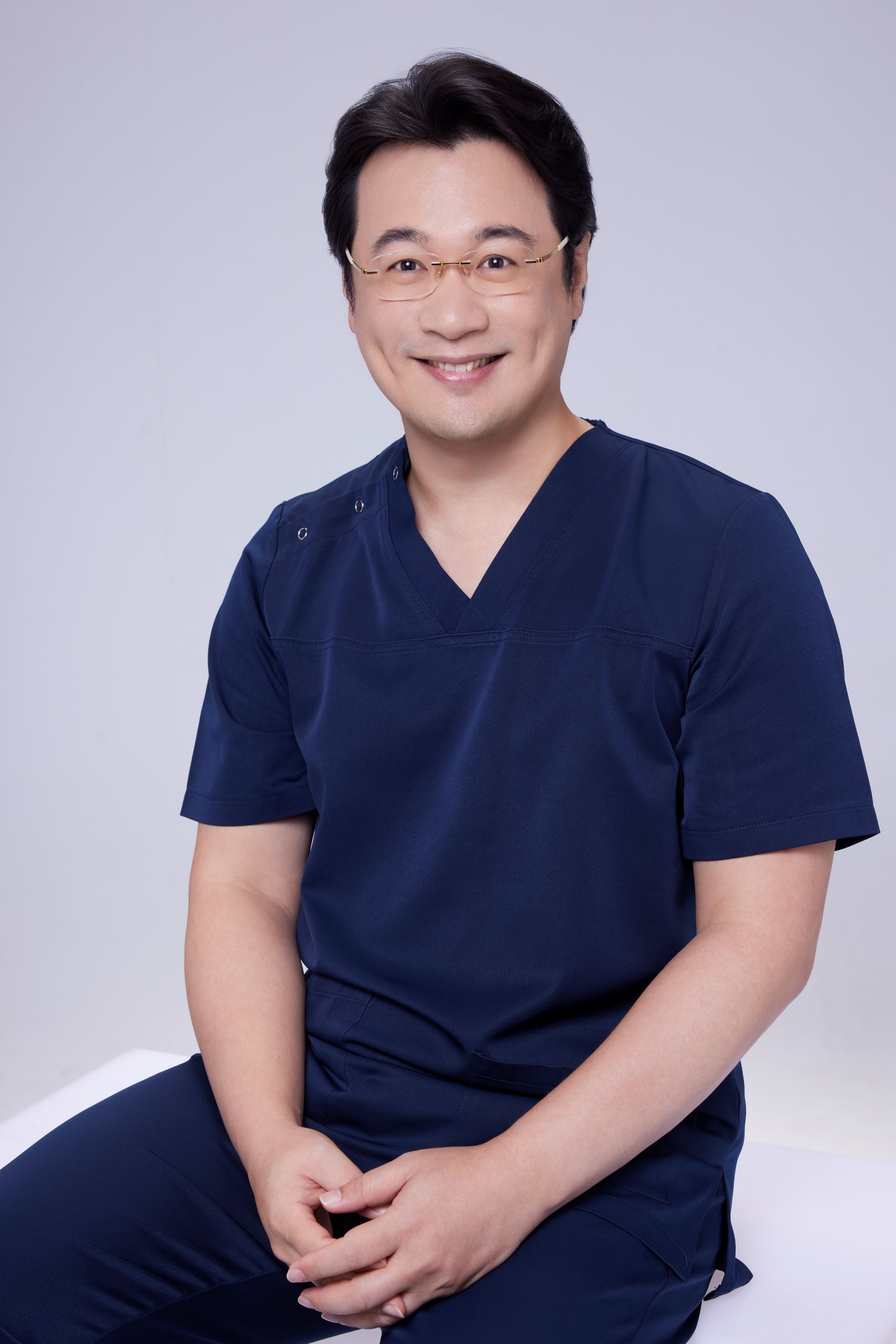
Dr. Ta-Ju Liu
Director, Liusmed Clinic · Over 15 years in minimally-invasive treatment
- Former attending dermatologist, Chang Gung Medical Center & Cosmetic Center
- Board-certified dermatologist · minimally-invasive surgery focus
- Advanced ultrasound-guided procedures · filler complication repair · complete apocrine gland clearance
"You can only treat what you can see" is the core belief running through every procedure I do. The subcutaneous world is intricate; what used to depend on experience and palpation now has a more reliable lens — advanced ultrasound. Seeing vessels, nerves, capsules, and glands first, then deciding where and how deep to cut — that is the standard every patient deserves.
Related Specialties


Unsure How to Classify Your Skin Concern? Let Us Image It First, Then Decide
Liusmed skin-repair specialty — skin, rosacea, melasma, scar, hair regrowth, post-transplant, six programs and one creed: "classification first, four-axis combination, scale tracking."