
Plastic Surgery Repair Authority Guide
Liposuction Rescue, Implant Micro-Adjustment& Fat Grafting Camouflage
Plastic surgery repair doesn't always mean major revision surgery. For crooked nose implants, Dr. Liu at Liusmed Clinic offers "Structural Thread Lifting" to micro-adjust nose shape without implant removal. For visible implant edges or transparency, "Fat Grafting Camouflage" builds a soft tissue cushion. We prioritize minimal incision techniques for liposuction irregularities and plastic surgery complications, helping you regain natural confidence. For capsular contracture after breast augmentation (a hardened breast), we treat the capsule as fibrosis and try to soften it non-surgically under ultrasound.
Why Choose Liusmed for Plastic Revision
Minimal Revision
Problems left by a previous surgery are addressed through minimal approaches.
Even & Symmetric
We improve irregularity and asymmetry to rebuild a natural contour.

Take Over & Follow-Up
We take over issues from elsewhere and value the repair process and follow-up.
Table of Contents

When Beauty Falls Short: A New Approach to Minimal Incision Repair
"Doctor, I don't want to have my nose completely reopened. Is there another way?"
This is the voice of many rhinoplasty revision patients. Having experienced the pain and recovery of one surgery, facing "revision" again brings enormous psychological pressure.
Dr. Ta-Ju Liu's Repair Philosophy: Repair doesn't equal destruction and rebuilding. For many "non-infectious" aesthetic issues (like crookedness, visible edges), we prioritize a Micro-Adjustment strategy. Through thread lifting or fat grafting, we precisely correct flaws without removing implants or creating large wounds, minimizing risk and recovery time.

Minimal Incision First
Avoid unnecessary implant removal, reduce secondary damage

Precise Correction
Target crookedness, transparency, and edge visibility

Lower Risk
Small wounds, short recovery, reduced complication rates
New Options for Rhinoplasty Revision: Micro-Adjustment Without Implant Removal
Traditional rhinoplasty revision typically involves "remove implant → clear capsule → replace implant" - an extensive process. But at Liusmed Clinic, we have smarter solutions for specific problems.

Structural Thread Lifting: Correcting Implant Deviation
Many patients find their nose bridge or tip slightly crooked after surgery, but the implant itself isn't infected.
Using special structural threads (high-tension threads) to create a support network around the nasal soft tissue and implant.
Through thread tension and guidance, "pull back" the crooked nose tip or bridge to the midline and secure it in the correct position.
Advantages

Fat Grafting Camouflage: Solving Edge Visibility & Transparency
Years after rhinoplasty, as skin thins, many notice "visible nasal bone," harsh implant edge lines, or even transparency under sunlight - making it obvious they've had work done.
Extract your own healthy Nano Fat or micro-refined fat.
Precisely inject into the dermal layer between implant and skin, creating a "natural cushion."
Advantages
Liposuction & Body Contour Repair: Smoothing the "Washboard"
Common liposuction failure issues include "washboard-like" irregularities on the abdomen or thighs, or skin adhesion from over-extraction.

Uneven Results from Traditional Liposuction
Wide-area suction disrupts subcutaneous layers, creating washboard appearance.

Fibrotic Adhesion After Laser Lipolysis
Thermal damage causes adhesion and fibrosis, reducing skin mobility.
Liusmed Minimal Incision Repair Strategy
Fibrosis Release
The critical first step. Using minimal incision instruments to "release" subcutaneous adhesive scar tissue, restoring skin mobility.

Micro-Fat Grafting
For over-depressed areas, perform precise micro-filling to restore surface smoothness.
If you're facing hardening issues from fillers, please refer to ourFiller Lump Repair Specialty

Capsular Contracture After Augmentation: Softening the Capsule as Fibrosis
A breast that turns hard, won't move, and won't fall outward when you lie down after an implant is often capsular contracture — the capsule around the implant over-thickening and contracting.
The capsule is essentially a deep fibrosis/scar reaction — the same family as lumps after fat grafting and fibrosis around fillers. Before removing and redoing, we approach it with the same "loosen and soften the fibrosis" thinking.
For suitable Baker II–III cases, ultrasound-guided energy softens and thins the thickened capsule, while capsule thickness is tracked objectively on ultrasound before and after.
Advantages
Honestly: the evidence for non-surgical capsule repair is still emerging and it doesn't suit everyone. Severe distortion, marked pain, or a malpositioned implant may still need surgery.
For full indications, grading and process, see thecapsular contracture non-surgical repair page
Repair Process: Honest Evaluation & Long-term Care

Advanced Imaging
Confirm implant position, deviation degree, and skin thickness.

Treatment Pathway
Micro-adjustment (for mild crookedness, visible edges) or surgical revision (for infection, severe contracture, or implant extrusion).

Honest Communication
Dr. Liu objectively analyzes pros and cons of minimal incision vs. surgery—never operating for the sake of operating.

Long-term Follow-up
Post-repair tissue changes slowly, requiring more patient post-operative care.
The Liusmed Standard: Clean, Even, and Precisely Measured Removal
Many patients have already had liposuction or contouring done elsewhere before coming to Liusmed — but "having had it done" does not mean it was done cleanly, and certainly not evenly. The most common situation we see is a surface left bumpy after liposuction or contour work, sometimes with a brand-new hollow. For us, whether fat can be extracted — or added — was never the point. What truly matters is whether the result is clean, even, and precise enough to be "neither too much nor too little."

Clean Removal
We fully release the adhesions and remove the stubborn mass, leaving no residual fragments that would let unevenness and hardness recur and become harder to fix later.
Even Surface
After treatment the surface stays smooth — no new craters or washboard irregularities. The most common failure is over-removal that creates a fresh hollow; avoiding it takes restraint and feel, not aggressiveness.

Precise, Not Excessive (Fat Grafting in Reverse)
Before we begin, we map out the irregularities across the whole area and account for muscle movement and how things settle once swelling subsides — so exactly the right amount is removed, no more and no less, and any deficit is precisely re-grafted in micro amounts. It is precision fat grafting performed in reverse.
This feel for evenness and precision comes from Dr. Ta-Ju Liu's years of underarm rotary-blade surgery, liposuction-and-grafting, liposuction revision, and the softening of fibrosis around fillers and implants (including capsular contracture after breast augmentation) — drawing on the same judgment of tissue layers and dynamics.
At follow-up one to two months after the procedure, most patients give positive feedback on how even and natural their contours look.
FAQ - Six Essential Questions
Q1: My nose is slightly crooked after surgery—can thread lifting really fix it?
It depends on the cause. If it's due to uneven soft tissue tension or minor implant displacement, "Structural Thread Lifting" using thread tension to guide the nose shape usually works well without reopening. However, severe implant misplacement or significant septal deviation may still require surgical treatment.
Q2: Will fat grafted to the nose absorb quickly?
Nasal fat grafting has good survival rates. We inject fat as a "modification layer" at implant edges or thinned skin areas. Although some absorption occurs, the remaining fat effectively increases skin thickness and improves transparency and edge visibility. Usually after 1-2 sessions, the effect is long-lasting.
Q3: Can post-liposuction irregularities really be fixed?
Significant improvement is possible. Through "fibrosis release" combined with "precise fat grafting," visual smoothness can be achieved. We've treated many severe adhesion cases that other doctors deemed hopeless, all achieving satisfactory improvement.
Q4: My rhinoplasty looks too high and fake—can fat modification help?
Not recommended. If the "fake look" is from an implant that's too high or large, adding fat will only make the nose bigger. Fat modification is suitable for "harsh lines," "visible edges," or "thin skin"—not for masking an oversized implant.
Q5: Is revision surgery high-risk?
Higher than primary surgery, but micro-adjustment is relatively safe. Thread lifting or fat grafting don't damage main structures or blood circulation, making them far safer than traditional open revision surgery.
Q6: I had a nose implant infection before—can I do thread lifting or fat grafting now?
The infection must be fully controlled. If there's currently no redness, swelling, heat, or pain, and the infection has healed for over 6 months, micro-modification can be considered. But if there's potential implant infection risk, we recommend removing the implant first and reconstructing with autologous tissue (dermis, rib cartilage) for maximum safety.
Not sure what is going on? Write it down and ask.
Describe what was injected, when, and what you are seeing now. Dr. Ta-Ju Liu replies in the thread with an educational explanation of what it might be, what needs to be told apart, and which signs mean you should be seen soon. Posting can be anonymous, and other patients with the same problem can read the answer too.
Replies are general health education, not a diagnosis, and do not replace an in-person examination.
About the Author
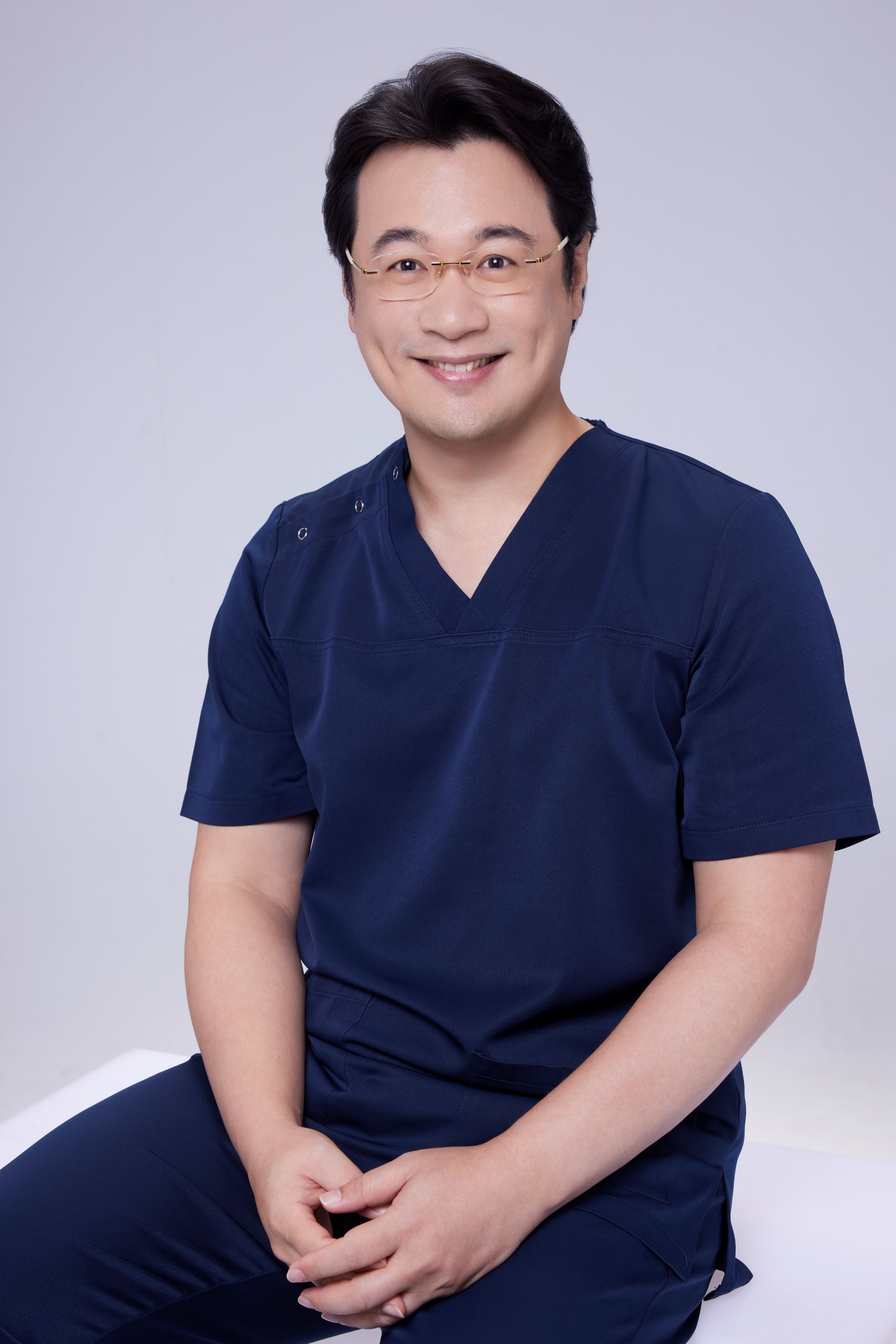
Dr. Ta-Ju Liu
Director, Liusmed Clinic
- Over 15 years of clinical minimal incision surgery experience
- Expert in plastic surgery micro-repair, structural thread lifting for crooked nose, and fat grafting edge modification
- Specializes in using "non-surgical" or "micro-incision" approaches for plastic surgery complications
- Adheres to "honest medicine," providing objective and safe repair solutions
- Board-certified Dermatologist
"Repair doesn't have to be drastic. We achieve maximum repair results with minimal invasive cost, helping you restore natural contours."
Other Repair Services
Plastic Surgery Revision · Minimal Invasion First · No Need to Tear It All Down
Don't tear out the whole implant — precisely tune asymmetry, see-through, and edge visibility
Structural thread correction for nose asymmetry · liposuction dimpling repair · fat-graft edge smoothing
Your Plastic Revision Treatment Includes
Minimal-invasion first · avoid unnecessary second open surgery
70% of cases resolved with conservative reshaping · no implant removal needed
Structural thread correction for nose asymmetry · no implant extraction
Precise refilling of post-liposuction dimples and irregularities
LIUSMED integrated post-op repair system included
Included and aftercare
- Suture Removal Included
- Photo Upload + Online Wound Care Advice
- 14-Day / 1-Mo / 3-Mo Follow-Up
- Post-Op Light Therapy Included
- Post-Op 3-Modality Recovery System Included
Select any item to see its full scope and exclusions
Not sure which approach fits you?
Send a few photos first, or book a consultation directly. How booking works

Don't Let Failed Surgery Trouble You Any Longer
Book a consultation and let us evaluate your situation to discuss the best repair plan. We don't pressure you into surgery—only provide honest advice.
Book Plastic Surgery Revision Consultation