
Post-Transplant Follicle Maintenance
PRP at 1/3/6/12 months · evidence-backed graft survival supportUebel 2006 (+15%) | Kumar 2024 SMD=+0.62 | LLLT + Finasteride/Minoxidil integration
Protection · Cadence · Collaboration

Protect Your Sunk Cost
The sunk cost of a transplant is "transplanted but did not survive." Uebel 2006 split-scalp RCT (Randomized Controlled Trial, the gold-standard treatment-comparison study; PMID:16969279) shows soaking grafts in PRP (Platelet-Rich Plasma, a concentrate of your own blood platelets rich in growth factors) yields ~15% higher survival — 300 more living grafts per 2,000-graft session. Kumar 2024 (DOI:10.1080/09546634.2024.2334088) authors now recommend "PRP as standard adjunct in transplantation."
1/3/6/12-Month Cadence, Literature-Based
Garg 2017 (PMID:28932060) showed patients with PRP at 1, 3, and 6 months had significantly higher 6-month survival density (p<0.05). We follow this cadence and add 12 months as "formal quantitative evaluation point" — providing support across regrowth, consolidation, and long-term maintenance. Not "shots scattered randomly."

Collaborate With Your Transplant Surgeon — No Turf War
Transplants done elsewhere are welcome here for maintenance. Please bring post-op records (graft count, area, date, prior intra-op/post-op PRP history). We will not criticize your original transplant surgeon in your presence — post-op maintenance and original surgery quality are two distinct things with clear separation of responsibility. The best path for most patients is "transplant surgeon + maintenance physician" working in parallel.
Liusmed Clinic — Cross-Specialty Core Principles
From skin tumors to post-transplant maintenance, we hold to "protect your investment, honestly disclose limits." Trichoscopy-quantified tracking, literature-backed timing, and collaboration (not turf war) with your transplant surgeon — supporting your transplant toward a good 12-month result.


You Might Be Experiencing
A transplant is only the start of follicular reconstruction. Transplanted follicles go through telogen effluvium (70-90% shedding in weeks 2-4), then regrowth, reaching final density at 6-12 months. During this window, growth is uneven, blood supply must establish, and scalp heals — maintenance does not "make grafts grow faster" but optimizes the bed environment and protects native hair.
- Just had a transplant, watching "80% of grafts shed" — worried
- Want to maximize graft survival — do not waste a hard-earned investment
- Native hair keeps thinning — worry that grafts will look like "isolated islands"
- Post-transplant density at 6 months below expectation — unclear if technique or maintenance issue
- Considering second transplant — want to optimize scalp conditions first
- Original transplant clinic's post-op maintenance is incomplete — want specialist support


PRP × Mesotherapy × Finasteride/Minoxidil: Three Layers Working Together
Post-transplant success requires three things at once: "graft survival rescue," "microenvironment nutrition," and "native hair defense line." No layer alone is sufficient; the combination is what supports a good 12-month result.
PRP: Life-Saving Growth Factors for Grafts
Newly transplanted follicles undergo ischemia-reperfusion injury — the core cause of post-op shedding. PRP's PDGF (Platelet-Derived Growth Factor, a cell-growth signal) and VEGF (Vascular Endothelial Growth Factor, a new-blood-vessel signal) accelerate vessel regeneration and blood flow restoration; IGF-1 (Insulin-like Growth Factor 1, a growth/repair signal) and EGF signal follicular stem cells to "stay alive and keep growing." Uebel 2006 (PMID:16969279) leveraged this mechanism for ~15% higher survival.

Customized Mesotherapy: Microenvironment Nutrition
Post-transplant scalp blood flow shifts locally and the follicular microenvironment rebuilds. Customized mesotherapy (shallow micro-injection of nutrients and medications; peptides, B-complex, biotin, hyaluronic acid, minerals) is adjusted to your post-op stage and native hair status — e.g., focusing on healing at month 1 vs. density preservation after month 6. Not "pharmacy off-the-shelf" — it is physician-adjusted for you.

Finasteride/Minoxidil: Long-Term Defense for Native Hair
Transplanted follicles from the androgen-resistant occipital area are permanent; native hair remains under DHT (Dihydrotestosterone, the androgen hormone that shrinks follicles) influence. Without continuous foundation therapy post-transplant, you may see at 5-10 years: "graft area density preserved, but surrounding native hair keeps thinning" — making grafts look like "islands" against thinned background. Suchonwanit 2019 (PMID:31496662) shows low-dose oral minoxidil (a topical/oral hair-growth drug) works for topical-intolerant cases.
What the Studies Say — What It Means for You
We surface 4 pivotal studies on "post-transplant PRP maintenance," each with a "what it means for you" — translating academic numbers into the questions you actually bring to clinic.
No Maintenance vs Medication-Only vs With PRP
Each maintenance strategy has its place. This table consolidates Uebel 2006, Garg 2017, Kumar 2024, AAD (American Academy of Dermatology) 2024 so you and your physician share a common vocabulary.
| Item | No Maintenance | Medication-Only | Medication + PRP/Mesotherapy |
|---|---|---|---|
| 6-Month Graft Survival | Surgery-dependent, ~70-85% | Limited effect on existing graft survival | +15% survival density (Uebel 2006) |
| Native Hair 5-Year Trend | Continues thinning; grafts may become "islands" | Significantly slowed thinning | Slowed thinning + increased shaft thickness/density |
| 12-Month Global Satisfaction | ★★★ | ★★★★ | ★★★★★(Garg 2017) |
| Additional Cost (12 months) | Baseline (none) | Low increment | Mid-high increment |
| vs Transplant Investment | — | ~5% | ~15-25% (protect transplant investment) |
Key Insight: A hair transplant is a substantial long-term investment; reinvesting about 15-25% to protect it is reasonable — like buying a luxury car and not changing the oil. Uebel 2006 proved years ago that PRP improves survival ~15%; if your 2,000 grafts have 300 more living follicles and the 12-month density gap is visible, the impact on "global satisfaction" is overwhelming.
Why Liusmed Clinic Recommends "1/3/6/12-Month Cadence + Three-Layer Integration"
We do not push "scattershot" irregular maintenance — literature has already told us the optimal cadence and combination. The two axes behind our choice: literature support and clinical observation.
Literature Support
- ·Uebel 2006 (PMID:16969279, split-scalp RCT): grafts soaked in PRP +18.7 follicles/cm² vs control 16.4 (p<0.001, +15.1%). The earliest and most-cited PRP RCT in transplant literature.
- ·Garg 2017 (PMID:28932060): post-op PRP at months 1, 3, 6 — significantly higher 6-month survival density (p<0.05). Our 1/3/6/12-month cadence directly stems from this plus month 12 as formal evaluation point.
- ·Kumar 2024 (DOI:10.1080/09546634.2024.2334088, 8 controlled studies): overall survival density SMD = +0.62 (p<0.001). **Authors recommend PRP as standard transplant adjunct** — no longer a luxury option.
- ·Suchonwanit 2019 (PMID:31496662): low-dose oral minoxidil works for topical-intolerant cases — especially useful for post-transplant patients with sensitive scalps.
- ·AAD 2024 guidelines: low-level laser therapy (LLLT) is a strong-recommendation foundation; can be integrated with PRP as a dual-axis post-transplant maintenance combination.
Dr. Liu — Clinical Observations
- ·Clinically, "no maintenance" patients at 5 years often present with "graft area still OK but surrounding native hair keeps thinning" — making grafts look like "islands." We discuss this honestly at first visit to calibrate expectations.
- ·On "inadequate PRP concentration," we look at the platelet dose actually injected, not just the concentration multiple. Bensa 2025, a knee study, links platelet dose to effect; on the scalp we record blood volume drawn, final volume, and leukocyte content (LR or LP) each session, then adjust against hair changes at follow-up.
- ·For "6-month density below expectation" patients, we do not immediately suggest "redo the transplant." First, trichoscopy quantification rules out infection, scab band ischemia, prolonged telogen, undiagnosed cicatricial alopecia, and other reversible causes. Most cases warrant intensified maintenance + waiting for 12-month formal evaluation as the responsible path.
- ·We will not criticize your original transplant surgeon in your presence — post-op maintenance and surgery quality are two distinct things with clear separation. The best path for most patients is "transplant surgeon + maintenance physician" working in parallel. We suggest you return to the transplant surgeon for first post-op visit, then come to our clinic for long-term maintenance.
- ·We use trichoscopy counts, graft area density, shaft thickness, and global photos for formal 6 and 12-month quantitative evaluation — not subjective "feels thicker." Updated each follow-up — patients themselves end up valuing this most.
We did not pick the "newest, flashiest therapy" — we picked the combination with solid current evidence, alignment with our cross-specialty philosophy, and a strong chance of supporting your transplant toward a good 12-month result.
12-Month Maintenance Process
From month 1 to month 12 post-op, five stages ensuring graft survival and lasting effect

Post-op Initial Eval
Post-op records + trichoscopy baseline

Month 1 PRP
Telogen effluvium support, accelerated healing

Month 3 PRP
Regrowth support, density initiation

Month 6 PRP + Eval
Consolidation + quantified progress

Month 12 Final Eval
Formal quantification, transition to maintenance
Clinical Evidence & References
PRP is performed under Taiwan's Special Medical Technology Regulations, limited to qualified institutions and personnel; our clinic complies. Finasteride and oral minoxidil are prescription medications requiring physician evaluation. High-quality evidence (Uebel 2006, Garg 2017, Kumar 2024, Suchonwanit 2019, Gentile 2019) continues to strengthen the clinical basis for post-transplant maintenance. We track each patient objectively via trichoscopy counts, graft area density, shaft thickness, and global photos.
- [1]OCEBM 1b2006
Uebel CO, et al.. The Role of Platelet Plasma Growth Factors in Male Pattern Baldness Surgery. Plast Reconstr Surg 118(6):1458-1466.
Split-scalp RCT (n=20): grafts soaked in PRP showed +18.7 follicles/cm² density vs 16.4 control (p<0.001, +15.1%) at 6 months; effect stable thereafter. The earliest and most widely-cited PRP RCT in transplant literature.
PMID: 16969279 - [2]OCEBM 2b2017
Garg AK, et al.. Comparative Efficacy of Platelet-Rich Plasma in Combination with Hair Transplantation: A Quantitative Comparative Study. J Cutan Aesthet Surg 10(4):201-205.
Comparative study: post-op PRP (months 1, 3, 6) vs standard care — significantly higher 6-month follicle survival density (p<0.05); shaft thickness and global appearance satisfaction also favored PRP. Shedding phase shortened.
PMID: 28932060 - [3]OCEBM 1a2024
Kumar R, et al.. Platelet-Rich Plasma in Hair Transplantation: A Systematic Review and Meta-Analysis. J Dermatolog Treat 35(1):2334088.
8 controlled studies pooled: overall follicle survival density SMD = +0.62 (SMD = Standardized Mean Difference, a unified effect-size across studies; 95% CI 0.38–0.86, CI = Confidence Interval, the range of likely true values; p<0.001); patient satisfaction also favors PRP. **Authors recommend PRP as standard adjunct in transplantation**.
DOI: 10.1080/09546634.2024.2334088 - [4]OCEBM 1b2019
Suchonwanit P, et al.. Minoxidil and Its Use in Hair Disorders: A Review. Drug Des Devel Ther 13:2777-2786.
5% topical minoxidil is first-line foundation for both male and female AGA; low-dose oral minoxidil (0.25-2.5 mg/day) shows efficacy in post-transplant patients intolerant to topical — requires prescription and BP monitoring.
PMID: 31496662 - [5]OCEBM 1a2019
Gentile P, Garcovich S. Systematic Review — The Effectiveness of PRP in Hair Restoration: A Meta-Analysis. Cells 8(5):466.
Systematic review (2010-2018): PRP shows significant improvement in shaft density and thickness across both transplant adjunct and AGA monotherapy uses; heterogeneity primarily from PRP preparation differences.
PMID: 31100937
Our Commitment to Honest Disclosure
Every procedure deserves your full understanding before deciding. The following summarizes common considerations and current research context; individual applicability is evaluated by the physician so you can proceed with confidence.
Contraindications
- •Within 7 days post-op (unhealed wounds)
- •Active infection in transplant area or other scalp regions
- •Severe coagulopathy, uncontrolled anticoagulant therapy
- •Active malignancy, hematologic malignancy
- •Unexplained transplant failure (rule out other systemic causes first)
Common Side Effects
- •PRP: transient site pain, redness (5-10%, resolves in 24h)
- •Transient sensitivity in graft area (grafts are superficial; injection depth must be adjusted)
- •Minoxidil topical: scalp itching, irritant contact dermatitis, initial shedding
- •Finasteride (an oral anti-hair-loss drug) oral: < 4% sexual side effects, mostly reversible
Research Status & Clinical Observations
- •Evidence primarily from split-scalp designs and smaller RCTs (Uebel 2006, Garg 2017). Kumar 2024 meta pooled 8 controlled studies with strong effect size, but PRP preparation heterogeneity across studies remains a literature limitation. We prepare both leukocyte-rich (LR-PRP) and leukocyte-poor PRP (LP-PRP, PRP filtered to remove white blood cells for gentler inflammation), choosing by graft area and scalp condition; the concentration multiple is not fixed at a single value.
- •Graft survival is never 100%: even with full PRP maintenance, some "natural shedding" and "individual non-survival" remains. Best evidence shows PRP improves survival ~+15% ("near 100%" is unrealistic). Each patient's baseline, follicle quality, surgical technique, and post-op behavior all affect outcomes. We use the most evidence-backed approach to bring survival as high as is realistically achievable.
- •"Maintenance cannot rescue serious technique flaws": incorrect graft angle, uneven density, or high follicle damage cannot be reversed by PRP. Maintenance is "additive on top of a good surgery," not "rescue for a poor one." We give honest objective evaluation of your scalp.
What Your Plan Is Made Of
| Item | How Cost Is Explained | Notes |
|---|---|---|
| Post-transplant initial evaluation (trichoscopy + status review) | Discussed case-by-case after evaluation | — |
| Single PRP scalp injection (LP or LR chosen by scalp condition) | Discussed case-by-case after evaluation | Bundled pricing for 4-session 1/3/6/12-month cadence |
| Customized mesotherapy injection (per session) | Discussed case-by-case after evaluation | — |
| Finasteride / Minoxidil prescription (one month) | Discussed case-by-case after evaluation | Varies by formulation and pharmacy source |
| 12-month formal quantitative evaluation | Included in protocol | — |
Actual pricing depends on individual symptoms, treatment count, and custom formulation — explained on a case-by-case basis via LINE consultation or in-person visit. The physician walks you through the treatment and the reasoning behind it for your individual situation.
FAQ
Is PRP maintenance mandatory after a hair transplant?
How soon after transplant can I start PRP?
Why the 1/3/6/12-month cadence?
How much does maintenance cost? Is it cheaper than surgery?
When can I stop maintenance?
I had my transplant elsewhere — can I do maintenance here?
What if new grafts do not grow?
Can PRP be combined with low-level laser therapy (LLLT)?
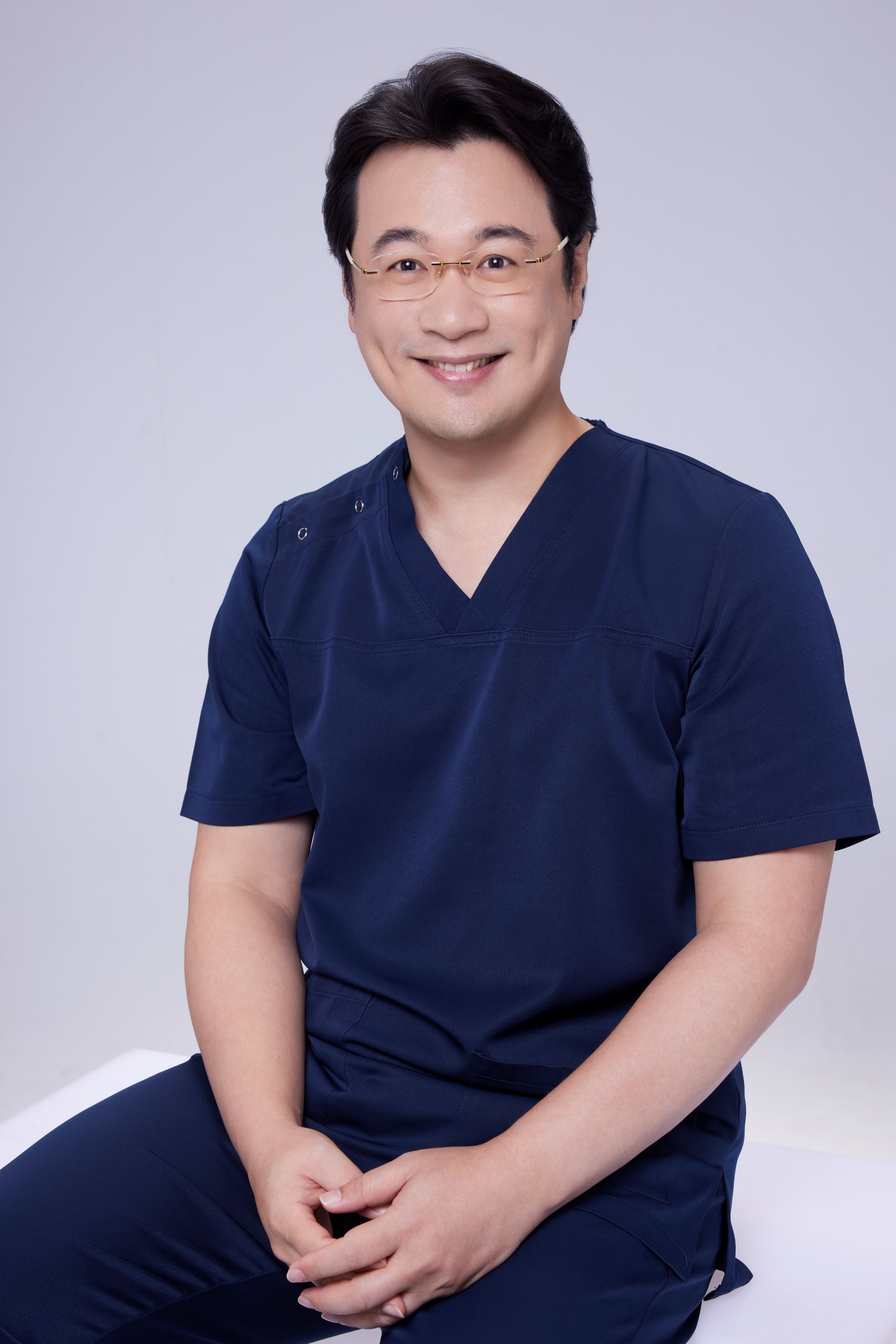
Dr. Ta-Ju Liu
Director, Liusmed Clinic · Over 15 years in minimally-invasive treatment
- Former attending dermatologist, Chang Gung Medical Center & Cosmetic Center
- Board-certified dermatologist · minimally-invasive surgery focus
- Advanced ultrasound-guided procedures · filler complication repair · complete apocrine gland clearance
"You can only treat what you can see" is the core belief running through every procedure I do. The subcutaneous world is intricate; what used to depend on experience and palpation now has a more reliable lens — advanced ultrasound. Seeing vessels, nerves, capsules, and glands first, then deciding where and how deep to cut — that is the standard every patient deserves.
One Transplant, One Case — Let Us First See Clearly with Trichoscopy, Then Plan 12-Month Maintenance
We do not push "fixed packages." Every PRP concentration, mesotherapy formulation, and monthly cadence is designed for your post-op status and trichoscopy quantification. Start with LINE consultation or book a face-to-face visit.
Post-Transplant 3 / 6 / 12-Month PRP · Maximize Graft Survival
Transplant success ≠ permanent success · 3 / 6 / 12-month PRP is the key to long-term density
Uebel 2006 + Garg 2017 confirm PRP significantly improves graft survival and 6-12 month density · we partner with your transplant team
Your Post-Transplant Maintenance Treatment Includes
Month-3 PRP · boosts initial graft survival
Uebel 2006 reports significant survival improvement with early PRP
Month-6 PRP · density stabilization phase augmentation
Month-12 PRP · long-term density and thickness maintenance
Garg 2017 RCT confirms significant 6-12 month density difference
Cooperation, not competition, with your original transplant team
No criticism of original surgeon · long-term maintenance specialist layer
Included and aftercare
Select any item to see its full scope and exclusions
Not sure which approach fits you?
Send a few photos first, or book a consultation directly. How booking works