
Non-Laser Rosacea Skin Remodeling Injection
Treating Rosacea Redness from Three Angles: Inflammation, Blood Vessels, and the Dermis
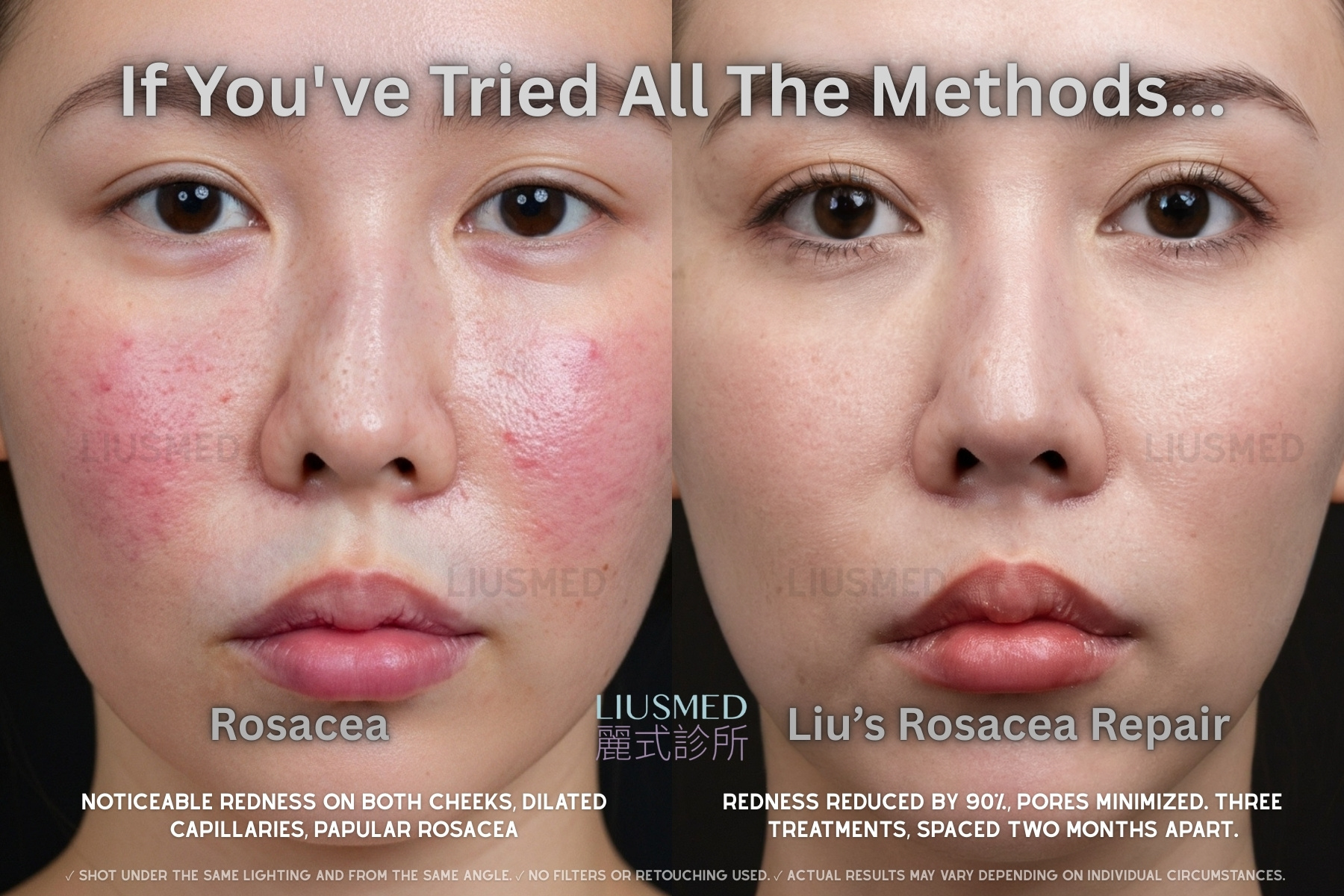
Recurring rosacea is linked to neurovascular overreaction, inflammation, and a weakened skin barrier, not only to surface blood vessels. The Liusmed rosacea injection hand-delivers tranexamic acid, microbotox, and repair factors into the dermis, aiming to reduce flushing and inflammation and let the barrier recover gradually. Results and relapse vary by individual.
Why Choose Liusmed for Rosacea

Low-Irritation Formula
Rosacea skin is sensitive; a low-irritation approach reduces flare-ups of redness.

Formula by Subtype
Calming and repair-oriented ingredients are designed by rosacea subtype.

Honest Expectations
We honestly explain what improves and what needs long-term control.
Table of Contents
We Understand Your Anxiety: Why Rosacea Never Seems to Heal
Dr. Liu, my face hurts so much I can't sleep.
I've had dozens of laser treatments - why does everything reset the moment I'm in the sun?
This is a desperate cycle of "hope and destruction." Many rosacea patients spend their lives searching for a relapse-free miracle. For some, the treatment direction never matched and the skin grew more sensitive; others relied on topical creams for so long that steroid dependency, Soolantra purging, and Demodex overgrowth ended up overlapping.
Why Does Rosacea Never Seem to Heal?
Rosacea is more than dilated capillaries. Neurovascular overreaction, inflammation, and dermal damage from enzymes such as MMP-9 all play a part. Treat only the surface vessels, and a trigger can still bring the redness back. When the dermal "soil" is riddled with damage, weeds pulled on the surface (vessels treated) can grow back as soon as the wind blows (external triggers).

Are You Experiencing These Issues?


Please don't panic - this is not your fault. Rosacea can be well controlled.
Triple Reconstruction Mechanism
Each of the three components addresses a different link in the chain

Tranexamic Acid (TXA): Lowering Pro-Angiogenic Signals
Beyond its use for melasma, tranexamic acid has been shown in laboratory studies to lower signals such as VEGF that promote new blood vessel growth. We inject it directly into the dermis, with the goal of reducing new abnormal vessel formation.

Microbotox: Easing Neurogenic Flushing
Ultra-low doses of botulinum toxin are spread evenly across the superficial dermis to calm overreactive nerve and blood vessel responses. Small randomized trials have shown improvement in flushing and redness. The effect usually builds gradually over a few weeks and wears off after about 3-6 months, so maintenance is needed.

Repair Factors: Helping the Damaged Dermis Recover
The growth factors in PRP aim to stimulate fibroblasts to produce new collagen, helping thinned, damaged dermis gradually regain its resilience.
How Injection Differs from Pulsed Dye Laser
The two approaches address different parts of the problem. Here is how they compare:
| Comparison | Pulsed Dye Laser (PDL) | Liusmed Rosacea Injection (Hand-Delivered Mesotherapy) |
|---|---|---|
| How It Works | Light energy targets hemoglobin in blood vessels, causing dilated vessels to shrink and close | Tranexamic acid, microbotox, and PRP are injected into the dermis |
| Main Symptoms Addressed | Persistent redness and visible blood vessels; the most researched option | Flushing, burning or stinging, and persistent redness (microbotox has small randomized trials; tranexamic acid and PRP mostly small studies) |
| Heat & Post-Treatment Reactions | Uses heat; temporary redness and swelling possible, and PDL may cause purpura | No heat; pinpoint marks, temporary redness, swelling, and bruising possible |
| After Stopping Treatment | Rosacea is chronic; it can return and needs maintenance | It can also return; microbotox effects wear off after about 3-6 months |
| When to Consider | Mainly visible blood vessels | Prominent flushing and stinging, or skin currently too sensitive for light- or heat-based treatment; the two can be combined depending on the situation |
Treatment Process & Real Expectations
Advanced Skin Assessment
Evaluate dermal inflammation severity, microvascular proliferation, and Demodex mite status.
Custom Formula Preparation
Tailor-mix the ratio of PRP, tranexamic acid, and Microbotox based on rosacea subtype.

Artisan Hand-Delivered Precision Injection
Under gentle pain-relief anesthesia, the physician uses a manual technique, avoiding fragile nerves, to layer the formula into the damaged dermis.
Post-Treatment Calming Repair
Medical-grade post-procedure care. Tiny wheals usually subside within a few days; changes in skin quality depend on the treatment course and the individual.
Expert Clinic FAQ
Q1Is the hand-delivered injection very painful? Do you use numbing cream?
For rosacea injections we never apply topical numbing cream and use gentle pain relief instead, for two reasons: numbing cream cannot really block the pain of injection, and rosacea skin may react to it with an allergy or become even more sensitive. Gentle pain-relief anesthesia can substantially reduce discomfort during injection, and the physician can talk with you and adjust at any time. Rosacea and skin-booster injections are usually given with intravenous gentle pain relief, so please fast beforehand, bring a relative or friend, do not drive or ride yourself, and confirm with the front desk.
Q2How often should I get treated? How many sessions to see results?
Treatment is usually every 3 to 4 weeks, and a full course is typically 3 to 6 sessions, depending on severity. In Dr. Liu's experience, many people notice flushing and stinging becoming less frequent within the first few sessions. This reflects our clinic's experience; results vary by individual.
Q3I'm currently using topical steroids and oral antibiotics - can I stop during treatment?
Please don't stop suddenly on your own. Abrupt steroid withdrawal can trigger a significant rebound. We design a "step-down tapering" plan, with the ultimate goal of safely weaning off steroids.
Q4Will I experience a terrible "breakout period" after injection treatment?
The injection uses no heat and focuses on reducing inflammation. Studies have found that microbotox can reduce sebum production. Responses vary by individual; if you break out after treatment, please come back so we can manage it.
Q5My face has been damaged by lasers and become ultra-sensitive - can I still do this injection?
We can evaluate you. For skin that has been thinned and become very sensitive, we start with more conservative doses, aiming to reduce inflammation and help the dermis recover gradually. If there is active acute inflammation, we treat that first.
Q6Is there recovery time after injection? When can I wash my face and wear makeup?
On the day of treatment, you'll have tiny needle marks with mild redness and swelling, which typically subside within 24 to 48 hours. You can wash your face with lukewarm water and apply physical sunscreen the very next day.

About the Author
Dr. Ta-Ju Liu
Director, Liusmed Clinic
Specialties:
True treatment is about restoring the skin to a healthy ecosystem. We choose repair over destruction and walk with each patient as their skin gradually regains its health.
Other Repair Services
Non-Laser Rosacea Reshape · Microbotox + TXA + PRP
Addressing rosacea redness from three angles: inflammation, blood vessels, and the skin barrier
Microbotox eases neurogenic flushing + TXA and PRP aim to lower pro-angiogenic signals and support dermal recovery · no heat
Your Rosacea Repair Treatment Includes
Microbotox: eases neurogenic flushing
Small randomized trials show reduced flushing and redness
Tranexamic acid (TXA): aims to lower pro-angiogenic signals
PRP repair factors: aim to help the damaged dermis recover
Three components combined, adjusted by subtype
Included and aftercare
Select any item to see its full scope and exclusions
Not sure which approach fits you?
Send a few photos first, or book a consultation directly. How booking works
Bring Rosacea Redness Under Control
You don't have to fight the burning and sensitivity alone
Let us help you reclaim a calm, healthy complexion
Book Rosacea Consultation