
Temporal Lift
For a drooping brow tail, outer eye and lateral hoodingIncision hidden in the hairline | Superficial temporal artery marked by ultrasound | Fixed to the deep temporal fascia | Taipei Xinyi · Kaohsiung Wenkang
Who is a temporal lift for?
It suits people whose problem is concentrated beside the eyes: a drooping brow tail, a drooping outer eye, or outer upper-eyelid hooding caused by the brow tail pressing down, with laxity already beyond what threads or radiofrequency/ultrasound can handle. The incision is hidden inside the temporal hairline, the surgery is done under local anesthesia plus gentle pain-relief anesthesia, and stitches come out at about 14 days. If the whole brow is low, forehead lines are deep, or the lower face clearly sags, a different procedure is needed.
Hidden · Seen · Held
Incision Hidden in the Hairline
The incision sits inside the temporal hairline, about 5 to 7 cm per side, cut at an angle so hair follicles can grow through the scar; there is no incision on the face. Hairline height, forehead length and hair density differ, so the incision design is reviewed with you before surgery.
See It Before Operating
The frontal branch of the facial nerve and the superficial temporal artery run beneath that small area of the temple. Before surgery we mark the artery with ultrasound and check for any filler or threads placed earlier, then decide the incision and dissection plane.

Fix the Fascia, Not Skin Tension
Dissection runs in two planes, subcutaneous and on the surface of the superficial layer of the deep temporal fascia, and the temporoparietal fascia with the soft tissue above it is fixed upward and outward to the deep temporal fascia. The fascia is what is fixed and the skin follows; pulling only the skin puts all the tension on the incision, widening the scar and making the position harder to hold.
You Might Be Experiencing
Laxity at the outer eye is often treated as an eyelid problem, and after upper-eyelid surgery the brow tail is still low. The starting point is often higher and further out, in the temple: the soft tissue there slides down, the brow tail follows, and the outer-eye skin is pulled down with it. Lift the brow first, then judge the eyelid.
- The brow tail sits lower than the head of the brow; the brow looks flat or curves down
- The outer eye corner has dropped and people say you look stern or tired
- A fold of skin at the outer eye covers your eyeliner and outer lashes
- You have had upper-eyelid surgery, but the brow tail is still low
- Hollow temples together with a drooping brow tail; in profile the outer brow bone looks sunken
- You have had threads or radiofrequency/ultrasound, but the brow-tail laxity is still beyond what they can handle
A Narrow Area With a Lot Inside
Where the frontal branch is, how the superficial temporal artery runs, and whether anything was placed before: these three are settled before surgery, not searched for after opening.

Why the Brow Tail Drops First
The inner and middle brow are held up by the frontalis muscle, but the outer third has no frontalis over it and relies only on temporal soft tissue and ligaments. When temporal fat and fascia loosen, the outer brow drops earlier than the inner brow and pushes the outer upper-eyelid skin down into a fold at the outer eye. This is pseudo-hooding: the skin is not necessarily excessive; what is above it has come down.

Which Layer the Frontal Branch Runs In
The frontal branch of the facial nerve runs obliquely across the temple from in front of the ear toward the outer brow; it raises the brow, its course varies between people, and it lies within or on the underside of the temporoparietal fascia. So dissection stays either above that fascia or directly on the superficial layer of the deep temporal fascia, keeping the nerve inside the raised flap, never vaguely in the middle of the temporoparietal fascia. The sentinel vein near the outer eye is a landmark that the nerve is close by.

The Superficial Temporal Artery and Prior Material
The pulse you can feel at the temple is the superficial temporal artery; it and its accompanying vein run superficially across the temple, and injuring them during dissection raises the chance of a post-operative hematoma. The temple is also a common site for filler and threads, and earlier material changes the layers. Ultrasound marks the artery and any old material before surgery, so their positions are known before anything is opened.
Temporal Lift vs Endoscopic Forehead Lift vs Facelift vs Thread Lift vs RF/Ultrasound
| Item | Temporal lift | Endoscopic forehead lift | Facelift | Thread lift | RF / ultrasound |
|---|---|---|---|---|---|
| Area treated | Brow tail, outer eye, outer upper eyelid, temple | Whole brow, forehead, between the brows | Midface, jawline, neck | Wherever the threads are directed | Skin quality and tightening from superficial layers to fascia |
| Incision | Inside the temporal hairline | Several small scalp incisions | In front of and behind the ear, into the hairline | Needle entry points | None |
| How it works | Refixes the fascia; can remove excess skin | Lifts the whole brow above or below the periosteum | Elevates and fixes the SMAS, removes skin | Barbs suspend tissue, limited by what the threads can carry | Heat drives collagen contraction and renewal; little change in position |
| Better suited to | Problems concentrated beside the eyes, with laxity beyond threads and energy devices | The whole brow is low; many forehead lines | Clear lower-face sagging, neck laxity | Mild to moderate, tissue still near its original position | Reduced firmness, mild laxity |
| Watch-outs | Frontal branch, superficial temporal artery, hairline scar | The lower face is outside its scope | Brow tail and upper eyelid need separate assessment | The temple is vascular; needle paths must avoid the superficial temporal artery | The temporal branch is shallow; energy depth must be right |
Key Insight: Use the tool that matches the layer where the problem is. How much the brow tail has dropped sets the ceiling for threads and energy devices; beyond that line is where a temporal lift comes in. If the laxity is still mild, there is no need to jump to surgery just to be thorough.
What the Studies Say — What It Means for You
The two most-cited case series on the temporal lift: one on the original technique and its complications, one on 923 cases with long-term follow-up.
Surgical Process
Marking is done sitting up: lying down lets the temple tissue slide back and the brow tail rise on its own

Sitting-Up Assessment
Brow-tail and outer-eye position, lift direction

Ultrasound Marking
Superficial temporal artery and prior material

Anesthesia
Local anesthesia plus gentle pain-relief anesthesia

Hairline Incision · Fascial Fixation
Temporoparietal fascia fixed to deep temporal fascia; excess skin trimmed

Follow-Up and Stitches
Dressing off next day; stitches at about 14 days
Clinical Evidence & References
The temporal-lift literature consists of case series and expert reviews, with no randomized trials; the studies differ in scope, anesthesia and follow-up, so their figures are reference ranges only. At our clinic, temporal lifts are performed by Dr. Ta-Ju Liu at the Taipei Xinyi (Main) and Kaohsiung Wenkang clinics.
- [1]OCEBM 42003
Fogli AL. Temporal Lift by Galeapexy: A Review of 270 Cases. Aesthetic Plast Surg 27(3):159-165.
Review of 270 patients (1996–2002, mean age 45): through a temporal incision, the temporal galeal layer is anchored upward to the temporal aponeurosis to correct a ptotic brow tail and crow's feet, all under local anesthesia. 225 rated very good to good, 13 average, 13 unsatisfactory; 5 unilateral hematomas needed evacuation, 4 had temporary alopecia, and 8 had temporary frontal-muscle weakness that resolved within 1–3 months.
PMID: 14534826 - [2]OCEBM 42015
Verpaele AM, Tonnard PL, Hamdi M. Long-term Use of the Fogli Temporal Lift Technique. Plast Reconstr Surg 135(2):282e-290e.
One team, 8+ years, 923 cases (20% isolated temporal lift, 80% combined with a minimal-access cranial suspension lift): among patients followed 5 years or more, lateral hooding and brow position were markedly improved in over 90%, relapse after 5 years was under 10%, and the complication rate was under 5%.
PMID: 25502857 - [3]OCEBM 42025
Şirinoğlu H, Ergün Tatar B, Güvercin E. Long Terms Results of Temporal Facelift: 6 Years of Experience in 250 Cases. J Craniofac Surg 36(2):e188-e192.
250 cases (mean age 37): temporary unilateral frontal-branch weakness in 5.6%, resolving on its own within a mean of 2.8 months; 2.4% had revision surgery; no hematoma, necrosis or infection observed. This technique combines a deep-plane midface lift and canthopexy under general anesthesia, a larger scope than our temporal lift, so the figures do not transfer directly.
PMID: 39641911 - [4]OCEBM 52022
Savetsky IL, Cohen JM, Matarasso A. Subcutaneous Lateral Temporal Lift. Clin Plast Surg 49(3):365-375.
A senior author's review of moving from the open coronal and anterior-hairline approaches through the endoscopic brow lift to the subcutaneous lateral temporal lift: lateral brow position is central to forehead rejuvenation, and the subcutaneous lateral temporal lift elevates it reliably and safely.
PMID: 35710152
Our Commitment to Honest Disclosure
Every procedure deserves your full understanding before deciding. The following summarizes common considerations and current research context; individual applicability is evaluated by the physician so you can proceed with confidence.
Contraindications
- •Pregnancy or breastfeeding: surgery is generally postponed
- •Anticoagulants, antiplatelet drugs or some supplements: the temple is vascular and hematoma risk rises; tell the doctor first and do not stop them on your own
- •A high hairline, long forehead or thin hair: whether the incision can be hidden, or should sit on the hairline instead, changes the design
- •Previous lifts, threads or filler in the temple, forehead or brow tail: ultrasound confirms the material and layer first, and old material is dealt with first if needed
- •Incomplete eye closure, dry eye or thyroid eye disease: changing the brow-tail and outer-eye position can affect closure and dryness, so an ophthalmologist or your treating doctor assesses this first
- •Smoking, a keloid tendency, or poorly controlled hypertension or diabetes: these affect healing and bleeding, so stopping smoking or coordinating with your treating doctor comes first
Common Side Effects
- •Swelling and bruising of the temple and eye area, sometimes spreading down to the outer eye and cheek; tightness at the scalp incision
- •Numbness or reduced sensation of the scalp and outer forehead from disturbed small sensory nerves, mostly recovering gradually
- •Sides settling at different speeds, with temporary brow asymmetry during recovery; temporary thinning of hair around the incision, which usually grows back
- •Hematoma: rapid swelling on one side, increasing pain, tight shiny skin — return immediately
- •Stretch or injury of the frontal branch: weakness raising one brow, usually temporary but slow to recover, needing follow-up
- •Incision infection or opening, a widened scar or no hair regrowth along it, persistent numbness, and relapse or uneven height needing adjustment
Research Status & Clinical Observations
- •Long-term data come mostly from single-team retrospective case series (Fogli 2003, Verpaele 2015) without randomized controls, and each team's technique differs in detail from ours.
- •A temporal lift treats only the area beside the eyes: central forehead lines, the area between the brows, under-eye issues and the mid and lower face do not change. If the whole brow is low or the lower face clearly sags, the lift can make laxity elsewhere more noticeable, so this is reviewed before surgery.
- •Over-lifting makes the brow tail too high and the eyes look surprised, and the two sides are often not symmetric to begin with. Both are reviewed and recorded during the sitting-up marking before surgery.
When to Seek Care Right Away
Most swelling, bruising and numbness settle with time. If any of the following happens, do not wait:
- Rapid one-sided swelling: one temple or eye area becomes markedly swollen, firm and increasingly painful within a short time
- Vision changes: blurred or double vision, pain moving the eye, or the eye too swollen to open
- Abnormal skin colour: unusually pale or dark purple skin, or a net-like pattern, at the temple or around the incision
- Brow weakness: one brow cannot be raised at all and one side of the forehead has no lines
- Signs of infection: a red, swollen, hot, painful incision, discharge or fever
- The eye will not close or stays dry: the white shows when closing, or stinging dryness does not improve
What Your Plan Is Made Of
| Item | How Cost Is Explained | Notes |
|---|---|---|
| Initial assessment (brow tail, outer eye, upper eyelid and temple, sitting upright) | Discussed case-by-case after in-person evaluation | — |
| Temporal lift (including pre-operative ultrasound marking) | Discussed case-by-case after in-person evaluation | Varies with one or both sides and the incision design |
| Combined lower-eyelid surgery or fat grafting in the same session | Discussed case-by-case after in-person evaluation | — |
Actual pricing depends on individual symptoms, treatment count, and custom formulation — explained on a case-by-case basis via LINE consultation or in-person visit. The physician walks you through the treatment and the reasoning behind it for your individual situation.
FAQ
What is a temporal lift, and how is it different from a full facelift?
Is the fold at the outer corner of my eye a drooping brow tail or loose upper-eyelid skin?
Where is the incision, and will the scar show?
What kind of anesthesia is used?
How do I care for it afterwards, and when are the stitches removed?
Temporal lift, thread lift, or radiofrequency/ultrasound — how do I choose?
My temples are hollow and sagging — should I have fat grafting or a lift? Can they be combined?
How long do the results last?
Where is it performed?
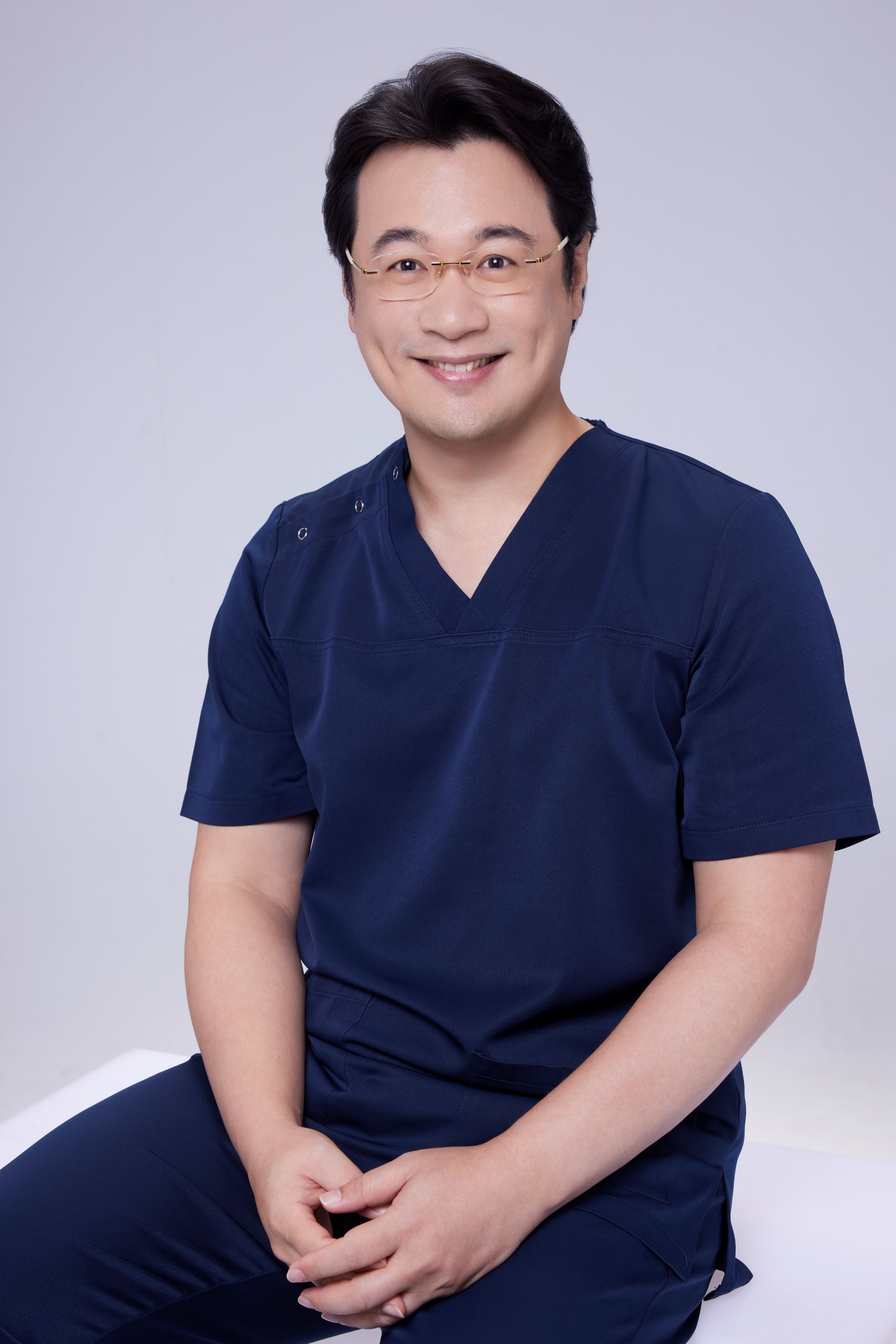
Dr. Ta-Ju Liu
Director, Liusmed Clinic · Over 15 years in minimally-invasive treatment
- Former attending dermatologist, Chang Gung Medical Center & Cosmetic Center
- Board-certified dermatologist · minimally-invasive surgery focus
- Advanced ultrasound-guided procedures · filler complication repair · complete apocrine gland clearance
"You can only treat what you can see" is the core belief running through every procedure I do. The subcutaneous world is intricate; what used to depend on experience and palpation now has a more reliable lens — advanced ultrasound. Seeing vessels, nerves, capsules, and glands first, then deciding where and how deep to cut — that is the standard every patient deserves.
First See Where Your Brow Tail Sits, Then Decide Whether and How Much to Lift
We look at the brow tail, outer eye, upper eyelid and temple together before choosing a temporal lift, threads, fat grafting or a combination. Start with a LINE consultation or book an in-person visit.
Temporal Lift · Hairline-Hidden Incision · Fascial Fixation
Put the sagging temporal fascia back, and the skin follows
For a drooping brow tail, outer eye and lateral hooding · marked sitting upright · superficial temporal artery marked by ultrasound · local anesthesia plus gentle pain-relief anesthesia
Your Temporal Lift Includes
Assessment and marking while sitting upright
Temple tissue slides back when you lie down, so marking is done sitting
Ultrasound marking of the superficial temporal artery
Also checks for existing filler or threads in the temple
Hairline incision · fascial fixation · excess skin trimmed
Dressing removed next day · stitches out at about 14 days
Included and aftercare
- Suture Removal Included
- Photo Upload + Online Wound Care Advice
- 14-Day / 1-Mo / 3-Mo Follow-Up
- Post-Op Light Therapy Included
Select any item to see its full scope and exclusions
Not sure which approach fits you?
Send a few photos first, or book a consultation directly. How booking works