Do Chemical Peels Work for Melasma? Inflammation Risk
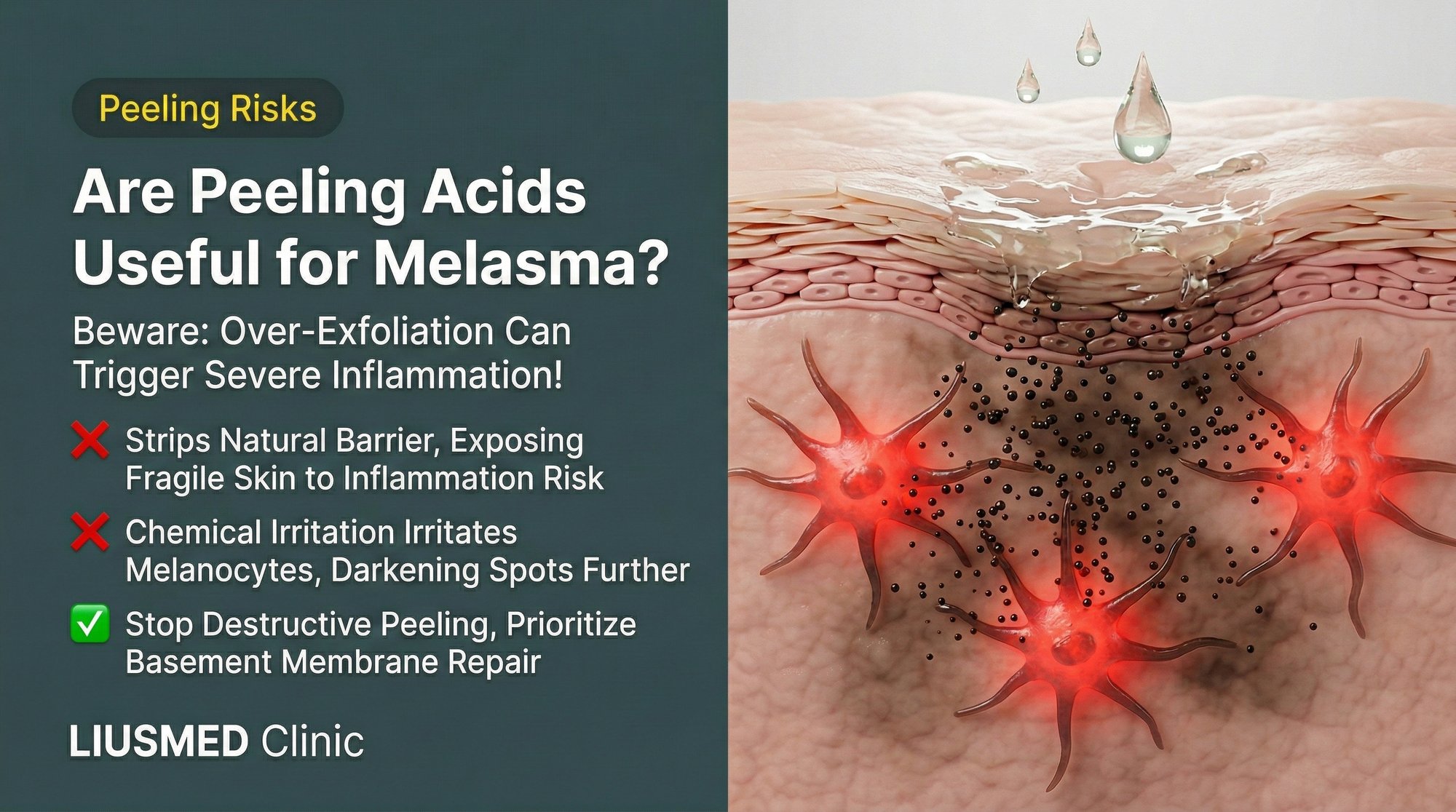
The logic seems sound. Melasma involves excess melanin deposited in the skin. Chemical peels accelerate the removal of superficial skin layers, including the melanin-laden cells within them. Apply the peel, shed the pigmented cells, reveal fresher and lighter skin underneath.
This reasoning works well for surface-level pigmentation issues such as post-acne marks or mild sun damage. For melasma, however, it contains a critical flaw that dermatologists increasingly recognize: the very act of chemically disrupting the skin creates an inflammatory response, and inflammation is one of the primary drivers of melasma itself.
What was intended to lighten your skin may, instead, pour fuel on the fire that caused the darkening in the first place.
Table of Contents
- Chemical Peels for Melasma: The Theory and the Reality
- The Inflammation Paradox: Why Peeling Triggers Pigment Production
- Which Peel Agents Are Used and Their Risk Profiles
- Who Is Most at Risk for Peel-Induced Worsening
- Chemical Peels vs. Non-Inflammatory Targeted Therapy: A Comparison
- Making Better Decisions About Melasma Treatment
Chemical Peels for Melasma: The Theory and the Reality
Chemical peels use acidic solutions to induce controlled chemical injury to the skin. The depth of injury depends on the agent used, its concentration, and the duration of contact. Superficial peels (glycolic acid, salicylic acid, mandelic acid) affect primarily the epidermis. Medium-depth peels (trichloroacetic acid at 25-35%) reach the papillary dermis. Deep peels (phenol, TCA at higher concentrations) penetrate to the reticular dermis.
For melasma, superficial peels are most commonly used, with glycolic acid at concentrations of 20-70% being the workhorse. The mechanism involves three effects. First, the acid dissolves the intercellular bonds between keratinocytes, accelerating desquamation and the shedding of melanin-containing cells. Second, it stimulates new keratinocyte production, theoretically replacing pigmented cells with fresh, less pigmented ones. Third, at higher concentrations, it may directly affect melanocyte function.
In controlled clinical studies, glycolic acid peels have shown modest efficacy for melasma, with improvement rates comparable to topical hydroquinone in some trials. However, these studies are typically short-term (eight to twelve weeks), conducted under highly controlled conditions, and the results must be interpreted alongside the recurrence rates and complication rates that are less prominently reported.
The reality that many patients experience is more nuanced. Initial improvement after the first two to three peels gives way to a frustrating pattern: the melasma resists further improvement, or worse, begins to darken again despite continued treatment. Some patients experience dramatic worsening, with pigmentation spreading beyond its original borders or deepening from a superficial epidermal pattern to a stubbornly persistent dermal one.
The Inflammation Paradox: Why Peeling Triggers Pigment Production
The key to understanding why chemical peels can worsen melasma lies in the biology of melanocyte activation.
Chemical peeling, by definition, creates a wound. Even a superficial peel generates a controlled inflammatory response: the acid disrupts the epithelium, immune cells migrate to the area, cytokines and prostaglandins are released, and the tissue repair cascade activates. In normal skin, this inflammation resolves cleanly, and the net result is improved texture and tone.
In melasma skin, the melanocytes are already primed. They exist in an environment of chronic low-grade inflammation, heightened sensitivity to inflammatory mediators, and disrupted regulatory signals from the basement membrane. When additional inflammation from a chemical peel is layered on top of this already-activated state, the melanocytes respond with increased melanin production.
Specifically, the peel-induced inflammation generates several melanocyte-activating signals. Prostaglandin E2 and prostaglandin D2, released by injured keratinocytes, directly stimulate melanogenesis. Interleukin-1 alpha and tumor necrosis factor alpha, part of the innate inflammatory response, activate melanocyte proliferation and melanin synthesis. Reactive oxygen species generated during tissue injury activate the p38 MAP kinase pathway in melanocytes, upregulating tyrosinase expression.
The result is post-inflammatory hyperpigmentation (PIH), the same darkening reaction that occurs after any skin injury in susceptible individuals. But in melasma patients, PIH is not an occasional complication; it is a near-constant threat because the melanocytes are already sensitized and poised to overreact to any inflammatory stimulus.
This creates a paradox: the peel removes some surface pigment while simultaneously commanding the melanocytes to produce more. The net outcome depends on which effect predominates, and in many melasma patients, particularly those with darker skin types or mixed/dermal melasma, the production effect overwhelms the clearance effect.
Which Peel Agents Are Used and Their Risk Profiles
Different peel agents carry different risk levels for melasma patients.
Glycolic acid (20-70%): The most commonly used agent for melasma peels. Relatively predictable depth of penetration. Risk of PIH increases with higher concentrations and longer contact times. Generally considered the safest option among peels for melasma, but "safest" is relative; PIH rates of 10-20% are reported in clinical studies, and real-world rates may be higher.
Salicylic acid (20-30%): A beta-hydroxy acid with anti-inflammatory properties that theoretically offset some of the PIH risk. Better tolerated in darker skin types than glycolic acid in some studies. However, efficacy for melasma is modest, and it primarily affects the epidermis with limited impact on dermal pigment.
Mandelic acid (30-40%): A larger molecular weight alpha-hydroxy acid that penetrates more slowly and evenly, reducing the risk of uneven or excessive penetration. Some evidence suggests a better safety profile for darker skin types. Limited data specifically for melasma.
Trichloroacetic acid (TCA, 10-25%): More aggressive than AHAs, with a higher risk of PIH. Used at lower concentrations (10-15%) for melasma, sometimes in combination with other agents (Jessner's solution). The depth of injury is less predictable and more operator-dependent, which increases variability in outcomes. Not recommended for Fitzpatrick (Fitzpatrick Skin Type) skin types IV-VI for melasma treatment.
Lactic acid (30-50%): Gentler than glycolic acid with some evidence for melanogenesis inhibition. Generally well-tolerated but with limited standalone efficacy for melasma. Often used as an introductory or maintenance peel agent.
Regardless of the specific agent, the fundamental issue remains: any chemical peel creates inflammation, and inflammation drives melasma. The difference between agents is the magnitude of the inflammatory response, not its presence or absence.
Who Is Most at Risk for Peel-Induced Worsening
Several patient characteristics increase the risk of melasma worsening after chemical peels.
Fitzpatrick skin type IV-VI: Darker skin types have more numerous and more reactive melanocytes. The threshold for inflammation-induced melanogenesis is lower, meaning that even mild peels can trigger disproportionate PIH. Multiple studies have documented higher PIH rates in darker-skinned patients undergoing chemical peels for melasma.
Mixed or dermal-predominant melasma: When a significant portion of the melanin is located in the dermis (below the epidermis), superficial peels cannot reach it. The peel removes epidermal pigment, but the inflammatory response drives new melanin production that may deposit in both the epidermis and the dermis, potentially converting a mixed-type melasma into a more dermal-predominant and harder-to-treat pattern.
Active hormonal stimulation: Patients who are currently pregnant, using oral contraceptives, or undergoing hormone replacement therapy have melanocytes that are under chronic hormonal activation. Adding inflammatory stimulation from peels to hormonal stimulation creates a compounded drive for melanogenesis.
Recent sun exposure or summer season: UV-primed skin has melanocytes in a heightened state of activity. Peeling sun-exposed melasma skin dramatically increases the risk of PIH and rebound darkening.
Compromised skin barrier: Patients who are concurrently using retinoids, other exfoliating agents, or have naturally sensitive or thin skin are more vulnerable to excessive or uneven peel penetration, increasing the inflammatory load.
History of PIH from any cause: If you have experienced darkening after acne lesions, cuts, insect bites, or previous aesthetic treatments, you have demonstrated a propensity for post-inflammatory pigment production. This propensity will apply equally to chemical peel-induced inflammation.
Chemical Peels vs. Non-Inflammatory Targeted Therapy: A Comparison
| Factor | Chemical Peels | Non-Inflammatory Targeted Injection |
|---|---|---|
| Mechanism of Action | Chemical destruction of superficial skin layers | Direct delivery of melanogenesis-modulating agents to target tissue |
| Inflammatory Response | Inherent; inflammation is the mechanism of action | Minimal; avoids chemical or thermal tissue disruption |
| PIH Risk | Moderate to high, especially in darker skin types | Low; no epidermal barrier disruption |
| Depth of Effect | Primarily epidermal; limited dermal penetration | Can target dermal-epidermal junction directly |
| Barrier Impact | Disrupts barrier by design; recovery period needed | Preserves epidermal barrier integrity |
| Vascular Component | Not addressed; inflammation may worsen vascularity | Can include vascular-normalizing agents |
| Suitability for Dark Skin | Higher risk; requires extreme caution | Suitable across skin types |
| Recovery Time | Peeling, redness, sensitivity for 3-7 days per session | Minimal; typically mild redness for 24-48 hours |
| Addresses Root Cause | No; removes surface pigment only | Yes; modulates the microenvironment driving melanogenesis |
| Recurrence After Stopping | High; surface removal does not affect underlying drivers | Lower when microenvironment is successfully normalized |
The fundamental philosophical difference is whether you approach melasma as surface pigment to be removed (the peel approach) or as a dysfunctional tissue environment to be repaired (the Melasma Injection Treatment approach). For patients who have already experienced peel-induced worsening, this distinction directly informs the treatment pivot they need to make.
Making Better Decisions About Melasma Treatment
If you are considering chemical peels for melasma, or have already tried them without success, here are evidence-based principles to guide your next steps.
Understand your melasma type. Before any treatment, a Wood's lamp or dermoscopy examination should determine whether your melasma is primarily epidermal, dermal, or mixed. Superficial peels have some rationale for purely epidermal melasma. For mixed or dermal types, which constitute the majority of cases in Asian skin, peels are unlikely to reach the deeper pigment and the inflammatory risk outweighs the potential benefit.
Assess your PIH risk honestly. If you are Fitzpatrick skin type III or higher, have a history of PIH from any cause, or have mixed/dermal melasma, the risk of peel-induced worsening is substantial. These are not factors that can be overcome with technique modifications or gentler formulations; they are biological characteristics that make your melanocytes inherently more reactive to inflammatory stimuli.
Recognize when peels have failed. If you have completed three or more peel sessions without progressive improvement, or if your melasma has worsened at any point during the peel series, continuing the same approach is unlikely to yield different results. The definition of a failed approach is clear: the treatment is not achieving its intended effect, or it is causing unintended worsening.
Consider the total inflammatory burden. If you are using topical retinoids, performing at-home exfoliation, or undergoing other treatments that create skin inflammation, adding chemical peels compounds the total inflammatory load. Your melanocytes do not distinguish between different sources of inflammation; they respond to the aggregate signal.
Prioritize approaches that avoid inflammation. The emerging understanding of melasma as a microenvironment disease points toward treatment strategies that work by modulation rather than destruction. Melasma Injection Treatment exemplifies this approach by delivering therapeutic agents directly to the tissue without creating the inflammatory cascade that is the Achilles heel of all ablative and exfoliative techniques.
Be wary of aggressive protocols. Some clinics advocate combining chemical peels with laser treatments and multiple active topical agents in aggressive "attack" protocols for melasma. While the intent is to hit the problem from all angles, the practical effect is often to overwhelm the skin with inflammatory stimuli, producing dramatic short-term lightening followed by equally dramatic rebound. A measured, anti-inflammatory approach may produce less impressive initial results but tends to achieve more stable long-term improvement.
Frequently Asked Questions
Q1: My aesthetician says chemical peels are safe for melasma if done at the right concentration. Is that true?
Lower concentrations do produce less inflammation and therefore carry lower PIH risk, but they do not eliminate it. Even gentle peels create some inflammatory response, which in sensitized melasma skin can trigger pigment production. The statement that peels are "safe at the right concentration" is partially true for patients with light skin and purely epidermal melasma, but it oversimplifies the risk for darker-skinned patients or those with mixed/dermal melasma.
Q2: I had one chemical peel and my melasma got significantly darker. Will it go back to baseline?
Post-inflammatory hyperpigmentation from a single peel episode typically improves over three to six months with strict sun protection and cessation of the offending treatment. The timeline depends on the depth of the inflammatory injury and whether the PIH is primarily epidermal or dermal. Epidermal PIH (brown color) resolves faster than dermal PIH (gray-blue color). During recovery, avoid all treatments that create inflammation, including retinoids, exfoliants, and energy-based devices.
Q3: Can I do chemical peels at home for melasma using over-the-counter products?
This carries significant risk. At-home peel products lack the precise application control and real-time skin assessment that an experienced clinician provides. Over-application, uneven application, or excessive contact time can produce deeper injury than intended. For melasma patients, the margin between a possibly beneficial and a definitely harmful peel is narrow, and at-home use often falls on the harmful side. This approach is not recommended.
Q4: Are newer peeling agents like tranexamic acid peels or phytic acid peels safer for melasma?
Formulations incorporating tranexamic acid or other anti-melanogenic agents into peel solutions attempt to combine exfoliation with melanogenesis suppression. While theoretically promising, the fundamental issue remains: the acid component still creates inflammation. These combination peels may reduce the net risk compared to traditional agents, but they do not eliminate it. Long-term comparative data against non-inflammatory approaches is currently lacking.
Q5: How many peels should I try before concluding they are not working for my melasma?
If you have not seen progressive improvement after three to four peel sessions (typically six to twelve weeks of treatment), it is reasonable to reassess the approach. If your melasma has worsened at any point, even after a single session, that is sufficient evidence that peeling is not appropriate for your specific case. Continuing beyond this point in the hope of eventual improvement is not supported by evidence and risks cumulative damage.
Q6: After a failed peel series, how long should I wait before starting injection therapy?
A recovery period of at least four to six weeks after the last peel session is generally recommended before initiating Melasma Injection Treatment. This allows the peel-induced inflammation to fully resolve and the epidermal barrier to repair. If significant PIH has occurred, a longer recovery period of two to three months may be advisable to allow the acute inflammatory component to subside before beginning a new treatment approach. Your treating physician will assess barrier function and inflammatory status to determine the optimal timing.
About the Author
Dr. Ta-Ju Liu is the founder of Liusmed Clinic, a specialized center for regenerative medicine and minimal incision surgery in Taiwan. Dr. Liu's clinical practice frequently involves patients who have experienced melasma worsening from various treatment modalities including chemical peels. His treatment philosophy is informed by the understanding that melasma is fundamentally an inflammatory microenvironment disorder, and effective treatment must avoid adding inflammatory insults while actively modulating the tissue environment that drives pigment production.
Disclaimer
This article is provided for educational and informational purposes only and does not constitute medical advice. Individual skin conditions vary significantly, and treatment outcomes depend on numerous patient-specific factors. Always consult a qualified dermatologist or medical professional before making decisions about melasma treatment. The information presented here reflects current medical understanding as of the publication date and may be updated as new research becomes available.

Specialties
Credentials
- Kaohsiung Medical University, School of Medicine
- Attending Physician, Dermatology, Kaohsiung Chang Gung Memorial Hospital
- Attending Physician, Aesthetic Center, Kaohsiung Chang Gung Memorial Hospital
- Visiting Physician, Dermatology, Xiamen Chang Gung Hospital
- Visiting Physician, Aesthetic Center, Xiamen Chang Gung Hospital
"For every surgery, I strive to achieve a good outcome through a small incision and refined technique. Minimally invasive surgery is not just a technique — it's a commitment of respect to every patient."
Recovery after any procedure needs peer support too


Want to learn more?
Schedule a consultation for professional evaluation and advice