Is Kligman's Triple Cream Thinning Your Skin? Hidden Risks
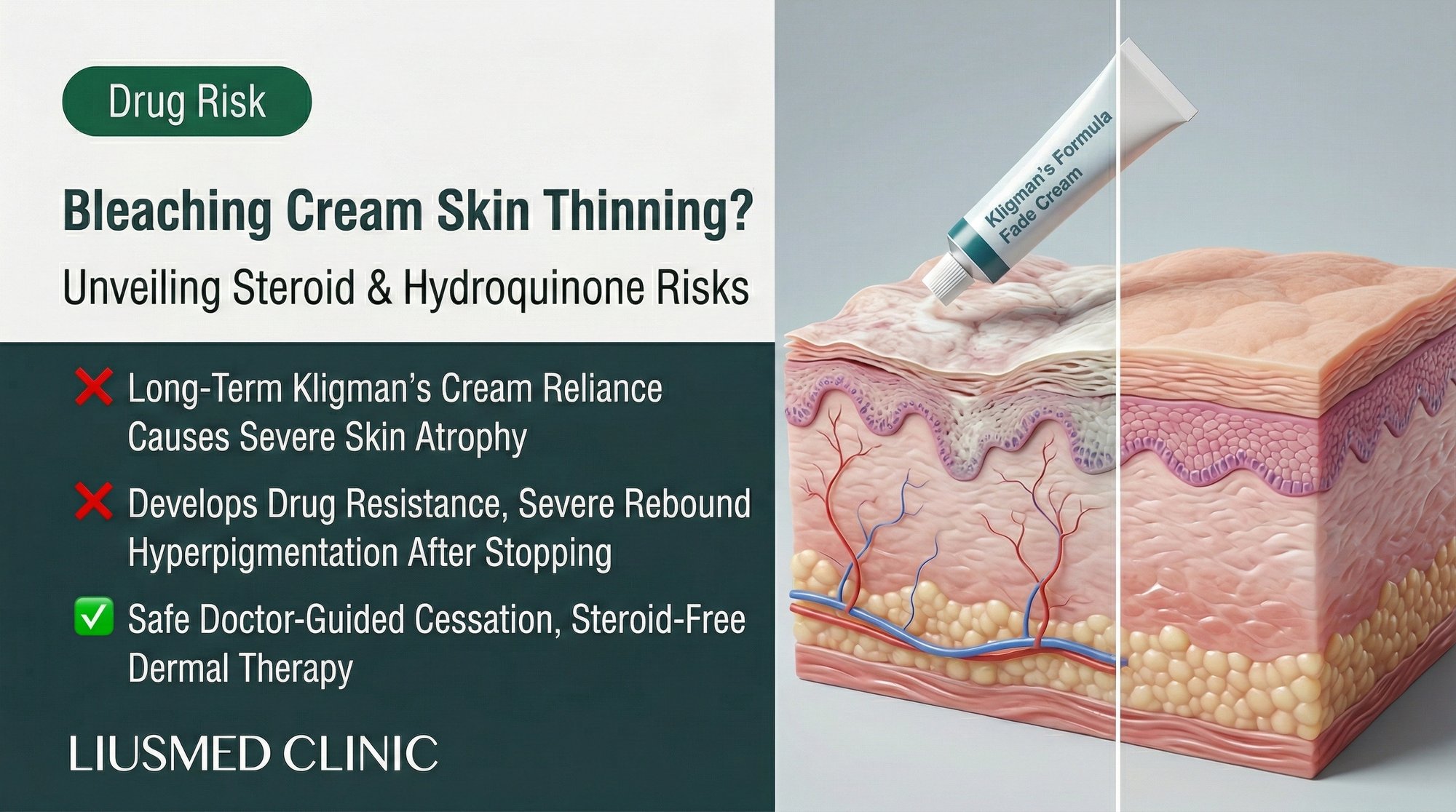
For decades, Kligman's triple combination cream has been the gold standard topical treatment for melasma. The formula, typically combining hydroquinone (4%), tretinoin (0.05%), and a medium-potency corticosteroid such as fluocinolone acetonide (0.01%), attacks melasma from three angles simultaneously. Hydroquinone inhibits tyrosinase to reduce melanin production. Tretinoin accelerates epidermal turnover to shed pigmented cells. The corticosteroid suppresses inflammation and reduces the irritation caused by the other two ingredients.
It works. In clinical trials, Kligman's formula consistently outperforms its individual components and most other topical treatments. For the first eight to twelve weeks, patients often see meaningful lightening of their melasma patches.
The problem begins after those first twelve weeks. Because melasma is chronic and relapsing, patients and sometimes their doctors extend treatment far beyond the recommended duration. What was designed as a short-term intervention becomes a long-term dependency, and the side effects of prolonged use can be devastating.
Table of Contents
- The Three Components and Their Individual Risks
- The Steroid Trap: How Short-Term Help Becomes Long-Term Harm
- Hydroquinone's Ceiling: Diminishing Returns and Ochronosis
- Recognizing the Signs of Topical Damage
- Kligman's Cream vs. Targeted Injection Therapy: A Comparison
- Transitioning Away from Triple Cream Safely
The Three Components and Their Individual Risks
Each ingredient in Kligman's formula carries its own risk profile that becomes relevant with extended use.
Hydroquinone is a potent tyrosinase inhibitor that reduces melanin synthesis at the cellular level. In concentrations of 2-4%, it is generally considered safe for use periods of eight to twelve weeks. Beyond this window, the risk profile changes significantly. Paradoxical hyperpigmentation can occur when hydroquinone generates reactive oxygen species through its metabolic pathway, causing oxidative damage to melanocytes and triggering a rebound darkening response. The most feared complication is exogenous ochronosis, a disfiguring blue-gray discoloration caused by the accumulation of homogentisic acid in the dermis. This condition is irreversible and notoriously difficult to treat. Ochronosis risk increases dramatically with hydroquinone use beyond six months, particularly in darker skin types and with concentrations above 4%.
Tretinoin (all-trans retinoic acid) accelerates keratinocyte turnover and promotes the shedding of melanin-laden cells from the epidermis. Short-term, this is beneficial for melasma. Long-term, the chronic acceleration of cell turnover can thin the viable epidermis and disrupt the barrier lipid organization. Patients on extended tretinoin develop increased transepidermal water loss, heightened sensitivity to environmental irritants, and a characteristic shiny, "glassy" skin texture that reflects an abnormally thin stratum corneum.
Corticosteroids are the most insidious component. Fluocinolone acetonide, the steroid in most commercial Kligman formulations, is classified as a low-potency topical corticosteroid, but its effects on facial skin are not low-potency. The face has thinner skin, greater density of steroid receptors, and higher percutaneous absorption compared to other body sites. What is a mild steroid on the body becomes a moderate-to-potent steroid on the face. Extended application on the face can produce skin atrophy within weeks to months, not the years that patients typically expect.
The Steroid Trap: How Short-Term Help Becomes Long-Term Harm
The corticosteroid component of Kligman's cream creates a particularly treacherous feedback loop. Initially, the steroid suppresses the inflammation and irritation caused by hydroquinone and tretinoin, making the cream comfortable to use. It also has a direct anti-melanogenic effect, contributing to the early brightening that patients experience.
However, chronic topical corticosteroid use on the face induces several changes that make the skin progressively more dependent on the medication. The steroid suppresses local immune function, which initially reduces redness and inflammation. When the steroid is withdrawn, the immune system rebounds with exaggerated inflammatory activity, causing flaring, redness, burning, and often worsening of the original pigmentation.
This withdrawal phenomenon drives patients to resume the cream, creating a dependency cycle. Each cycle of use and attempted withdrawal tends to be worse than the last, because the steroid is simultaneously causing structural damage that makes the skin less resilient.
The structural damage from chronic facial steroid use includes dermal atrophy (thinning of the collagen-rich dermis), which manifests as visibly thin skin through which blood vessels are apparent. Capillary fragility increases, and the skin bruises easily. Striae (stretch marks) can develop on the face, particularly around the mouth and on the cheeks. Perioral dermatitis and steroid rosacea are common complications, presenting as papules, pustules, and persistent erythema that will not resolve until the steroid is discontinued.
Some patients develop what is clinically described as steroid-dependent face. The skin looks acceptable only while the steroid cream is being applied. Any attempt to stop triggers severe rebound inflammation, flushing, peeling, and discomfort that lasts weeks to months. The patient is trapped: the cream that was supposed to treat their melasma has created a new and arguably worse condition that masks the original problem while simultaneously preventing its resolution.
Hydroquinone's Ceiling: Diminishing Returns and Ochronosis
Even without the steroid complications, hydroquinone as a long-term melasma strategy has fundamental limitations. The drug works by inhibiting tyrosinase, the enzyme responsible for converting tyrosine to melanin. This suppression is effective but temporary; as soon as the drug is withdrawn, tyrosinase activity returns to baseline or above, and pigment production resumes.
Moreover, melanocytes adapt. Studies have demonstrated that chronic hydroquinone exposure can upregulate alternative melanogenic pathways, making the cells partially resistant to the drug's effect. The clinical manifestation is a plateau: the melasma stops improving despite continued use, and may slowly begin to darken again even while treatment continues.
The ochronosis risk warrants special attention because it is both the most serious complication and the most underappreciated. Exogenous ochronosis develops when hydroquinone metabolites, primarily benzoquinone and homogentisic acid, accumulate in the dermis and form ochre-colored deposits. Clinically, this presents as blue-gray or blue-black papules and macules in the areas of hydroquinone application.
The tragedy of ochronosis is its irony: a treatment intended to lighten the skin produces a darkening that is far more disfiguring than the original melasma, and unlike melasma, it does not respond to most conventional treatments. Cases of ochronosis from hydroquinone use exceeding twelve months have been documented extensively in the medical literature, particularly in patients with Fitzpatrick (Fitzpatrick Skin Type) skin types IV-VI.
Recognizing the Signs of Topical Damage
Patients on long-term Kligman's cream should monitor for the following warning signs:
Steroid-related signs: Skin that appears increasingly thin or translucent, particularly on the cheeks and around the eyes. Visible blood vessels that were not previously apparent. Easy bruising or petechiae. Development of papules or pustules resembling acne or rosacea, especially around the mouth. A burning or stinging sensation when applying any product, including the cream itself. Rebound redness and inflammation when the cream is skipped for more than one to two days.
Hydroquinone-related signs: A plateau in improvement despite continued consistent use. Development of a grayish or ashy undertone in the treated areas. Any blue-gray discoloration, papules, or textural changes in the application area. Paradoxical darkening of melasma patches.
Tretinoin-related signs: Skin that appears shiny and glassy. Excessive dryness that is not relieved by moisturizer. Flaking or peeling that persists beyond the initial adjustment period. Increased sensitivity to wind, temperature changes, and cosmetic products.
Any of these signs should prompt an immediate conversation with your prescribing physician about tapering or discontinuing the cream. Continuing use in the presence of these signs increases the risk of irreversible damage.
Kligman's Cream vs. Targeted Injection Therapy: A Comparison
| Factor | Kligman's Triple Cream | Targeted Melasma Injection Therapy |
|---|---|---|
| Delivery Method | Topical application across all treated skin | Precise microinjection into affected tissue only |
| Steroid Exposure | Continuous daily steroid application to facial skin | No steroid component; avoids atrophy risk entirely |
| Hydroquinone Risk | Cumulative ochronosis risk with extended use | No hydroquinone; eliminates paradoxical darkening risk |
| Barrier Impact | Chronic barrier disruption from tretinoin and steroid | Preserves epidermal barrier integrity |
| Dependency Risk | High (steroid rebound cycle) | Low; no pharmacological dependency mechanism |
| Duration Limitations | Safe only for 8-12 weeks; risky beyond 6 months | No established maximum duration concern |
| Depth of Action | Primarily epidermal; limited dermal penetration | Direct delivery to dermal and dermal-epidermal junction |
| Vascular Component | Not addressed | Can include vascular-normalizing agents |
| Treatment of Underlying Cause | Suppresses symptoms only | Addresses microenvironment dysfunction |
The fundamental limitation of Kligman's cream is that it suppresses melasma through pharmacological agents that themselves cause cumulative harm. Melasma Injection Treatment offers a different paradigm: delivering therapeutic agents precisely where they are needed without the collateral damage of chronic topical steroid, hydroquinone, and retinoid exposure across the entire facial surface.
Transitioning Away from Triple Cream Safely
If you have been using Kligman's cream for an extended period, abrupt discontinuation is not recommended due to the risk of steroid withdrawal flare. A structured tapering protocol is essential.
Week one through two: Reduce application frequency from daily to every other day. On the off days, apply only a barrier-repair moisturizer and sunscreen.
Week three through four: Reduce to every third day. Continue barrier support on non-treatment days.
Week five through six: Reduce to twice weekly. Begin monitoring for rebound redness or pigment changes.
Week seven through eight: Discontinue completely. Expect some degree of rebound inflammation, which typically peaks at one to two weeks after complete cessation and gradually resolves over the following four to eight weeks.
During the tapering period, strict daily sun protection with SPF (Sun Protection Factor) 50+ broad-spectrum sunscreen is non-negotiable. Gentle, fragrance-free skincare focused on barrier repair (ceramides, cholesterol, fatty acids) should replace any active treatment products.
Once the skin has stabilized after discontinuation (typically two to three months), a comprehensive reassessment of the melasma can be performed. At this point, the true extent of the melasma can be evaluated without the confounding effects of active pharmacological suppression, and a treatment strategy such as Melasma Injection Treatment can be considered based on the actual clinical picture.
The key message is this: Kligman's cream was designed as a short-term tool, not a lifestyle. Using it beyond its intended duration does not produce better results; it produces new complications that make the original problem harder to solve.
Frequently Asked Questions
Q1: My doctor prescribed Kligman's cream and I have been using it for over a year. Should I be worried?
Extended use beyond the recommended eight to twelve weeks does increase the risk of complications. However, not every patient using the cream long-term will develop problems. The most important step is to have an honest conversation with your prescribing physician about your current skin status, look for the warning signs described above, and develop a tapering plan. Do not stop abruptly without medical guidance, as steroid withdrawal can cause significant rebound.
Q2: Are over-the-counter versions of Kligman's cream safer because they have lower concentrations?
Over-the-counter formulations typically contain hydroquinone at 2% rather than 4%, and may substitute less potent steroids. While lower concentrations reduce the rate at which complications develop, they do not eliminate the risk, particularly with extended use. The same principles regarding duration limitations apply regardless of concentration. Additionally, some over-the-counter products sold internationally may contain undeclared higher concentrations or mercury, which adds toxicity risks.
Q3: Can I use the hydroquinone component alone without the steroid to avoid skin thinning?
Yes, using hydroquinone without a corticosteroid eliminates the steroid-related risks. However, hydroquinone alone is typically less effective than the combination and still carries its own duration-dependent risks, particularly ochronosis with prolonged use. Intermittent use (eight weeks on, eight weeks off) is a common strategy to mitigate this risk, but even this approach does not address the fundamental limitation that hydroquinone only suppresses pigment production temporarily.
Q4: I have been using the cream for two months and my melasma is much better. Is it safe to continue for a third month?
Most clinical guidelines consider use up to twelve weeks (approximately three months) to be within the acceptable safety window, provided you are being monitored by a physician. Beyond twelve weeks, the risk-benefit ratio shifts unfavorably. If your melasma has improved, this is actually an ideal time to discuss transitioning to a maintenance strategy that does not carry the cumulative risks of continued triple cream use.
Q5: I stopped Kligman's cream and my face became red, puffy, and the melasma came back darker. What happened?
This is the steroid withdrawal rebound phenomenon combined with return of melanogenesis after removal of hydroquinone suppression. It is temporary but can be distressing. The rebound inflammation typically peaks one to two weeks after discontinuation and gradually resolves over one to three months. The apparent worsening of melasma reflects the removal of active suppression rather than true worsening. Once the rebound settles, the melasma can be reassessed and addressed with a different treatment approach.
Q6: Can the injection approach help repair damage from long-term Kligman's cream use?
The Melasma Injection Treatment approach can address both the residual melasma and some of the collateral damage from prolonged topical treatment. Because it delivers reparative agents directly to the dermis, it can support recovery of skin structure while simultaneously modulating the melanocyte microenvironment. However, treatment should only begin after the steroid withdrawal phase has resolved and the skin has stabilized, typically two to three months after complete discontinuation of the cream.
About the Author
Dr. Ta-Ju Liu is the founder of Liusmed Clinic, a specialized center for regenerative medicine and minimal incision surgery in Taiwan. Dr. Liu frequently treats patients who present with complications from prolonged use of topical melasma medications, including steroid-dependent skin and hydroquinone-related changes. His treatment philosophy emphasizes addressing the root causes of melasma through targeted therapies that avoid the cumulative toxicity profiles of conventional topical agents.
Disclaimer
This article is provided for educational and informational purposes only and does not constitute medical advice. Do not alter your prescribed medication regimen without consulting your treating physician. Individual skin conditions vary significantly, and treatment outcomes depend on numerous patient-specific factors. Always consult a qualified dermatologist or medical professional before making decisions about melasma treatment. The information presented here reflects current medical understanding as of the publication date and may be updated as new research becomes available.

Specialties
Credentials
- Kaohsiung Medical University, School of Medicine
- Attending Physician, Dermatology, Kaohsiung Chang Gung Memorial Hospital
- Attending Physician, Aesthetic Center, Kaohsiung Chang Gung Memorial Hospital
- Visiting Physician, Dermatology, Xiamen Chang Gung Hospital
- Visiting Physician, Aesthetic Center, Xiamen Chang Gung Hospital
"For every surgery, I strive to achieve a good outcome through a small incision and refined technique. Minimally invasive surgery is not just a technique — it's a commitment of respect to every patient."
Recovery after any procedure needs peer support too


Want to learn more?
Schedule a consultation for professional evaluation and advice