Already a "Laser Refugee" with Extreme Sensitivity? Is There Still Hope for Your Skin?
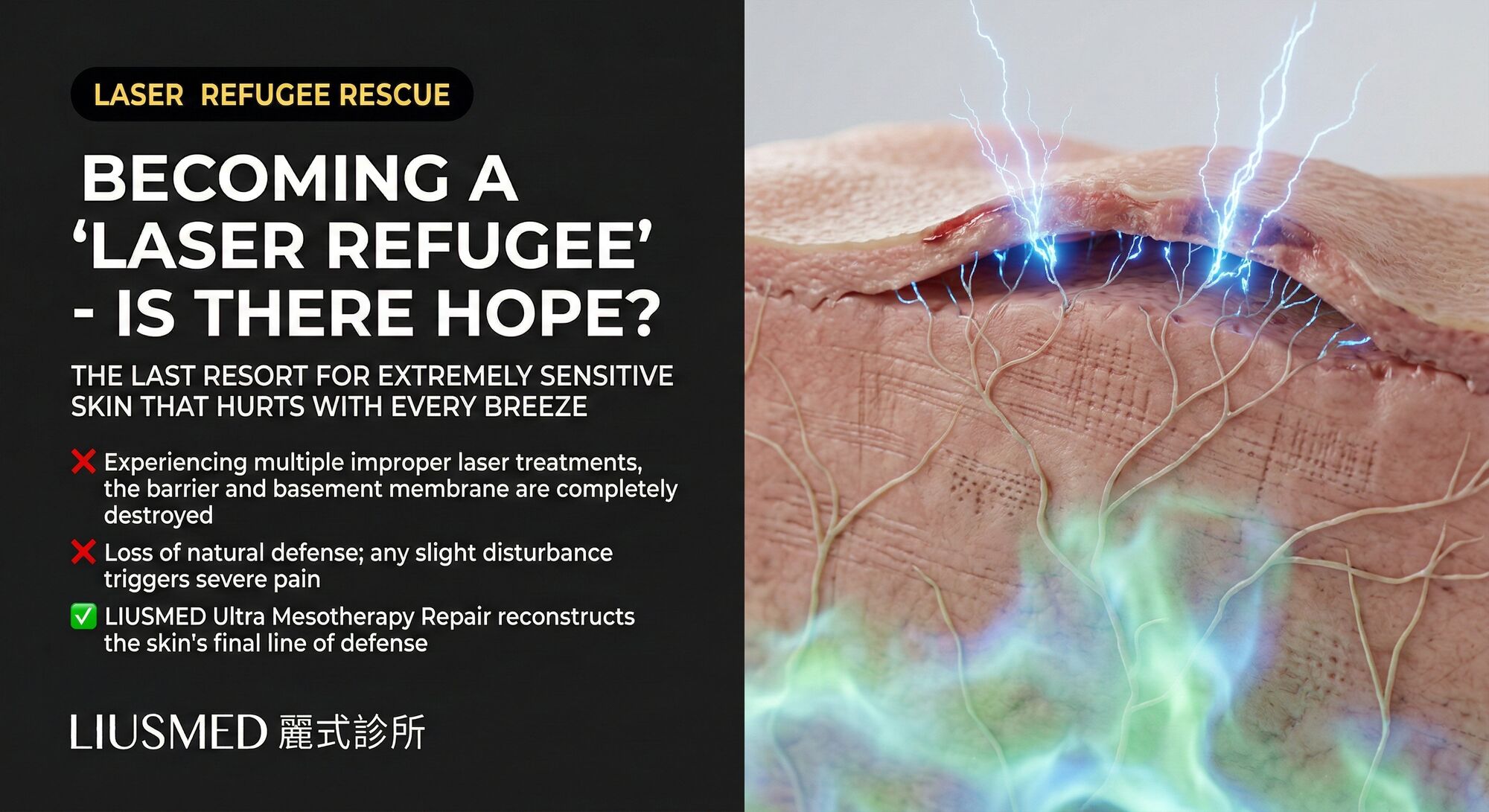
You have a term for yourself that you never expected to need: laser refugee. After years of treatments that were supposed to fix your rosacea — pulsed dye laser, IPL (Intense Pulsed Light), fractional laser, picosecond, sometimes all of them — your skin is in worse condition than when you started. It burns constantly. Products that claim to be for "sensitive skin" make you flinch. You cannot tolerate sunscreen without stinging, so you avoid the sun entirely or cover your face with a physical barrier. The redness that drove you to treatment in the first place has spread and deepened, and now it is accompanied by a persistent burning that dominates your daily experience.
You have been told by multiple practitioners that your skin is "too sensitive for treatment." Some have suggested you simply wait. Others have implied that you are the problem — too anxious, too reactive, too focused on your skin. None of them have offered an explanation for how professional medical treatments made your condition worse, or what can actually be done about it.
This article is for you. The situation is serious, but it is not hopeless. Understanding what has happened to your skin at the structural and immunological level is the first step toward a realistic recovery plan.
Table of Contents
- What "Laser Refugee" Actually Means: A Clinical Definition
- The Anatomy of Laser-Damaged Rosacea Skin
- Why Traditional Rosacea Treatments Fail in This Population
- The Rehabilitation Framework: Phases of Recovery
- What Recovery Actually Looks Like: Realistic Timelines and Expectations
- Finding the Right Practitioner for Laser-Refugee Rehabilitation
What "Laser Refugee" Actually Means: A Clinical Definition {#laser-refugee-definition}
The term "laser refugee" has emerged from patient communities to describe individuals whose skin has been damaged by repeated laser or light-based treatments to the point where they can no longer tolerate further device treatments and have lost confidence in the medical system that caused their deterioration.
While not a formal medical diagnosis, the laser-refugee presentation has consistent clinical features that distinguish it from untreated rosacea:
Baseline burning or stinging that persists without external trigger. This is not the intermittent flushing of standard rosacea but a constant, low-grade nociceptive signal indicating ongoing tissue irritation.
Extreme product intolerance. Inability to tolerate most topical products, including those specifically formulated for sensitive skin. Even plain water may sting on contact. This reflects severe barrier compromise and possible sensitization of dermal nociceptors.
Paradoxical redness pattern. Rather than the classic rosacea distribution (central face, bilateral cheeks, nose), laser-refugee redness often corresponds to treatment zones — rectangular or handpiece-shaped areas of heightened erythema that map to the coverage pattern of previous laser sessions.
Textural deterioration. Skin that appears thinner, more translucent, or more "papery" than before treatment began. Vessels that were not previously visible now show through the thinned tissue.
Heightened neural sensitivity. Temperature changes, air movement, emotional stress, and physical contact produce exaggerated sensory responses — burning, stinging, itching — that are disproportionate to the stimulus and slow to resolve.
Loss of resilience. The skin's ability to recover from minor insults (mild sun exposure, brief temperature changes, slight product irritation) is dramatically reduced. Recovery that would take hours in normal rosacea skin takes days in laser-refugee skin.
The Anatomy of Laser-Damaged Rosacea Skin {#anatomy-of-damage}
Understanding the specific structural changes in laser-refugee skin explains both the symptoms and the rehabilitation requirements:
Stratum corneum (outermost barrier): Repeated laser treatments disrupt the organized lipid bilayers that provide the skin's primary barrier function. Ceramides, cholesterol, and free fatty acids — the three lipid species that form the mortar between corneocyte "bricks" — are depleted by thermal exposure and the inflammatory response. The result is a barrier that leaks water outward (increased transepidermal water loss) and allows irritants inward.
Epidermis: Chronic inflammation from both rosacea and repeated treatment has disrupted normal keratinocyte differentiation. The epidermis may be thinner, with fewer cell layers and reduced production of natural moisturizing factors. Melanocyte function may be altered, contributing to uneven pigmentation in treated areas.
Dermal-epidermal junction: The basement membrane zone — the structural interface between epidermis and dermis — is compromised by both MMP (Matrix Metalloproteinase) activity from chronic inflammation and direct thermal damage. A weakened DEJ (Dermal-Epidermal Junction) reduces mechanical stability and impairs communication between epidermal and dermal cells.
Papillary dermis: This superficial dermal layer bears the brunt of cumulative laser damage. Collagen is disorganized, glycosaminoglycans are depleted (reducing hydration and turgor), and the capillary network is in a state of dysfunctional remodeling — simultaneously showing areas of vessel destruction and areas of chaotic angiogenesis.
Dermal nerve endings: Sensory nerve fibers in the superficial dermis show evidence of sensitization — lowered activation thresholds and altered neuropeptide expression. This is the structural basis for the constant burning and exaggerated sensitivity to stimuli.
Mast cell population: Mast cell density and reactivity are often increased in laser-refugee skin, reflecting both the underlying rosacea and the chronic wound-healing response to repeated treatments.
| Layer | Normal Rosacea | Laser-Refugee Rosacea |
|---|---|---|
| Stratum corneum | Mildly compromised | Severely depleted lipid bilayers |
| Epidermis | Slightly thinned | Significantly thinned, disrupted differentiation |
| Basement membrane | Mildly degraded | Significantly weakened |
| Papillary dermis | Dilated vessels, mild matrix changes | Disorganized collagen, depleted GAGs, chaotic vasculature |
| Neural sensitivity | Elevated TRP channel activity | Markedly sensitized nociceptors, constant signaling |
| Mast cells | Hyperactive | Hyperactive and increased in density |
| Recovery capacity | Reduced but functional | Severely impaired |
Why Traditional Rosacea Treatments Fail in This Population {#why-traditional-treatments-fail}
Standard rosacea treatments were developed for rosacea skin — skin with an inflammatory disease but an otherwise relatively intact structural foundation. Laser-refugee skin has lost this foundation, which is why treatments designed for standard rosacea are often counterproductive:
Topical metronidazole/ivermectin: These standard rosacea topicals contain excipients (preservatives, emulsifiers, solvents) that laser-refugee skin cannot tolerate. Even if the active ingredients would be beneficial, the vehicle causes stinging, burning, and flare.
Oral antibiotics/anti-inflammatories: Low-dose doxycycline and similar systemic anti-inflammatories can help reduce the inflammatory component but do nothing to address the structural damage. They may provide modest symptom relief but cannot rehabilitate a destroyed barrier or repair depleted collagen.
Additional laser or light treatments: This is the recommendation that causes the most distress. Applying any energy-based device to skin that has been damaged by energy-based devices, before structural repair has occurred, will cause further damage. The thermally compromised dermal matrix lacks the resilience to tolerate additional thermal load, and the sensitized nerve endings produce exaggerated pain responses that make treatment impractical even if it were advisable.
Standard "sensitive skin" products: Most sensitive-skin product lines are formulated for mild sensitivity — reduced fragrance, fewer common allergens. Laser-refugee skin requires a level of ingredient simplicity that goes far beyond standard sensitive formulations. Even ingredients considered universally safe (niacinamide, hyaluronic acid, certain peptides) can trigger reactions in severely compromised skin, particularly if the vehicle contains penetration enhancers.
The recommendation to "just wait." While rest from treatment is essential, passive waiting without active rehabilitation is insufficient. Laser-refugee skin has lost the structural resources needed for autonomous recovery. Without targeted support — barrier repair, matrix rehabilitation, neural calming — the damaged state becomes self-perpetuating.
The Rehabilitation Framework: Phases of Recovery {#rehabilitation-framework}
Rehabilitating laser-refugee rosacea skin requires a structured, phased approach that respects the tissue's severely limited tolerance while progressively rebuilding its capacity. The process typically unfolds over three overlapping phases:
Phase 1: Stabilization (Months 1–3)
The immediate priority is to stop the ongoing damage and create conditions for healing to begin:
Complete treatment cessation. No lasers, IPL, chemical peels, microneedling, or any other device-based treatments. No retinoids, acids, or active ingredients. No new products beyond the absolute minimum.
Barrier emergency repair. Introduction of a minimal, ultra-simple barrier repair program. This often begins with a single product — a pure, pharmaceutical-grade ceramide-based occlusive — applied to slightly damp skin. The goal is to reduce transepidermal water loss and create a protected environment for barrier regeneration.
Environmental control. Minimizing trigger exposure: temperature extremes, wind, UV (mineral-only sunscreen if tolerated; physical barriers like hats and masks if not), and emotional stress (which triggers neurogenic inflammation through the same TRP channel pathways).
Neural calming. Cooling compresses, specific thermal spring water sprays (those with documented anti-inflammatory mineral compositions), and, in severe cases, low-dose oral medications that modulate nociceptor sensitivity.
The goal of Phase 1 is not improvement — it is stability. The burning should stabilize (not necessarily resolve), the flare frequency should stabilize, and the skin should stop actively deteriorating.
Phase 2: Structural Rehabilitation (Months 3–9)
Once stabilized, the focus shifts to rebuilding the damaged structural components:
Barrier restoration. Gradual introduction of additional barrier-supportive ingredients — fatty acids, cholesterol, phytosphingosine — in carefully formulated vehicles. The ceramide ratios that characterize healthy barrier function take months of consistent support to re-establish.
Dermal matrix support. Targeted delivery of matrix-building precursors and anti-inflammatory agents to the damaged dermis. This is where approaches like Rosacea Injection Treatment offer particular value — delivering active agents directly to the dermis, bypassing the compromised barrier that limits topical penetration.
Anti-inflammatory modulation. Graduated introduction of topical anti-inflammatory agents as barrier tolerance allows. Beginning with the mildest options (azelaic acid at low concentration, for example) and titrating upward based on individual tolerance.
Vascular stabilization. Supporting maturation of the chaotic vascular network through agents that promote pericyte recruitment and basement membrane repair. The goal is not to destroy vessels but to stabilize them — mature, stable vessels cause less redness and less inflammatory amplification than immature, leaky ones.
Phase 3: Optimization and Maintenance (Months 9–18+)
As structural recovery progresses, the focus shifts to optimizing the new tissue and preventing regression:
Gradual reintroduction of active ingredients. Retinoids, vitamin C, and other skin-quality-improving agents can be cautiously introduced as barrier integrity and neural sensitivity permit.
Selective, conservative vascular treatment. If residual telangiectasia remains after structural rehabilitation, conservative device treatment may be considered — but only on tissue that has demonstrated recovery of its structural integrity and inflammatory resilience. Parameters should be conservative, intervals extended, and anti-inflammatory support maintained throughout.
Long-term maintenance protocol. Rosacea remains a chronic condition. The maintenance phase establishes a sustainable routine that preserves the structural gains achieved during rehabilitation while managing the ongoing inflammatory tendency with minimal interventions.
What Recovery Actually Looks Like: Realistic Timelines and Expectations {#realistic-timelines}
Honest expectation-setting is essential for laser-refugee rehabilitation. The timelines are long, the progress is non-linear, and the endpoint may be different from pre-rosacea skin.
Month 1–2: Stabilization. Burning may decrease slightly but remains prominent. Redness is unchanged. The main achievement is stopping deterioration. Many patients feel discouraged at this stage because there is no visible improvement.
Month 3–4: First signs of barrier improvement. Reduced stinging with the ceramide-based products. Possibly able to tolerate a gentle cleanser that was previously intolerable. Redness may fluctuate but flares begin to be less severe (shorter duration, lower intensity peak).
Month 5–6: More consistent barrier function. The constant burning begins to ease — not disappear, but shift from a constant presence to an intermittent one. Some areas of the face show reduced redness. Neural sensitivity begins to moderate, though trigger responses remain exaggerated.
Month 7–9: Structural improvement becomes visible. Skin texture begins to normalize. The "papery" quality diminishes. Color becomes more even, though redness persists. Product tolerance expands — more ingredients can be introduced without flaring.
Month 10–12: Meaningful cosmetic improvement. Redness is reduced (typically 30–50% from the laser-refugee peak, though still above pre-rosacea levels). Burning is occasional rather than constant. Quality of life is substantially improved.
Month 12–18: Continued gradual improvement. Some patients approach a "new normal" that, while not identical to pre-rosacea skin, represents manageable rosacea with adequate structural integrity and functional barrier. Selective device treatments may become tolerable for residual cosmetic concerns.
Important caveats: These timelines assume consistent adherence to the rehabilitation protocol. Setbacks occur — illness, stress, accidental trigger exposure, product errors — and each setback can add weeks to the recovery timeline. Progress is measured in months, not weeks, and patience is not optional.
Not all damage is fully reversible. Elastic fiber loss is largely permanent in adult skin. Some degree of neural sensitization may persist. The goal is not perfection but meaningful, sustained improvement in both appearance and comfort.
Finding the Right Practitioner for Laser-Refugee Rehabilitation {#finding-right-practitioner}
The most critical factor in successful rehabilitation is finding a practitioner who understands laser-refugee pathology and has a structured approach to its management. Several characteristics distinguish appropriate practitioners:
Acknowledgment that treatment caused harm. A practitioner who dismisses your laser-damage concerns, attributes your symptoms entirely to anxiety, or suggests more laser as the solution is not the right fit. Laser-refugee rehabilitation requires honest assessment of iatrogenic (treatment-caused) damage as a starting point.
Structured phased approach. A clear treatment plan with defined phases, milestones, and timelines — not "let us try this and see what happens." The complexity of laser-refugee skin requires systematic methodology, not trial-and-error.
Emphasis on rebuilding over destroying. The instinct to destroy vessels, remove redness, or ablate damaged tissue must give way to rebuilding, stabilizing, and supporting. If the proposed treatment plan is heavy on devices and light on structural repair, the approach is likely inappropriate.
Experience with this specific population. Laser-refugee skin behaves differently from standard rosacea. Practitioners who have treated this population understand the extreme sensitivity, the non-linear recovery, the need for ultra-conservative introduction of any new agent, and the patience required for meaningful progress.
Willingness to go slowly. The biggest risk in laser-refugee rehabilitation is doing too much too fast, driven by either practitioner enthusiasm or patient desperation. Recovery cannot be accelerated beyond the tissue's capacity to rebuild, and attempts to force faster progress typically cause setbacks that extend the overall timeline.
If you are a laser refugee, know this: your experience is real, it is recognized by specialists in this field, and there are structured approaches to recovery. The damage done by well-intentioned but inappropriate treatments can be substantially reversed with time, patience, and the right rehabilitation protocol. You are not a hopeless case. You are a rebuilding project.
Frequently Asked Questions
Q1: How do I know if I am a laser refugee or if my rosacea just naturally progressed?
Several features distinguish laser-refugee skin from naturally progressive rosacea. Treatment-zone-specific redness patterns (redness matching the shape of a laser handpiece rather than natural rosacea distribution), onset of constant burning that correlates temporally with laser treatments rather than natural disease progression, textural changes (thinning, translucency) in treated areas, and dramatically worse product tolerance compared to pre-treatment baseline are all indicators of iatrogenic damage rather than natural disease progression.
Q2: My previous doctor says I need to continue laser treatments to manage the redness. Should I believe them?
When a patient presents with worsened rosacea following laser treatments, recommending more laser treatments requires careful justification. Ask specifically: what is different about the proposed treatment that will produce a different outcome? If the answer is "same treatment, just more sessions," this is unlikely to help and may cause further damage. If the answer includes structural pre-treatment, altered parameters, extended intervals, and anti-inflammatory support, the practitioner may be offering a more nuanced approach. Seeking a second opinion from a specialist in rosacea rehabilitation is always reasonable.
Q3: Can I use any skincare products during the stabilization phase, or should my skin be completely bare?
Completely bare skin is not ideal — it leaves the damaged barrier fully exposed to environmental stressors. The stabilization phase typically involves one to two ultra-simple products: a very gentle ceramide-based moisturizer and, if tolerated, a mineral sunscreen. No cleanser initially (water-only washing) unless sebum accumulation becomes problematic, in which case the mildest possible cream cleanser may be introduced. The products used during stabilization should have minimal ingredient lists — ideally fewer than ten ingredients with no fragrances, essential oils, alcohols, or common sensitizers.
Q4: Is laser-refugee damage permanent? Will my skin ever be normal again?
Most components of laser-refugee damage are at least partially reversible. Barrier function can be fully restored with consistent support. Collagen organization can improve significantly through targeted matrix rehabilitation. Neural sensitivity typically decreases substantially, though it may not fully return to pre-treatment levels. Elastic fiber loss is the most difficult to reverse and may remain as a long-term consequence. Most patients achieve a stable, comfortable state that, while not identical to pre-rosacea skin, represents a dramatic improvement over their laser-refugee nadir.
Q5: I have been approached by clinics offering "rescue" treatments with new devices for laser-damaged skin. Should I consider these?
Exercise extreme caution. While legitimate rehabilitation protocols exist, the marketing of new devices as solutions for device-damaged skin deserves skepticism. Key questions: Does the approach prioritize structural repair before any device treatment? Is there a phased protocol with the first phase involving no devices? Can the practitioner explain the specific mechanism by which this device differs from the ones that caused your damage? Has this approach been used in a laser-refugee population, or only in standard rosacea? If the answer to any of these is unsatisfactory, proceed with great caution.
Q6: How much improvement can I realistically expect after completing a full rehabilitation protocol?
Based on clinical experience with laser-refugee rehabilitation, most patients who complete a full protocol (12–18 months) achieve: reduction of constant burning from severe to mild or intermittent; redness improvement of 30–50% from their worst point; restoration of meaningful product tolerance (able to use a basic skincare routine without pain); reduced flare frequency and severity; and significant improvement in quality of life. These are meaningful gains, though they may fall short of pre-rosacea skin condition. Setting realistic expectations at the outset — aiming for "manageable and comfortable" rather than "perfect" — leads to higher satisfaction with outcomes.
About the Author
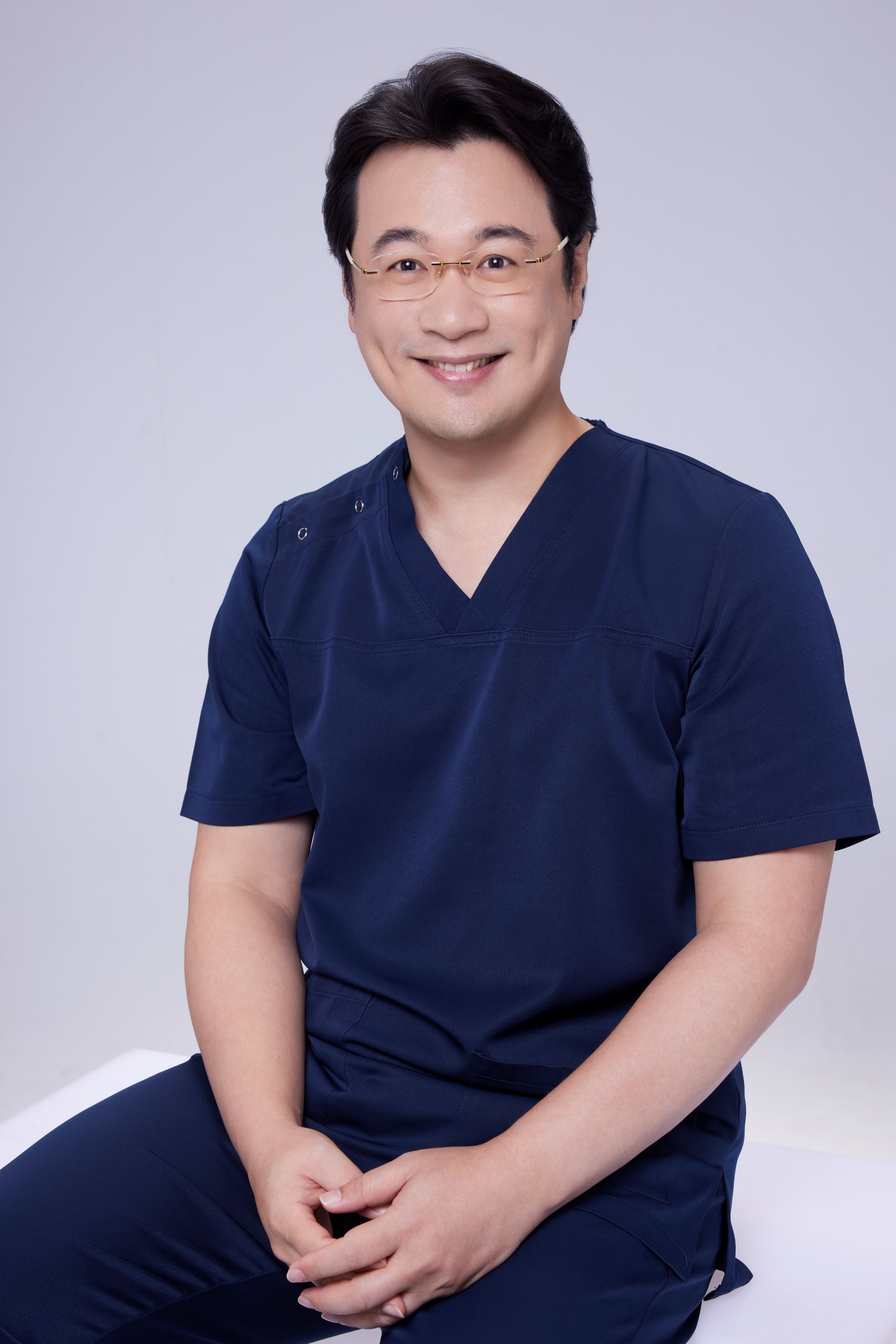
Dr. Ta-Ju Liu is the founder of Liusmed Clinic, a specialized practice focused on regenerative medicine and minimal incision surgery. With particular expertise in rehabilitating skin damaged by aggressive aesthetic treatments, Dr. Liu has developed structured protocols for laser-refugee patients that prioritize tissue rebuilding, barrier rehabilitation, and gradual microenvironment repair. Liusmed Clinic serves patients from Taiwan and around the world who have been told their skin is beyond help, offering evidence-based hope for meaningful recovery.
Disclaimer
This article is provided for educational and informational purposes only and does not constitute medical advice, diagnosis, or treatment. The term "laser refugee" is a colloquial descriptor used in patient communities and is not a recognized medical diagnosis. Laser and light-based treatments are established medical technologies that are safe and effective when used appropriately. This article discusses situations where these treatments may have caused complications. Individual circumstances vary significantly. All treatment decisions should be made in consultation with a qualified healthcare provider.
Specialties
Credentials
- Kaohsiung Medical University, School of Medicine
- Attending Physician, Dermatology, Kaohsiung Chang Gung Memorial Hospital
- Attending Physician, Aesthetic Center, Kaohsiung Chang Gung Memorial Hospital
- Visiting Physician, Dermatology, Xiamen Chang Gung Hospital
- Visiting Physician, Aesthetic Center, Xiamen Chang Gung Hospital
"For every surgery, I strive to achieve a good outcome through a small incision and refined technique. Minimally invasive surgery is not just a technique — it's a commitment of respect to every patient."
Recovery after any procedure needs peer support too


Want to learn more?
Schedule a consultation for professional evaluation and advice