Face Redder and More Sensitive After Laser? Understanding Laser Thermal Damage in Rosacea
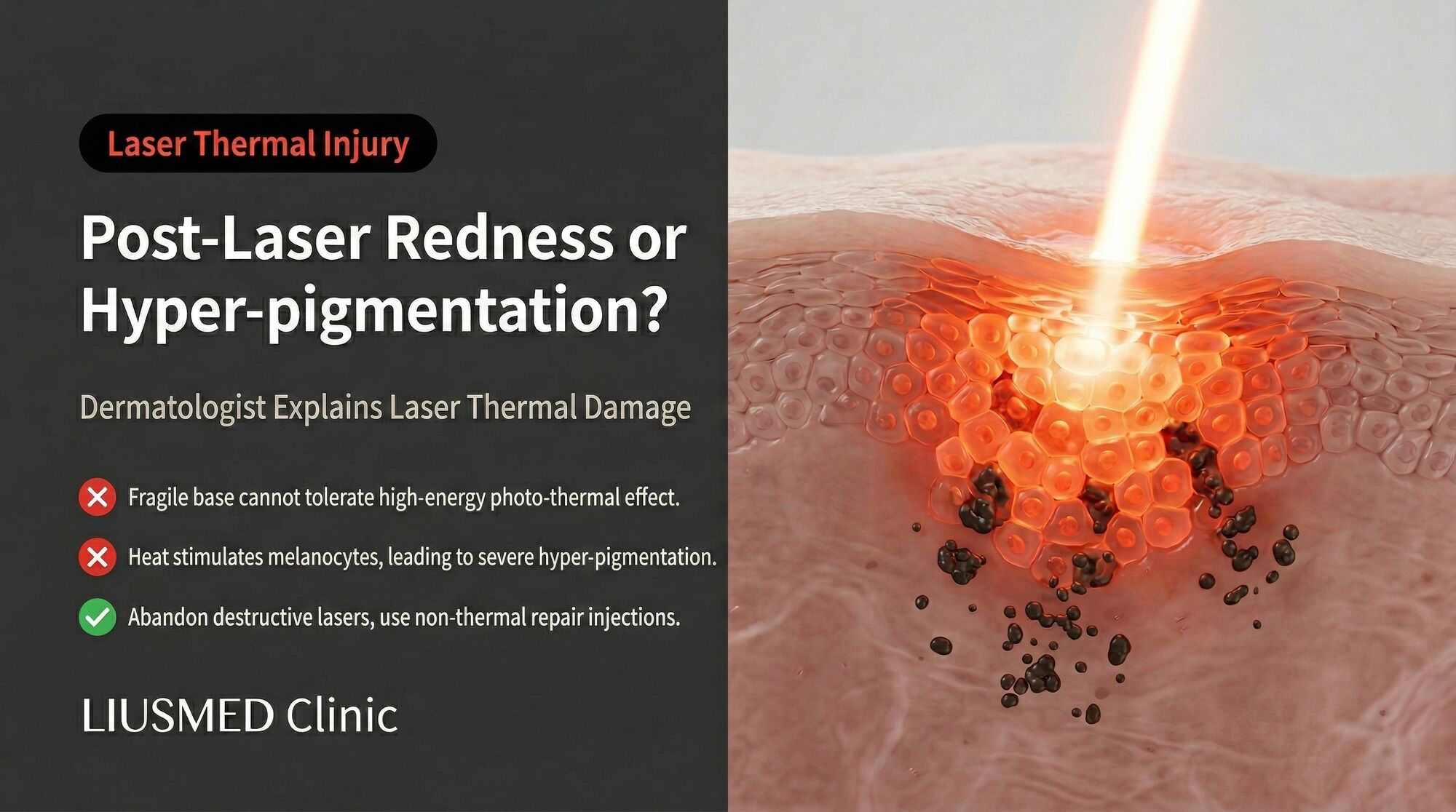
You went to the clinic for redness. After six months and four laser sessions, you have more redness, thinner-feeling skin, and a face that flares at stimuli it used to tolerate — warm rooms, mild exercise, lukewarm water. Your practitioner says you need more sessions. Something about this does not add up.
The experience of worsening rosacea after laser treatment is far more common than the aesthetic industry acknowledges. It is not a failure of technique in most cases, nor is it simply "your skin being difficult." It is a predictable biological consequence of applying repeated thermal energy to tissue that is already in a state of chronic inflammatory compromise.
Table of Contents
- What Thermal Damage Actually Means at the Tissue Level
- The Cumulative Effect: Why Each Session Can Make Things Worse
- How Heat Degrades the Dermal Support Structure
- Pericyte Loss and the Vicious Cycle of Unstable Vessels
- Recognizing Laser-Induced Worsening: Key Signs
- Recovery Pathways for Thermally Damaged Rosacea Skin
What Thermal Damage Actually Means at the Tissue Level {#what-thermal-damage-means}
Every laser and light device used on skin works through one fundamental mechanism: converting light energy into heat within target tissues. In the context of rosacea treatment, the intended target is oxyhemoglobin within dilated blood vessels. The laser heats the blood, the heat transfers to the vessel wall, and the vessel is destroyed.
However, thermal energy does not confine itself neatly to the intended target. Heat radiates outward from the vessel into surrounding tissue. The zone of thermal diffusion — the area around each targeted vessel that experiences elevated temperature — extends anywhere from 50 to 200 micrometers beyond the vessel wall, depending on pulse duration, fluence, and vessel diameter.
Within this zone, several types of collateral damage occur:
Collagen denaturation begins at approximately 60 degrees Celsius. The triple-helix structure of collagen fibrils unwinds, and while mild denaturation can trigger beneficial remodeling in healthy skin, in already-compromised rosacea tissue the remodeling response is dysregulated — producing disorganized, mechanically inferior collagen.
Fibroblast stress occurs at lower temperatures (45–55 degrees Celsius). Fibroblasts are the cells responsible for producing and maintaining the extracellular matrix. Thermal stress activates heat shock proteins and can push fibroblasts into a senescent state where they produce pro-inflammatory cytokines (the senescence-associated secretory phenotype, or SASP) rather than healthy matrix components.
Mast cell degranulation is triggered by temperatures as low as 42–45 degrees Celsius. Since rosacea skin already contains hyperactive mast cells with a lower degranulation threshold, laser treatment can trigger widespread histamine release that extends well beyond the treatment zone.
The result is that while the targeted vessel may be successfully destroyed, the surrounding tissue experiences a cascade of inflammatory and degenerative events that can exceed the therapeutic benefit.
The Cumulative Effect: Why Each Session Can Make Things Worse {#the-cumulative-effect}
The most insidious aspect of laser thermal damage in rosacea is its cumulative nature. A single, appropriately performed laser session may produce minimal collateral damage. The tissue has time to recover, the inflammatory spike resolves, and the net effect is positive. The problem emerges with repetition.
Each laser session adds a layer of thermal stress to tissue that has not fully recovered from the previous session. Standard treatment protocols call for sessions every four to six weeks, but dermal recovery from thermal injury — particularly in inflammatory skin — requires eight to twelve weeks minimum. This means most rosacea laser protocols are re-treating tissue before it has healed from the last session.
The cumulative pattern typically follows this trajectory:
Sessions 1–2: Net positive. Visible vessel reduction outweighs collateral thermal effects. Patient is encouraged.
Sessions 3–4: Diminishing returns. Fewer visible vessels remain as targets, so the laser-to-target ratio decreases while collateral thermal exposure to surrounding tissue remains constant. Some patients notice increased baseline sensitivity.
Sessions 5–6: Net negative becomes possible. The dermal matrix has accumulated significant subclinical damage. Background redness may increase even as telangiectasia count decreases. The patient notices that flares are more frequent and more severe.
Sessions 7+: For susceptible patients, the cumulative thermal load has degraded the perivascular support structure to the point where new vessels form faster, are less stable, and dilate more readily. The skin has crossed a threshold from which recovery requires active intervention, not just cessation of treatment.
This progression is not inevitable — some patients tolerate many sessions well, particularly those with robust dermal matrices and lower baseline inflammation. But for a significant subset of rosacea patients, the cumulative model explains their paradoxical worsening.
How Heat Degrades the Dermal Support Structure {#heat-degrades-dermal-support}
The dermis is not simply a container for blood vessels. It is a sophisticated structural matrix of collagen, elastin, glycosaminoglycans, and proteoglycans, populated by fibroblasts, mast cells, dendritic cells, and sensory nerve endings. This matrix provides mechanical support to blood vessels, regulates fluid exchange, and houses the immune sentinel cells that modulate inflammation.
Repeated thermal exposure degrades this matrix through several mechanisms:
Collagen cross-link disruption: Heat breaks the weak bonds (hydrogen bonds and hydrophobic interactions) that stabilize collagen's triple-helix structure. While the body can repair this damage, repeated cycles of denaturation and incomplete repair result in progressively disorganized collagen architecture. Skin that has undergone multiple thermal treatments often shows a characteristic loss of the organized basket-weave collagen pattern, replaced by loosely arranged, mechanically weaker fibrils.
Glycosaminoglycan depletion: Hyaluronic acid and other glycosaminoglycans are heat-sensitive. They maintain tissue hydration and provide the gel-like ground substance that supports cellular function. Thermal depletion of glycosaminoglycans reduces tissue hydration, impairs nutrient diffusion, and creates a drier, less resilient microenvironment.
Elastic fiber fragmentation: Elastin provides tissue recoil and flexibility. Once damaged by heat, elastic fibers are very slowly replaced (if at all in adult skin). Progressive elastin loss contributes to the "papery" or thin quality that some patients describe after extensive laser treatment.
Basement membrane thinning: The basement membrane separating the epidermis from the dermis, and surrounding each blood vessel, is a delicate structure vulnerable to both direct thermal damage and enzymatic degradation by heat-activated MMPs. A thinned basement membrane allows greater transepidermal water loss, increases sensitivity, and provides less structural support to vessels — which then dilate more easily.
Pericyte Loss and the Vicious Cycle of Unstable Vessels {#pericyte-loss}
Pericytes are specialized cells that wrap around capillaries and small venules, providing structural support, regulating blood flow, and communicating with endothelial cells to maintain vessel stability. In healthy skin, pericytes ensure that capillaries maintain appropriate diameter and respond normally to vasodilatory and vasoconstrictory signals.
In rosacea, pericyte coverage is already reduced compared to normal skin. Laser thermal damage further depletes pericytes through direct thermal injury and disruption of the signaling pathways (particularly PDGF-BB/PDGFR-beta) that maintain pericyte-endothelial cell adhesion.
The consequences of pericyte loss are significant:
| Characteristic | Pericyte-Covered Vessels | Pericyte-Deficient Vessels |
|---|---|---|
| Diameter regulation | Responsive to neural and chemical signals | Chronically dilated |
| Permeability | Tight endothelial junctions maintained | Leaky, allowing plasma extravasation |
| Response to VEGF | Modulated, controlled growth | Excessive, disorganized sprouting |
| Vessel stability | Mature, long-lived | Fragile, prone to rupture and remodeling |
| Response to vasodilatory triggers | Proportionate dilation, quick recovery | Exaggerated dilation, slow recovery |
| Appearance | Minimal contribution to redness | Significant contributor to diffuse erythema |
When laser treatment destroys vessels that had some pericyte coverage, the replacement vessels that form through angiogenesis often have even less pericyte coverage than the originals. This creates a progressive deterioration: each cycle of vessel destruction and regrowth produces a vascular network that is less stable, more reactive, and more visible than the one before.
This is the vicious cycle that explains why some patients genuinely worsen with each laser session. They are not imagining it, and their practitioner is not necessarily performing the treatment incorrectly. The biology of pericyte-deficient angiogenesis in an inflamed microenvironment simply favors vessels that are worse than the ones that were destroyed.
Recognizing Laser-Induced Worsening: Key Signs {#recognizing-laser-induced-worsening}
Patients and practitioners should monitor for the following signs that laser treatment may be causing cumulative harm:
Expanded trigger sensitivity: If stimuli that previously caused mild flushing now cause intense, prolonged flushing — or if new triggers emerge that were never problematic before — cumulative thermal damage to sensory nerve endings and mast cells may be responsible.
Faster recurrence between sessions: If the interval between "redness is acceptable" and "redness has returned" is shrinking with each session, this suggests that the angiogenic drive is increasing, not decreasing, with treatment.
Textural changes: Skin that feels thinner, more papery, or shows more visible underlying structures (veins, tendons in thin areas) may have experienced glycosaminoglycan depletion and dermal matrix degradation.
Prolonged post-treatment sensitivity: While some post-laser sensitivity is expected, if the recovery period is lengthening with each session — taking two weeks instead of five days to feel normal — the tissue's regenerative capacity is being outpaced by the thermal injury.
Development of burning sensation without visible trigger: A baseline burning or stinging quality, particularly in response to products that were previously tolerated, suggests thermal damage to dermal nerve endings with lowered activation thresholds.
If you recognize these patterns in your own experience, the most important first step is to stop. Continuing laser treatment in the presence of these signs will not produce a different outcome. The tissue needs time and support to recover before any further energy-based treatment can be beneficial.
Recovery Pathways for Thermally Damaged Rosacea Skin {#recovery-pathways}
Recovery from cumulative laser thermal damage is possible but requires patience and a fundamentally different approach from the one that caused the damage:
Immediate cessation of all energy-based treatments. This includes not only laser but also IPL (Intense Pulsed Light), radiofrequency, microneedling with radiofrequency, and LED therapy at high fluences. The tissue needs a minimum of three to six months without any additional thermal load.
Aggressive barrier rehabilitation. The damaged stratum corneum needs support through ceramide-rich, fragrance-free formulations applied consistently. Mineral-only sunscreen is essential, as thermally damaged skin has reduced melanin distribution and increased photosensitivity.
Anti-inflammatory microenvironment support. Addressing the perivascular inflammation that both preceded and was amplified by laser treatment is critical. This is where approaches like Rosacea Injection Treatment can deliver anti-inflammatory agents directly to the affected dermal tissue, bypassing the compromised barrier.
Pericyte recruitment support. Emerging protocols focus on promoting pericyte migration and adhesion to newly forming vessels, improving vessel stability and reducing the cycle of unstable angiogenesis.
Patience. Dermal matrix recovery is measured in months, not weeks. Collagen remodeling cycles are approximately 90 days. Meaningful structural improvement typically requires two to three complete remodeling cycles — six to nine months of consistent support without further thermal insult.
The path from laser-damaged rosacea back to stable, manageable skin is longer than anyone would like. But understanding the mechanism of damage is the first step toward appropriate recovery, and the evidence consistently shows that thermally damaged tissue can regain stability when given the right support and sufficient time.
For deciding what to do next, non-laser rosacea skin remodeling injection versus laser sets out how a structural-repair approach differs from adding further thermal treatment. Rather than targeting vessels with heat, it rebuilds the thinned dermis so that vessels regain support. On skin that has already been thermally injured, repairing that environment first is often the steadier route than another round of heat. How much improvement is possible, and how long it takes, varies with the depth of the injury and how well inflammation is controlled.
Frequently Asked Questions
Q1: Is all laser treatment for rosacea harmful, or is it just certain types?
Not all laser treatment is harmful. The risk of cumulative thermal damage is highest with aggressive parameters (high fluence, large spot sizes), short intervals between sessions, and treatment of actively inflamed skin. Conservative protocols with appropriate intervals on skin that has been pre-treated to reduce inflammation carry significantly lower risk. The problem is not laser technology itself but how it is applied — specifically, repeated high-thermal-load treatments on chronically inflamed tissue.
Q2: How can I tell the difference between normal post-laser recovery and actual thermal damage?
Normal post-laser recovery follows a predictable, diminishing pattern: redness and sensitivity peak at 24–48 hours, then steadily improve over five to seven days. Thermal damage signs include sensitivity that lasts beyond two weeks, new trigger sensitivities that persist after healing, baseline burning sensations that were not present before treatment, and textural changes (thinning, increased translucency) that do not resolve.
Q3: My practitioner uses cooling devices during laser treatment. Does that prevent thermal damage?
Contact cooling and cryogen spray cooling protect the epidermis effectively, reducing surface thermal injury and pain. However, they have limited ability to prevent thermal diffusion at the dermal level where vessels are located. The thermal damage to perivascular tissue occurs at the depth of the target vessels (150–400 micrometers into the dermis), which is beyond the effective range of surface cooling. Cooling reduces epidermal risk but does not eliminate dermal collateral damage.
Q4: I have had ten or more laser sessions and my skin is significantly worse. Can the damage be reversed?
Extensive cumulative thermal damage requires more time and more active intervention than mild damage, but recovery is still achievable for most patients. The key factors are complete cessation of thermal treatments, active barrier and matrix repair, anti-inflammatory support delivered to the dermal level, and realistic timeframes — typically nine to eighteen months for significant improvement after extensive damage. Complete return to pre-treatment baseline may not always be possible, but meaningful improvement in both appearance and comfort is a realistic goal.
Q5: Are there any laser types that are safer for rosacea than pulsed dye laser?
No laser type eliminates the fundamental issue of thermal energy delivery to inflamed tissue. Nd:YAG (1064 nm) lasers penetrate deeper with less surface purpura but still generate perivascular heat. KTP (532 nm) lasers have similar thermal profiles to PDL (Pulsed Dye Laser). The question is not which laser is safest but whether the tissue is in an appropriate state to receive any thermal energy at all. A safe laser on unprepared rosacea skin is still problematic.
Q6: Should I warn my new dermatologist about my previous laser history before starting any new treatment?
Absolutely. Your complete laser history — number of sessions, dates, device types, parameters if known, and your skin's response to each — is critical information for any new treating practitioner. Previous cumulative thermal exposure fundamentally changes the treatment approach. A practitioner who begins a new laser protocol without knowing your history is operating without essential information that directly affects treatment safety and efficacy.
About the Author
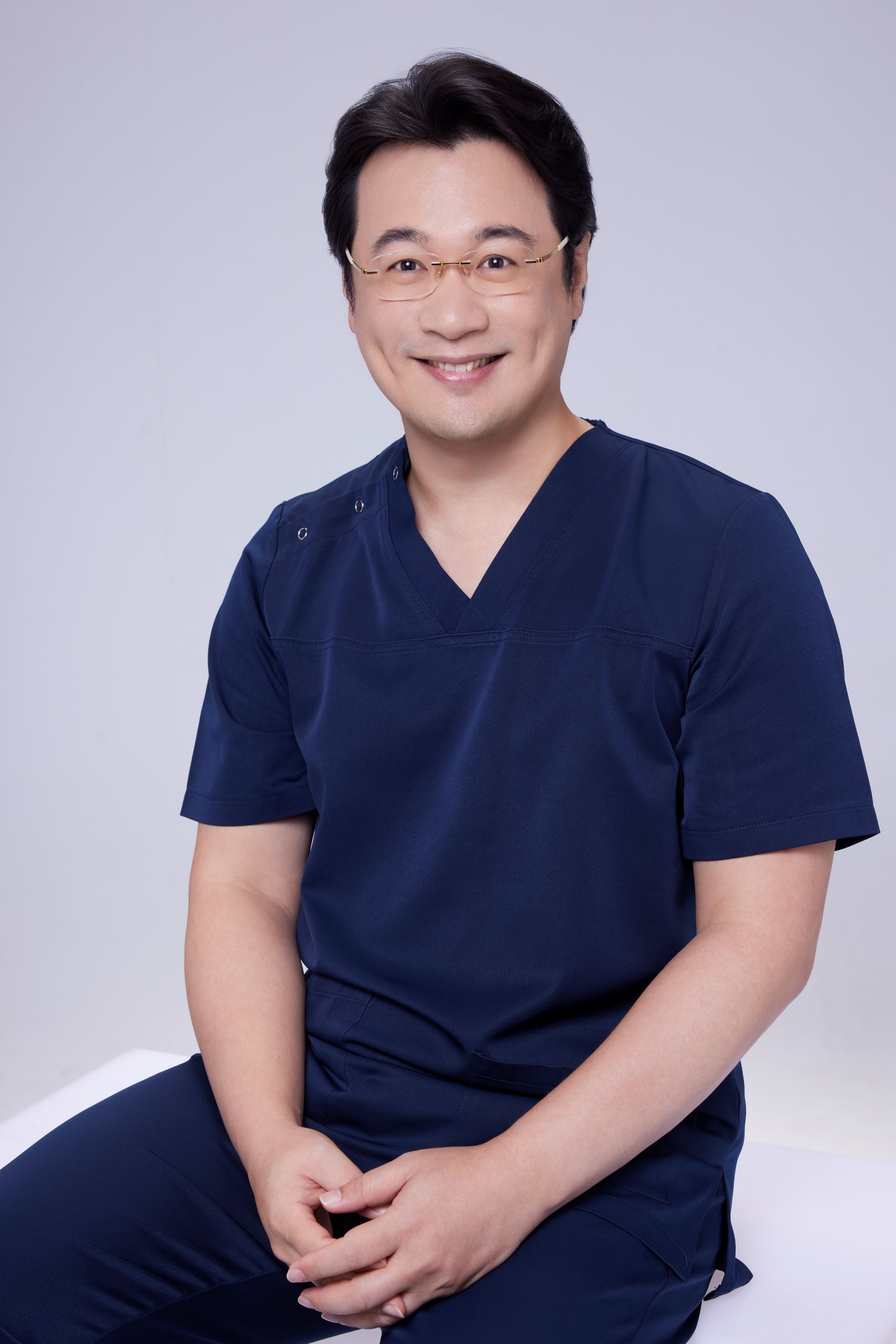
Dr. Ta-Ju Liu is the founder of Liusmed Clinic, specializing in regenerative medicine and minimal incision surgery. With extensive experience treating patients who have experienced complications from aggressive aesthetic treatments, Dr. Liu has developed protocols specifically designed to rehabilitate thermally damaged rosacea skin. Liusmed Clinic emphasizes tissue preservation and repair over ablative or thermal approaches, serving patients from Taiwan and around the world who seek evidence-based treatment for complex skin conditions.
Disclaimer
This article is provided for educational and informational purposes only and does not constitute medical advice, diagnosis, or treatment. Individual responses to laser treatment vary significantly based on skin type, rosacea subtype, treatment parameters, and other factors. Not all patients who undergo laser treatment for rosacea will experience worsening. Treatment decisions should be made in consultation with a qualified healthcare provider familiar with your specific medical history.
Specialties
Credentials
- Kaohsiung Medical University, School of Medicine
- Attending Physician, Dermatology, Kaohsiung Chang Gung Memorial Hospital
- Attending Physician, Aesthetic Center, Kaohsiung Chang Gung Memorial Hospital
- Visiting Physician, Dermatology, Xiamen Chang Gung Hospital
- Visiting Physician, Aesthetic Center, Xiamen Chang Gung Hospital
"For every surgery, I strive to achieve a good outcome through a small incision and refined technique. Minimally invasive surgery is not just a technique — it's a commitment of respect to every patient."
Recovery after any procedure needs peer support too


Want to learn more?
Schedule a consultation for professional evaluation and advice