A Letter to Those Who Have Suffered Years of Redness and Papules: Rosacea Is a Battle That Science Can Control
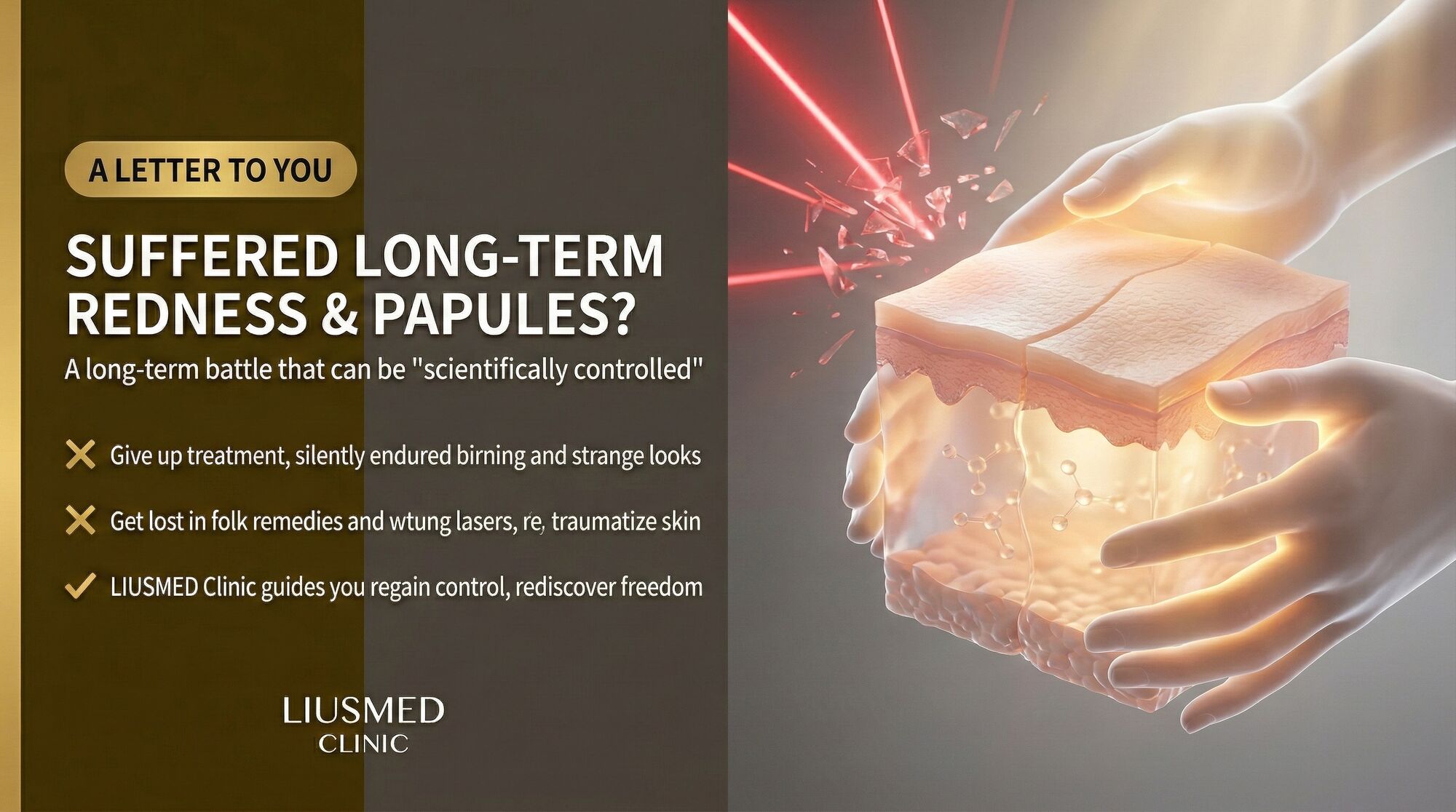
If you are reading this, you have probably lived with rosacea for years. You know the morning mirror check, the mental calculation of how red your face is today, the decision about whether you can face the world with or without concealer. You have memorized your triggers, apologized for your flushing at dinner parties, and explained to well-meaning friends that no, it is not sunburn. You may have tried half a dozen treatments and cycled through hope and disappointment so many times that cynicism feels like self-protection. This letter is not here to sell you hope. It is here to give you information, because rosacea science has advanced significantly in recent years, and many patients are still being treated with frameworks that predate that progress.
Table of Contents
- What We Now Understand About Rosacea
- Why Previous Treatments May Have Failed You
- The Tissue Repair Paradigm: A Different Framework
- What Controllable Really Means
- The Psychological Dimension Is Real and Valid
- A Practical Path Forward
What We Now Understand About Rosacea
A decade ago, rosacea was understood primarily as a vascular disorder: blood vessels dilated too easily, stayed dilated too long, and eventually became permanently visible. Treatment followed logically from this understanding: constrict the vessels, destroy the visible ones, reduce the redness.
Current science tells a more complete story. Rosacea is now understood as a multi-system dysfunction involving at least four interconnected pathways.
Innate immune dysregulation. The cathelicidin pathway, part of the skin's innate immune defense, is overactive in rosacea. The enzyme kallikrein 5 cleaves cathelicidin into pro-inflammatory fragments (LL-37) that promote inflammation and vascular growth. This is not an infection or an allergy. It is the skin's own defense system misfiring.
Neurovascular hypersensitivity. Transient receptor potential (TRP) channels in rosacea skin, particularly TRPV1 (Transient Receptor Potential channels) and TRPA1, have lowered activation thresholds. This means stimuli that would produce no response in normal skin, such as mild temperature changes, minor stress, or common food ingredients, trigger a full vascular dilation response. The nerves are too sensitive, and the blood vessels are too responsive.
Barrier dysfunction. The stratum corneum in rosacea patients shows altered lipid composition, reduced ceramide levels, and elevated transepidermal water loss. This compromised barrier allows environmental irritants to penetrate more easily and moisture to escape more readily, creating a perpetual state of low-grade irritation that feeds the inflammatory cycle.
Dermal matrix degradation. Chronic inflammation breaks down the collagen and elastin framework in the dermis. This degraded matrix cannot provide adequate structural support to blood vessels, contributing to permanent dilation (telangiectasia) and making the skin more susceptible to further damage.
The critical insight is that these four pathways are interconnected. Barrier dysfunction increases irritant penetration, which activates the innate immune system, which promotes inflammation, which degrades the dermal matrix, which weakens vascular support, which worsens visible symptoms. No single-target treatment can break this cycle because the cycle has no single entry point.
Why Previous Treatments May Have Failed You
Understanding the multi-pathway nature of rosacea explains why many conventional treatments produce temporary improvement but fail to achieve lasting control.
Topical antibiotics (metronidazole, azelaic acid) reduce inflammatory papules by suppressing bacterial activity and modulating local immune response. They do not repair the skin barrier, rebuild the dermal matrix, or address neurovascular hypersensitivity. When discontinued, the underlying drivers remain intact and symptoms return.
Oral antibiotics (doxycycline, minocycline) have anti-inflammatory properties beyond their antibacterial effects. Sub-antimicrobial doses can reduce papular inflammation effectively. However, they do not address barrier dysfunction or dermal matrix degradation, and long-term use carries concerns about microbiome disruption and antibiotic resistance.
Topical vasoconstrictors (brimonidine, oxymetazoline) produce rapid and dramatic reduction in redness by constricting blood vessels. The effect is temporary, lasting hours, and rebound vasodilation is common. These medications manage a symptom moment-to-moment without addressing any underlying pathway.
Vascular lasers (pulsed dye laser, KTP laser, IPL) destroy visible telangiectasia through selective photothermolysis. In healthy surrounding tissue, destroyed vessels are absorbed and the area heals. In rosacea tissue with elevated VEGF (Vascular Endothelial Growth Factor — new blood vessel signal), degraded matrix, and chronic inflammation, new abnormal vessels can form within months. Additionally, repeated thermal exposure can further compromise an already-weakened barrier.
Topical retinoids can normalize skin cell turnover and have some anti-inflammatory effect. However, they frequently cause irritation and barrier disruption in rosacea skin, worsening the very vulnerability they are trying to address.
None of these treatments is inherently wrong. Each addresses a real aspect of rosacea. The problem is that none of them, alone or in typical combination, addresses the full multi-pathway dysfunction. They manage individual symptoms while the underlying tissue environment continues to decline.
The Tissue Repair Paradigm: A Different Framework
The tissue repair paradigm begins with a different question. Instead of asking what symptoms need to be suppressed, it asks what tissue conditions need to be restored for the skin to regulate itself.
This reframing produces a treatment approach organized around four repair objectives:
Objective 1: Restore barrier integrity. Deliver physiological lipids (ceramides, cholesterol, free fatty acids) in ratios that match the healthy stratum corneum. Reduce transepidermal water loss. Normalize surface pH. Create a functional first line of defense that reduces irritant penetration and inflammatory stimulation.
Objective 2: Rebalance the immune microenvironment. Shift the local immune response away from chronic Th1/Th17 activation toward balanced surveillance. Reduce cathelicidin overproduction and kallikrein 5 activity. Decrease the concentration of pro-inflammatory mediators in the dermis.
Objective 3: Rebuild the dermal matrix. Stimulate organized collagen deposition and elastin cross-linking. Restore the structural scaffold that supports normal vascular architecture. Create a tissue environment that constrains vessel caliber and resists the formation of new telangiectasia.
Objective 4: Stabilize neurovascular reactivity. As barrier function improves and dermal inflammation decreases, the sensory threshold for neurovascular activation gradually rises. The skin becomes less reactive, not because nerve signals are being blocked, but because the tissue environment that was driving hypersensitivity has been normalized.
At Liusmed Clinic, this framework informs the Rosacea Injection Treatment protocol, which addresses all four objectives through regenerative medicine principles rather than relying solely on symptomatic suppression.
What Controllable Really Means
The word "controllable" deserves careful definition because it is easily misinterpreted as either too optimistic or too pessimistic.
Rosacea involves genetic predispositions that current medicine cannot alter. Polymorphisms in genes affecting the innate immune system, vascular reactivity, and skin barrier composition create a baseline susceptibility that is part of your biology. No treatment can change your genetic makeup.
What treatment can change is the tissue environment in which those genes operate. A person genetically predisposed to rosacea but with a healthy, well-maintained skin barrier, balanced immune microenvironment, and structurally sound dermal matrix may experience minimal or no clinical symptoms. The genetic predisposition exists, but the conditions that activate it are absent.
"Controllable" means achieving and maintaining a tissue environment in which your genetic predisposition does not produce clinical disease. In practical terms, this means:
- Extended periods of clear or near-clear skin without active treatment
- Significantly elevated trigger thresholds (stimuli that once caused flares no longer do)
- Rapid recovery from occasional flares (hours or days rather than weeks)
- Ability to maintain skin health with a simple daily routine rather than complex pharmaceutical regimens
- Progressive reduction in treatment frequency and intensity over time
This is not a cure. It is sustainable management through tissue health, and for many patients, it is functionally indistinguishable from not having rosacea.
The Psychological Dimension Is Real and Valid
Rosacea is classified as a dermatological condition, but its impact is profoundly psychological. Research consistently demonstrates that rosacea patients experience higher rates of anxiety, depression, social avoidance, and diminished quality of life compared to the general population. The severity of psychological impact does not always correlate with the severity of visible symptoms; even mild rosacea can produce significant distress.
If you have experienced any of the following, you are not alone and you are not overreacting:
- Avoiding social situations because of your skin
- Spending significant time and mental energy on concealment
- Feeling that others are judging your appearance
- Experiencing frustration or hopelessness after treatment failures
- Altering career decisions based on skin concerns
- Feeling dismissed when doctors describe your rosacea as "mild" while you experience it as life-altering
These responses are normal reactions to a visible, chronic condition in a society that places enormous value on facial appearance. They are not signs of weakness or vanity.
Effective rosacea treatment should acknowledge and address the psychological dimension alongside the physical. As tissue health improves and flares become less frequent and less severe, many patients report a disproportionately large improvement in psychological well-being. The relationship between skin and psyche is bidirectional: reduced stress also supports skin barrier function, creating a positive cycle.
A Practical Path Forward
If you have been living with rosacea for years and previous treatments have not produced lasting improvement, here is a concrete framework for moving forward.
Step 1: Get a comprehensive tissue assessment. Move beyond visual evaluation. Request measurement of transepidermal water loss, skin hydration, and surface pH. These measurements establish whether your skin barrier is functioning and provide a baseline for tracking genuine tissue improvement. Any clinic treating rosacea seriously should have this capability.
Step 2: Audit your current treatment for tissue impact. Evaluate each element of your current regimen not just for symptom control but for tissue effect. Is your treatment reducing TEWL (Transepidermal Water Loss) or increasing it? Is your trigger sensitivity expanding or contracting? Are your remission intervals lengthening or shortening? These trends reveal whether your current path leads toward recovery or toward progressive tissue decline.
Step 3: Prioritize barrier repair. Regardless of what other treatments you pursue, barrier repair is the foundation. A compromised barrier undermines every other intervention. This means physiological lipid replacement, gentle cleansing, consistent sun protection, and avoidance of barrier-disrupting ingredients and procedures until function is restored.
Step 4: Consider a multi-pathway approach. If single-target treatments have failed, the logical step is not stronger single-target treatments but a framework that addresses the multiple pathways driving your rosacea simultaneously. This is where physicians with expertise in both dermatology and regenerative medicine can offer strategies that conventional single-specialty care cannot.
Step 5: Be patient but measure relentlessly. Tissue repair is slower than symptom suppression. Rebuilding a healthy dermal matrix and restoring barrier function takes months, not days. But unlike symptomatic treatments, genuine tissue repair is cumulative and self-sustaining. Measure your progress objectively. If the numbers are improving, even slowly, you are on the right path.
Step 6: Address the psychological dimension. If rosacea has affected your mental health, seek support. This can include professional counseling, peer support communities, or simply acknowledging to yourself that the emotional burden of this condition is real and deserving of attention. You do not need to wait until your skin is perfect to invest in your psychological well-being.
Frequently Asked Questions
Q1: I have had rosacea for over a decade. Is it too late for tissue repair to work?
No. Tissue repair capacity does decrease with age and chronic damage, but it does not disappear. Patients with long-standing rosacea can and do achieve significant improvement through repair-focused approaches. The timeline may be longer than for someone with recent-onset disease, but the trajectory of progressive improvement is achievable.
Q2: My rosacea is "only" type 1 (erythematotelangiectatic). Do I still need a multi-pathway approach?
Type 1 rosacea involves barrier dysfunction, neurovascular hypersensitivity, and dermal matrix changes even in the absence of papules. The four pathways are active in all rosacea subtypes, though their relative prominence varies. A multi-pathway approach benefits all subtypes.
Q3: Can diet really affect rosacea at the tissue level?
Yes. Dietary factors influence systemic inflammation, gut microbiome composition (which modulates immune function), and the availability of nutrients required for barrier maintenance and collagen synthesis. Diet alone is unlikely to resolve established rosacea, but it is a meaningful supportive factor in a comprehensive tissue repair strategy.
Q4: Should I stop all my current medications immediately and switch to a repair approach?
No. Abrupt discontinuation of medications, especially topical steroids or vasoconstrictors, can trigger severe rebound flares. Any transition should be gradual and medically supervised. A repair approach can often be initiated in parallel with existing treatments, with medications tapered as tissue health improves.
Q5: How do I find a doctor who practices the tissue repair paradigm?
Look for physicians with training in both dermatology and regenerative medicine. Ask specific questions: Do you measure TEWL and skin barrier function? Do you have a strategy for dermal matrix repair? Do you track objective tissue health indicators over time? A physician who answers yes to these questions is likely working within a tissue-repair framework.
Q6: Is rosacea truly a battle that science can control, or is that just encouraging language?
It is a statement of scientific reality. The mechanisms of rosacea are increasingly well understood. The tools for tissue repair, including barrier restoration, immune modulation, and matrix remodeling, exist and are supported by evidence. The gap is not in the science but in the translation of that science into clinical practice. Patients who access multi-pathway, repair-focused care are achieving levels of control that were not possible a decade ago.
About the Author
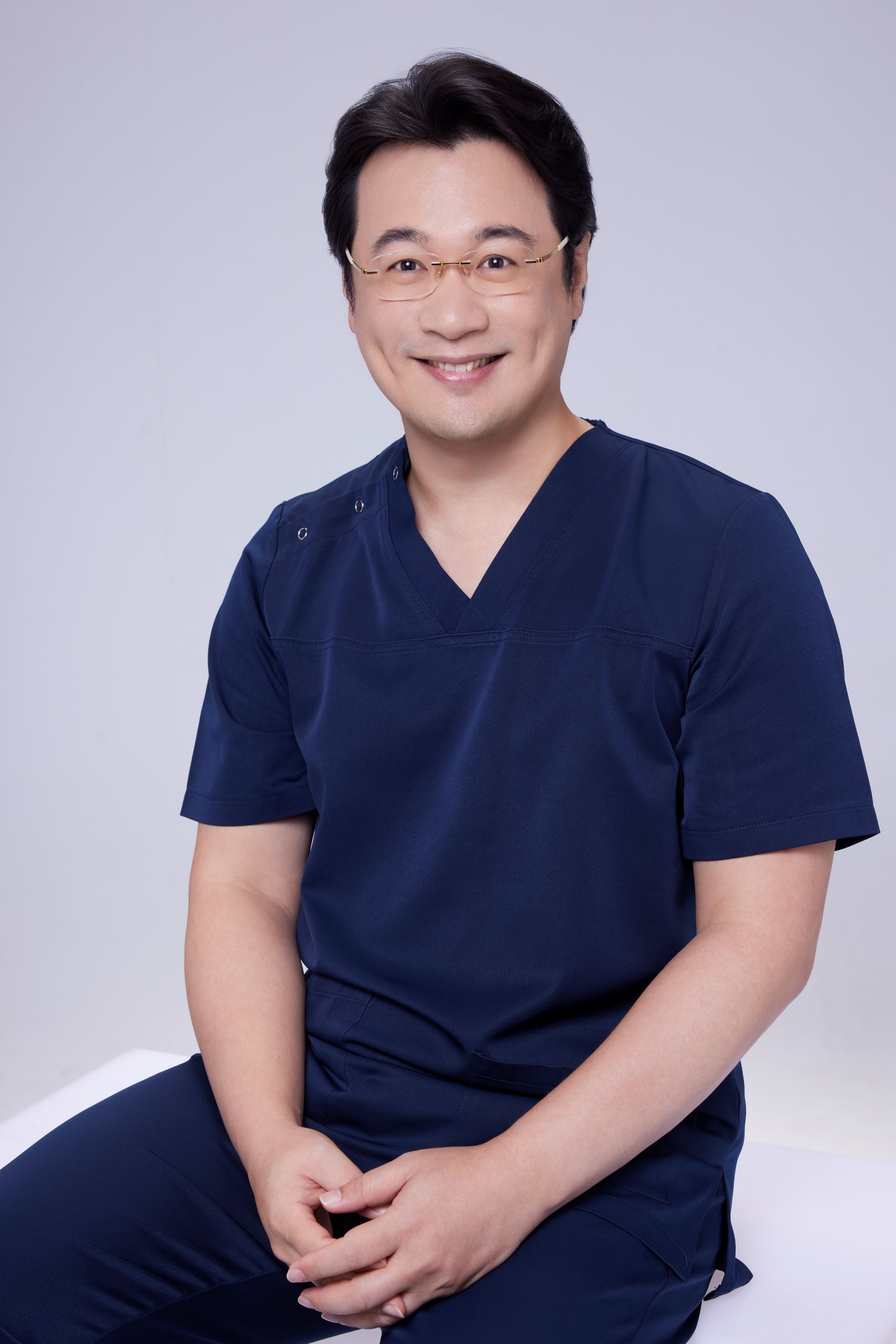
Dr. Ta-Ju Liu is the founder and lead physician at Liusmed Clinic in Taiwan. His practice integrates regenerative medicine with dermatological expertise, specializing in rosacea treatment, skin barrier restoration, and minimal incision surgery. Dr. Liu's clinical experience treating rosacea patients who have exhausted conventional options has shaped his conviction that tissue repair, not symptom suppression, is the path to sustainable rosacea management. He wrote this article for the patients who have been told to "just manage it" and deserve to know that more is possible.
Disclaimer
This article is provided for educational and informational purposes only and does not constitute medical advice, diagnosis, or treatment. Rosacea is a complex condition with significant individual variability. The information presented here reflects current scientific understanding and one clinical perspective but should not replace individualized medical evaluation. Do not modify or discontinue any prescribed treatment without consulting your treating physician. Psychological symptoms associated with rosacea may require professional mental health support in addition to dermatological care.
Specialties
Credentials
- Kaohsiung Medical University, School of Medicine
- Attending Physician, Dermatology, Kaohsiung Chang Gung Memorial Hospital
- Attending Physician, Aesthetic Center, Kaohsiung Chang Gung Memorial Hospital
- Visiting Physician, Dermatology, Xiamen Chang Gung Hospital
- Visiting Physician, Aesthetic Center, Xiamen Chang Gung Hospital
"For every surgery, I strive to achieve a good outcome through a small incision and refined technique. Minimally invasive surgery is not just a technique — it's a commitment of respect to every patient."
Recovery after any procedure needs peer support too


Want to learn more?
Schedule a consultation for professional evaluation and advice