Facing Melasma Recurrence Anxiety: How a Professional Repair Clinic Helps You Regain Bare-Skin Confidence
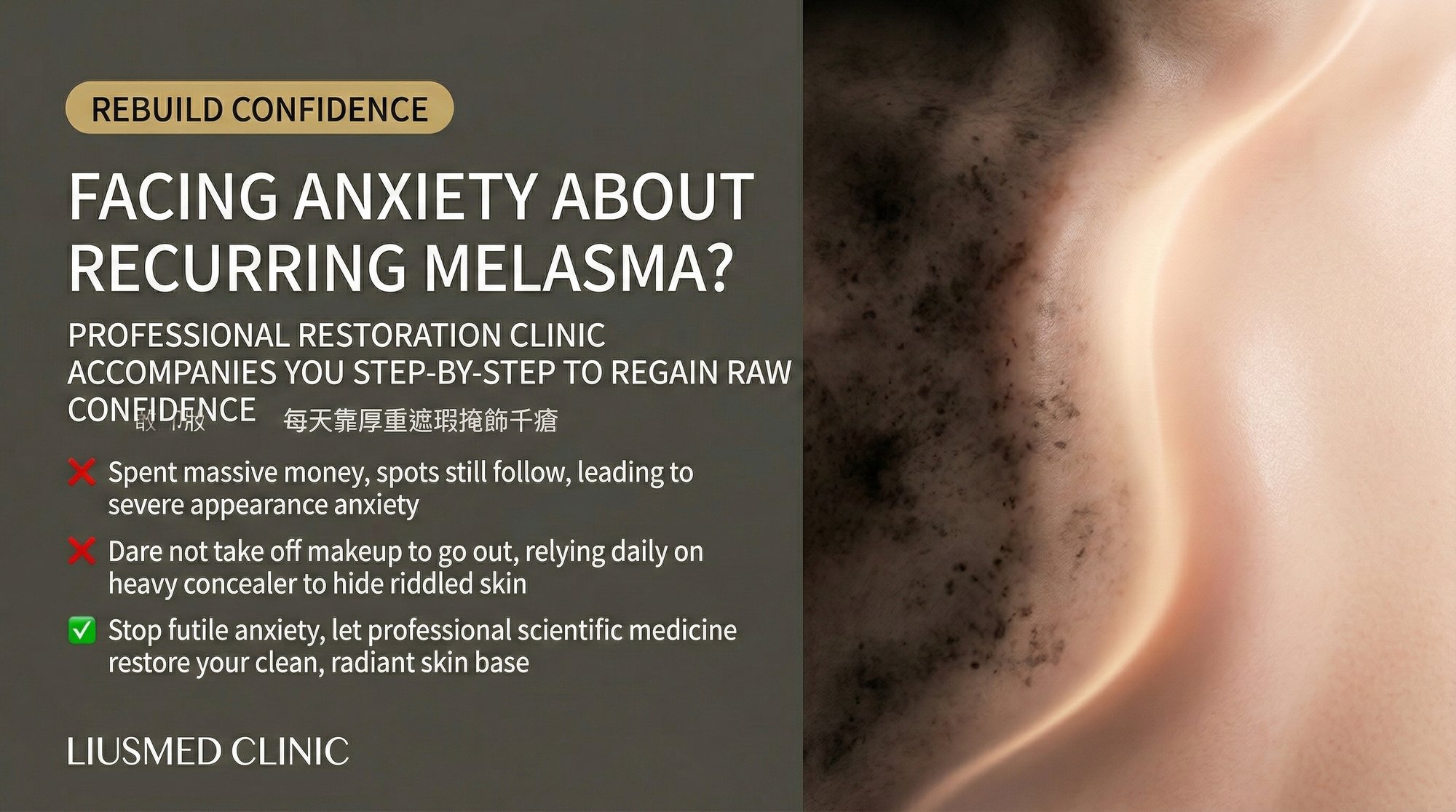
There is a particular kind of dread that settles over someone who has watched their melasma fade after treatment, only to see it creep back weeks or months later. It is not just the pigmentation returning — it is the collapse of hope. The first recurrence is disappointing. The second is demoralizing. By the third or fourth, many patients develop what can only be described as melasma recurrence anxiety: a persistent fear that no treatment will ever work, that their skin is fundamentally broken, and that they are trapped in an endless cycle of temporary improvement and inevitable relapse.
This anxiety is not irrational. It is a perfectly logical response to a pattern of real experiences. And addressing it requires more than reassurance — it requires a fundamentally different approach to treatment that breaks the cycle at its root.
Table of Contents
- The Psychology of Melasma Recurrence
- Why Conventional Treatment Creates Anxiety Cycles
- What Changes When You Work With a Repair-Focused Clinic
- Rebuilding Trust: The Patient-Clinic Relationship in Melasma Care
- Practical Steps Toward Bare-Skin Confidence
- Long-Term Maintenance: Preventing Recurrence Without Fear
- Frequently Asked Questions
- About the Author
- Disclaimer
The Psychology of Melasma Recurrence {#psychology-of-recurrence}
Melasma occupies a unique psychological space among skin conditions. Unlike acne, which often resolves with age, or eczema, which has visible acute flares that respond to treatment, melasma presents as a persistent alteration of one's facial appearance — the most visible and identity-linked part of the body. The patches are there every morning in the mirror, every time a photo is taken, every moment under fluorescent lighting.
Research consistently shows that melasma has a significant negative impact on quality of life, comparable to or exceeding that of other dermatological conditions. The psychosocial burden includes reduced self-esteem, social avoidance, decreased professional confidence, and in some cases, clinically significant anxiety and depression.
Recurrence compounds these effects exponentially. Each failed treatment cycle does not simply return the patient to baseline — it adds a layer of learned helplessness. Patients begin to believe that their condition is uniquely untreatable, that they have tried everything, and that further attempts will only lead to more disappointment and wasted resources.
This belief system, once established, creates its own barriers to treatment. Patients may delay seeking care, settle for heavy concealer as a permanent coping strategy, or approach new treatments with such deep skepticism that they discontinue prematurely when results are not immediately apparent.
Understanding this psychological reality is not peripheral to melasma treatment — it is central. A clinic that treats melasma without acknowledging and addressing the emotional experience of the condition is treating only half the problem.
Why Conventional Treatment Creates Anxiety Cycles {#anxiety-cycles}
The structure of conventional melasma treatment inadvertently amplifies recurrence anxiety through several mechanisms:
The promise-disappointment cycle. Many clinics, often with the best intentions, present treatments with optimistic framing that sets expectations too high. When patients are told that a laser series will clear their melasma, the initial improvement feels like confirmation — finally, something works. The subsequent recurrence is then experienced not as a characteristic of the disease but as a personal failure or a betrayal by the treatment provider.
Short-term metrics, long-term frustration. Conventional treatment success is often measured by immediate post-treatment improvement in MASI (Melasma Area and Severity Index) scores or visual appearance. These short-term metrics can be impressive while masking the fact that the underlying pathology remains unaddressed. The patient sees dramatic clearing at week 8 and devastating recurrence at month 6.
Lack of recurrence planning. Many treatment plans end when the active treatment series is completed. There is no structured maintenance protocol, no planned follow-up to catch early recurrence, and no adjustment strategy for when — not if — the condition begins to reassert itself. The patient is left to discover the recurrence on their own and must then initiate a new cycle of consultation and treatment from scratch.
Incomplete pathological assessment. When treatment targets only the visible pigment without addressing the underlying vascular, inflammatory, and structural components of melasma, recurrence is not just likely — it is mechanistically inevitable. The patient does not understand why the melasma keeps coming back because the underlying reasons were never explained.
Treatment damage accumulation. Each round of aggressive treatment can cause incremental tissue damage — thinning epidermis, compromised basement membrane, sensitized skin. Over multiple treatment cycles, the skin becomes progressively less able to respond to treatment and more prone to rebound hyperpigmentation. The condition genuinely becomes harder to treat over time, confirming the patient's fear that their melasma is getting worse.
What Changes When You Work With a Repair-Focused Clinic {#repair-focused-clinic}
A professional repair clinic like Liusmed Clinic approaches melasma from a fundamentally different starting point. The difference is not just in the treatments offered — it is in the entire framework of care.
Honest prognostic communication. From the first consultation, melasma is framed as a chronic, manageable condition rather than a curable disease. This may sound less appealing than a promise of permanent clearing, but it is the foundation of realistic expectations and sustainable hope. When a patient understands that the goal is durable control with minimal maintenance rather than a one-time cure, every improvement is experienced as a genuine win rather than a temporary reprieve before the next disappointment.
Root-cause treatment planning. The Melasma Injection Treatment approach at Liusmed Clinic begins with comprehensive assessment of the tissue-level pathology driving each patient's condition. By identifying and addressing the specific combination of factors — inflammation, vascularity, basement membrane status, hormonal influence — the treatment plan targets the roots of recurrence rather than just the visible symptoms.
Phased treatment with built-in maintenance. Treatment is designed in phases, with maintenance as an integral part of the plan from the beginning — not an afterthought. The transition from active treatment to maintenance is gradual and planned, with clear criteria for adjusting the approach based on the patient's response.
Damage assessment and rehabilitation. For patients with a history of multiple prior treatments, the first phase of care often involves assessing and repairing the tissue damage caused by those treatments. This may mean a period of active restraint — not treating the melasma directly but instead rehabilitating the skin so that subsequent treatment can be effective. This concept is counterintuitive for patients who feel urgent to see improvement, but it is often the key that unlocks sustained progress.
Rebuilding Trust: The Patient-Clinic Relationship in Melasma Care {#rebuilding-trust}
Patients with recurrence anxiety have typically lost trust — in their skin, in treatments, and often in healthcare providers. Rebuilding that trust requires specific relational practices:
Validation of past experience. Patients need to hear that their frustration is justified and that their treatment failures were not their fault. The recurrence they experienced was a predictable consequence of treatment approaches that did not address the full pathology of their condition. This validation is therapeutic in itself.
Transparent communication about uncertainty. No physician can guarantee outcomes for a complex, multifactorial condition. A trustworthy clinic acknowledges uncertainty openly: treatment plans are presented with realistic ranges of expected outcomes, and patients are told clearly what is known, what is uncertain, and what factors might influence their individual response.
Regular progress documentation. Standardized photography and quantitative measurement at regular intervals create an objective record of progress. This is important because melasma patients often have difficulty perceiving gradual improvement — they become habituated to their appearance and may not recognize meaningful change without documentation to refer to.
Accessible communication channels. Between appointments, patients should have a clear pathway to ask questions, report concerns, or seek reassurance. The interval between appointments should not feel like a void. Knowing that support is available — even if it is not needed — reduces anxiety significantly.
Collaborative decision-making. Rather than presenting a treatment plan as a directive, effective melasma care involves the patient as an active participant. When patients understand the reasoning behind each phase of treatment, they are better equipped to maintain their regimen, manage expectations, and communicate effectively about their experience.
Practical Steps Toward Bare-Skin Confidence {#practical-steps}
Regaining confidence in bare skin is a gradual process that parallels the physiological improvement. Several practical strategies support this process:
Graduated exposure. Patients who have relied on heavy concealer or makeup to hide melasma often benefit from gradually reducing coverage as their skin improves. This might mean going without concealer at home first, then in low-stakes social settings, then in professional contexts. The key is that each step feels manageable rather than overwhelming.
Reframing the timeline. Melasma did not develop overnight, and it will not resolve overnight. Patients who reframe their expectations from weeks to months — and who measure progress in terms of stability and trajectory rather than day-to-day appearance — experience less anxiety and more satisfaction with treatment.
Sun protection as empowerment. Rather than experiencing photoprotection as a burden or a reminder of their condition, patients can reframe it as an active, empowering choice. Consistent, high-quality sun protection is one of the most effective things a patient can do to maintain treatment results, and understanding this gives patients a sense of agency.
Mindful mirror habits. Obsessive mirror-checking under harsh lighting amplifies anxiety and distorts perception. Some patients benefit from establishing intentional habits around when and how they assess their skin — for example, checking once daily in natural light rather than repeatedly under fluorescent lighting.
Community and perspective. Knowing that melasma affects millions of people worldwide, that it is a medical condition and not a cosmetic failure, and that effective management is achievable can provide meaningful perspective. Support communities, whether online or in person, can reduce the isolation that many melasma patients feel.
Long-Term Maintenance: Preventing Recurrence Without Fear {#long-term-maintenance}
The goal of a professional repair clinic is not just to improve melasma but to give patients a sustainable maintenance framework that prevents recurrence without creating dependence or anxiety.
| Maintenance Component | Purpose | Frequency |
|---|---|---|
| Topical regimen | Ongoing melanocyte modulation, barrier support | Daily |
| Photoprotection | UV trigger avoidance | Daily |
| In-clinic assessment | Early detection of recurrence, protocol adjustment | Every 3-6 months |
| Maintenance treatment | Sustained tissue-level support | As individually indicated |
| Lifestyle optimization | Hormonal, heat, and stress trigger management | Ongoing |
The critical distinction is that maintenance is proactive, not reactive. Rather than waiting for recurrence and then scrambling to treat it, maintenance protocols are designed to keep the tissue environment stable so that recurrence is less likely to occur in the first place.
When recurrence does occur — and in some patients, minor fluctuations are expected — the maintenance framework allows for early intervention before the condition can re-establish itself. A small area of darkening addressed promptly at a scheduled check-up is a very different experience from discovering a major recurrence months after treatment ended.
This is how recurrence anxiety is gradually replaced by recurrence preparedness — and eventually, by a sustained sense of control.
Frequently Asked Questions
Q1: Is it normal to feel anxious about starting melasma treatment again after past failures?
Absolutely. Treatment anxiety after repeated failures is a completely rational response to a pattern of disappointing experiences. At Liusmed Clinic, we recognize this anxiety as a legitimate part of the clinical picture and address it through honest communication, realistic expectation-setting, and a treatment approach designed to break the recurrence cycle that caused the anxiety in the first place.
Q2: How do I know if a repair clinic is genuinely different from the clinics where my treatment failed?
Key indicators include: willingness to discuss your previous treatment history in detail and explain why those treatments may have failed; framing melasma as a chronic condition requiring ongoing management rather than promising a permanent cure; assessing tissue-level pathology rather than jumping directly to device-based treatment; and including a structured maintenance plan as part of the treatment design from the beginning.
Q3: What if my melasma recurs even with tissue-level treatment?
Recurrence does not mean treatment failure. In a well-designed management plan, minor fluctuations are expected and are addressed promptly through the maintenance protocol. The difference is that with tissue-level repair, recurrences tend to be milder, less frequent, and more responsive to intervention than the dramatic rebounds that follow surface-level treatments. Learn more about our Melasma Injection Treatment maintenance approach.
Q4: Can the psychological impact of melasma be addressed alongside the physical treatment?
Yes. While Liusmed Clinic is not a mental health practice, we recognize the psychological dimension of melasma and integrate supportive communication, realistic goal-setting, and progressive confidence-building into our care approach. For patients with clinically significant anxiety or depression, we encourage concurrent care with a mental health professional.
Q5: How long does it typically take to feel confident in bare skin again?
This varies enormously between patients and depends on the severity of the condition, the treatment history, and individual psychological factors. Some patients begin feeling more confident within the first few months of treatment as they see consistent, measurable improvement. Others require a longer period of sustained stability before they feel secure enough to reduce their reliance on concealing makeup. The important thing is that the process is gradual and sustainable.
Q6: Will I need treatment forever?
Melasma management is long-term, but it should not be burdensome. After the active treatment phase, most patients transition to a maintenance regimen that may include daily topical care, consistent sun protection, and periodic in-clinic visits — a commitment comparable to routine dental care. Over time, as the tissue environment stabilizes, the maintenance requirements often become less intensive.
About the Author
Dr. Ta-Ju Liu is the founder of Liusmed Clinic, a specialized practice focused on regenerative medicine and minimal incision surgery. Dr. Liu's approach to melasma treatment recognizes that effective care must address both the pathological and psychological dimensions of the condition. His clinical philosophy emphasizes honest communication, tissue-level repair, and sustainable management frameworks that help patients move from recurrence anxiety to confident, long-term disease control.
Disclaimer
This article is provided for educational and informational purposes only and does not constitute medical advice, diagnosis, or psychological counseling. The psychological experiences described are generalizations and may not reflect every patient's experience. Individual conditions and responses to treatment vary significantly. Always consult qualified healthcare and mental health professionals for personalized guidance. Treatment outcomes cannot be guaranteed.

Specialties
Credentials
- Kaohsiung Medical University, School of Medicine
- Attending Physician, Dermatology, Kaohsiung Chang Gung Memorial Hospital
- Attending Physician, Aesthetic Center, Kaohsiung Chang Gung Memorial Hospital
- Visiting Physician, Dermatology, Xiamen Chang Gung Hospital
- Visiting Physician, Aesthetic Center, Xiamen Chang Gung Hospital
"For every surgery, I strive to achieve a good outcome through a small incision and refined technique. Minimally invasive surgery is not just a technique — it's a commitment of respect to every patient."
Recovery after any procedure needs peer support too


Want to learn more?
Schedule a consultation for professional evaluation and advice