Melasma: Hormones or Sun? 3 Key Triggers Explained
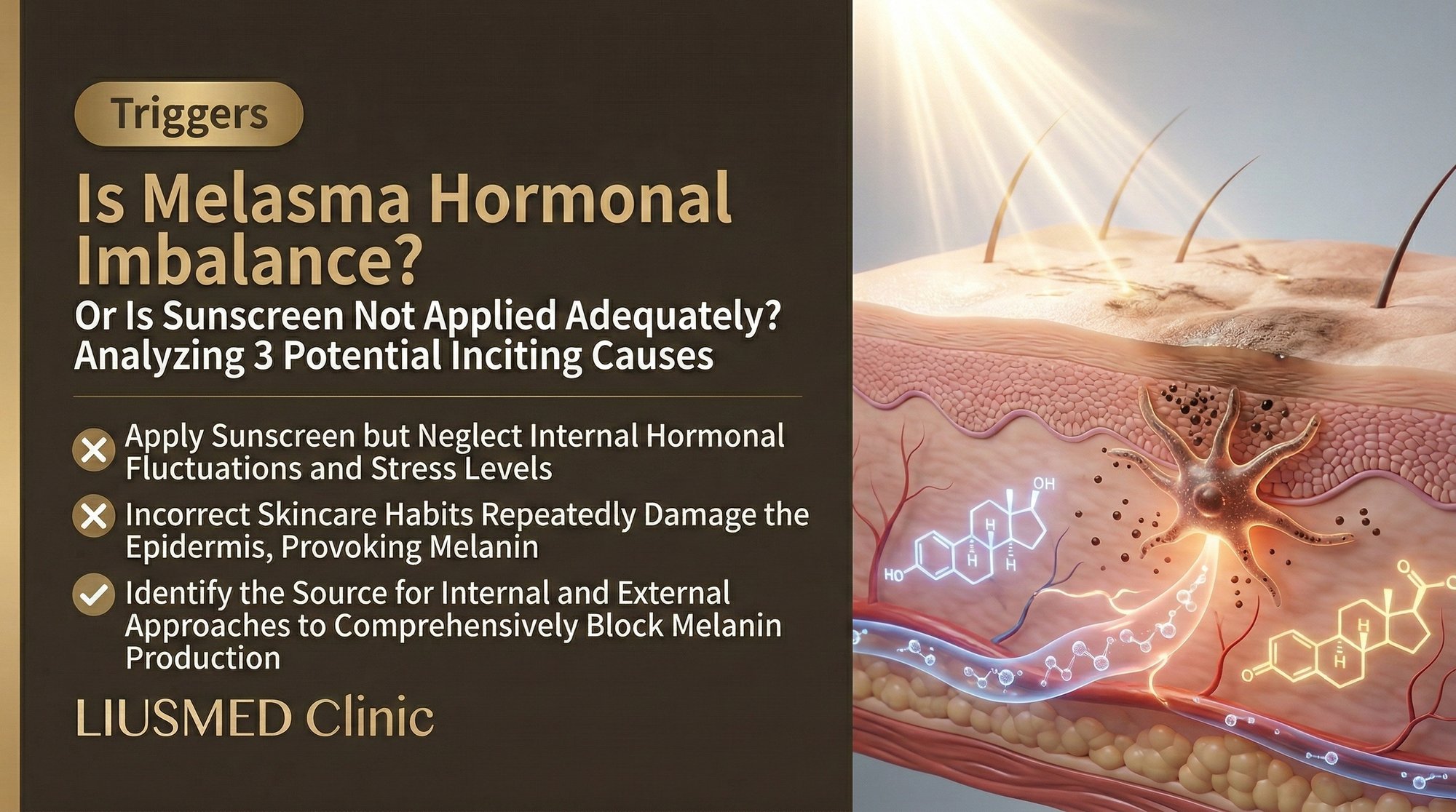
Walk into any skincare forum and you will find two camps arguing about melasma. One insists it is a hormonal problem that no amount of sunscreen can fix. The other swears it is purely a sun damage issue that disciplined UV protection will resolve. Both are partially right — and both are dangerously incomplete. Melasma is a convergence disorder, meaning it emerges when multiple triggers collide simultaneously. Understanding which triggers dominate in your specific case is the difference between a treatment plan that works and years of frustration chasing the wrong target.
Table of Contents
- Trigger One: Hormonal Fluctuations and Melanocyte Stimulation
- Trigger Two: Ultraviolet Radiation and Visible Light
- Trigger Three: Vascular Inflammation — The Hidden Amplifier
- How the Three Triggers Interact
- Self-Assessment: Which Trigger Dominates Your Melasma?
- Treatment Implications for Each Trigger Profile
Trigger One: Hormonal Fluctuations and Melanocyte Stimulation
Estrogen and progesterone are the most well-documented hormonal drivers of melasma. These hormones bind to receptors on melanocytes — the pigment-producing cells in the basal layer of the epidermis — and directly upregulate the expression of tyrosinase, the key enzyme in melanin synthesis. When circulating levels of these hormones rise, melanocytes shift into a state of heightened activity, producing more melanin per cell and distributing it more aggressively to surrounding keratinocytes.
This explains why melasma so frequently appears during pregnancy (often called chloasma or the mask of pregnancy), after initiating oral contraceptive pills, or during hormone replacement therapy. Studies estimate that pregnancy triggers melasma in 15 to 50 percent of pregnant women, depending on skin type and geographic population.
However, the hormonal picture extends beyond estrogen and progesterone. Thyroid dysfunction, particularly hypothyroidism, has been associated with increased melasma prevalence. Elevated levels of melanocyte-stimulating hormone (MSH) — which can occur during chronic stress — also contribute. Even cortisol, the primary stress hormone, has indirect effects on melanocyte behaviour through its influence on inflammatory pathways in the skin.
The clinical hallmark of hormonally dominant melasma is symmetry. When hormones are the primary driver, the patches typically appear in a centrofacial pattern — across the cheeks, forehead, nose, and upper lip — in an almost mirror-image distribution. This symmetry reflects the systemic nature of hormonal stimulation: every melanocyte in the affected zone receives the same hormonal signal simultaneously.
A critical point that many patients overlook is that hormonal triggers do not disappear after the triggering event ends. A woman who developed melasma during pregnancy may find that the pigmentation persists months or even years postpartum. This occurs because the initial hormonal surge can cause epigenetic changes in melanocytes — essentially reprogramming them to maintain elevated pigment production even after hormone levels normalize.
Trigger Two: Ultraviolet Radiation and Visible Light
UV radiation is the most potent external trigger for melasma, and no treatment plan can succeed without addressing it. Both UVA and UVB wavelengths stimulate melanogenesis, but they do so through different mechanisms. UVB primarily causes direct DNA damage in keratinocytes, triggering an inflammatory cascade that signals melanocytes to ramp up pigment production as a protective response. UVA penetrates deeper into the dermis, generating reactive oxygen species (ROS) that activate melanocyte signaling pathways and damage the extracellular matrix.
What many patients and even some clinicians underestimate is the role of visible light — particularly high-energy visible (HEV) light in the blue-violet spectrum (400 to 450 nm). Research published over the past decade has demonstrated that visible light can induce sustained pigmentation in darker skin types (Fitzpatrick III to VI) through a pathway mediated by opsin-3 receptors on melanocytes. This means that even with perfect UVA and UVB sunscreen coverage, unprotected exposure to visible light from sunlight — and to a lesser extent from screens — can perpetuate melasma.
The practical implication is profound: chemical-only sunscreens that rely on organic UV filters are insufficient for melasma patients. Effective photoprotection requires mineral filters (iron oxides, titanium dioxide, zinc oxide) that physically block visible light wavelengths. Tinted sunscreens containing iron oxides have been shown in clinical trials to provide significantly better melasma control than untinted broad-spectrum SPF (Sun Protection Factor) products of equivalent UV protection.
UV and visible light do not simply add pigment — they create a self-perpetuating inflammatory cycle. UV-damaged keratinocytes release endothelin-1, stem cell factor, and alpha-MSH, all of which are potent melanocyte activators. These paracrine signals can maintain melanocyte hyperactivity for weeks after a single significant UV exposure event. For melasma-prone individuals, this means that one afternoon of inadequate sun protection can undo months of treatment progress.
Trigger Three: Vascular Inflammation — The Hidden Amplifier
The least recognized and most frequently overlooked trigger for melasma is the vascular-inflammatory component. Research using dermatoscopy and histopathology has consistently shown that melasma-affected skin contains a significantly higher density of blood vessels compared to adjacent non-affected skin. These vessels are not just a bystander — they are active participants in the disease process.
Enlarged dermal blood vessels in melasma lesions express elevated levels of vascular endothelial growth factor (VEGF), which promotes further angiogenesis and creates a feed-forward loop. The increased blood flow delivers more inflammatory mediators, growth factors, and even heat to the melanocytes in the overlying epidermis. Each of these factors independently stimulates melanin production. Together, they create a microenvironment that keeps melanocytes permanently activated.
This vascular component explains several clinical observations that puzzle patients. Why does melasma darken after drinking alcohol, eating spicy food, exercising intensely, or experiencing emotional stress? All of these triggers cause vasodilation — expanding the very blood vessels that feed the melanocytes. Why does melasma improve slightly in cool weather and worsen in summer heat, even in patients who maintain perfect sun protection? Because ambient temperature affects dermal blood vessel calibre.
Clinically, vascular melasma can be identified by a reticular or net-like pattern visible on dermatoscopy, background erythema within the pigmented patches, and a history of worsening with vasodilatory triggers. If you notice that your melasma patches look redder or more inflamed before they darken, the vascular component is almost certainly significant.
Addressing this trigger requires strategies that go beyond melanin suppression. Anti-angiogenic approaches — including targeted therapies like Melasma Injection Treatment — aim to reduce the abnormal vasculature that sustains the pigmentary process. Without addressing this vascular soil, even the most potent topical depigmenting agents provide only temporary relief.
How the Three Triggers Interact
The three triggers do not operate in isolation — they form an interconnected network where each amplifies the others. Estrogen upregulates VEGF (Vascular Endothelial Growth Factor — new blood vessel signal) expression in skin, directly promoting the angiogenesis that characterizes vascular melasma. UV radiation triggers both melanogenesis and inflammatory cytokine release, which in turn promotes vascular proliferation. Increased vascularity delivers more estrogen metabolites and inflammatory mediators to the melanocytes, completing the cycle.
This interconnection explains why melasma is so notoriously difficult to treat with any single modality. A topical hydroquinone preparation may suppress tyrosinase activity (addressing the hormonal trigger's downstream effect), but it does nothing about UV-induced inflammation or vascular proliferation. A laser treatment may destroy surface melanin, but the thermal energy can paradoxically trigger both inflammation and vasodilation, worsening the other two triggers.
The patients who achieve the best long-term melasma control are those whose treatment plans address all three triggers simultaneously: hormonal management or avoidance of hormonal triggers where possible, rigorous broad-spectrum plus visible light photoprotection, and targeted therapy for the vascular-inflammatory component.
Self-Assessment: Which Trigger Dominates Your Melasma?
| Observation | Hormonal Dominant | UV Dominant | Vascular Dominant |
|---|---|---|---|
| Onset timing | During pregnancy, OCP use, or HRT | After prolonged sun exposure or vacation | Gradual, often with concurrent rosacea |
| Distribution | Centrofacial, highly symmetrical | More prominent on sun-exposed side | Reticular pattern, bilateral with redness |
| Seasonal variation | Minimal — persists year-round | Markedly worse in summer | Worsens with heat regardless of sun |
| Response to sunscreen | Partial improvement | Significant improvement | Limited improvement |
| Response to topical lighteners | Moderate initial response | Good initial response | Poor or temporary response |
| Worsening triggers | Hormonal changes, stress | Sun, outdoor activities | Alcohol, spicy food, exercise, heat |
| Background skin appearance | Normal skin tone around patches | Photo-aged, may have sunspots | Visible redness, telangiectasia |
| Recurrence pattern | After hormonal shifts | After UV exposure events | Persistent, treatment-resistant |
Most melasma patients will identify with more than one column. That is expected — pure single-trigger melasma is the exception, not the rule.
Treatment Implications for Each Trigger Profile
For hormonally dominant melasma, the first step is to eliminate or reduce hormonal triggers where medically appropriate. This may mean switching from estrogen-containing contraceptives to progesterone-only or non-hormonal alternatives, in consultation with a gynaecologist. Topical agents that target tyrosinase — including prescription-strength hydroquinone, tranexamic acid, and azelaic acid — form the pharmacological backbone.
For UV-dominant melasma, photoprotection becomes the single most impactful intervention. This means daily tinted mineral sunscreen with iron oxides, reapplication every two hours during outdoor activity, and broad-brimmed hats. Even indoor UV exposure through windows can perpetuate melasma, so daily sunscreen application is non-negotiable regardless of planned sun exposure.
For vascular-dominant melasma, conventional topical approaches often fall short because they do not address the underlying vascular pathology. This is where specialized treatments become essential. Oral tranexamic acid has shown efficacy partly through its anti-angiogenic properties. Targeted vascular therapies such as Melasma Injection Treatment can address the abnormal vasculature directly, reducing the inflammatory microenvironment that sustains melanocyte hyperactivity.
In practice, the most effective treatment plans layer strategies across all three trigger categories, weighted according to which triggers are most active in the individual patient. This requires a thorough diagnostic evaluation — not a one-size-fits-all prescription.
Frequently Asked Questions
Q1: If I stop taking birth control pills, will my melasma go away?
Not necessarily. While removing the hormonal trigger can slow the progression of melasma, the melanocytes may have undergone epigenetic changes that keep them in a hyperactive state long after hormone levels normalize. Many women find that melasma persists for months or years after discontinuing oral contraceptives. Active treatment is usually still required.
Q2: I wear SPF 50 every day but my melasma is not improving. Why?
SPF measures protection against UVB radiation only. Melasma is also driven by UVA and visible light, which many sunscreens do not adequately block. Switch to a tinted mineral sunscreen containing iron oxides for visible light protection. Also confirm that you are applying sufficient quantity — most people apply only 25 to 50 percent of the amount needed for the labelled SPF rating.
Q3: Can stress cause melasma?
Yes. Chronic psychological stress elevates cortisol and melanocyte-stimulating hormone levels, both of which can stimulate melanin production. Stress also promotes systemic inflammation and can cause vasodilation, activating the vascular trigger pathway. While stress management alone is unlikely to clear melasma, it is a meaningful component of a comprehensive treatment plan.
Q4: Is melasma hereditary?
There is a significant genetic component. Studies show that 40 to 60 percent of melasma patients have a family history of the condition. Genetic factors likely influence melanocyte sensitivity to hormonal and UV triggers, baseline inflammatory response, and vascular reactivity. Having a genetic predisposition does not make melasma untreatable — it means the trigger threshold is lower and prevention must be more vigilant.
Q5: Does diet affect melasma?
There is emerging evidence that certain dietary factors may influence melasma. Antioxidant-rich diets may help by reducing oxidative stress in the skin. Conversely, diets high in processed foods and refined sugars promote systemic inflammation, which can exacerbate the inflammatory component of melasma. Phytoestrogens in soy products have a complex relationship with melasma that is still being studied.
Q6: How long does melasma treatment take to show results?
Visible improvement typically requires 8 to 12 weeks of consistent treatment for epidermal melasma. Dermal and vascular melasma may take 4 to 6 months or longer. The key is setting realistic expectations: melasma is a chronic condition that requires ongoing management, not a one-time fix. Premature discontinuation of treatment is one of the most common reasons for relapse.
About the Author
Dr. Ta-Ju Liu is the founder and lead physician at Liusmed Clinic, specializing in regenerative medicine and minimal incision surgery. With extensive clinical experience in pigmentary disorders, Dr. Liu focuses on evidence-based, multi-target treatment strategies that address the root causes of treatment-resistant melasma rather than superficial symptom suppression. Liusmed Clinic combines advanced diagnostic imaging with targeted injection therapies to deliver lasting outcomes for complex pigmentation conditions.
Disclaimer
This article is provided for educational and informational purposes only and does not constitute medical advice, diagnosis, or treatment. The information presented here is based on current medical literature and clinical experience but may not apply to every individual case. Melasma is a complex condition with significant individual variation. Always consult a qualified medical professional for personalized diagnosis and treatment recommendations. No treatment outcome is guaranteed.

Specialties
Credentials
- Kaohsiung Medical University, School of Medicine
- Attending Physician, Dermatology, Kaohsiung Chang Gung Memorial Hospital
- Attending Physician, Aesthetic Center, Kaohsiung Chang Gung Memorial Hospital
- Visiting Physician, Dermatology, Xiamen Chang Gung Hospital
- Visiting Physician, Aesthetic Center, Xiamen Chang Gung Hospital
"For every surgery, I strive to achieve a good outcome through a small incision and refined technique. Minimally invasive surgery is not just a technique — it's a commitment of respect to every patient."
Recovery after any procedure needs peer support too


Want to learn more?
Schedule a consultation for professional evaluation and advice