Does Mesotherapy Hurt? How Long Is Recovery? A Complete 3-7 Day Renewal Guide
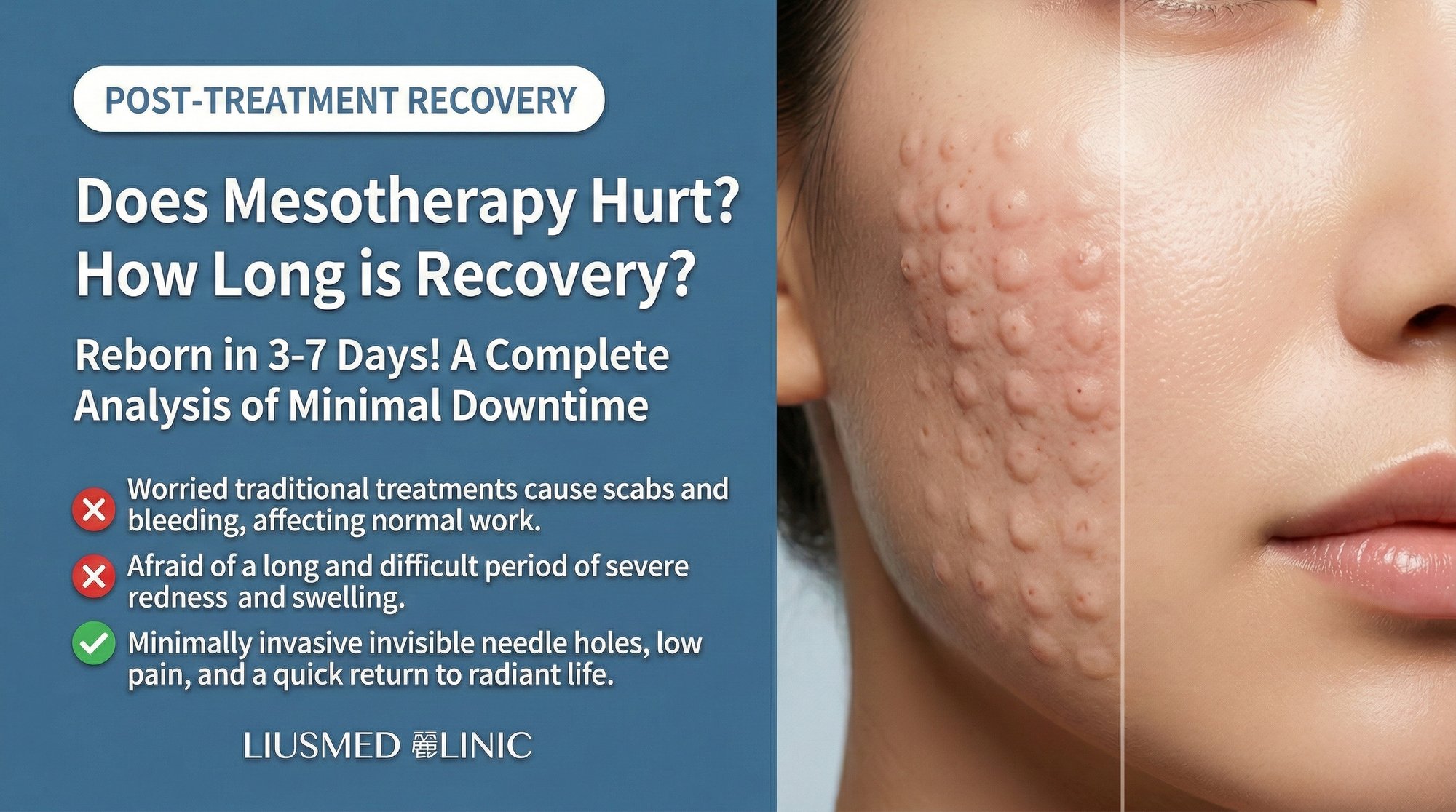
Every patient considering mesotherapy for melasma asks the same two questions. First: how much does it hurt? Second: when can I go back to normal life? The honest answers are more reassuring than most patients expect — and understanding the day-by-day recovery timeline eliminates the anxiety that often delays treatment decisions.
Table of Contents
- Setting Expectations: What Mesotherapy (shallow micro-injection of nutrients/meds) Actually Feels Like
- The Day-by-Day Recovery Timeline
- Understanding the Skin Renewal Process Behind the Timeline
- Post-Treatment Care: What to Do and What to Avoid
- Pain Management: Before, During, and After Treatment
- Comparing Downtime: Mesotherapy vs. Other Melasma Treatments
Setting Expectations: What Mesotherapy Actually Feels Like
The word "injection" triggers anxiety in most people. Images of large needles and deep penetration come to mind. Mesotherapy for melasma is fundamentally different from these associations, and understanding the reality helps patients approach treatment with appropriate expectations.
The needles used in manual mesotherapy are extremely fine — typically 30-gauge or 32-gauge, which means the outer diameter is approximately 0.3 mm or less. For comparison, a standard blood draw needle is 21-gauge (0.8 mm outer diameter) — nearly three times thicker. The mesotherapy needle is thinner than a human hair shaft.
Injection depth is superficial: 0.5 to 1.5 mm into the papillary dermis. This is shallow enough that the needle does not reach the deeper nerve plexus that mediates sharp pain sensation. Most patients describe the feeling as a series of tiny pinpricks or a mild stinging sensation, comparable to rubber band snaps against the skin.
The treatment area matters. Certain facial zones — the upper lip, the temples, and the periorbital region — have thinner skin and higher nerve density, making them slightly more sensitive. The malar cheeks, which are the most common melasma location, tend to be among the least sensitive areas for mesotherapy.
The sensation during injection also includes a feeling of mild pressure or fullness as the treatment fluid distributes through the tissue. This hydrostatic sensation is different from needle pain and is generally described as unusual rather than painful. It typically lasts only seconds at each injection point.
Session duration for a full facial melasma treatment is typically 20 to 40 minutes, depending on the extent of the treatment area and the specific protocol components included. The discomfort does not intensify over the course of the session — in fact, many patients report that the area becomes somewhat less sensitive as treatment progresses due to the mild numbing effect of the treatment solution.
The Day-by-Day Recovery Timeline
The recovery profile after the Melasma Injection Treatment follows a predictable pattern that can be divided into distinct phases:
Day 0 (Treatment day, hours 0-6). Immediately after treatment, the skin shows mild erythema (redness) and slight edema (swelling) from the injected fluid. Tiny injection puncture marks may be visible on close inspection. The skin may feel warm and mildly tender, similar to a mild sunburn. This is the most visible phase. Most patients can apply mineral sunscreen and return to non-strenuous activities immediately.
Day 1 (Hours 6-24). The fluid-related swelling begins to resolve as the injected solution is absorbed by the tissue. Redness fades from bright pink to a mild flush. The puncture marks are less visible. Some patients notice the melasma appears slightly darker — this is expected and reflects the inflammatory process beginning to activate the skin's renewal mechanisms.
Days 2-3 (The quiet phase). Most external signs of treatment have resolved. The skin may feel slightly drier than usual as the superficial layers respond to the micro-trauma of injection. The treated area may show subtle textural changes. Internally, the anti-inflammatory cascade initiated by TXA (Tranexamic Acid) is actively suppressing pathological signaling, and PRP (Platelet-Rich Plasma — concentrate of your own blood platelets rich in growth factors) growth factors are beginning to stimulate fibroblast activity.
Days 4-5 (Early renewal). Many patients notice the first visible signs of improvement during this phase. The skin texture begins to feel smoother. A subtle lightening effect may become apparent as the anti-inflammatory action reduces the vascular redness component of melasma. The basement membrane repair process is underway but not yet complete.
Days 6-7 (Visible renewal). By the end of the first week, the full effect of the initial session becomes apparent. The skin has completed its superficial turnover cycle, and the anti-inflammatory and anti-vascular effects of TXA are well-established. Patients typically report that their skin looks brighter, more even, and less congested than before treatment.
| Timeline | Visible Signs | Internal Processes | Activity Restrictions |
|---|---|---|---|
| Day 0 (0-6 hours) | Redness, mild swelling, puncture marks | Fluid distribution, initial drug absorption | Avoid strenuous exercise, heat exposure |
| Day 1 | Fading redness, resolving swelling | Anti-inflammatory cascade begins | Avoid active skincare ingredients |
| Days 2-3 | Minimal external signs, mild dryness | TXA suppressing inflammation, PRP activating fibroblasts | Gentle skincare only |
| Days 4-5 | Improved texture, early lightening | Collagen synthesis initiated, vascular normalization | Resume normal skincare |
| Days 6-7 | Brighter, more even complexion | Full anti-inflammatory effect established | Full normal activities |
Understanding the Skin Renewal Process Behind the Timeline
The recovery timeline is not arbitrary — it reflects specific biological processes occurring in the treated tissue. Understanding these processes helps patients appreciate why each phase occurs and why the timeline is remarkably consistent.
Acute response (Hours 0-6). The micro-trauma of needle insertion triggers a controlled acute inflammatory response. This is not pathological inflammation — it is the body's normal healing cascade. Platelets aggregate at the injection sites, releasing their initial burst of growth factors. Neutrophils arrive to clean up cellular debris. Blood flow to the area increases, causing the visible redness and warmth.
Transition phase (Hours 6-48). The acute response transitions to a constructive healing response. Macrophages replace neutrophils as the dominant immune cell. These macrophages serve a dual role: they clear inflammatory debris and they produce cytokines that recruit fibroblasts and other repair cells. The TXA in the treatment cocktail is actively modulating this process, ensuring the inflammatory response remains constructive rather than becoming chronic.
Proliferative phase (Days 2-5). Fibroblasts, recruited and activated by PRP growth factors, begin synthesizing new collagen, elastin, and glycosaminoglycans. At the basement membrane zone, type IV collagen production is upregulated. New extracellular matrix is being assembled to repair the structural damage characteristic of melasma. Simultaneously, the anti-angiogenic effects of TXA are slowing the formation of pathological blood vessels.
Remodeling phase (Days 5-7 and beyond). The newly deposited matrix undergoes organization and cross-linking, transforming from a loose provisional scaffold into structured, functional tissue. This remodeling continues well beyond the visible recovery window — the one-week timeline represents the point where external signs of treatment have resolved, not the endpoint of internal healing.
This biological sequence explains why results from the Melasma Injection Treatment are progressive. Each session initiates a fresh cycle of modulation, repair, and remodeling. The cumulative effect of multiple sessions produces structural changes in the dermis that become increasingly durable over time.
Post-Treatment Care: What to Do and What to Avoid
Proper post-treatment care optimizes the recovery process and protects the healing tissue from counterproductive influences.
Immediate post-treatment (first 6 hours):
- Apply mineral-based (physical) sunscreen if sun exposure is unavoidable. The zinc oxide and titanium dioxide in mineral sunscreens provide UV protection without chemical irritation.
- Avoid touching or rubbing the treated area. The injection sites are open micro-channels for the first few hours and should be kept clean.
- Avoid strenuous exercise, sauna, steam room, or hot baths. Elevated body temperature and increased blood flow can exacerbate swelling and redness.
- Do not apply makeup for at least 4 to 6 hours to allow injection sites to close.
Days 1-3:
- Cleanse gently with a mild, non-foaming cleanser. Avoid scrubbing or exfoliating.
- Apply a simple, fragrance-free moisturizer to support barrier function.
- Continue diligent sunscreen application every 2 hours during sun exposure.
- Avoid active skincare ingredients: retinoids, vitamin C serums, AHAs, BHAs, and niacinamide at high concentrations. These can irritate the healing skin.
- Avoid alcohol-based toners or astringents.
Days 4-7:
- Gradually reintroduce your regular skincare products, starting with the gentlest formulations.
- Continue sun protection as a non-negotiable daily habit.
- Light exercise can be resumed.
- Makeup can be applied normally.
Ongoing between sessions:
- Maintain rigorous sun protection. UV exposure is the single most counterproductive behavior for melasma treatment. Broad-spectrum SPF (Sun Protection Factor) 50+ sunscreen, reapplied every 2 hours during outdoor exposure, is essential.
- Consider a wide-brimmed hat for extended outdoor time.
- Maintain a gentle, hydrating skincare routine that supports barrier function.
Pain Management: Before, During, and After Treatment
For patients with heightened sensitivity or anxiety about the procedure, several pain management strategies are available:
Before treatment. Topical anesthetic cream (typically containing lidocaine 4-5%) can be applied to the treatment area 30 to 45 minutes before the procedure. This numbs the superficial nerve endings and significantly reduces the pinprick sensation. Most patients who use topical anesthesia report the procedure as comfortable, though sensitivity varies by individual.
During treatment. The manual technique itself incorporates pain-reduction strategies. The treatment solution contains components that provide mild local anesthetic effect. The physician's technique — maintaining consistent rhythm, appropriate pressure, and optimal needle angle — minimizes tissue trauma and associated discomfort. Cold air or ice application between treatment zones can further reduce sensation.
After treatment. Post-treatment discomfort is typically minimal and self-limiting. If needed, cold compresses (wrapped in a clean cloth, applied for 5-10 minutes at a time) provide effective relief for any residual tenderness. Over-the-counter pain medications are rarely needed, but acetaminophen (paracetamol) can be used if desired. Non-steroidal anti-inflammatory drugs (NSAIDs) such as ibuprofen should be avoided for 24 hours as they may increase bruising tendency.
It is worth noting that pain tolerance is highly individual and influenced by factors including anxiety level, hormonal status, and previous treatment experience. Patients who have undergone laser treatment for melasma often find mesotherapy significantly more comfortable by comparison.
Comparing Downtime: Mesotherapy vs. Other Melasma Treatments
One of the most significant practical advantages of the mesotherapy approach is its minimal downtime compared to alternative melasma treatments.
| Treatment | Typical Downtime | Social Downtime | Pain During Treatment | Risk of PIH |
|---|---|---|---|---|
| Manual mesotherapy (Liusmed protocol) | 1-2 days visible redness | 0-1 days | Mild (pinpricks) | Negligible |
| Q-switched laser toning | 3-5 days redness/swelling | 2-3 days | Moderate (stinging/burning) | Moderate risk |
| Picosecond laser | 2-4 days redness | 1-2 days | Moderate | Low-moderate risk |
| Medium chemical peel | 5-10 days peeling | 5-7 days | Moderate burning | Moderate risk |
| Deep chemical peel | 10-14 days healing | 10-14 days | Significant | High risk |
| Topical hydroquinone | No acute downtime | None | None | Low (but chronic irritation risk) |
The "social downtime" distinction is important. Medical downtime refers to the total healing period. Social downtime refers to the period during which the visible effects of treatment would be noticeable to others and might prompt questions. For most mesotherapy patients, social downtime is zero to one day — the mild redness on treatment day is easily camouflaged with mineral makeup if desired.
This minimal downtime profile makes the Melasma Injection Treatment compatible with normal professional and social schedules. Many patients schedule sessions at the end of the workday or before a weekend, returning to full activities the next morning.
Frequently Asked Questions
Q1: On a scale of 1 to 10, how painful is mesotherapy for melasma?
Most patients rate the discomfort between 2 and 4 out of 10 without topical anesthesia, and 1 to 2 with topical numbing cream applied beforehand. The sensation is a series of tiny pinpricks rather than deep pain. Patients who have experienced laser treatment typically rate mesotherapy as substantially less uncomfortable.
Q2: Can I go to work the same day as treatment?
Yes. Most patients return to desk-based work immediately after treatment. The mild redness can be concealed with mineral-based makeup after 4 to 6 hours. Outdoor work or physically demanding jobs may benefit from scheduling treatment at the end of the day to allow overnight recovery of the most visible redness.
Q3: Will I bruise after mesotherapy?
Minor bruising is possible but infrequent with fine-gauge needles and proper technique. When bruising does occur, it is typically small (pinpoint) and resolves within 3 to 5 days. Avoiding blood-thinning supplements (fish oil, vitamin E, ginkgo biloba) and medications (aspirin, ibuprofen) for 48 hours before treatment reduces bruising risk.
Q4: Why does melasma sometimes look darker in the first 1-2 days after treatment?
This temporary darkening reflects the controlled inflammatory response that initiates the healing cascade. As the skin responds to the micro-trauma of injection, there may be brief melanocyte stimulation and increased blood flow that makes the pigmentation appear temporarily more prominent. This resolves within 48 to 72 hours and is followed by progressive lightening.
Q5: Can I exercise after mesotherapy treatment?
Light activity (walking, gentle stretching) is fine from Day 1. Vigorous exercise, including running, heavy lifting, and hot yoga, should be avoided for 24 to 48 hours. Elevated body temperature and increased blood flow from intense exercise can prolong redness and swelling. Swimming pools should be avoided for 48 hours due to chlorine exposure.
Q6: What if I have an important event coming up — how far in advance should I schedule treatment?
For a social event, wedding, photo shoot, or presentation, scheduling treatment at least 7 to 10 days in advance provides ample margin. Most patients look completely normal within 48 hours, but the 7-10 day buffer ensures that even the rare occurrence of a small bruise or prolonged redness has fully resolved, and the skin has entered its visible renewal phase.
About the Author
Dr. Ta-Ju Liu is the founder of Liusmed Clinic and a specialist in regenerative medicine and minimal incision surgery. His patient-centered approach emphasizes transparent communication about treatment expectations, recovery timelines, and realistic outcomes. Liusmed Clinic is committed to providing evidence-based treatments with minimal disruption to patients' daily lives.
Disclaimer
This article is provided for educational and informational purposes only. It does not constitute medical advice, diagnosis, or treatment. Recovery timelines described represent typical experiences and may vary based on individual factors including skin type, treatment extent, underlying health conditions, and adherence to post-treatment instructions. Consult a qualified healthcare professional for personalized treatment guidance.

Specialties
Credentials
- Kaohsiung Medical University, School of Medicine
- Attending Physician, Dermatology, Kaohsiung Chang Gung Memorial Hospital
- Attending Physician, Aesthetic Center, Kaohsiung Chang Gung Memorial Hospital
- Visiting Physician, Dermatology, Xiamen Chang Gung Hospital
- Visiting Physician, Aesthetic Center, Xiamen Chang Gung Hospital
"For every surgery, I strive to achieve a good outcome through a small incision and refined technique. Minimally invasive surgery is not just a technique — it's a commitment of respect to every patient."
Recovery after any procedure needs peer support too


Want to learn more?
Schedule a consultation for professional evaluation and advice