Meta-Analysis: Why PRP Injection Is First-Line for Melasma
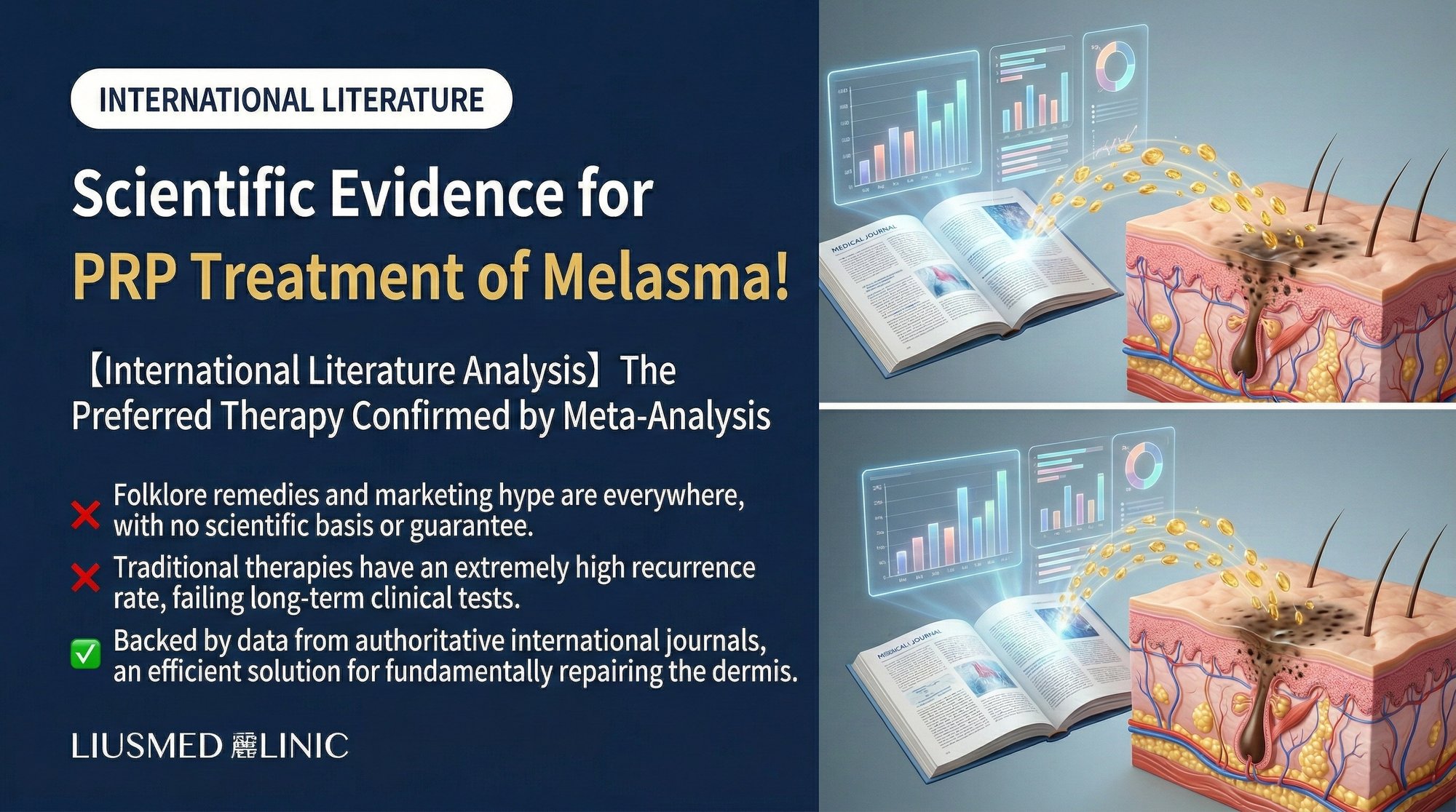
For decades, melasma treatment has relied on a familiar triad: topical depigmenting agents, photoprotection, and energy-based devices. While these interventions remain relevant, their limitations are well-documented — incomplete clearance, high recurrence rates, and the risk of post-inflammatory hyperpigmentation, particularly in patients with higher Fitzpatrick (Fitzpatrick Skin Type) skin types. Against this backdrop, platelet-rich plasma (PRP) injection has emerged as a biologically compelling alternative that addresses melasma at the tissue level rather than merely at the pigment level.
Recent meta-analyses and systematic reviews have begun to consolidate the clinical evidence, and the findings support what regenerative medicine practitioners have observed clinically: PRP (Platelet-Rich Plasma — concentrate of your own blood platelets rich in growth factors) offers a mechanistically distinct approach that complements and, in some contexts, outperforms conventional treatments. This article reviews the current evidence, explains the underlying biology, and discusses how PRP fits within a comprehensive melasma treatment framework.
Table of Contents
- The Evidence Landscape: What Meta-Analyses Show
- Understanding PRP: Mechanism of Action in Melasma
- PRP vs. Conventional Treatments: Comparative Evidence
- Clinical Considerations: Patient Selection and Protocol Design
- Limitations of Current Evidence and Future Directions
- How Liusmed Clinic Integrates PRP Into Melasma Protocols
- Frequently Asked Questions
- About the Author
- Disclaimer
The Evidence Landscape: What Meta-Analyses Show {#evidence-landscape}
The evidence base for PRP in melasma treatment has expanded significantly in recent years. Multiple systematic reviews and meta-analyses have pooled data from randomized controlled trials (RCTs) and comparative studies, providing a higher level of evidence than individual case series or uncontrolled trials.
Key findings from the cumulative literature include:
Statistically significant improvement in MASI (Melasma Area and Severity Index) scores. The Modified Melasma Area and Severity Index (MASI) is the standard quantitative measure for melasma severity. Meta-analytic data consistently show that PRP treatment produces statistically significant reductions in MASI scores compared to baseline, with effect sizes that are clinically meaningful — not just statistically detectable.
Comparable or superior efficacy to topical treatments. In head-to-head comparisons, PRP has demonstrated efficacy comparable to topical tranexamic acid and, in some studies, superior outcomes when combined with microneedling. The combination of PRP with microneedling appears particularly effective, likely due to enhanced delivery of growth factors through microchannels.
Favorable safety profile. Across pooled study data, PRP demonstrates a low incidence of adverse effects. The most commonly reported side effects — transient erythema, mild swelling, and bruising at injection sites — resolve within days and do not result in the pigmentary complications that can accompany laser treatments.
Lower recurrence rates. Several studies have reported that the improvement achieved with PRP is more durable than that achieved with conventional treatments, with lower recurrence rates at 3-month and 6-month follow-up. This is consistent with PRP's mechanism of action, which addresses underlying tissue pathology rather than simply clearing existing pigment.
Benefit in treatment-resistant cases. Notably, PRP has shown efficacy in patients who had previously failed conventional therapies — the refractory melasma population. This finding is particularly relevant because treatment-resistant patients represent the greatest unmet need in melasma management.
It is important to note that the evidence base, while growing, is still developing. Many studies have relatively small sample sizes, and there is heterogeneity in PRP preparation methods, injection protocols, and outcome measures across studies. These limitations are discussed in more detail below.
Understanding PRP: Mechanism of Action in Melasma {#mechanism-of-action}
PRP's efficacy in melasma cannot be explained by a single mechanism. Rather, it acts through multiple biological pathways that collectively address the tissue-level pathology underlying melasma:
Anti-inflammatory modulation. Platelets release a complex cocktail of growth factors and cytokines upon activation, including transforming growth factor-beta (TGF-beta), hepatocyte growth factor (HGF), and interleukin-1 receptor antagonist. These factors shift the local immune environment from a pro-inflammatory state toward a regenerative, anti-inflammatory state. Since chronic low-grade inflammation is a key driver of melanocyte hyperactivity in melasma, this anti-inflammatory effect is therapeutically significant.
Basement membrane repair. The growth factors in PRP — particularly TGF-beta, platelet-derived growth factor (PDGF), and epidermal growth factor (EGF) — stimulate fibroblast activity and extracellular matrix remodeling. This promotes repair of the disrupted basement membrane zone, potentially reducing the melanin incontinence (dermal melanin spillage) that characterizes chronic melasma.
Anti-angiogenic effects. PRP contains thrombospondin-1, a potent endogenous anti-angiogenic factor. By reducing the pathological vascularity associated with melasma, PRP addresses the vascular component that sustains melanocyte stimulation — a mechanism that most conventional treatments ignore entirely.
Collagen remodeling. The fibroblast-stimulating effects of PRP promote organized collagen deposition and dermal remodeling. This is particularly relevant in patients with solar elastosis, where the degraded dermal matrix contributes to the permissive environment for ongoing pigmentary dysfunction.
Melanocyte environment normalization. Rather than directly destroying melanin or killing melanocytes, PRP works by normalizing the microenvironment in which melanocytes operate. By reducing inflammation, improving basement membrane integrity, modulating vascularity, and restoring dermal architecture, PRP addresses the root conditions that drive melanocyte hyperactivity.
This multi-pathway mechanism explains why PRP can produce more durable results than treatments that target melanin alone — it is treating the disease rather than just the symptom.
PRP vs. Conventional Treatments: Comparative Evidence {#comparative-evidence}
The following table summarizes how PRP compares to conventional melasma treatments across key clinical parameters, based on the available literature:
| Parameter | Topical Agents (HQ, TXA, Retinoids) | Energy-Based Devices (Laser, IPL) | Chemical Peels | PRP Injection |
|---|---|---|---|---|
| MASI score reduction | Moderate (30-50%) | Variable (20-60%) | Moderate (25-45%) | Significant (40-60%) |
| Time to visible improvement | 8-12 weeks | 4-8 weeks | 6-10 weeks | 4-8 weeks |
| Recurrence rate at 6 months | High (50-70%) | High (40-60%) | High (50-65%) | Lower (20-40%) |
| Risk of PIH | Low | Moderate to High | Low to Moderate | Very Low |
| Basement membrane effect | Neutral to Negative | Potentially Damaging | Neutral | Reparative |
| Vascular component addressed | TXA only | Minimal | No | Yes |
| Anti-inflammatory effect | Variable | Pro-inflammatory risk | Mild inflammatory | Anti-inflammatory |
| Suitability for Fitzpatrick IV-VI | Good | Limited | Moderate | Excellent |
| Suitability for refractory cases | Limited | Limited (risk of worsening) | Limited | Demonstrated benefit |
Note: Values represent general trends from the literature and should not be interpreted as precise predictions for individual patients. Actual outcomes vary based on patient-specific factors, treatment parameters, and protocol design.
Several important observations emerge from this comparison:
PRP's advantage is most pronounced in the dimensions that conventional treatments neglect — basement membrane repair, vascular modulation, and anti-inflammatory activity. These are precisely the tissue-level factors that drive chronicity and refractoriness in melasma.
PRP is particularly well-suited for patients with darker skin types, where the risk of laser-induced PIH (Post-Inflammatory Hyperpigmentation) is a significant concern. The regenerative, non-thermal mechanism of PRP avoids the inflammatory cascade that triggers post-procedural pigmentation.
The combination of PRP with other modalities — particularly microneedling and topical tranexamic acid — appears to produce synergistic effects that exceed the outcomes of any single intervention.
Clinical Considerations: Patient Selection and Protocol Design {#clinical-considerations}
Not all PRP protocols are equal, and the clinical literature highlights several factors that influence treatment outcomes:
PRP preparation quality. The platelet concentration, leukocyte content, and activation method all affect PRP bioactivity. Studies using optimized PRP preparation protocols generally report better outcomes than those using basic preparation methods. At Liusmed Clinic, PRP preparation follows stringent protocols to ensure consistent growth factor concentrations.
Delivery method. PRP can be delivered via direct intradermal injection, microneedling-assisted delivery, or a combination. The evidence suggests that microneedling-assisted delivery may enhance efficacy by creating a uniform distribution of growth factors across the treatment area while simultaneously stimulating a controlled wound-healing response.
Treatment interval and number of sessions. Most clinical studies use protocols of 3 to 6 sessions at 2-to-4-week intervals. The evidence suggests that a minimum of 3 sessions is typically needed to achieve clinically significant improvement, with additional sessions providing incremental benefit.
Patient selection. PRP appears to be particularly effective for patients with mixed (epidermal-dermal) melasma, those with a significant vascular component, and those who have not responded to conventional therapies. Patients with purely epidermal melasma may respond adequately to topical agents alone, though PRP can still offer benefits through its anti-inflammatory and barrier-repair properties.
Combination therapy. The strongest evidence supports PRP as part of a multimodal approach rather than a standalone treatment. Combining PRP with topical tranexamic acid, oral tranexamic acid (where appropriate), and rigorous photoprotection produces outcomes that exceed any single intervention.
Limitations of Current Evidence and Future Directions {#limitations}
Intellectual honesty requires acknowledging what the current evidence does not tell us:
Standardization gaps. There is no universally accepted standard for PRP preparation, concentration, or delivery in the context of melasma. This heterogeneity makes direct comparison across studies challenging and means that the effectiveness of PRP depends heavily on the specific protocol used.
Sample size limitations. Many RCTs in this area have relatively small sample sizes (20-60 patients), which limits statistical power and generalizability. Larger, multicenter trials are needed to confirm and refine the existing evidence.
Long-term follow-up data. Most studies report outcomes at 3 to 6 months post-treatment. Longer follow-up periods (12-24 months) are needed to fully characterize the durability of PRP-mediated improvement and the long-term recurrence profile.
Optimal combination protocols. While combination therapy appears superior to PRP monotherapy, the optimal combination — which agents, in what sequence, at what intervals — has not been definitively established.
Patient subgroup analysis. More data is needed on how PRP outcomes vary across different melasma subtypes (epidermal, dermal, mixed), skin types, and clinical presentations. This would enable more precise patient selection and protocol optimization.
Despite these limitations, the trajectory of the evidence is clear and consistent: PRP represents a mechanistically sound, clinically effective, and safely tolerated treatment for melasma, with particular advantage in refractory cases and in patients for whom conventional treatments carry unacceptable risks.
How Liusmed Clinic Integrates PRP Into Melasma Protocols {#liusmed-integration}
At Liusmed Clinic, our Melasma Injection Treatment protocol incorporates PRP as a core component of tissue-level repair. However, PRP is never applied in isolation — it is integrated into a phased treatment plan that addresses the specific pathological profile of each patient's melasma.
PRP is typically introduced during the tissue repair phase, after inflammation has been stabilized and the skin barrier has been assessed and, if necessary, rehabilitated. This sequencing ensures that the regenerative effects of PRP are maximized rather than being undermined by ongoing inflammatory processes.
The specific PRP protocol — including preparation method, concentration, delivery technique, and treatment interval — is calibrated to each patient's needs. A patient with significant dermal vascularity may receive PRP in combination with vascular-modulating agents. A patient with primarily basement membrane disruption may receive PRP with protocols optimized for collagen remodeling.
This integration of evidence-based PRP therapy within an individualized treatment framework represents the convergence of regenerative medicine science with personalized clinical care — a combination that consistently produces outcomes superior to standardized approaches.
Frequently Asked Questions
Q1: What is PRP and how is it prepared for melasma treatment?
PRP (platelet-rich plasma) is a concentrated preparation derived from the patient's own blood. A small blood sample is drawn and centrifuged to separate the platelet-rich fraction from other blood components. This concentrated platelet preparation contains high levels of growth factors and cytokines that promote tissue repair, reduce inflammation, and modulate the skin microenvironment. Because it is autologous (derived from the patient's own body), the risk of allergic reaction or rejection is extremely low.
Q2: How many PRP sessions are typically needed for melasma?
Based on the clinical literature, most protocols involve 3 to 6 sessions spaced 2 to 4 weeks apart. Clinically significant improvement is typically observed after 3 sessions, with continued improvement through subsequent sessions. However, the exact number depends on melasma severity, chronicity, and the specific treatment protocol. Maintenance sessions at longer intervals may be recommended for sustained results.
Q3: Is PRP painful? What is the recovery like?
PRP injection involves mild to moderate discomfort, comparable to other injectable procedures. Topical anesthesia is typically applied before treatment to minimize pain. Recovery is minimal — patients may experience transient redness, mild swelling, and occasionally bruising at injection sites, which typically resolve within 1 to 3 days. Unlike laser treatments, there is no risk of thermal injury, blistering, or post-inflammatory hyperpigmentation.
Q4: Can PRP be combined with my current melasma treatment?
PRP is highly compatible with most melasma treatments, including topical depigmenting agents, oral and topical tranexamic acid, and photoprotection. However, the timing and sequencing of combination therapy matters. At Liusmed Clinic, we carefully design combination protocols to ensure that each modality complements rather than interferes with the others. Your current regimen would be evaluated during consultation and adjusted as needed.
Q5: Is the evidence for PRP in melasma really strong enough to call it a first choice?
The evidence is substantial and growing, particularly for refractory melasma and for patients with higher Fitzpatrick skin types where laser treatments carry significant risks. Multiple meta-analyses have confirmed statistically significant efficacy. That said, treatment selection should always be individualized. PRP may be the first choice for many patients, but the best treatment for any individual depends on their specific clinical profile. Visit our Melasma Injection Treatment page to learn about our comprehensive approach.
Q6: Are there any patients who should not receive PRP for melasma?
PRP is contraindicated in patients with platelet disorders, active blood cancers, active skin infection at the treatment site, and those on anticoagulation therapy that cannot be temporarily adjusted. Patients with autoimmune conditions should be evaluated on a case-by-case basis. Pregnant or breastfeeding patients are generally advised to defer elective procedures. A thorough medical history review is conducted before any PRP treatment at Liusmed Clinic.
About the Author
Dr. Ta-Ju Liu is the founder of Liusmed Clinic, specializing in regenerative medicine and minimal incision surgery. With a deep commitment to evidence-based practice, Dr. Liu integrates current research findings into clinical protocols for complex pigmentary disorders. His approach to melasma treatment combines rigorous scientific reasoning with the principles of regenerative medicine, emphasizing tissue-level repair over surface-level symptom management.
Disclaimer
This article is a clinical literature review provided for educational and informational purposes only. It does not constitute medical advice, diagnosis, or treatment. The meta-analytic findings discussed represent aggregate data and may not predict individual treatment outcomes. Treatment decisions should always be made in consultation with a qualified healthcare professional who can evaluate your specific clinical situation. The interpretation and clinical application of the cited evidence reflects the perspective of the author and Liusmed Clinic.

Specialties
Credentials
- Kaohsiung Medical University, School of Medicine
- Attending Physician, Dermatology, Kaohsiung Chang Gung Memorial Hospital
- Attending Physician, Aesthetic Center, Kaohsiung Chang Gung Memorial Hospital
- Visiting Physician, Dermatology, Xiamen Chang Gung Hospital
- Visiting Physician, Aesthetic Center, Xiamen Chang Gung Hospital
"For every surgery, I strive to achieve a good outcome through a small incision and refined technique. Minimally invasive surgery is not just a technique — it's a commitment of respect to every patient."
Recovery after any procedure needs peer support too


Want to learn more?
Schedule a consultation for professional evaluation and advice