The Role of PRP/PLT Growth Factors in Rosacea Treatment: Rebuilding Dermal Thickness
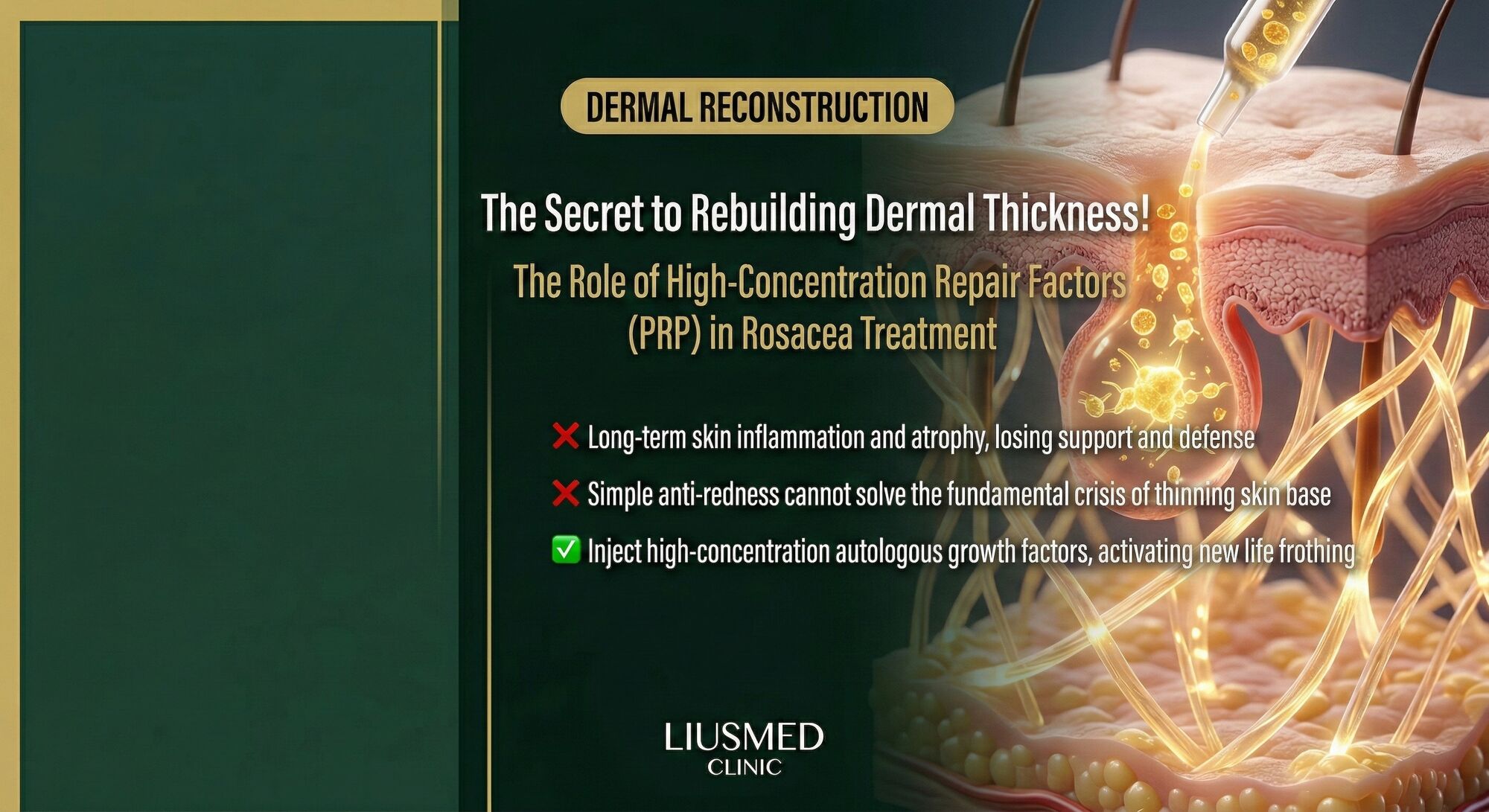
There is a question that rarely gets asked in rosacea consultations but should be: why can you see the blood vessels in the first place? The standard answer points to vessel dilation and proliferation -- and that is true. But there is a second, equally important factor: the skin above those vessels has become too thin to hide them. In healthy facial skin, a dense collagen-rich dermis provides an opaque layer that obscures the underlying vascular network. In rosacea, chronic inflammation progressively degrades this collagen scaffold, thinning the dermis and creating a translucency that makes even normal-caliber vessels visible.
This is why treatments that only target the vessels -- whether by laser destruction or pharmaceutical constriction -- provide incomplete results. The vessels may shrink, but the thin window through which you see them remains. PRP (Platelet-Rich Plasma — concentrate of your own blood platelets rich in growth factors) and PLT (Platelet (count)) growth factor therapy addresses this second dimension of rosacea by rebuilding the dermal thickness that the disease has taken away.
Table of Contents
- Dermal Thinning in Rosacea: The Hidden Half of Visible Redness
- PRP and PLT: What They Are and How They Differ
- The Growth Factor Cascade: From Platelet to Collagen
- How Growth Factors Are Delivered in the Rosacea Protocol
- PRP/PLT vs. Other Collagen-Stimulating Treatments
- Timeline of Dermal Rebuilding and What Patients Observe
Dermal Thinning in Rosacea: The Hidden Half of Visible Redness
The dermis in healthy adult facial skin ranges from approximately 1.0 to 1.5 millimeters in thickness, depending on the anatomical zone. It consists primarily of collagen (types I and III in roughly a 4:1 ratio), elastin, glycosaminoglycans, and a resident population of fibroblasts responsible for maintaining this matrix. In rosacea, several processes conspire to degrade this structure:
MMP (Matrix Metalloproteinase) overexpression. Chronic inflammation drives sustained production of matrix metalloproteinases -- particularly MMP-1 (collagenase-1), MMP-3 (stromelysin), and MMP-9 (gelatinase B) -- that actively digest collagen fibrils. In normal skin, MMP activity is tightly regulated by tissue inhibitors of metalloproteinases (TIMPs). In rosacea, the MMP-to-TIMP ratio shifts toward destruction.
Fibroblast senescence. Rosacea-affected fibroblasts show markers of premature cellular aging, including reduced proliferative capacity, decreased collagen synthesis, and increased production of inflammatory cytokines. These senescent fibroblasts not only produce less new matrix but actively contribute to the inflammatory environment through a senescence-associated secretory phenotype (SASP).
UV-accelerated damage. Rosacea patients are typically photosensitive, yet sun exposure is often unavoidable. UV radiation independently degrades collagen through direct photochemical damage and upregulation of MMPs, compounding the inflammation-driven destruction.
Vascular leakage. The dysfunctional vessels in rosacea are more permeable than normal, allowing plasma proteins and inflammatory cells to leak into the perivascular space. This chronic microedema disrupts normal matrix organization and creates a cycle of inflammation and degradation.
The clinical consequence is a dermis that may be 30 to 50 percent thinner than age-matched healthy skin in the most affected zones. This thinning converts the dermis from an opaque barrier into a semi-translucent window, making the underlying vascular network -- both normal and pathological vessels -- dramatically more visible.
Rebuilding dermal thickness is therefore not a cosmetic luxury. It is a structural intervention that directly reduces the visibility of redness by restoring the optical density of the tissue overlying the vascular network.
PRP and PLT: What They Are and How They Differ
Both PRP (platelet-rich plasma) and PLT (platelet lysate therapy) are autologous blood-derived products, meaning they are prepared from the patient's own blood. This eliminates the risk of allergic reaction and disease transmission while providing biologically active growth factors tailored to the individual's own cellular signaling environment.
PRP (Platelet-Rich Plasma): A small volume of the patient's blood (typically 15 to 30 mL) is drawn and centrifuged to separate the plasma fraction enriched in platelets -- typically achieving a platelet concentration three to five times higher than whole blood. The platelets are suspended in their native plasma and injected in their intact form. Upon contact with the tissue, the platelets activate (either spontaneously or with a calcium chloride trigger) and release their granular contents over a period of hours to days, providing a sustained release of growth factors.
PLT (Platelet Lysate Therapy): PLT takes the process one step further. After concentration, the platelets are lysed (broken open) through freeze-thaw cycling, releasing their entire growth factor payload immediately. The resulting lysate is a cell-free solution containing concentrated growth factors without intact platelets. This provides a higher initial concentration of bioactive molecules and eliminates the variable of platelet activation kinetics.
| Feature | PRP | PLT |
|---|---|---|
| Preparation | Centrifugation only | Centrifugation + freeze-thaw lysis |
| Contains intact platelets | Yes | No (cell-free) |
| Growth factor release | Sustained over hours to days | Immediate, full payload available |
| Peak concentration | Lower initial, sustained over time | Higher initial, shorter duration |
| Injection consistency | Slightly variable (activation-dependent) | More consistent (pre-released factors) |
| Clinical indication | Broader tissue applications | Situations requiring immediate high-dose stimulation |
The choice between PRP and PLT in the Liusmed Rosacea Injection Treatment is made based on the individual patient's treatment phase and clinical needs. During the loading phase, PLT may be preferred for its higher immediate growth factor delivery. During the remodeling and tapering phases, PRP's sustained release profile may provide more appropriate ongoing stimulation.
The Growth Factor Cascade: From Platelet to Collagen
Understanding why PRP/PLT works for dermal rebuilding requires following the signaling cascade from platelet activation to new collagen deposition:
Step 1: Growth factor release. Activated platelets (or pre-lysed platelet lysate) release a concentrated mixture of growth factors including:
- PDGF (Platelet-Derived Growth Factor): A potent mitogen for fibroblasts and smooth muscle cells. PDGF (Platelet-Derived Growth Factor — platelet-released cell growth signal) recruits fibroblasts to the injection site and stimulates their proliferation.
- TGF-beta (Transforming Growth Factor-beta): The master regulator of collagen synthesis. TGF-beta stimulates fibroblasts to produce collagen I, collagen III, fibronectin, and glycosaminoglycans. It also induces collagen IV synthesis, directly contributing to basement membrane repair.
- VEGF (Vascular Endothelial Growth Factor): While seemingly counterintuitive in an anti-angiogenic protocol, the controlled VEGF (Vascular Endothelial Growth Factor — new blood vessel signal) release from platelets supports the formation of organized, functional microvasculature rather than the chaotic, leaky vessels of rosacea. This paradox is resolved by context: VEGF in a pro-repair, growth-factor-rich environment promotes vessel maturation and stabilization rather than pathological sprouting.
- EGF (Epidermal Growth Factor): Stimulates keratinocyte proliferation and migration, supporting epidermal barrier restoration.
- IGF-1 (Insulin-like Growth Factor-1): Synergizes with PDGF and TGF-beta to amplify fibroblast activity and collagen production.
Step 2: Fibroblast activation. The growth factor cocktail arrives at a population of dermal fibroblasts that have been functionally dormant or senescent due to the chronic inflammatory environment. The concentrated signaling overcomes the inhibitory effects of the inflammatory milieu, reactivating fibroblasts to re-enter the cell cycle and begin producing extracellular matrix components.
Step 3: Procollagen synthesis and secretion. Activated fibroblasts synthesize procollagen molecules (the precursor form of collagen), which are secreted into the extracellular space. These procollagen molecules are enzymatically processed and self-assemble into collagen fibrils.
Step 4: Fibril cross-linking and maturation. New collagen fibrils are cross-linked by lysyl oxidase to form a stable, mechanically strong matrix. This process takes weeks to months, which is why the visible effects of growth factor therapy accumulate gradually over the treatment course rather than appearing immediately.
Step 5: Matrix remodeling. The newly deposited matrix is gradually remodeled by a balanced MMP-TIMP system to optimize its architecture. The concurrent use of TXA (Tranexamic Acid) in the Liusmed protocol helps protect this new matrix from premature enzymatic degradation by inhibiting plasmin-mediated MMP activation.
The net result is a measurable increase in dermal thickness, collagen density, and structural integrity in the treated zones -- the physical restoration of tissue that rosacea has eroded.
How Growth Factors Are Delivered in the Rosacea Protocol
Growth factor delivery within the Liusmed protocol follows the same manual mesotherapy principles applied to all components of the formulation, with specific adaptations for PRP/PLT:
Preparation. Blood is drawn at the beginning of the appointment and processed during the topical anesthesia application period (approximately 20-30 minutes). This ensures the growth factor preparation is fresh and biologically active at the time of injection.
Temperature management. PRP and PLT are temperature-sensitive biological products. They are maintained at room temperature during the brief preparation-to-injection interval. Excessive heat denatures growth factors; cold temperatures can trigger premature platelet activation in PRP.
Injection technique. Growth factors are delivered using the papule technique at specific points of maximum dermal thinning identified by clinical assessment and, when available, high-frequency ultrasound imaging of dermal thickness. The papule technique creates concentrated depots of growth factors at the sites of greatest need, maximizing local fibroblast exposure to the signaling molecules.
Combination with other agents. In the Liusmed protocol, PRP/PLT is often combined with TXA and microbotox in a single treatment session but may be delivered in a specific sequence rather than mixed in the same syringe. TXA and microbotox are typically delivered first to suppress inflammation and neurogenic activity, followed by PRP/PLT into a calmer tissue environment where the growth factors can act without competing inflammatory signals.
Volume and distribution. The typical PRP/PLT volume per session is 2 to 4 mL, distributed across the affected facial zones with emphasis on the central face (cheeks, nose, perioral area) where rosacea most commonly causes dermal thinning. Distribution patterns are individualized based on the clinical assessment of each patient's specific pattern of dermal thinning and erythema.
PRP/PLT vs. Other Collagen-Stimulating Treatments
Several alternative treatments claim to stimulate collagen production. Understanding how they compare to PRP/PLT in the specific context of rosacea explains why growth factor therapy is preferred:
| Treatment | Collagen Stimulation Mechanism | Suitability for Rosacea Skin | Key Limitation |
|---|---|---|---|
| PRP/PLT mesotherapy | Direct growth factor signaling to fibroblasts | Excellent; no thermal or chemical insult | Requires blood draw; variable platelet concentration |
| Fractional laser (ablative) | Thermal wound healing response | Poor; excessive inflammation in rosacea | Thermal damage worsens barrier dysfunction |
| Fractional laser (non-ablative) | Controlled thermal remodeling | Limited; still involves heat | Milder stimulation; risk of flare |
| Microneedling (CIT) | Mechanical wound healing response | Moderate; less inflammatory than laser | Needle trauma may trigger rosacea flare |
| Poly-L-lactic acid (PLLA) injection | Foreign body granulomatous response | Moderate; slow, diffuse collagen induction | Inflammatory mechanism unsuitable for active rosacea |
| Calcium hydroxylapatite (CaHA) injection | Scaffold for fibroblast infiltration | Limited; primarily for volume, not surface repair | Too deep for papillary dermal targeting |
| Radiofrequency microneedling | Combined thermal and mechanical | Limited; heat component problematic | Same thermal concerns as laser |
| Topical retinoids | Upregulation of collagen gene expression | Limited in rosacea; irritation common | Poor penetration; surface irritation |
The critical advantage of PRP/PLT in the rosacea context is that it stimulates collagen production through biological signaling rather than through injury. Every other collagen-stimulating treatment works by creating controlled damage and relying on the wound healing response to produce new collagen as a byproduct of repair. In rosacea skin, where the wound healing response is dysregulated and inflammatory signaling is already amplified, adding more injury to stimulate repair is inherently problematic.
PRP/PLT bypasses this problem entirely. It delivers the growth factors that would normally be released during wound healing without creating the wound. The fibroblasts receive the proliferative and synthetic signals without the inflammatory context, resulting in organized matrix production rather than inflammatory fibrosis.
Timeline of Dermal Rebuilding and What Patients Observe
Collagen remodeling is a slow biological process, and patients should have realistic expectations about the timeline:
Weeks 1-4: No measurable change in dermal thickness. The growth factors are activating fibroblasts and initiating procollagen synthesis, but new fibrils have not yet accumulated in sufficient quantity to alter tissue structure. Patients may notice improved hydration and skin texture from the hyaluronic acid component of the formulation, but this is not yet collagen remodeling.
Weeks 4-8: Early collagen deposition begins. High-frequency ultrasound (when used for monitoring) may detect the initial stages of dermal thickening. Clinically, patients may notice that their skin feels firmer and that makeup applies more smoothly. The optical density of the skin begins to increase, meaning that background redness appears slightly less vivid as the tissue above the vessels becomes less translucent.
Weeks 8-16: Active remodeling phase. Collagen fibrils are accumulating and cross-linking. Dermal thickness increases measurably. The combined effect of VEGF suppression (from TXA), reduced neurogenic vasodilation (from microbotox), and increasing dermal opacity (from new collagen) produces the most dramatic visible improvement during this period. Patients frequently report that this is when friends and family begin commenting on how much their skin has improved.
Months 4-8: Maturation and stabilization. The newly deposited collagen matrix undergoes remodeling and cross-linking, increasing its mechanical stability and longevity. The tissue transitions from actively rebuilding to maintaining its new structure. This is the period when tapering becomes possible because the structural gains have achieved a degree of permanence.
Beyond 8 months: The collagen deposited during treatment has a biological lifespan of years (collagen turnover in adult skin is estimated at 1-2% per year). The structural improvement is durable, though not permanent against ongoing aging and any continued inflammatory insult. Maintenance sessions may be recommended based on individual assessment.
The key message for patients is patience. The growth factor therapy is not producing a cosmetic effect that appears and fades. It is building physical tissue structure that accumulates incrementally and persists long after the treatment course is completed. The Rosacea Injection Treatment at Liusmed Clinic integrates PRP/PLT growth factor therapy as the regenerative backbone of a protocol designed for lasting structural change.
Frequently Asked Questions
Q1: Is PRP safe for rosacea patients given that it contains VEGF?
This is a common and reasonable concern. Platelet-derived VEGF is released in a controlled, physiological context alongside other growth factors that promote vessel maturation and stabilization (PDGF, angiopoietin). This is fundamentally different from the pathological, inflammation-driven VEGF overexpression in rosacea tissue. Additionally, the concurrent use of TXA in the protocol directly suppresses the plasmin-mediated VEGF release that drives pathological angiogenesis. The net effect is pro-repair vessel organization, not pro-disease vessel sprouting.
Q2: How much blood is drawn for PRP/PLT preparation?
Typically 15 to 30 mL (approximately one to two tablespoons), depending on the preparation system used and the volume of PRP/PLT required. This is a small fraction of what is drawn during routine blood tests and does not cause any systemic effects. Patients with needle anxiety or a history of vasovagal responses during blood draws should inform the clinic in advance so appropriate comfort measures can be arranged.
Q3: Can I use over-the-counter collagen supplements instead of PRP injection?
Oral collagen supplements (hydrolyzed collagen peptides) provide amino acid building blocks that may modestly support general skin health. However, they do not provide the targeted growth factor signaling needed to reactivate senescent fibroblasts in specifically damaged tissue zones. The difference is analogous to providing raw lumber versus providing an architect with a construction crew. The materials alone are insufficient without the biological instructions for where and how to build.
Q4: Does PRP work differently in older patients versus younger patients?
Age does affect PRP efficacy because platelet growth factor content and fibroblast responsiveness both decline with age. However, the concentrated growth factor delivery of PRP still provides a significant stimulus above baseline in older patients. The treatment timeline may be longer and the peak dermal thickness gain may be somewhat less than in younger patients, but meaningful structural improvement is achievable across a wide age range. Patients over 60 may benefit from PLT over PRP for its higher immediate growth factor concentration.
Q5: Are there any blood conditions that would prevent me from receiving PRP treatment?
Patients with platelet disorders (thrombocytopenia, platelet dysfunction syndromes), active blood cancers, or systemic infections should not receive PRP therapy. Patients on antiplatelet medications (aspirin, clopidogrel) may have suboptimal platelet function affecting PRP quality; this is discussed during consultation. Patients with chronic liver disease may have altered platelet function. A basic blood count is typically reviewed before initiating PRP-inclusive treatment.
Q6: How does PLT compare to synthetic growth factor products available on the market?
Synthetic or recombinant growth factor products contain one or a few specific growth factors in standardized concentrations. PLT contains the complete native growth factor profile released by platelets -- dozens of signaling molecules in their physiological ratios. This complexity is an advantage because collagen synthesis and tissue remodeling involve coordinated signaling cascades that require multiple concurrent growth factor inputs. A single recombinant growth factor cannot replicate the orchestrated biological response that a full platelet-derived cocktail provides.
About the Author
Dr. Ta-Ju Liu is the founder of Liusmed Clinic, a practice dedicated to regenerative medicine and minimal incision surgery. Dr. Liu's integration of PRP and PLT growth factor therapy into the rosacea injection protocol reflects his commitment to structural tissue restoration as the foundation of lasting clinical improvement. His approach combines autologous biological therapeutics with precision manual delivery to rebuild the dermal architecture that rosacea has degraded, addressing the disease at its structural root rather than at its cosmetic surface.
Disclaimer
This article is provided for educational and informational purposes only and does not constitute medical advice, diagnosis, or treatment. PRP and PLT therapies are autologous biological treatments whose outcomes vary based on individual patient factors including age, platelet concentration, baseline disease severity, and treatment adherence. The information presented reflects the clinical approach used at Liusmed Clinic and may not be applicable to all patients or clinical settings. Always consult a qualified healthcare provider before beginning any new treatment for rosacea or other medical conditions.
Specialties
Credentials
- Kaohsiung Medical University, School of Medicine
- Attending Physician, Dermatology, Kaohsiung Chang Gung Memorial Hospital
- Attending Physician, Aesthetic Center, Kaohsiung Chang Gung Memorial Hospital
- Visiting Physician, Dermatology, Xiamen Chang Gung Hospital
- Visiting Physician, Aesthetic Center, Xiamen Chang Gung Hospital
"For every surgery, I strive to achieve a good outcome through a small incision and refined technique. Minimally invasive surgery is not just a technique — it's a commitment of respect to every patient."
Recovery after any procedure needs peer support too


Want to learn more?
Schedule a consultation for professional evaluation and advice