Refractory Rosacea: Why Regenerative + Dermatology Expertise
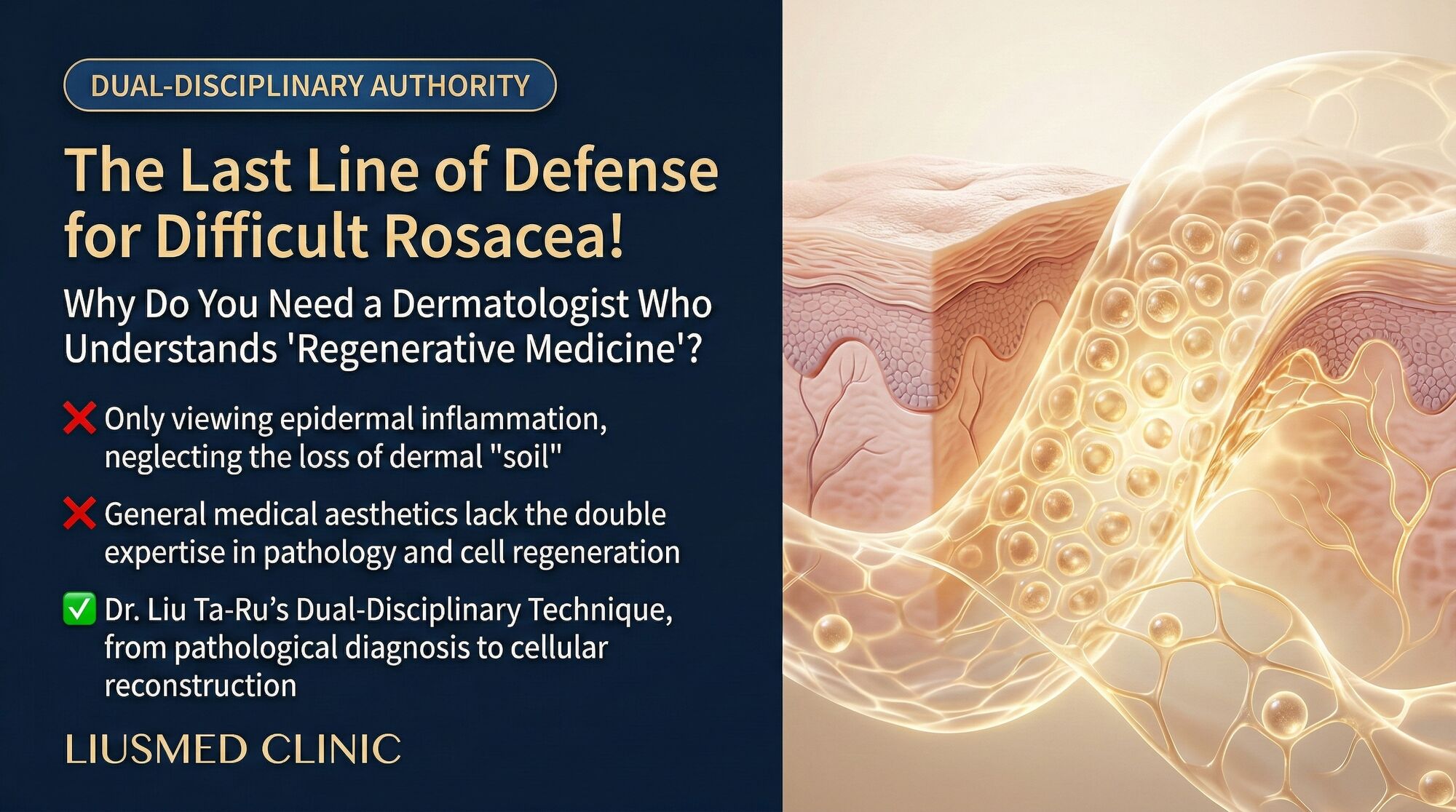
If you have cycled through multiple dermatologists, tried topical metronidazole, oral doxycycline, intense pulsed light, and pulsed dye laser yet still wake up to a burning, flushed face every morning, you are not alone. Refractory rosacea affects an estimated 30-40 percent of rosacea patients, and the common thread among them is that conventional single-pathway treatments eventually hit a ceiling. The missing piece, for many, is a physician who understands not only the dermatological surface but also the regenerative biology underneath it.
Table of Contents
- Why Single-Specialty Treatment Reaches a Ceiling
- What Regenerative Medicine Brings to the Table
- The Dual-Expertise Framework: Dermatology Meets Regeneration
- Comparison: Single-Specialty vs. Dual-Expertise Outcomes
- What a Dual-Expertise Consultation Looks Like
- When to Seek Dual-Expertise Care
Why Single-Specialty Treatment Reaches a Ceiling
Traditional dermatology excels at pattern recognition and pharmacological intervention. A board-certified dermatologist can classify your rosacea subtype, prescribe evidence-based topicals, and perform laser procedures with surgical precision. These interventions target the visible manifestation of rosacea: dilated capillaries, inflammatory papules, and surface redness.
The problem surfaces when the underlying tissue environment remains hostile. Rosacea is not merely a surface disease. Research over the past decade has demonstrated that the condition involves a complex interplay between neurovascular dysregulation, innate immune dysfunction, compromised skin barrier integrity, and altered dermal extracellular matrix composition. When a dermatologist eliminates visible telangiectasia with a laser, the dysfunctional vascular environment can simply regenerate new abnormal vessels within months. When antibiotics suppress papules, the underlying inflammatory cascade often reasserts itself once the medication is discontinued.
This is the ceiling. The tools of conventional dermatology are powerful at managing symptoms, but they were not designed to rebuild the tissue environment that gives rise to those symptoms.
What Regenerative Medicine Brings to the Table
Regenerative medicine operates on a fundamentally different principle: instead of removing or suppressing pathology, it seeks to restore the biological conditions under which healthy tissue can maintain itself. In the context of rosacea, this means:
Skin barrier reconstitution. The stratum corneum in rosacea patients shows measurably reduced ceramide levels, altered lipid ratios, and increased transepidermal water loss (TEWL). Regenerative approaches focus on restoring these parameters through bioactive delivery systems that provide the raw materials for barrier self-repair rather than simply coating the surface with occlusives.
Dermal matrix remodeling. Chronic rosacea degrades the dermal extracellular matrix, weakening the structural support around blood vessels and nerve endings. Regenerative techniques stimulate fibroblast activity and directed collagen deposition to rebuild this matrix, giving vessels a stable scaffold that discourages the formation of new telangiectasia.
Neurovascular calibration. Transient receptor potential (TRP) channels in rosacea skin are hypersensitive. Regenerative protocols that reduce local inflammatory mediators and restore perivascular support structures help reset the threshold at which these channels fire, reducing the baseline reactivity of the skin.
Immune microenvironment balancing. Rather than broadly suppressing immune activity (as antibiotics and anti-inflammatories do), regenerative approaches aim to shift the local immune environment from a pro-inflammatory Th1/Th17 dominance back toward a balanced state that permits tissue maintenance without chronic inflammation.
The Dual-Expertise Framework: Dermatology Meets Regeneration
A physician trained in both dermatology and regenerative medicine can construct treatment plans that operate on two levels simultaneously.
Level 1: Acute management (dermatological). This includes targeted pharmacotherapy to bring active flares under control, careful use of vascular lasers where appropriate, and evidence-based topical regimens to manage symptoms during the rebuilding phase.
Level 2: Tissue rebuilding (regenerative). Running in parallel, regenerative protocols work to restore the skin barrier, rebuild dermal matrix integrity, rebalance the immune microenvironment, and stabilize the neurovascular network.
The key insight is that these two levels are not sequential; they are simultaneous and synergistic. Dermatological management creates a window of reduced symptoms during which regenerative interventions can take hold without being overwhelmed by active inflammation. Regenerative tissue rebuilding, in turn, extends the durability of dermatological interventions by creating a healthier tissue environment that is less prone to relapse.
At Liusmed Clinic, this dual framework forms the foundation of the Rosacea Injection Treatment protocol, where Dr. Ta-Ju Liu integrates his background in regenerative medicine with dermatological assessment to address rosacea at both the symptomatic and structural levels.
Comparison: Single-Specialty vs. Dual-Expertise Outcomes
| Parameter | Single-Specialty Dermatology | Dual-Expertise Approach |
|---|---|---|
| Primary target | Surface symptoms (redness, papules, telangiectasia) | Symptoms + underlying tissue environment |
| Typical tools | Topicals, oral medications, laser, IPL | All dermatological tools + regenerative biologics, barrier restoration, matrix remodeling |
| Relapse rate after treatment | Higher; vascular and inflammatory pathways remain dysfunctional | Lower; rebuilt tissue resists re-establishment of pathological loops |
| Skin barrier status post-treatment | Often unchanged or further compromised by procedures | Measurably improved ceramide ratios and reduced TEWL |
| Duration of remission | Months; maintenance therapy often required indefinitely | Extended remission periods; some patients achieve self-sustaining stability |
| Laser dependency | Often requires repeated sessions every 6-12 months | Laser used strategically if at all; reduced need for repeat sessions |
| Patient experience during treatment | Symptomatic relief alternating with flares | Progressive, cumulative improvement with fewer peaks and valleys |
This comparison is not meant to diminish the value of dermatology. Rather, it illustrates that the addition of regenerative expertise changes the trajectory of treatment from cyclical symptom management to progressive tissue restoration.
What a Dual-Expertise Consultation Looks Like
Patients seeking dual-expertise care for rosacea should expect a consultation that goes beyond visual inspection.
Comprehensive skin barrier assessment. This includes evaluation of transepidermal water loss, surface lipid composition, and pH mapping. These measurements provide a quantitative baseline for the regenerative component of treatment.
Vascular mapping. Detailed assessment of telangiectasia distribution, vessel caliber, and perfusion patterns helps determine whether vascular laser intervention is appropriate, or whether vascular normalization through regenerative means alone is sufficient.
Trigger and lifestyle analysis. Regenerative medicine recognizes that tissue repair cannot occur in a hostile environment. Detailed mapping of dietary, environmental, and behavioral triggers allows the treatment plan to include environmental modifications that support tissue rebuilding.
Phased treatment plan. Rather than a single intervention, a dual-expertise physician will typically outline a phased approach: an initial stabilization phase (dermatological), followed by overlapping rebuilding phases (regenerative), with clear milestones and objective measurements to track progress.
Ongoing monitoring and adjustment. Regenerative processes are biological and therefore variable. A dual-expertise physician adjusts protocols based on measured tissue responses, not arbitrary timelines.
When to Seek Dual-Expertise Care
Not every rosacea patient needs a dual-expertise physician. Mild rosacea that responds well to first-line topicals and lifestyle modifications can be managed effectively by a skilled dermatologist alone.
Consider seeking dual-expertise care if:
- You have tried three or more different treatment approaches without achieving lasting improvement.
- Laser treatments provide temporary clearance but telangiectasia consistently returns within months.
- Your skin barrier feels perpetually compromised despite appropriate skincare.
- Oral antibiotics control papules but symptoms recur shortly after discontinuation.
- You have been diagnosed with steroid-dependent rosacea or have a history of topical steroid overuse.
- Your rosacea involves significant neurovascular symptoms such as burning, stinging, or flushing that do not correlate with visible vascular changes.
These patterns suggest that the tissue environment itself needs repair, not just the symptoms it produces.
Frequently Asked Questions
Q1: What exactly does "dual expertise" mean in this context?
It means a physician who holds training and clinical experience in both dermatology (the diagnosis and treatment of skin diseases) and regenerative medicine (the science of restoring tissue function through biological repair mechanisms). This combination allows the doctor to address rosacea at both the symptomatic level and the underlying tissue level simultaneously.
Q2: Can I get the same result by seeing a dermatologist and a regenerative medicine doctor separately?
In theory, yes, but in practice coordination between two separate physicians is difficult. Treatment timing, drug interactions, and protocol sequencing require integrated decision-making. A single physician with dual training can make real-time adjustments that two separate specialists communicating through referral letters cannot.
Q3: Does the regenerative approach mean I will never need laser treatment?
Not necessarily. Some patients benefit from targeted laser use as part of an integrated plan. The difference is that in a dual-expertise approach, laser is used strategically to address specific vascular targets while regenerative protocols work to prevent recurrence, rather than relying on repeated laser sessions as the sole long-term strategy.
Q4: How long does a dual-expertise rosacea treatment typically take?
Most patients begin to see measurable improvement in skin barrier function within four to six weeks. Visible vascular improvement typically follows over two to four months. Achieving stable remission, where the skin can maintain itself without active treatment, generally requires six to twelve months depending on severity and chronicity.
Q5: Is this approach supported by scientific evidence?
Yes. The principles of skin barrier restoration, dermal matrix remodeling, and immune microenvironment modulation are well-established in peer-reviewed literature. The integration of these regenerative principles with conventional dermatological management represents an evidence-informed synthesis, not an alternative medicine approach.
Q6: How do I verify that a doctor truly has dual expertise?
Ask about their training background in both dermatology and regenerative medicine. Inquire about the specific regenerative modalities they use and the evidence supporting them. A genuine dual-expertise physician will be able to explain both the dermatological and regenerative components of their treatment plan in clear, evidence-based terms.
About the Author
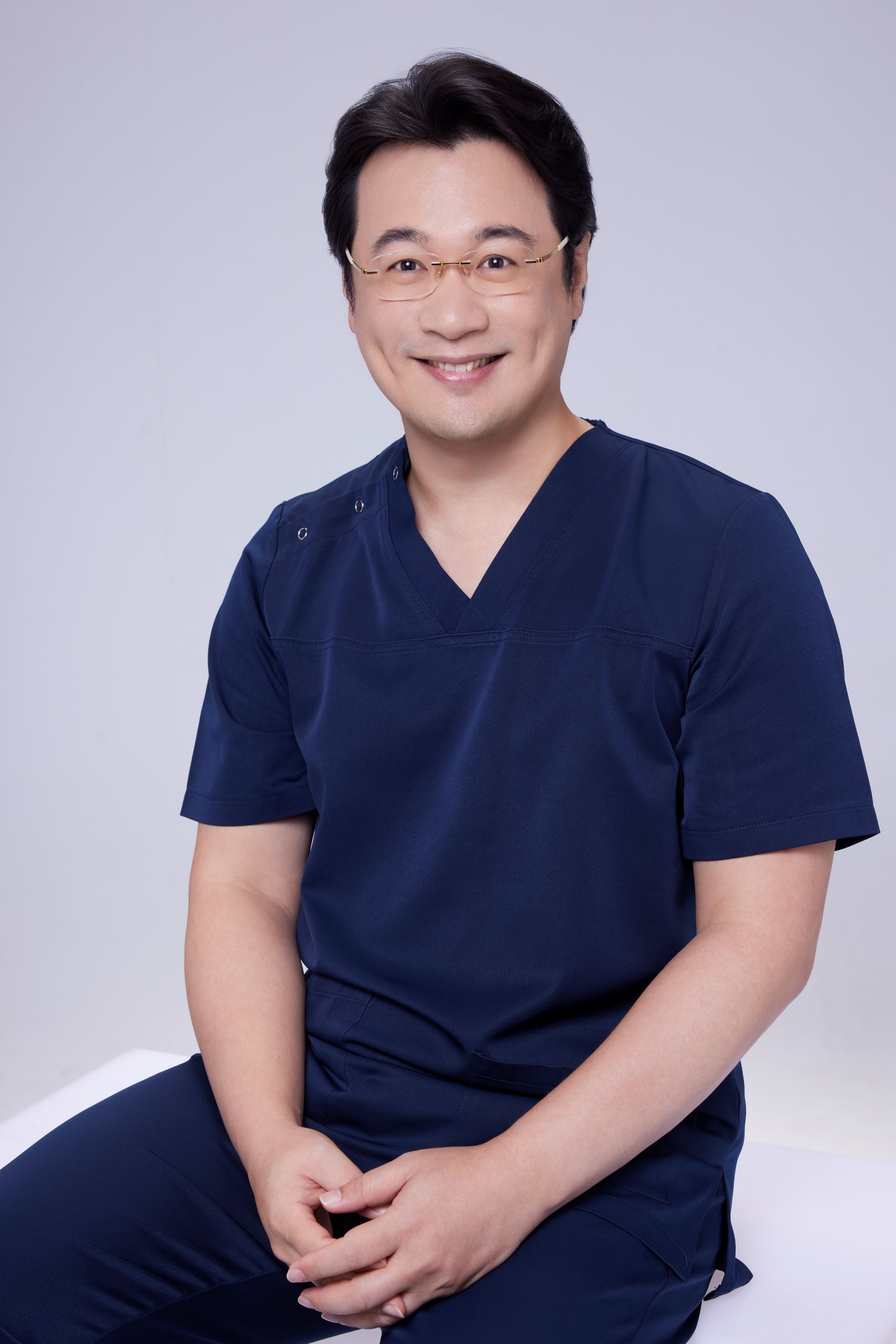
Dr. Ta-Ju Liu is the founder and lead physician at Liusmed Clinic in Taiwan. His practice integrates regenerative medicine principles with dermatological expertise, specializing in rosacea treatment, skin barrier restoration, and minimal incision surgery for complex aesthetic and medical conditions. Dr. Liu's approach focuses on rebuilding tissue from within rather than relying solely on surface-level symptom management, earning Liusmed Clinic a reputation for treating refractory cases that have not responded to conventional approaches.
Disclaimer
This article is provided for educational and informational purposes only and does not constitute medical advice, diagnosis, or treatment. Individual rosacea presentations vary significantly, and treatment decisions should be made in consultation with a qualified physician who can evaluate your specific condition. Results described in this article reflect general clinical observations and are not guaranteed for any individual patient. Always consult your healthcare provider before modifying any treatment regimen.
Specialties
Credentials
- Kaohsiung Medical University, School of Medicine
- Attending Physician, Dermatology, Kaohsiung Chang Gung Memorial Hospital
- Attending Physician, Aesthetic Center, Kaohsiung Chang Gung Memorial Hospital
- Visiting Physician, Dermatology, Xiamen Chang Gung Hospital
- Visiting Physician, Aesthetic Center, Xiamen Chang Gung Hospital
"For every surgery, I strive to achieve a good outcome through a small incision and refined technique. Minimally invasive surgery is not just a technique — it's a commitment of respect to every patient."
Recovery after any procedure needs peer support too


Want to learn more?
Schedule a consultation for professional evaluation and advice