[Case Study] From Laser Refugee to Healthy Bare Skin: A Complete Non-Laser Rosacea Recovery Journey
![[Case Study] From Laser Refugee to Healthy Bare Skin: A Complete Non-Laser Rosacea Recovery Journey](/images/articles/rosacea-case-laser-refugee-recovery/rosacea-case-laser-refugee-recovery-cover_en.jpg)
She arrived at the clinic with a folder of photographs documenting three years and eight laser sessions. The first photos showed moderate erythematotelangiectatic rosacea: persistent central facial redness with scattered visible vessels. The final photos, taken just weeks before her consultation, showed something worse. The redness had not only persisted but intensified. The skin was visibly thin, reactive to touch, and burning constantly. She had become what patients in online rosacea communities call a "laser refugee": someone whose condition has been worsened rather than improved by repeated energy-based treatments. This is the story of her recovery.
Table of Contents
- Initial Presentation: What Three Years of Laser Did
- The Assessment: Looking Beyond the Surface
- The Treatment Plan: Repair Without Destruction
- Month-by-Month Recovery Timeline
- Objective Measurements: Tracking Tissue Repair
- Lessons from This Case
Initial Presentation: What Three Years of Laser Did
The patient, a woman in her late thirties, had first noticed persistent facial redness in her early thirties. A dermatologist diagnosed erythematotelangiectatic rosacea and recommended pulsed dye laser (PDL) treatment. The first session produced improvement. Redness decreased by approximately 30 percent, and several prominent nasal telangiectasia disappeared.
Encouraged by this result, she continued with quarterly PDL sessions. Improvement after each session became progressively smaller. By the fifth session, post-treatment erythema lasted longer than before. By the seventh, she noticed that her skin had become hypersensitive to products she had used for years without issue. After the eighth session, she experienced a severe flare that lasted six weeks, during which her entire central face burned continuously and even lukewarm water caused stinging.
Her referring dermatologist suggested switching to a different laser wavelength. Instead, she chose to seek a different approach entirely.
At initial presentation at Liusmed Clinic, the clinical picture included:
- Diffuse centrofacial erythema extending from the nasolabial folds to the lateral cheeks
- Fine telangiectasia visible across the nose and medial cheeks
- Skin visibly thin with a translucent quality over the nasal bridge
- Profound tactile sensitivity; light touch produced visible blanching followed by reactive hyperemia
- Patient-reported constant burning sensation rated 5-6 out of 10 at baseline
- Inability to tolerate any skincare product other than plain petroleum jelly
The Assessment: Looking Beyond the Surface
Standard dermoscopic examination confirmed diffuse telangiectasia with a disorganized vascular pattern consistent with chronic rosacea. But the critical findings came from tissue function assessments that went beyond visual evaluation.
Transepidermal water loss (TEWL): Measured at 38 g/m2/h on the central cheeks. Normal range is 5-15 g/m2/h. This extreme elevation confirmed severe barrier dysfunction.
Skin hydration: Corneometry readings of 18 arbitrary units on the cheeks, compared to a normal range of 40-60 AU. The skin was profoundly dehydrated despite the patient's diligent use of petroleum jelly.
pH measurement: Surface pH of 6.8 on the cheeks, compared to a healthy range of 4.5-5.5. The alkaline shift indicated significant disruption of the acid mantle, which compromises antimicrobial defense and enzyme function.
Dermoscopic vascular pattern: Disorganized, with multiple branching vessels lacking normal hierarchical architecture. This pattern indicates chronic vascular remodeling in a structurally unsupported dermal environment.
The assessment painted a clear picture: this was not simply rosacea. It was rosacea compounded by cumulative barrier damage from repeated thermal injury. The skin had lost its ability to protect itself, hydrate itself, or regulate its own vascular responses. The laser sessions, while effectively destroying individual vessels each time, had progressively degraded the tissue environment.
The Treatment Plan: Repair Without Destruction
Based on this assessment, a strictly non-destructive treatment plan was designed through the Rosacea Injection Treatment protocol. The core principle was clear: no energy-based device, no ablative procedure, and no intervention that would further compromise the already devastated barrier.
Immediate priorities:
- Complete cessation of all active treatments and products except a prescribed minimal barrier support regimen
- Introduction of a physiological lipid replacement system designed to deliver ceramides, cholesterol, and free fatty acids in the ratio found in healthy stratum corneum
- Anti-inflammatory support through targeted delivery of calming biologics
Medium-term strategy:
- Regenerative injection protocol to deliver growth factors and anti-inflammatory signals directly to the dermis
- Gradual reintroduction of gentle active ingredients as barrier function improved
- Weekly monitoring of TEWL and hydration to guide treatment intensity
Long-term goals:
- Restoration of TEWL to below 20 g/m2/h
- Normalization of surface pH to below 5.5
- Dermoscopic evidence of organized vascular architecture
- Patient-reported burning at 0-1 out of 10
- Tolerance of a complete basic skincare routine
Month-by-Month Recovery Timeline
Month 1: Stabilization. The first four weeks focused exclusively on stopping the decline. The barrier support regimen was applied three times daily. The patient was instructed to avoid all water contact with the face except brief lukewarm rinsing once daily. Burning sensation decreased from 5-6 to 3-4 out of 10 by week three. TEWL decreased from 38 to 31 g/m2/h. The visible redness did not change.
Month 2: First regenerative phase. With initial barrier stabilization achieved, the first regenerative injection session was performed. The protocol delivered anti-inflammatory and pro-repair biologics to the mid-dermis. The patient experienced mild warmth for 24 hours post-treatment but no flare. By the end of month two, burning had decreased to 2-3 out of 10, and the patient reported her first full day without discomfort in over a year.
Month 3: Visible changes begin. TEWL reached 24 g/m2/h. Skin hydration improved to 32 AU. The first visible change was a reduction in the translucent quality of the nasal skin, indicating early dermal thickening from collagen deposition. Redness remained diffuse but the patient noted it was no longer constant; she began having periods of near-normal color in the mornings.
Month 4-5: Accelerating improvement. The second and third regenerative sessions were performed. Dermoscopic examination showed the first evidence of vascular reorganization: some previously chaotic vessel patterns were resolving into more linear, hierarchical arrangements. TEWL reached 19 g/m2/h. The patient was able to introduce a gentle cleanser and a basic moisturizer without reactivity.
Month 6-7: Breakthrough. Surface pH normalized to 5.2. Skin hydration reached 41 AU, entering the normal range for the first time since treatment began. The patient reported burning at 0-1 out of 10, describing the sensation as occasional mild warmth rather than constant burning. Visually, the diffuse redness had resolved to a mild, intermittent flush that appeared primarily in the afternoon and after exercise.
Month 8-9: Stabilization and independence. The final regenerative session was performed at month eight. By month nine, TEWL had stabilized at 14 g/m2/h, within the normal range. Dermoscopic examination showed substantially organized vascular architecture with only a few persistent telangiectasia on the nasal alae. The patient was maintaining a complete basic skincare routine including cleanser, moisturizer, and mineral sunscreen without any reactivity.
Objective Measurements: Tracking Tissue Repair
| Measurement | Baseline | Month 3 | Month 6 | Month 9 | Normal Range |
|---|---|---|---|---|---|
| TEWL (g/m2/h) | 38 | 24 | 17 | 14 | 5-15 |
| Skin hydration (AU) | 18 | 32 | 41 | 48 | 40-60 |
| Surface pH | 6.8 | 6.1 | 5.2 | 5.0 | 4.5-5.5 |
| Burning (0-10 scale) | 5-6 | 2-3 | 0-1 | 0 | 0 |
| Product tolerance | Petroleum jelly only | Barrier cream | Cleanser + moisturizer | Full basic routine | Full routine |
These numbers tell a story that photographs alone cannot. While visual improvement was gradual and sometimes difficult for the patient to appreciate in the moment, the objective measurements showed continuous, measurable tissue repair from the first month onward.
Lessons from This Case
Lesson 1: Laser damage is cumulative in compromised skin. In healthy skin, thermal injury from laser treatment is a controlled event that heals predictably. In rosacea skin with already-compromised barrier function, each thermal event can push the tissue further into dysfunction. The decision to continue laser treatment should be based on tissue health assessments, not only on vascular appearance.
Lesson 2: Barrier repair must precede all other interventions. The skin barrier is the foundation on which all other therapeutic goals rest. Attempting to treat dermal inflammation or vascular dysfunction while the barrier is severely compromised is like trying to repair a building's interior while the roof is missing.
Lesson 3: Tissue repair is measurable. The shift from subjective visual assessment to objective tissue measurements transforms rosacea treatment from art to science. Patients who can see their TEWL decreasing and their hydration increasing maintain motivation even during periods when visual changes are subtle.
Lesson 4: Non-laser recovery is possible. This case demonstrates that even severe rosacea complicated by iatrogenic barrier damage can be meaningfully improved through a purely regenerative, non-destructive approach. The persistent nasal telangiectasia at month nine could potentially be addressed with a single targeted laser session now that the tissue environment is healthy, but the patient has chosen to continue with the repair approach and monitor whether further vascular normalization occurs.
Lesson 5: Recovery takes time, but it is progressive. Nine months is a significant commitment. But unlike the cyclical pattern of laser treatment (improvement, recurrence, retreatment), the repair trajectory was consistently progressive. Each month was measurably better than the last, and the improvements were self-sustaining rather than dependent on repeated intervention.
Frequently Asked Questions
Q1: Is this a single patient or a composite case?
This article presents a representative case that illustrates patterns observed across multiple patients. Specific measurements and timelines reflect real clinical data, but details have been generalized to protect patient privacy and to present a case that is broadly illustrative rather than idiosyncratic.
Q2: Would the outcome have been different if she had stopped lasers earlier?
Likely yes. The degree of barrier damage was directly related to the cumulative thermal exposure. Patients who seek repair-based treatment earlier in their laser journey typically have faster recovery timelines because the baseline tissue damage is less severe.
Q3: Does this mean lasers are always harmful for rosacea?
No. Lasers are effective tools when used appropriately. This case illustrates what can happen when laser treatment is continued despite signs of cumulative tissue damage, specifically increasing sensitivity, prolonged post-treatment erythema, and declining tolerance for previously tolerated products. These are warning signs that the tissue environment needs repair, not further thermal intervention.
Q4: How many regenerative sessions were required?
This patient received four regenerative injection sessions over nine months. The frequency was determined by objective measurements rather than a predetermined schedule. Sessions were spaced further apart as tissue function improved and the skin demonstrated increasing ability to maintain itself between treatments.
Q5: Can men experience the same "laser refugee" pattern?
Yes. While rosacea demographics and hormonal factors differ between sexes, the fundamental tissue dynamics of barrier damage from repeated thermal exposure apply equally. Male patients with rosacea who have undergone multiple laser sessions without improvement should consider tissue health assessment as an alternative pathway.
Q6: What skincare routine does the patient use now for maintenance?
At the conclusion of active treatment, the patient maintains a simple routine: gentle non-foaming cleanser, a ceramide-based moisturizer, and mineral sunscreen. She avoids known personal triggers (alcohol, extreme temperatures, spicy food) and uses the barrier-support lipid system during periods of increased environmental stress such as winter dry air or travel.
About the Author
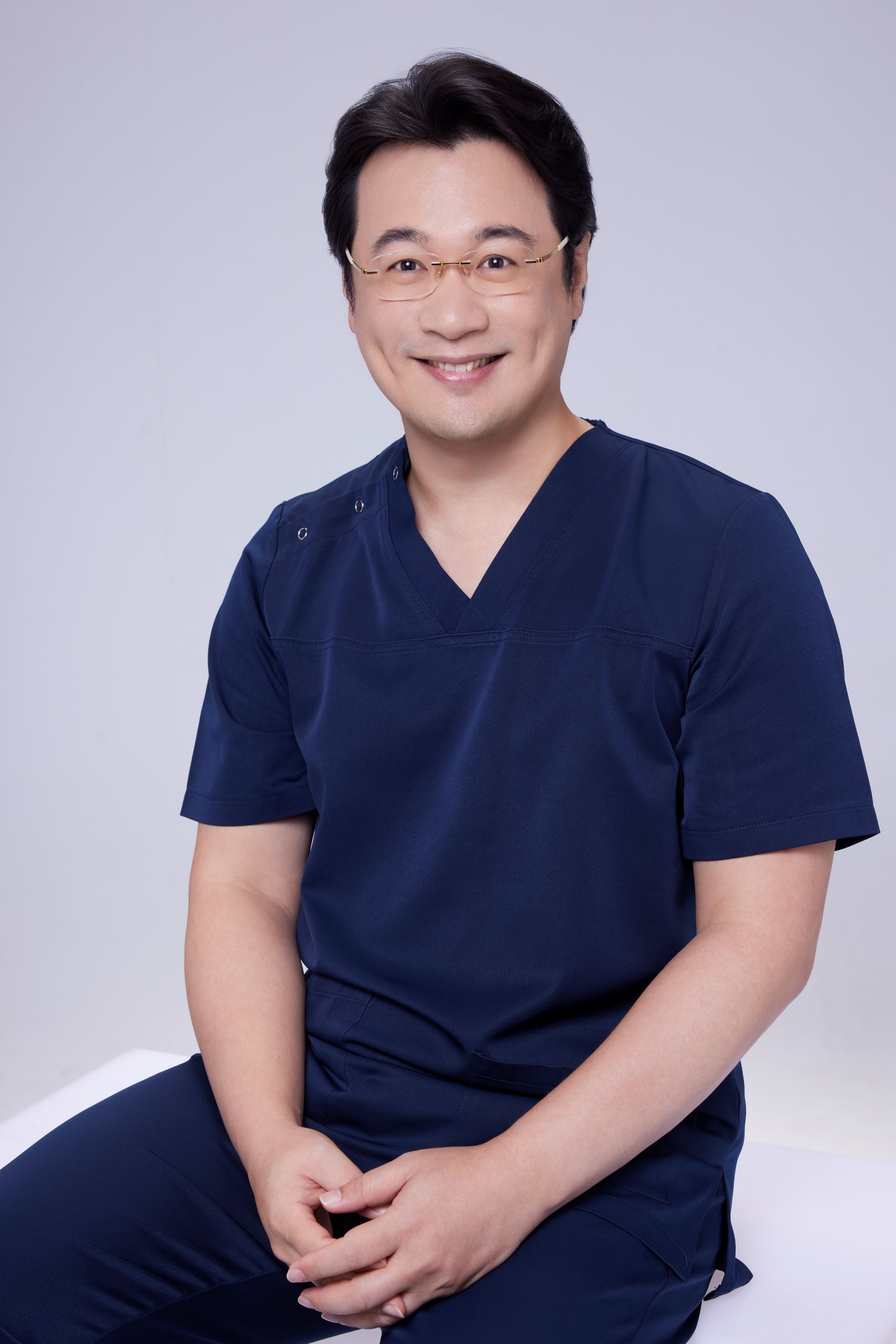
Dr. Ta-Ju Liu is the founder and lead physician at Liusmed Clinic in Taiwan, where he specializes in regenerative medicine, rosacea treatment, and minimal incision surgery. His clinical work with laser-refugee patients has informed a tissue-repair-first approach that prioritizes measurable restoration of skin barrier function and dermal architecture. Dr. Liu believes that quantitative tissue assessment should guide treatment decisions, replacing the subjective visual evaluations that often lead to overtreatment.
Disclaimer
This article presents a representative clinical case for educational purposes and does not constitute medical advice. Individual cases vary significantly in presentation, severity, and response to treatment. The timeline and outcomes described here are specific to this case and should not be interpreted as typical or guaranteed results. Past results do not predict future outcomes. All rosacea treatment decisions should be made with a qualified physician who can evaluate your individual condition. Do not discontinue prescribed treatments without consulting your doctor.
Specialties
Credentials
- Kaohsiung Medical University, School of Medicine
- Attending Physician, Dermatology, Kaohsiung Chang Gung Memorial Hospital
- Attending Physician, Aesthetic Center, Kaohsiung Chang Gung Memorial Hospital
- Visiting Physician, Dermatology, Xiamen Chang Gung Hospital
- Visiting Physician, Aesthetic Center, Xiamen Chang Gung Hospital
"For every surgery, I strive to achieve a good outcome through a small incision and refined technique. Minimally invasive surgery is not just a technique — it's a commitment of respect to every patient."
Recovery after any procedure needs peer support too


Want to learn more?
Schedule a consultation for professional evaluation and advice