Is There Downtime After Rosacea Injection? Post-Treatment Recovery and Step-Down Tapering Guide
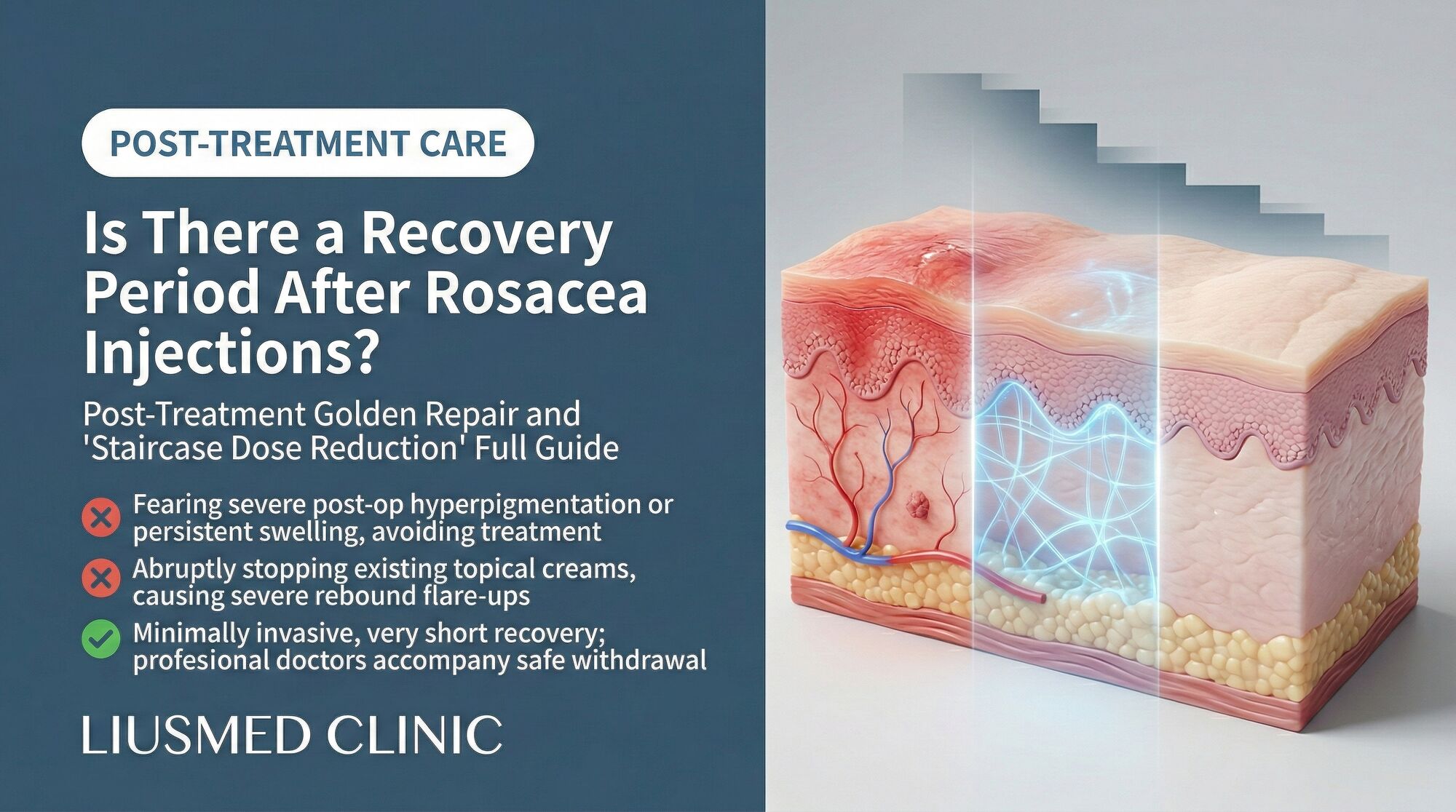
One of the first questions every rosacea patient asks before starting the injection protocol is: what happens after? How much downtime is involved? When can I return to normal activities? Will my skin look worse before it looks better? These are practical questions that deserve honest, detailed answers -- not vague reassurances.
The reality is that the Rosacea Injection Treatment at Liusmed Clinic is designed to produce minimal disruption to daily life, but "minimal" is not "zero." Understanding the recovery timeline, knowing what to expect at each stage, and following the post-treatment care guidelines correctly makes the difference between smooth healing and unnecessary complications. Equally important is understanding the tapering protocol -- the structured step-down plan that progressively extends intervals between sessions as your skin rebuilds its structural integrity.
Table of Contents
- Immediate Post-Treatment: The First 24 Hours
- Days 2-7: The Early Recovery Window
- The Treatment Schedule: Loading, Remodeling, and Tapering Phases
- The Step-Down Tapering Protocol Explained
- What to Avoid During Recovery and Between Sessions
- When to Contact the Clinic: Red Flags vs. Normal Responses
Immediate Post-Treatment: The First 24 Hours
Immediately after your injection session, the treated areas will show visible evidence of the procedure. Understanding what is normal prevents unnecessary anxiety:
Pinpoint redness. Each injection site produces a small red dot where the needle entered the skin. In a full-face treatment, there may be 100 to 200 of these points. The overall effect is a diffuse pinkness across the treated zones that looks somewhat like a mild sunburn. This redness is caused by the micro-trauma of needle insertion, not by an inflammatory flare of your rosacea.
Mild swelling. The injected fluid creates small depots in the papillary dermis that produce slight puffiness, particularly noticeable in thin-skinned areas such as the under-eye region and perioral zone. This swelling is the deposited formulation in the tissue and resolves as the fluid is absorbed and distributed over the following hours.
Wheal formation. Where the papule injection technique was used (typically over areas of maximum rosacea activity), small raised bumps resembling mosquito bites may be visible. These wheals flatten within two to four hours as the injected bolus distributes through the surrounding tissue.
Occasional pinpoint bleeding. Some injection points may produce a tiny drop of blood, particularly in areas where the dense vascular network of rosacea increases the probability of capillary contact. This resolves with gentle pressure and does not indicate any complication.
Tingling or warmth. The treated areas may feel warm or tingly for one to three hours post-treatment. This reflects the normal tissue response to mesotherapy agents and the mild histamine release from needle-induced micro-trauma.
What you should do in the first 24 hours:
- Apply the post-treatment soothing serum provided by the clinic as directed
- Avoid touching, rubbing, or massaging the treated areas
- Do not apply makeup for at least 12 hours (24 hours is preferred)
- Avoid direct sun exposure; if you must go outside, use a mineral (zinc oxide) sunscreen after 12 hours
- Sleep on your back if possible to avoid pressing treated areas against the pillow
- Avoid hot showers, saunas, and strenuous exercise for 24 hours
- Do not apply active skincare ingredients (retinoids, AHAs, BHAs, vitamin C serums) for 48 hours
Most patients describe the first 24 hours as mildly inconvenient rather than significantly disruptive. The visible signs are subtle enough that many patients return to work the same day or the following morning with minimal concealer applied after the 12-hour waiting period.
Days 2-7: The Early Recovery Window
By the second day, most of the immediate post-treatment signs have resolved or are resolving:
Day 2: Pinpoint redness fades to a slight overall pinkness. Swelling is significantly reduced. Wheals have fully flattened. The skin may feel slightly drier than usual as the tissue absorbs the injected formulation.
Days 3-4: The treated skin often enters what patients describe as a "glow" phase -- the hydrating components of the formulation (particularly hyaluronic acid) create a plump, hydrated appearance that many patients find cosmetically pleasant. Background rosacea redness may already appear slightly less intense, though this is variable.
Days 5-7: Skin returns to its baseline state, though perceptive patients may notice that their flushing threshold has shifted -- triggers that previously caused immediate flushing may produce a delayed or milder response. This is the early evidence of the anti-neurogenic effect of microbotox and the anti-inflammatory effect of tranexamic acid beginning to take hold.
Possible variation: the initial flare. A minority of patients (approximately 10-15%) experience a transient increase in redness or mild papule formation during the first 48 hours. This is not a sign that the treatment is failing. It represents the tissue's initial inflammatory response to the injection micro-trauma superimposed on already-reactive rosacea skin. This reaction is self-limiting and typically resolves by day three to four. If it occurs after your first session, the physician may adjust the technique or formulation concentration for subsequent sessions.
Bruising. Approximately 10-15% of patients develop one or more small bruises at injection sites. These appear within 24 hours and resolve over five to seven days. Bruising is more common in patients taking aspirin, fish oil supplements, or other blood-thinning agents. While not medically significant, patients who want to minimize bruising risk are advised to discontinue non-essential supplements with anticoagulant properties one week before treatment (after consulting with their prescribing physician regarding any prescription blood thinners).
The Treatment Schedule: Loading, Remodeling, and Tapering Phases
The Liusmed rosacea injection protocol is not a single treatment. It is a structured course designed in three phases, each with a specific biological objective:
Phase 1: Loading (Weeks 1-6). Sessions are scheduled every one to two weeks. The primary objectives during this phase are inflammation suppression, VEGF (Vascular Endothelial Growth Factor — new blood vessel signal) reduction, and initial barrier stabilization. The frequent sessions establish therapeutic tissue concentrations of TXA (Tranexamic Acid) and microbotox while providing repeated growth factor stimulation to activate dormant fibroblasts. Patients typically receive four to six sessions during the loading phase.
Phase 2: Remodeling (Months 2-4). Session intervals extend to every three to four weeks. The focus shifts from acute inflammation control to structural repair. Collagen deposition in the papillary dermis accelerates during this phase, basement membrane components begin to reassemble, and dermal thickness measurably increases. The skin's inherent barrier function improves, reducing transepidermal water loss and decreasing sensitivity. Patients typically receive three to five sessions during remodeling.
Phase 3: Tapering (Months 4-8+). Session intervals progressively lengthen as the tissue demonstrates independent stability. This is the critical transition from treatment dependence to treatment independence. The tapering phase is individualized based on clinical response and cannot be predetermined on a fixed schedule.
The total number of sessions varies by individual, but most patients completing the full protocol receive between twelve and eighteen sessions over six to eight months.
The Step-Down Tapering Protocol Explained
The tapering phase deserves special attention because it distinguishes the Liusmed approach from maintenance-dependent treatment models. The goal is not indefinite treatment at fixed intervals but progressive withdrawal as the tissue demonstrates self-sustaining stability.
The tapering protocol follows a structured decision framework:
Step 1: Three-week interval test. After completing the remodeling phase, the session interval is extended to three weeks. If the patient maintains stability (no increase in flushing frequency, no recurrence of sensitivity, stable erythema scores on photography), the interval is extended further.
Step 2: Four-week interval. If stability holds at three weeks, the interval extends to four weeks. The same stability criteria are applied.
Step 3: Six-week interval. A significant step that tests the tissue's ability to maintain its structural gains over a longer period without reinforcement.
Step 4: Eight-week interval. At this stage, many patients have achieved sufficient dermal thickness and barrier integrity that the visible signs of rosacea have significantly diminished and flushing episodes are infrequent and mild.
Step 5: Twelve-week interval or transition to maintenance. If stability is maintained at eight weeks, the patient moves to quarterly check-in sessions or transitions to an as-needed maintenance model.
| Phase | Session Interval | Duration | Number of Sessions | Primary Goal |
|---|---|---|---|---|
| Loading | Every 1-2 weeks | 4-6 weeks | 4-6 | Inflammation suppression, initial VEGF blockade |
| Remodeling | Every 3-4 weeks | 8-12 weeks | 3-5 | Collagen deposition, BMZ repair, barrier rebuilding |
| Tapering Step 1 | Every 3 weeks | 6-9 weeks | 2-3 | Test tissue stability at shorter interval |
| Tapering Step 2 | Every 4 weeks | 4-8 weeks | 1-2 | Extended stability verification |
| Tapering Step 3 | Every 6 weeks | 6-12 weeks | 1-2 | Intermediate independence |
| Tapering Step 4 | Every 8 weeks | 8-16 weeks | 1-2 | Near-independence validation |
| Maintenance | Every 12 weeks or as needed | Ongoing | As needed | Sustain structural gains |
What happens if stability is not maintained at a tapering step? If a patient experiences recurrence of flushing, increased erythema, or return of sensitivity at any tapering step, the interval is shortened back to the previous stable level for one to two additional sessions before re-attempting the extension. This is not failure -- it is the tissue communicating that it needs more time to consolidate structural repair before the next independence step. The protocol accommodates this without requiring a return to the loading phase.
Individual variation. Some patients progress through the tapering steps rapidly, reaching twelve-week intervals within four months. Others require a more gradual taper, particularly those with long-standing rosacea (more than ten years), extensive baseline damage, or ongoing exposure to unavoidable triggers (occupational heat exposure, for example). The protocol is designed to be patient-responsive, not calendar-driven.
What to Avoid During Recovery and Between Sessions
Consistent adherence to recovery guidelines between sessions significantly impacts treatment outcomes. The following recommendations apply throughout the treatment course:
Sun protection. UV radiation is both a rosacea trigger and a direct driver of VEGF expression and MMP (Matrix Metalloproteinase) activation. Rigorous sun protection with mineral sunscreen (SPF 30 or higher, zinc oxide or titanium dioxide based) is essential throughout the treatment course and ideally maintained permanently. Chemical sunscreens containing oxybenzone or octinoxate may irritate rosacea skin and are not recommended.
Gentle skincare only. During the treatment course, the skincare routine should be simplified to a gentle cleanser, a barrier-repair moisturizer, and mineral sunscreen. Active ingredients (retinoids, glycolic acid, salicylic acid, benzoyl peroxide, high-concentration vitamin C) should be paused unless specifically approved by the treating physician. These agents, while potentially beneficial in healthy skin, can undermine barrier repair in actively treated rosacea skin.
Trigger awareness and documentation. Patients are asked to maintain a flushing diary throughout the treatment course, documenting flushing episodes, their triggers, duration, and severity. This data informs tapering decisions and helps identify triggers that may need behavioral management alongside the injection protocol.
Avoid competing treatments. Laser treatments, chemical peels, microneedling, and other device-based procedures should not be performed during the injection protocol unless specifically coordinated by the treating physician. These treatments can create competing inflammatory signals that interfere with the controlled remodeling process.
Dietary and lifestyle considerations. While the injection protocol addresses the tissue-level pathology, trigger management remains important. Common dietary triggers (alcohol, spicy food, hot beverages) and environmental triggers (extreme temperature changes, prolonged heat exposure) should be managed based on the individual patient's trigger profile.
When to Contact the Clinic: Red Flags vs. Normal Responses
Distinguishing between expected recovery signs and genuine complications prevents both unnecessary worry and delayed treatment of real problems.
Normal responses (do not require clinic contact):
- Pinpoint redness lasting up to 48 hours
- Mild swelling lasting up to 36 hours
- Wheal formation resolving within four hours
- Minor bruising resolving within seven days
- Transient increase in skin sensitivity lasting 24 to 48 hours
- Mild dryness or flaking on days three to five
- Slight tingling or warmth for the first few hours
Contact the clinic if you experience:
- Increasing redness, swelling, or pain after the initial 48-hour recovery period
- Fever or feeling systemically unwell after treatment
- Pus, discharge, or crusting at injection sites (may indicate infection)
- Blistering or vesicle formation at injection sites
- Persistent numbness or unusual sensation lasting beyond 72 hours
- Severe bruising covering a large area beyond discrete injection points
- Rash or hives extending beyond the treated area (possible allergic reaction)
- Asymmetric swelling suggesting uneven product distribution or vascular compromise
These complications are rare with proper technique and formulation, but prompt communication ensures appropriate management if they occur. The clinic maintains direct communication channels for treatment-related concerns outside of scheduled appointment times.
The overarching principle of the Liusmed Rosacea Injection Treatment recovery and tapering protocol is guided independence: providing your skin with the structural resources it needs to heal, then gradually stepping back as it demonstrates the ability to maintain its own integrity.
Frequently Asked Questions
Q1: Can I wear makeup the day after treatment?
Mineral-based makeup (powder foundation, mineral concealer) can generally be applied after the initial 12 to 24 hour avoidance period. Liquid foundations and heavy cream-based products should be avoided for 48 hours as they may occlude the injection sites and introduce bacteria. When resuming makeup, apply gently without rubbing and use only products that you have previously used without irritation. Avoid trying new makeup products during the treatment course.
Q2: How many workdays will I need to take off during the treatment course?
Most patients do not take any dedicated days off. Treatment sessions are typically scheduled in the late afternoon, and the next morning the visible signs have faded sufficiently for normal professional activities. Patients with public-facing roles or video-intensive work schedules may prefer to schedule sessions before a lighter workday. The loading phase, with its more frequent sessions, is the most schedule-intensive period.
Q3: What happens if I miss a scheduled session during the loading phase?
A single missed session is unlikely to derail your progress, though it may slightly delay the timeline. If you need to reschedule, aim to do so within a few days of the original date rather than simply skipping to the next scheduled session. During the loading phase, maintaining momentum is important for establishing therapeutic tissue concentrations. If an extended interruption is unavoidable (travel, illness), discuss a modified re-entry plan with your physician.
Q4: Will my skin permanently depend on injections to look normal?
The entire tapering protocol is designed to answer this question with "no." By rebuilding the structural components of the dermis and basement membrane, the treatment creates lasting tissue changes that persist beyond the treatment period. Most patients who complete the full protocol maintain their improvement with only occasional maintenance sessions (two to four per year) or none at all. The structural repair is architectural, not cosmetic -- rebuilt collagen and restored basement membrane do not simply disappear when treatments stop.
Q5: Is the tapering schedule the same for all patients?
No. The tapering schedule is individualized based on clinical response at each step. Factors that influence tapering speed include the severity and duration of rosacea before treatment, the patient's age and baseline skin quality, trigger exposure profile, adherence to recovery guidelines, and the rate of observed structural improvement on clinical photography. Some patients taper quickly; others need a more gradual transition. Neither pace is inherently better -- the goal is stable independence, not speed.
Q6: Can I exercise during the treatment course?
Light to moderate exercise can generally be resumed 24 hours after each session. Intense exercise that causes significant facial flushing (heavy weightlifting, high-intensity interval training, hot yoga) should be avoided for 48 hours post-treatment and may need to be moderated throughout the loading phase. Exercise-induced flushing is a trigger for many rosacea patients, and managing exercise intensity is part of the broader trigger management strategy. Swimming in chlorinated pools should be avoided for 48 hours after treatment due to the potential for chemical irritation at injection sites.
About the Author
Dr. Ta-Ju Liu is the founder of Liusmed Clinic, specializing in regenerative medicine and minimal incision surgery. Dr. Liu designed the step-down tapering protocol based on the principle that successful rosacea treatment should build toward patient independence rather than treatment dependence. His approach combines structured therapeutic phases with individualized clinical decision-making, ensuring each patient's treatment course reflects their unique tissue response and recovery trajectory.
Disclaimer
This article is provided for educational and informational purposes only and does not constitute medical advice, diagnosis, or treatment. Recovery timelines and tapering schedules described here are based on typical clinical observations at Liusmed Clinic and may not reflect every individual's experience. Actual treatment plans are determined through clinical evaluation and ongoing assessment. Always follow the specific post-treatment instructions provided by your treating physician, which may differ from the general guidelines presented here.

Specialties
Credentials
- Kaohsiung Medical University, School of Medicine
- Attending Physician, Dermatology, Kaohsiung Chang Gung Memorial Hospital
- Attending Physician, Aesthetic Center, Kaohsiung Chang Gung Memorial Hospital
- Visiting Physician, Dermatology, Xiamen Chang Gung Hospital
- Visiting Physician, Aesthetic Center, Xiamen Chang Gung Hospital
"For every surgery, I strive to achieve a good outcome through a small incision and refined technique. Minimally invasive surgery is not just a technique — it's a commitment of respect to every patient."
Recovery after any procedure needs peer support too


Want to learn more?
Schedule a consultation for professional evaluation and advice