Sheet Masks Cause Instant Stinging and Redness? The Complete Rosacea Skincare and Sunscreen Guide
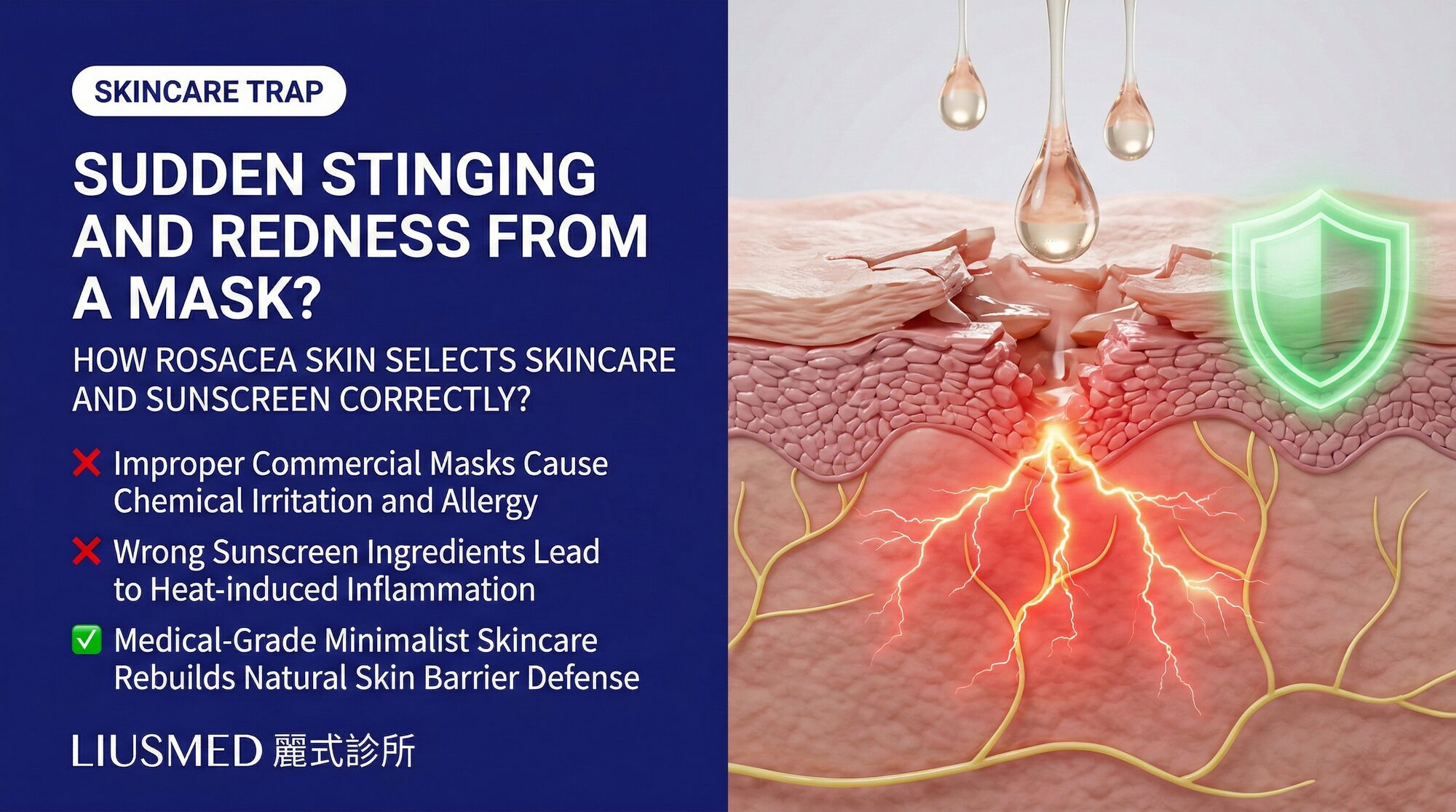
You pressed the sheet mask onto your face expecting a moment of pampering. Instead, within thirty seconds, your cheeks were burning. You ripped it off to find angry red patches spreading across your face that took hours to calm down. The next morning you tried a new "sensitive skin" moisturizer and the stinging returned. Welcome to the daily reality of skincare with rosacea, where products marketed as gentle can still be loaded with hidden irritants that turn a simple routine into a minefield.
Table of Contents
- Why Rosacea Skin Reacts to Products That Are "For Sensitive Skin"
- The Hidden Irritant Checklist: Ingredients to Eliminate
- Building a Rosacea-Safe Skincare Routine Step by Step
- The Sunscreen Problem: Chemical vs. Mineral and How to Choose
- Sheet Masks, Essences, and K-Beauty: What Works and What Does Not
- When Good Products Still Cause Reactions
Why Rosacea Skin Reacts to Products That Are "For Sensitive Skin"
The term "sensitive skin" in cosmetic marketing has no regulated definition. A product labeled for sensitive skin may simply have removed fragrance while retaining a dozen other ingredients that are perfectly fine for most people but inflammatory for rosacea skin. The gap between marketing claims and rosacea-appropriate formulation is vast.
Rosacea skin reactivity stems from three interconnected abnormalities. First, the barrier is structurally compromised with reduced ceramide content, disorganized lamellar lipid structures, and elevated transepidermal water loss. This means ingredients penetrate deeper and in higher concentrations than the formulator intended for intact skin. Second, sensory nerve endings express upregulated TRPV1 (Transient Receptor Potential channels) and TRPA1 ion channels that are activated by a wide range of chemical stimuli at concentrations far below what healthy skin would detect. Third, the innate immune system is primed for overreaction, with elevated TLR2 expression that can mount inflammatory responses to compounds that would be ignored by normal immune surveillance.
These three factors create a situation where the ingredient threshold for irritation in rosacea skin is dramatically lower than in the general population. A preservative system that causes no reaction in 99% of users may consistently trigger stinging and erythema in rosacea patients. A surfactant concentration that is gentle by normal standards may strip the already-depleted barrier lipids to below functional levels.
This is why a product can be genuinely appropriate for most people with sensitive skin while being completely inappropriate for rosacea. Rosacea is not at the far end of a sensitivity spectrum; it is a distinct pathological state with specific molecular abnormalities that demand specifically formulated care.
The Hidden Irritant Checklist: Ingredients to Eliminate
Many ingredients that trigger rosacea reactions are not immediately obvious on labels. The following table identifies the most common culprits, organized by category.
| Ingredient Category | Common Names on Labels | Why It Triggers Rosacea | How Common in "Sensitive" Products |
|---|---|---|---|
| Fragrance | Parfum, fragrance, linalool, limonene, geraniol, citronellol | Direct TRPV1 activation, contact sensitization | Reduced but not always eliminated |
| Alcohol (drying) | Alcohol denat., SD alcohol, isopropyl alcohol | Barrier lipid dissolution, evaporative cooling triggers vasodilation | Common in toners and lightweight formulations |
| Chemical sunscreen filters | Oxybenzone, avobenzone, octinoxate, homosalate | TRPV1 activation, potential endocrine disruption, allergenic | Standard in many "sensitive" sunscreens |
| Essential oils | Tea tree, lavender, eucalyptus, peppermint, rosemary | High terpene content irritates nerve endings | Common in "natural" sensitive ranges |
| Harsh surfactants | Sodium lauryl sulfate (SLS), ammonium lauryl sulfate | Strips ceramides, disrupts lamellar bodies | Reduced but present in some cleansers |
| Witch hazel | Hamamelis virginiana | Contains volatile compounds, high tannin content astringes | Very common in "soothing" products |
| Menthol / Camphor | Menthol, camphor, methyl salicylate | Direct TRPM8 and TRPV1 activation | Present in "cooling" or "calming" products |
| High-concentration niacinamide | Niacinamide above 5% | Histamine release at high concentrations | Increasingly common in serums |
| Propylene glycol | Propylene glycol, PG | Penetration enhancer, increases absorption of other irritants | Common vehicle in many formulations |
| Sodium benzoate + citric acid | Listed as preservatives/pH adjusters | Combined use can form benzene; individual irritation potential | Ubiquitous preservative system |
Eliminating these ingredients dramatically reduces the daily irritant load on rosacea skin. However, it requires reading ingredient lists carefully rather than relying on front-of-package claims.
Building a Rosacea-Safe Skincare Routine Step by Step
The optimal rosacea skincare routine prioritizes barrier protection, minimizes irritant exposure, and includes only ingredients with demonstrated benefit for rosacea-type skin. Simplicity is a feature, not a limitation.
Step 1: Cleanser (Morning and Evening) Choose a non-foaming, lipid-replenishing cleanser with a pH of 5.0 to 5.5. Cream or milk formats are generally better tolerated than gels. Avoid micellar waters that require cotton pad friction for removal. The cleanser should leave the skin feeling comfortable, not tight or squeaky. Apply with fingertips using gentle circular motions, rinse with lukewarm (not warm, not cool) water, and pat dry with a soft towel.
Step 2: Treatment (Evening Only, When Indicated) If your physician has prescribed a treatment such as azelaic acid 15%, ivermectin 1%, or metronidazole 0.75%, apply it after cleansing on dry skin. Wait 10 to 15 minutes before proceeding to moisturizer. Prescription treatments should be used consistently as directed rather than intermittently based on symptom severity.
Step 3: Moisturizer (Morning and Evening) A ceramide-dominant formulation that mimics the skin's natural lipid ratio is ideal. Look for products containing ceramide NP, ceramide AP, ceramide EOP, cholesterol, and phytosphingosine. Apply to slightly damp skin if the product is well-tolerated, as this enhances absorption and occlusion. Evening application can be more generous than morning application.
Step 4: Sunscreen (Morning, Every Day, Non-Negotiable) Mineral-only sunscreen with zinc oxide as the primary active ingredient provides broad-spectrum protection without chemical filter irritation. See the next section for detailed guidance.
What to omit: Toners, astringents, essences, serums (beyond prescription treatment), eye creams with retinol, face mists with thermal water (mineral content can irritate), and any product with a strong scent regardless of whether the scent comes from fragrance or natural botanicals.
The Sunscreen Problem: Chemical vs. Mineral and How to Choose
Sun protection is the single most impactful daily measure for rosacea management. UV radiation triggers rosacea flares through multiple mechanisms: direct TRPV1 activation, MMP (Matrix Metalloproteinase) upregulation, cathelicidin induction, and vascular endothelial damage. Yet many rosacea patients avoid sunscreen because it causes stinging and irritation. The solution lies in choosing the right type.
Chemical (Organic) Filters: Why They Problematic for Rosacea Chemical UV filters work by absorbing UV photons and releasing the energy as heat. This thermal conversion occurs within the skin, creating microscopic temperature increases that activate TRPV1 channels. Beyond this inherent mechanism, many chemical filters are direct TRPV1 agonists independent of their UV-absorbing function. Avobenzone in particular is a well-documented irritant in rosacea populations. The combination of chemical penetration through a compromised barrier and thermoreceptor activation makes chemical sunscreens one of the most common causes of daily skincare stinging in rosacea patients.
Mineral (Inorganic) Filters: The Preferred Choice Zinc oxide and titanium dioxide sit on the skin surface and reflect or scatter UV radiation. They do not penetrate the stratum corneum significantly and do not generate heat within the skin. Zinc oxide additionally possesses mild anti-inflammatory and antimicrobial properties, providing ancillary benefit beyond UV protection.
| Feature | Chemical Sunscreen | Mineral Sunscreen |
|---|---|---|
| UV protection mechanism | Absorption and heat release | Reflection and scattering |
| Penetration into skin | Significant | Minimal |
| Heat generation in skin | Yes | No |
| TRPV1 activation risk | High | Very low |
| Barrier disruption | Common | Rare |
| White cast | None | Variable (zinc oxide > titanium dioxide) |
| Reapplication feel | Lightweight | Can feel heavier |
| Recommended for rosacea | No | Yes |
Modern micronized and tinted zinc oxide formulations have substantially reduced the white cast issue that historically made mineral sunscreens cosmetically unacceptable. Iron oxide tinting not only addresses the white cast but also provides additional protection against visible light, which has been shown to worsen rosacea through opsin-mediated pathways.
Apply mineral sunscreen as the final step before makeup, in a quantity of approximately one-quarter teaspoon for the face. Reapply every two hours during direct sun exposure. On days spent entirely indoors, a single morning application is generally sufficient.
Sheet Masks, Essences, and K-Beauty: What Works and What Does Not
The global popularity of multi-step skincare routines, particularly Korean beauty (K-beauty) protocols, presents specific challenges for rosacea patients. The 10-step routine philosophy directly conflicts with the minimalist approach that rosacea skin requires.
Sheet Masks. The occlusive nature of sheet masks enhances penetration of the serum they contain. For healthy skin, this means better delivery of beneficial ingredients. For rosacea skin, it means enhanced penetration of every potential irritant in the formula. Additionally, the sustained occlusion raises local skin temperature, the wet-to-dry transition as the mask dries can cause evaporative cooling that triggers flushing, and the physical removal of the mask provides mechanical stimulation. The combination of enhanced chemical penetration, thermal stimulation, and mechanical irritation makes sheet masks one of the highest-risk skincare categories for rosacea patients.
Essences and Toners. These typically water-based, low-viscosity products often contain penetration enhancers (butylene glycol, propylene glycol), fermented ingredients (which can be histamine-triggering), and botanical extracts with unpredictable irritation profiles. The "watery" texture creates a false sense of gentleness, but the penetration enhancement means active ingredients reach deeper layers than their concentration would suggest.
Fermented Ingredients. Galactomyces ferment filtrate, saccharomyces ferment filtrate, and similar fermented ingredients are staples of K-beauty. Fermentation produces histamine and other biogenic amines that can trigger mast cell degranulation in sensitized rosacea skin. Patients with histamine-mediated flushing should be particularly cautious.
What Can Work. Centella asiatica (cica) extracts, when formulated without accompanying irritants, have demonstrated anti-inflammatory benefit for rosacea-type skin. Products containing madecassoside or asiaticoside as primary actives in a minimal base may be well-tolerated. Snail mucin (filtered and processed) provides humectant and wound-healing peptides that some rosacea patients tolerate well, though individual patch testing is essential.
When Good Products Still Cause Reactions
Some rosacea patients follow every guideline, use products with impeccable ingredient profiles, and still experience stinging and flares. This occurs because the neurovascular dysfunction underlying rosacea creates a reactivity threshold so low that even the most inert formulations can trigger nerve-ending activation.
In these cases, the problem is not the product. The problem is the disease state itself. The sensory nerves are hypersensitized to the point where any chemical stimulus, including the water used for cleansing, provokes a response.
This scenario indicates that topical skincare optimization alone is insufficient. The neurovascular dysregulation requires direct intervention to reset the sensitivity threshold before topical products can be tolerated. Rosacea Injection Treatment approaches that target the vascular and neural components of rosacea can reduce this baseline hyperreactivity, expanding the range of skincare products the patient can use without triggering flares.
Patients who find themselves progressively eliminating products from their routine until almost nothing is tolerated should recognize this as a signal that the disease itself needs more aggressive management, not that they need to find an even gentler moisturizer.
Maintaining a symptom diary that tracks product use, environmental exposures, and flare timing can help identify patterns that distinguish product-induced reactions from disease-driven baseline instability. This documentation is invaluable when discussing treatment escalation with a physician.
Frequently Asked Questions
Q1: Is thermal spring water spray beneficial for rosacea?
Despite marketing claims, thermal water sprays provide minimal sustained benefit for rosacea and can worsen symptoms. The minerals in thermal water, particularly selenium and silica at certain concentrations, may have mild anti-inflammatory properties, but the evaporative cooling effect as the mist dries can trigger vasodilation and flushing. The repeated wet-dry cycle also disrupts the lipid layer of the barrier. If you need to cool your skin during a flare, a cold compress applied briefly is more effective and less disruptive.
Q2: Should I use a separate eye cream or just extend my moisturizer?
Extending your rosacea-safe moisturizer to the periorbital area is generally preferable to introducing a separate eye cream with its own set of potentially irritating ingredients. The periorbital skin is the thinnest on the face and most susceptible to irritation. If you do use a separate eye product, ensure it is free of retinol, peptides with penetration enhancers, and fragranced ingredients. Simple emollient or ceramide formulations are safest.
Q3: Can I use vitamin C serum with rosacea?
L-ascorbic acid, the most common and most potent form of vitamin C in serums, requires a low pH (below 3.5) for stability and penetration. This acidic pH is poorly tolerated by most rosacea skin. Derivative forms such as ascorbyl glucoside or sodium ascorbyl phosphate are formulated at higher pH and may be tolerated by some patients, though evidence for their efficacy in rosacea specifically is limited. Patch test extensively before incorporating any vitamin C product.
Q4: My sunscreen pills with visible light from screens all day. Do I need special protection?
Indoor visible light exposure from screens is orders of magnitude lower than outdoor visible light and does not pose a meaningful rosacea trigger risk for most patients. The concern about blue light and skin damage has been substantially overstated by the cosmetic industry. Focus your sun protection efforts on outdoor UV and visible light exposure. A tinted zinc oxide sunscreen provides adequate visible light protection for the level of indoor exposure most people experience.
Q5: How do I remove makeup without irritating my rosacea skin?
A gentle oil-based cleanser or micellar water (applied with fingertips rather than wiped with a cotton pad) effectively dissolves makeup without mechanical friction. Follow with your regular non-foaming cleanser to remove any residue. Avoid makeup-removing wipes, which combine chemical irritants with physical abrasion. If you use waterproof eye makeup, a dedicated oil-based eye makeup remover applied with a soft pad and held against the eye rather than rubbed across it minimizes periorbital irritation.
Q6: I have been using the same products for years without problems, but suddenly they sting. What changed?
Progressive intolerance to previously safe products is a hallmark of rosacea disease progression. The neurovascular dysregulation worsens over time, lowering the irritation threshold until products that were once comfortable become intolerable. This is not a product quality change; it is a disease behavior change. When this pattern emerges, it signals that the underlying rosacea requires more active management to prevent further deterioration. Consult a rosacea specialist to discuss treatment escalation options.
About the Author
Dr. Ta-Ju Liu is the founder of Liusmed Clinic, where he specializes in regenerative medicine and minimal incision surgery. His approach to rosacea management integrates careful skincare optimization with targeted medical treatments, recognizing that topical care and disease management must work in concert for optimal outcomes. Dr. Liu counsels patients on evidence-based product selection as a foundational component of every rosacea treatment plan.
Disclaimer
This article is provided for educational and informational purposes only and does not constitute medical advice, diagnosis, or treatment. Product recommendations are general guidelines based on ingredient analysis and clinical experience; individual tolerance varies significantly. The mention of product categories or ingredient types does not constitute endorsement of any specific brand. Always patch-test new products and consult a qualified healthcare professional for personalized skincare guidance. No doctor-patient relationship is established through reading this content.

Specialties
Credentials
- Kaohsiung Medical University, School of Medicine
- Attending Physician, Dermatology, Kaohsiung Chang Gung Memorial Hospital
- Attending Physician, Aesthetic Center, Kaohsiung Chang Gung Memorial Hospital
- Visiting Physician, Dermatology, Xiamen Chang Gung Hospital
- Visiting Physician, Aesthetic Center, Xiamen Chang Gung Hospital
"For every surgery, I strive to achieve a good outcome through a small incision and refined technique. Minimally invasive surgery is not just a technique — it's a commitment of respect to every patient."
Recovery after any procedure needs peer support too


Want to learn more?
Schedule a consultation for professional evaluation and advice