How to Tell If Your Rosacea Treatment Is on the Wrong Path: 4 Professional Assessment Indicators
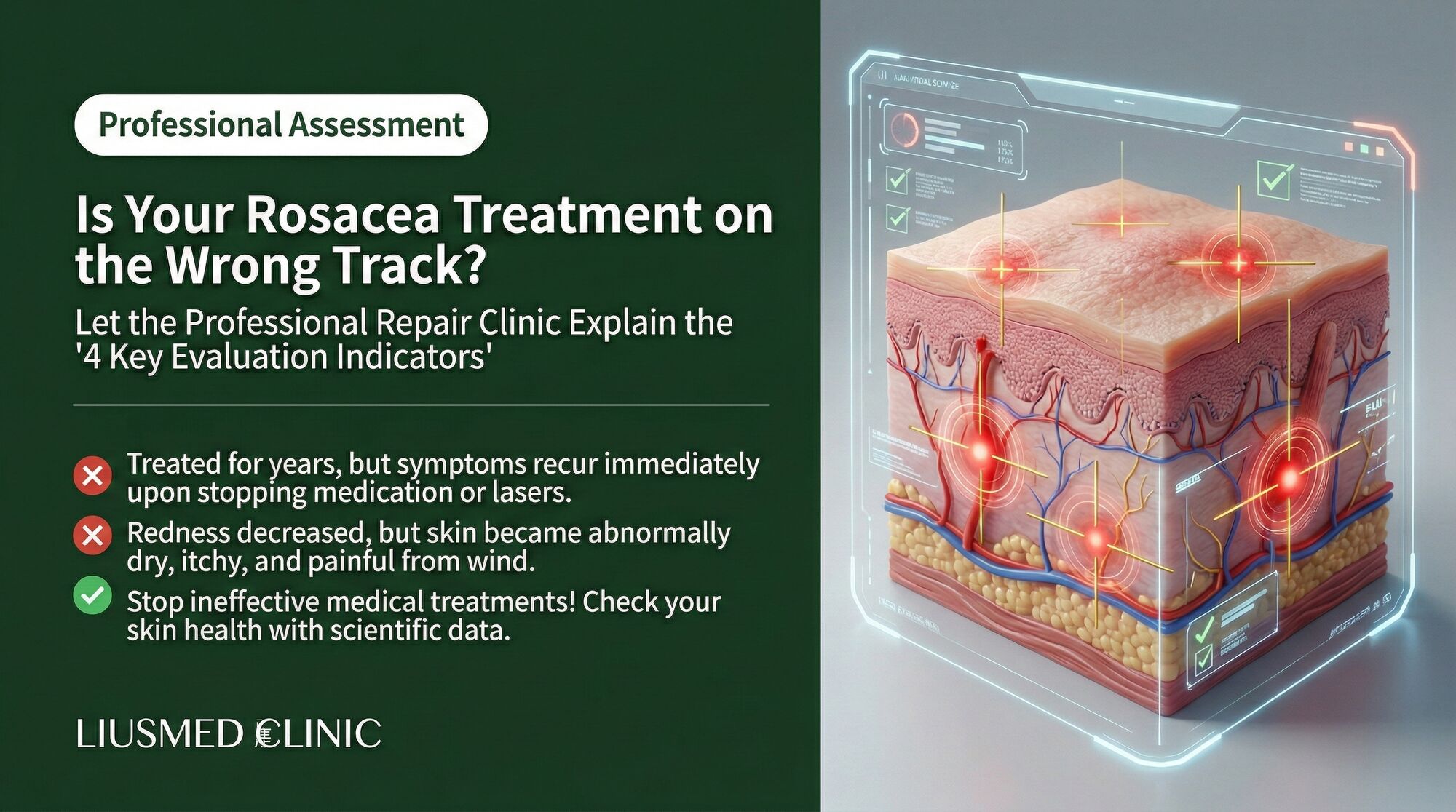
Rosacea patients are among the most persistent, informed, and proactive people in any dermatology clinic. They research ingredients, track triggers, follow treatment plans meticulously, and often invest years and thousands of dollars into managing their condition. Yet many of them are unknowingly on a treatment path that is not just failing to help but is actively making their skin worse. The problem is not a lack of effort. The problem is that the standard markers used to evaluate rosacea treatment, primarily visual appearance and symptom severity, can mask underlying tissue deterioration. This article introduces four objective indicators that reveal whether your treatment is genuinely repairing your skin or slowly eroding it.
Table of Contents
- Why Visual Assessment Alone Is Unreliable
- Indicator 1: Rising Transepidermal Water Loss
- Indicator 2: Expanding Trigger Sensitivity
- Indicator 3: Shortening Remission Intervals
- Indicator 4: Increasing Treatment Intensity for Equal Results
- What to Do If You Recognize These Patterns
Why Visual Assessment Alone Is Unreliable
The conventional rosacea follow-up appointment typically lasts ten to fifteen minutes. The doctor examines the face under clinical lighting, asks about symptom severity, compares to photographs from previous visits, and determines whether to continue, adjust, or escalate treatment. This process is not inherently flawed, but it has a critical limitation: visual appearance can improve even while the underlying tissue environment is deteriorating.
Consider two scenarios. In Scenario A, a treatment reduces visible redness by suppressing surface inflammation while the skin barrier continues to thin. The patient looks better. The doctor records improvement. Treatment continues. In Scenario B, a treatment produces modest visible improvement but measurably restores barrier function, reduces transepidermal water loss, and normalizes surface pH. The patient looks only slightly better, perhaps prompting the doctor to consider escalation.
Scenario A is the wrong path disguised as progress. Scenario B is genuine repair that visual assessment undervalues.
The four indicators below are designed to detect Scenario A before years of cumulative damage make recovery significantly more difficult.
Indicator 1: Rising Transepidermal Water Loss
What it measures: Transepidermal water loss (TEWL) quantifies how much moisture escapes through the skin barrier. It is the single most reliable objective measure of barrier integrity.
Normal range: 5-15 g/m2/h on the cheeks.
What to watch for: If your TEWL is rising over the course of treatment, or remains persistently elevated above 25 g/m2/h despite months of therapy, the skin barrier is not being repaired. This is true even if visible redness has decreased.
Why it matters: A rising TEWL indicates progressive barrier dysfunction. This means the skin is losing its ability to retain moisture, exclude environmental irritants, and maintain the acidic pH necessary for normal enzyme function and antimicrobial defense. A compromised barrier is the foundation on which rosacea flares are built. Any treatment that does not stabilize or improve TEWL is addressing symptoms while allowing the root vulnerability to worsen.
How to track it: TEWL measurement requires a specialized device (evaporimeter or Tewameter) available in well-equipped dermatology and aesthetic clinics. If your current provider does not measure TEWL, ask why not. If they are unfamiliar with the measurement, consider whether their assessment framework is sufficiently comprehensive for a condition as complex as rosacea.
The comparison:
| TEWL Trend | What It Suggests | Action |
|---|---|---|
| Decreasing toward normal over months | Treatment is repairing barrier function | Continue current approach |
| Stable but elevated (20-30 g/m2/h) | Treatment is maintaining but not repairing | Consider adding barrier-focused interventions |
| Rising despite treatment | Treatment may be damaging the barrier | Reassess treatment approach urgently |
| Normal range (5-15 g/m2/h) | Barrier is functional | Focus on other aspects of rosacea management |
Indicator 2: Expanding Trigger Sensitivity
What it measures: The range and intensity of stimuli that provoke a rosacea flare.
What to watch for: If the list of things that trigger your rosacea is growing rather than shrinking, your treatment is on the wrong path. Specifically, watch for:
- Products you previously tolerated now causing stinging or burning
- Environmental temperatures that were previously comfortable now triggering flushing
- Foods that were not previously problematic now provoking reactions
- Emotional stress producing more intense or prolonged flushing than before
- Exercise that was previously tolerable now triggering severe and prolonged redness
Why it matters: Expanding trigger sensitivity is a clinical sign of increasing neurovascular instability and barrier dysfunction. In healthy rosacea management, the opposite should occur: as the skin barrier strengthens and dermal inflammation decreases, the threshold for triggering flares should rise, meaning you should become less reactive over time, not more.
How to track it: Maintain a simple trigger diary. Record not just what triggered a flare, but the intensity of the stimulus. If you used to flush only in saunas but now flush walking into a mildly warm room, that is a meaningful escalation. Review your diary every three months. If the trigger list is expanding or the threshold for each trigger is decreasing, this is an objective signal that something is wrong.
The critical distinction: Some treatments, particularly topical vasoconstrictors like brimonidine, can create an illusion of reduced sensitivity during their active period while actually increasing rebound sensitivity. If your skin feels calm during the day when medication is active but burns intensely when it wears off, the medication may be masking worsening rather than producing improvement.
Indicator 3: Shortening Remission Intervals
What it measures: The duration of clear or near-clear skin between flares or between treatment sessions.
What to watch for: After a laser session, how many weeks does the improvement last? After completing an antibiotic course, how long before papules return? After a good period of careful trigger avoidance, how quickly does a flare reestablish?
If these intervals are getting shorter, the tissue environment is declining.
Why it matters: Remission interval is a proxy for the tissue's ability to maintain homeostasis without active intervention. Healthy tissue can self-regulate. Damaged tissue requires constant external support. When remission intervals shorten, it means the skin's autonomous regulatory capacity is diminishing.
Typical patterns of concern:
- Laser treatment: First session produces 6 months of improvement. Second session produces 4 months. Third produces 2 months. This is not the laser becoming less effective; it is the tissue becoming less capable of maintaining the laser's effects.
- Antibiotics: First course produces 3 months of clear skin. Second course produces 6 weeks. Third produces 3 weeks. The bacteria are not necessarily becoming resistant; the immune environment is becoming less capable of maintaining control without pharmacological support.
- Topical treatments: A product that initially controlled symptoms with once-daily application now requires twice-daily application to achieve the same effect.
How to track it: After any treatment intervention that produces visible improvement, note the date. Then note the date when you first observe return of symptoms. This interval, recorded consistently, provides one of the clearest longitudinal indicators of treatment trajectory.
Indicator 4: Increasing Treatment Intensity for Equal Results
What it measures: The amount of therapeutic input required to achieve the same clinical outcome.
What to watch for: This indicator is the treatment-side mirror of shortening remission intervals. It manifests as:
- Needing higher laser fluences to achieve the same degree of vascular clearance
- Requiring stronger or additional medications to control symptoms that were previously managed with milder treatments
- Escalation from topical to oral medications, or from single to combination therapy, without genuine improvement in baseline status
- Adding new devices or treatments on top of existing ones to maintain the same level of control
Why it matters: In a well-functioning treatment plan, therapeutic intensity should decrease over time as the tissue environment improves. The skin should become easier to manage, not harder. If you find yourself needing more and more intervention to achieve the same result, you are on a treadmill, not a recovery path.
A useful framework:
| Treatment Trajectory | Intensity Over Time | Interpretation |
|---|---|---|
| Genuine recovery | Decreasing; skin needs less help | Tissue is being repaired |
| Stable management | Constant; same inputs maintain same outputs | Symptoms are controlled but tissue is not improving |
| Wrong path | Increasing; more input needed for same output | Tissue environment is deteriorating despite treatment |
The escalation trap: The most dangerous version of this pattern is the well-intentioned escalation trap. A conscientious doctor observes declining treatment response and responds by adding more treatments: a stronger laser, an additional medication, a new device. Each addition may produce temporary improvement, reinforcing the approach, but the overall trajectory remains downward because the fundamental tissue environment is never addressed.
What to Do If You Recognize These Patterns
Recognizing that your treatment may be on the wrong path is not a reason to panic, but it is a reason to act. Here are concrete steps:
Step 1: Request objective measurements. Ask your current provider to measure TEWL and skin hydration. If they cannot or will not, seek a provider who can. These measurements are straightforward, non-invasive, and take less than five minutes. They provide information that visual examination simply cannot.
Step 2: Review your treatment timeline. Map out your treatment history including what was done, when, and what the outcome was. Look specifically for the four patterns described above: rising TEWL, expanding trigger sensitivity, shortening remission intervals, and increasing treatment intensity.
Step 3: Seek a second opinion from a provider with tissue repair expertise. Not all dermatologists approach rosacea the same way. A physician who integrates regenerative medicine principles with dermatological management can evaluate whether your tissue environment is being repaired or degraded, and can recommend course corrections. The Rosacea Injection Treatment approach at Liusmed Clinic is one example of a repair-focused methodology.
Step 4: Do not abruptly stop current treatments. If you are on prescription medications, especially topical steroids or vasoconstrictors, abrupt discontinuation can trigger severe rebound flares. Any treatment modifications should be made gradually and under medical supervision.
Step 5: Shift your success metrics. Start measuring treatment success by tissue function (TEWL, hydration, pH, trigger tolerance) rather than visual appearance alone. A treatment that improves tissue function but produces only modest visual improvement in the short term is far more valuable than one that improves appearance while degrading tissue health.
Frequently Asked Questions
Q1: Can I measure TEWL at home?
Consumer-grade TEWL devices exist but their accuracy is limited compared to clinical instruments. For reliable longitudinal tracking, clinical-grade measurement is recommended. Some clinics offer barrier function assessment as a standalone service even if you are not a patient for treatment.
Q2: My dermatologist says my treatment is working because my redness has improved. Should I trust that?
Reduced redness is a positive sign, but it is insufficient as the sole measure of treatment success. If your redness has improved but your skin is more sensitive, your trigger list has expanded, or your remission intervals are shortening, the surface improvement may not reflect what is happening at the tissue level. Respectfully request objective measurements to complement visual assessment.
Q3: I have been on topical metronidazole for two years and it still controls my papules. Does that mean I am on the right path?
Stable symptom control is better than worsening, but long-term pharmacological dependency without tissue improvement represents the "stable management" category rather than genuine recovery. If you discontinue metronidazole and symptoms return within weeks, the medication is controlling symptoms, not resolving the condition. A repair-focused approach aims for progressive independence from pharmacological support.
Q4: How quickly should I expect to see improvement in objective measurements?
TEWL and hydration can show measurable improvement within four to eight weeks of effective barrier-focused intervention. pH normalization typically follows over two to four months. If objective measurements show no improvement after three months of a new treatment approach, the approach may need adjustment.
Q5: Is it possible that my treatment is on the right path but just slow?
Yes, genuine tissue repair is inherently slow, particularly for chronic rosacea. The key distinction is between slow improvement and no improvement. If objective measurements show even modest improvement each quarter, the trajectory is positive. If measurements are flat or declining, slowness is not the issue; the direction is.
Q6: Can I bring these four indicators to my current dermatologist as a framework for evaluation?
Absolutely. These indicators are based on well-established dermatological principles. A physician who is open to incorporating objective tissue measurements into their rosacea management framework is a physician who is prioritizing your long-term outcome. If a provider is dismissive of objective measurement, consider whether their evaluation framework is serving your needs.
About the Author
Dr. Ta-Ju Liu is the founder and lead physician at Liusmed Clinic in Taiwan. His practice combines regenerative medicine with dermatological expertise, specializing in rosacea treatment, tissue repair, and minimal incision surgery. Dr. Liu advocates for objective, measurement-based treatment evaluation rather than reliance on visual assessment alone, believing that quantitative tissue health indicators are essential for identifying failing treatment paths before irreversible damage occurs.
Disclaimer
This article is provided for educational and informational purposes only and does not constitute medical advice, diagnosis, or treatment. The four indicators described here are general assessment principles and should be interpreted in the context of your specific medical history and condition by a qualified physician. Do not modify or discontinue any prescribed treatment without consulting your treating doctor. Individual responses to treatment vary, and the patterns described here may not apply to every patient or every clinical situation.

Specialties
Credentials
- Kaohsiung Medical University, School of Medicine
- Attending Physician, Dermatology, Kaohsiung Chang Gung Memorial Hospital
- Attending Physician, Aesthetic Center, Kaohsiung Chang Gung Memorial Hospital
- Visiting Physician, Dermatology, Xiamen Chang Gung Hospital
- Visiting Physician, Aesthetic Center, Xiamen Chang Gung Hospital
"For every surgery, I strive to achieve a good outcome through a small incision and refined technique. Minimally invasive surgery is not just a technique — it's a commitment of respect to every patient."
Recovery after any procedure needs peer support too


Want to learn more?
Schedule a consultation for professional evaluation and advice