Facial Redness: Allergy or Rosacea? 3 Self-Checks
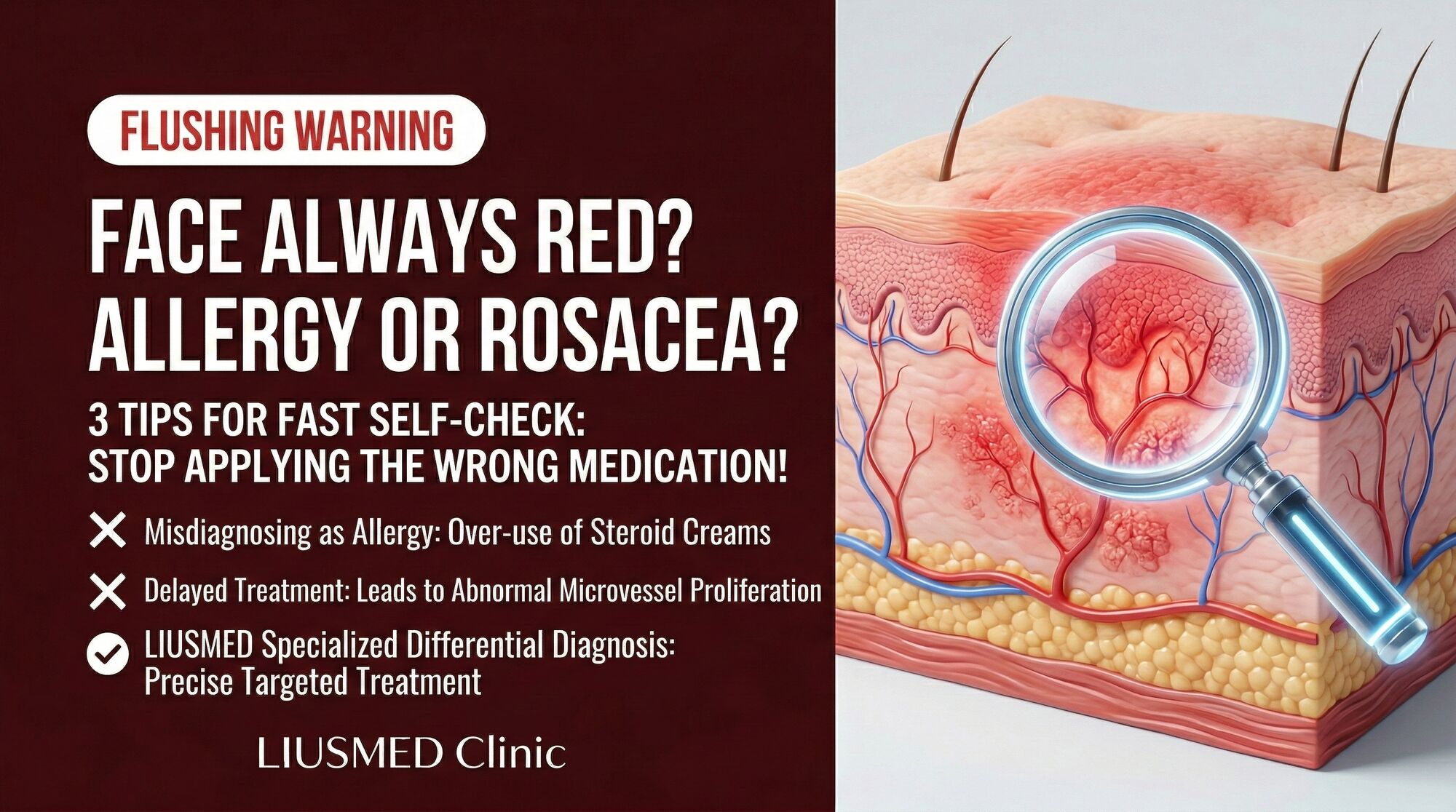
If your face has been red, irritated, and sensitive for weeks or months and antihistamines or hydrocortisone cream have done little to help, you may not be dealing with allergies at all. Rosacea affects an estimated 415 million people worldwide, yet a significant portion of those patients spend years believing they simply have "sensitive skin" or chronic allergic reactions. The distinction matters enormously: treating rosacea as an allergy can worsen the condition, while early and accurate identification opens the door to therapies that genuinely calm the skin. In this article, we walk through three evidence-based self-check methods you can perform at home, explain the underlying pathophysiology that separates these two conditions, and outline clear criteria for when professional evaluation is essential.
Table of Contents
- Understanding the Confusion: Why Rosacea Mimics Allergies
- Self-Check Method 1: The Timing and Trigger Pattern Test
- Self-Check Method 2: The Distribution Map
- Self-Check Method 3: The Antihistamine Response Test
- Key Differences at a Glance: Rosacea vs. Allergic Dermatitis
- When to See a Specialist
- Frequently Asked Questions
- About the Author
- Disclaimer
Understanding the Confusion: Why Rosacea Mimics Allergies
Both rosacea and allergic contact dermatitis share surface-level symptoms: redness, stinging, and sometimes swelling. This overlap is not coincidental. Both conditions involve inflammatory cascades that dilate blood vessels and recruit immune cells to the skin. However, the upstream triggers and the specific mediators involved are fundamentally different.
Allergic contact dermatitis is a delayed-type hypersensitivity reaction (Type IV) mediated by T-lymphocytes. The immune system identifies a specific external allergen, such as nickel, fragrance, or preservatives in skincare, and mounts a targeted response. Remove the allergen and the inflammation resolves, typically within one to three weeks.
Rosacea, on the other hand, involves a chronic dysregulation of the innate immune system, neurovascular control, and the skin microbiome. Cathelicidin peptides (LL-37) are overproduced, kallikrein-5 (KLK5) serine protease activity is elevated, and Toll-like receptor 2 (TLR2) signaling is amplified. These processes create a self-perpetuating cycle of inflammation that does not depend on a single removable trigger. The vascular component means that blood vessels in rosacea-prone skin dilate more easily, stay dilated longer, and eventually undergo structural remodeling that makes redness semi-permanent.
Understanding this mechanistic difference is the foundation for the three self-check methods below. Each method tests a different axis of the allergy-versus-rosacea distinction.
Self-Check Method 1: The Timing and Trigger Pattern Test
Grab a notebook or open a notes app and track your facial redness episodes for two weeks. Record the following for each episode: when the redness started, what you were doing or exposed to in the preceding 30 minutes, how long the redness lasted, and what (if anything) made it subside.
Allergy pattern: Redness appears within minutes to hours after contact with a specific substance. It correlates strongly with a new product, environmental exposure, or seasonal change. When the trigger is avoided, episodes cease entirely. The timeline follows a clear cause-and-effect logic.
Rosacea pattern: Redness is triggered by a wide and often bewildering variety of stimuli: temperature changes, hot beverages, emotional stress, alcohol, spicy food, sunlight, or even exercise. The triggers are non-specific, meaning they are not allergens but rather stimuli that affect vascular tone and neurogenic inflammation. Critically, episodes recur even after you eliminate any single trigger, because the underlying neurovascular dysfunction persists.
If your diary shows a single identifiable trigger whose removal eliminates symptoms, allergic contact dermatitis is more likely. If your diary reveals multiple, seemingly unrelated triggers and a baseline level of redness that never fully clears, rosacea should be strongly considered.
Self-Check Method 2: The Distribution Map
Stand in front of a well-lit mirror and map exactly where the redness and irritation occur on your face. Use your phone camera to take photos under consistent lighting for comparison over time.
Allergy distribution: Allergic reactions follow the contact zone. If a moisturizer is the culprit, redness appears wherever the product was applied, which may include the forehead, jawline, neck, and periorbital area. Reactions to airborne allergens (fragrance, pollen) may affect the eyelids and neck prominently. The pattern matches the exposure site.
Rosacea distribution: Rosacea has a characteristic central-facial distribution. The cheeks and nose are almost always involved, often symmetrically. The forehead and chin (the convex surfaces, collectively called the "convexity" of the face) may also be affected. Importantly, the periorbital area (immediately around the eyes) and the lateral neck are typically spared. This sparing pattern reflects the unique density and distribution of neurovascular units and Demodex mites in central facial skin.
If your redness respects the classic mid-face distribution with periorbital sparing, that is a strong indicator of rosacea rather than allergy.
Self-Check Method 3: The Antihistamine Response Test
This is perhaps the most practical differentiator, though it should be used as supportive evidence rather than a standalone diagnostic tool.
Take a standard dose of a second-generation oral antihistamine (such as cetirizine or loratadine) during an active episode of facial redness and observe the response over 24 to 48 hours.
Allergy response: Allergic reactions are driven significantly by histamine release from mast cells. Antihistamines block histamine H1 receptors and typically provide noticeable relief: reduced itching, decreased swelling, and fading redness within hours.
Rosacea response: Rosacea inflammation is driven primarily by cathelicidin, matrix metalloproteinases, and neurovascular signaling rather than histamine. While mast cells do play a supporting role in rosacea, antihistamines alone produce minimal improvement. The redness persists, the burning sensation continues, and the overall clinical picture changes little.
If antihistamines provide clear and consistent relief, allergy is the more probable diagnosis. If they make little difference, the inflammatory mechanism is likely non-histaminergic, pointing toward rosacea.
Key Differences at a Glance: Rosacea vs. Allergic Dermatitis
| Feature | Allergic Contact Dermatitis | Rosacea |
|---|---|---|
| Primary trigger | Specific allergen (product, metal, fragrance) | Non-specific (heat, stress, sun, alcohol) |
| Trigger count | Usually one or few identifiable triggers | Multiple, diverse triggers |
| Distribution | Follows contact zone; may include neck, eyelids | Central face (cheeks, nose); periorbital sparing |
| Baseline redness | Clears fully between episodes | Persistent background erythema |
| Antihistamine response | Significant improvement | Minimal to no improvement |
| Itching vs. burning | Itching predominates | Burning and stinging predominate |
| Visible blood vessels | Uncommon | Telangiectasia often present |
| Duration | Resolves in 1-3 weeks after allergen removal | Chronic, relapsing course over months to years |
| Pathophysiology | Type IV hypersensitivity (T-cell mediated) | Innate immune dysregulation, neurovascular dysfunction |
When to See a Specialist
While these self-check methods provide valuable initial guidance, they are not a substitute for professional diagnosis. You should seek evaluation from a dermatologist or a physician experienced in rosacea management if any of the following apply:
- Persistent baseline redness that has lasted more than three months despite avoiding suspected allergens.
- Visible telangiectasia (tiny spider-like blood vessels) on the cheeks or nose.
- Papules and pustules (small red bumps or pus-filled lesions) appearing on the central face without comedones (blackheads or whiteheads).
- Ocular symptoms such as gritty, burning eyes, frequent styes, or eyelid margin redness, which may indicate ocular rosacea.
- Phymatous changes such as thickening skin on the nose (rhinophyma) or other facial areas.
- Failed topical steroid therapy: If you have been using topical corticosteroids for facial redness and the condition has worsened or become dependent on them, steroid-induced rosacea or steroid rebound must be ruled out.
At the specialist level, diagnosis may involve dermoscopy (which can reveal vascular patterns characteristic of rosacea), patch testing (to rule out allergic contact dermatitis definitively), and sometimes skin biopsy in ambiguous cases.
For patients whose rosacea is confirmed, modern treatment approaches focus on addressing the root neurovascular and immune dysfunction rather than simply suppressing surface symptoms. Rosacea Injection Treatment protocols, for example, deliver targeted agents directly into affected tissue to modulate the inflammatory cascade at its source.
Frequently Asked Questions
Q1: Can I have both rosacea and allergies at the same time?
Yes. The two conditions are not mutually exclusive. Some patients have an underlying rosacea phenotype and also develop allergic contact dermatitis from skincare products, which complicates the clinical picture. In fact, rosacea-compromised skin has an impaired barrier, making it more susceptible to irritant and allergic reactions. A dermatologist can perform patch testing to identify any concurrent allergic component.
Q2: My redness goes away with hydrocortisone cream. Does that mean it is an allergy?
Not necessarily. Topical corticosteroids suppress inflammation broadly, regardless of the underlying cause. They will temporarily reduce rosacea redness as well. However, prolonged use of topical steroids on the face can cause steroid rosacea, perioral dermatitis, skin thinning, and rebound flares. Improvement with steroids does not confirm allergy as the diagnosis.
Q3: I only flush after drinking wine. Could that still be rosacea?
Alcohol-induced flushing can occur in people without rosacea due to acetaldehyde accumulation, particularly in individuals with ALDH2 enzyme variants common in East Asian populations. However, if wine-induced flushing is accompanied by persistent background redness, visible blood vessels, or other rosacea signs, it may be an early rosacea trigger response. The context of the flushing matters more than the flushing itself.
Q4: Are there any blood tests that can confirm rosacea?
There is no blood test that diagnoses rosacea. It remains a clinical diagnosis based on phenotypic features as described by the 2017 ROSacea COnsensus (ROSCO) panel and the updated National Rosacea Society classification. Blood tests may be used to rule out other conditions such as lupus (ANA testing) or carcinoid syndrome, but not to confirm rosacea itself.
Q5: I have been told I have eczema on my face. Could it actually be rosacea?
Facial eczema (atopic dermatitis) and rosacea can look similar, but they differ in distribution, symptom quality, and age of onset. Eczema tends to affect the periorbital area and flexural surfaces, causes intense itching, and often has a childhood onset. Rosacea favors the central convexities of the face, causes burning rather than itching, and typically presents after age 30. A careful clinical exam can usually distinguish the two.
Q6: If I identify my condition as rosacea through these self-checks, what should my first step be?
Your first step should be consulting a physician with experience in rosacea to confirm the diagnosis and determine your specific subtype. While waiting for your appointment, simplify your skincare routine to a gentle cleanser and a broad-spectrum mineral sunscreen (SPF 30 or higher), avoid known triggers, and stop any topical steroids unless medically directed. Do not start prescription rosacea treatments without professional guidance.
About the Author
Dr. Ta-Ju Liu is the founder of Liusmed Clinic, where he specializes in regenerative medicine and minimal incision surgery. With extensive clinical experience treating chronic inflammatory skin conditions, Dr. Liu integrates evidence-based dermatological principles with advanced regenerative techniques to address rosacea at its neurovascular and immunological roots. His approach emphasizes accurate diagnosis, patient education, and targeted treatments that go beyond symptom suppression.
Disclaimer
This article is provided for educational and informational purposes only and does not constitute medical advice, diagnosis, or treatment. The self-check methods described are screening tools and are not a substitute for professional clinical evaluation. Individual conditions vary, and a qualified healthcare provider should be consulted for personalized diagnosis and treatment recommendations. Do not discontinue or modify any current treatment without consulting your physician.

Specialties
Credentials
- Kaohsiung Medical University, School of Medicine
- Attending Physician, Dermatology, Kaohsiung Chang Gung Memorial Hospital
- Attending Physician, Aesthetic Center, Kaohsiung Chang Gung Memorial Hospital
- Visiting Physician, Dermatology, Xiamen Chang Gung Hospital
- Visiting Physician, Aesthetic Center, Xiamen Chang Gung Hospital
"For every surgery, I strive to achieve a good outcome through a small incision and refined technique. Minimally invasive surgery is not just a technique — it's a commitment of respect to every patient."
Recovery after any procedure needs peer support too


Want to learn more?
Schedule a consultation for professional evaluation and advice