Air Conditioning Hurts Your Face? The Hidden Truth Behind Rosacea's Extreme Wind Sensitivity
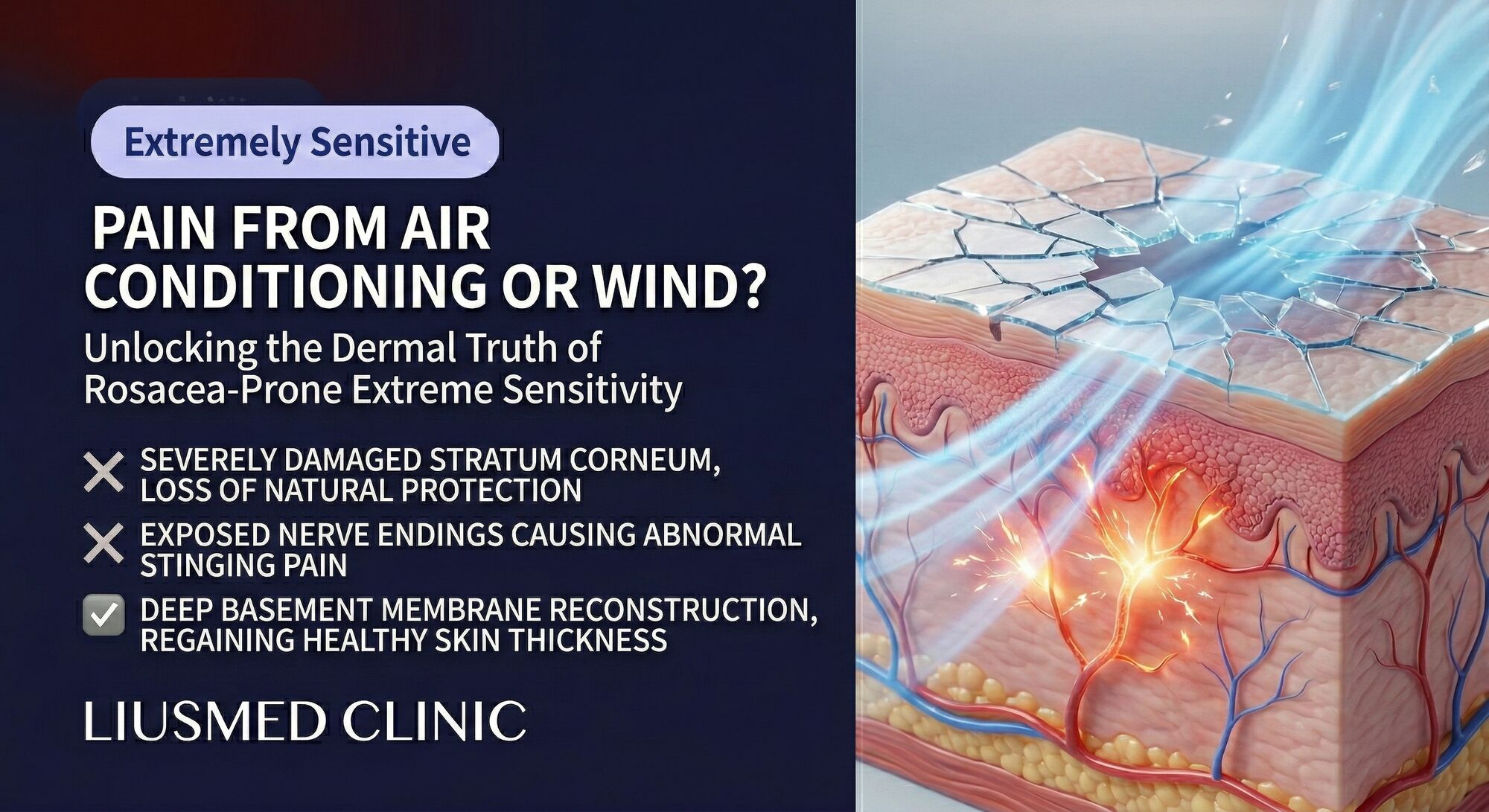
If a gentle breeze across your face causes stinging, burning, or outright pain, you are not exaggerating and you are not alone. Wind sensitivity is one of the most distressing yet least discussed symptoms of rosacea, affecting daily activities from commuting to working in air-conditioned offices. This symptom is not a psychological response or a sign of weakness. It reflects measurable changes in the sensory nerve architecture of rosacea-affected skin: increased nerve fiber density, upregulated TRPV1 (Transient Receptor Potential channels) and TRPA1 receptor expression, and a state of chronic neurogenic inflammation that makes normal environmental stimuli feel harmful. Understanding this mechanism is the first step toward finding treatments that actually help.
Table of Contents
- Why Wind Hurts: The Basics of Sensory Nerve Hypersensitivity
- TRPV1 and TRPA1: The Molecular Sentinels of Pain
- Nerve Fiber Density: More Wires, More Signals
- Neurogenic Inflammation: The Self-Perpetuating Cycle
- The Barrier Dysfunction Factor
- Management Strategies: From Protection to Treatment
- Frequently Asked Questions
- About the Author
- Disclaimer
Why Wind Hurts: The Basics of Sensory Nerve Hypersensitivity
To understand why wind causes pain in rosacea skin, we need to start with how skin normally processes tactile and thermal stimuli.
Healthy facial skin contains a dense network of sensory nerve fibers that detect touch, temperature, and chemical stimuli. These fibers include myelinated A-beta fibers (light touch), myelinated A-delta fibers (sharp pain, temperature), and unmyelinated C-fibers (burning pain, itch, temperature). Under normal conditions, the threshold for activating pain-signaling fibers is set well above the level of stimulation caused by airflow. A breeze activates light-touch receptors and gentle cooling receptors but does not trigger pain pathways.
In rosacea, this calibration is disrupted at multiple levels. The sensory nerve fibers themselves are more numerous (increased intraepidermal nerve fiber density, or IENFD), their activation thresholds are lowered (peripheral sensitization), and the central nervous system neurons that process their signals become hyperexcitable (central sensitization). The result is allodynia: pain from stimuli that should not be painful. Wind across the face, which should register as a neutral tactile and cooling sensation, instead activates pain pathways and generates a burning, stinging response.
This is the same category of sensory dysfunction seen in neuropathic pain conditions, and it helps explain why rosacea-associated facial pain responds poorly to conventional anti-inflammatory analgesics and why it is so profoundly life-altering for affected patients.
TRPV1 and TRPA1: The Molecular Sentinels of Pain
The molecular basis of wind sensitivity in rosacea centers on two families of ion channels expressed on sensory nerve terminals in the skin.
TRPV1 (Transient Receptor Potential Vanilloid 1): As discussed in the context of heat sensitivity, TRPV1 is the primary heat-sensing channel that also responds to capsaicin, protons (acidic pH), and inflammatory mediators. In rosacea, TRPV1 is overexpressed and its activation threshold is lowered by chronic inflammation. Wind across the face can activate TRPV1 through evaporative cooling followed by rebound warming, through mechanical stimulation of nerve endings whose TRPV1 channels are sensitized to multimodal input, and through exposure of sensitized nerve endings where the barrier is compromised.
TRPA1 (Transient Receptor Potential Ankyrin 1): This is the cold and irritant sensor, activated by temperatures below approximately 17 degrees Celsius, by environmental irritants (mustard oil, smoke, formalin), and by endogenous inflammatory mediators (4-hydroxynonenal, prostaglandins). TRPA1 is co-expressed with TRPV1 on many C-fiber nociceptors, meaning the same nerve fiber can be activated by both heat and cold stimuli. In rosacea, TRPA1 is upregulated and sensitized, which explains why both warm winds and cold drafts can trigger pain. Air conditioning, which delivers a continuous stream of cool, dry air directly to the face, is a potent TRPA1 activator in sensitized skin.
Cross-sensitization between TRPV1 and TRPA1: These two channels interact at the molecular level. Activation of one can sensitize the other through shared intracellular signaling pathways (calcium influx, protein kinase C activation). This cross-sensitization means that exposure to heat (which activates TRPV1) can subsequently make the skin more sensitive to cold or wind (via TRPA1 sensitization), and vice versa. It creates a situation where virtually any environmental stimulus has the potential to trigger pain.
When wind activates these sensitized channels, the nerve fibers fire action potentials that are transmitted centrally as pain signals. Simultaneously, they release neuropeptides antidromically (outward, into the skin), triggering neurogenic inflammation, the subject of the next section.
Nerve Fiber Density: More Wires, More Signals
Histological studies of rosacea-affected facial skin have consistently demonstrated increased intraepidermal nerve fiber density (IENFD) compared to healthy controls. This is not a subtle finding; some studies show a twofold or greater increase in nerve fiber counts per unit area of epidermis.
This increase in nerve fiber density has several important consequences:
Amplified signal magnitude: More nerve fibers responding to the same stimulus means a larger aggregate signal reaching the central nervous system. A breeze that activates 100 nerve endings per square centimeter in healthy skin might activate 200 or more in rosacea skin, generating a proportionally stronger pain signal.
Reduced spatial discrimination: Dense nerve fiber networks have overlapping receptive fields, meaning a stimulus to one small area of skin activates fibers over a larger region. This contributes to the diffuse, poorly localized nature of rosacea facial pain; patients often describe pain across the entire mid-face rather than in a pinpoint location.
Increased neuropeptide release: More nerve terminals mean more sites of antidromic neuropeptide release (CGRP, Substance P, PACAP). This amplifies neurogenic inflammation per unit area, creating more intense redness and edema in response to any trigger.
The increase in nerve fiber density is believed to result from elevated levels of nerve growth factor (NGF) in rosacea-affected skin. NGF (Nerve Growth Factor — nerve repair signal) is produced by keratinocytes and inflammatory cells in response to chronic inflammation and drives axonal sprouting, the growth of new nerve branches into the epidermis. This represents another example of the progressive structural remodeling that characterizes rosacea: inflammation drives nerve growth, more nerves produce more neurogenic inflammation, which drives further nerve growth.
Neurogenic Inflammation: The Self-Perpetuating Cycle
When sensitized sensory nerve fibers in rosacea skin are activated by wind, they do not merely transmit pain signals to the brain. They simultaneously release vasoactive and pro-inflammatory neuropeptides into the surrounding tissue through a process called the axon reflex or antidromic release.
The key neuropeptides released are:
CGRP (Calcitonin Gene-Related Peptide): Causes potent arteriolar vasodilation, increasing blood flow and causing visible flushing. CGRP also promotes vascular permeability, leading to tissue edema. It activates mast cells and modulates immune cell function, bridging neurogenic and immune-mediated inflammation.
Substance P: Activates NK1 receptors on blood vessels (causing dilation), mast cells (causing degranulation and histamine release), and immune cells (promoting cytokine production). Substance P also stimulates keratinocyte proliferation and further NGF production, feeding the cycle of nerve growth.
PACAP (Pituitary Adenylate Cyclase-Activating Polypeptide): A potent vasodilator and pro-inflammatory mediator that acts on both vascular and immune targets. Elevated PACAP levels have been documented in rosacea.
The inflammatory mediators released by mast cells and immune cells (histamine, tryptase, prostaglandins, TNF-alpha) in turn sensitize nerve fibers further, lowering their activation thresholds and promoting additional neuropeptide release. This creates a self-perpetuating positive feedback loop: nerve activation causes inflammation, inflammation sensitizes nerves, sensitized nerves are more easily activated.
This cycle explains why wind sensitivity in rosacea tends to worsen over time. Each episode of neurogenic inflammation leaves the tissue in a more sensitized state than before. What started as mild discomfort with strong winds gradually progresses to pain with gentle breezes, then with air conditioning, and eventually with any airflow across the face.
The Barrier Dysfunction Factor
The skin barrier plays a critical but often overlooked role in wind sensitivity. In healthy skin, the stratum corneum functions as a shield that prevents environmental stimuli from directly reaching the sensory nerve endings in the epidermis and dermis. It buffers temperature changes, slows evaporative water loss, and blocks chemical irritants.
Rosacea skin has well-documented barrier dysfunction:
Reduced ceramide content: Ceramides are the primary lipid component of the stratum corneum's lamellar structure. Rosacea skin shows decreased ceramide levels, creating gaps in the barrier architecture.
Increased transepidermal water loss (TEWL): The compromised barrier allows water to evaporate more rapidly from the skin. When wind blows across barrier-deficient skin, it accelerates this evaporation, causing rapid cooling of the skin surface. This evaporative cooling can activate TRPA1 channels and trigger the neurogenic cascade.
Reduced mechanical protection: The thinner, more disorganized stratum corneum provides less mechanical buffering against air currents, allowing the shear forces of wind to stimulate mechanosensitive nerve endings more effectively.
Chemical exposure: A compromised barrier allows environmental chemicals, pollutants, and even components of the patient's own skincare products to penetrate to nerve-rich layers, potentially activating TRPV1 and TRPA1 through chemical mechanisms in addition to the mechanical and thermal effects of wind.
Barrier repair is therefore a fundamental component of managing wind sensitivity, not merely a cosmetic consideration. Restoring the stratum corneum's integrity directly reduces the magnitude of stimulation reaching the sensitized nerve network.
Management Strategies: From Protection to Treatment
Addressing wind sensitivity in rosacea requires a multi-layered approach that combines physical protection, barrier repair, and targeted treatment of the underlying neurogenic inflammation.
Physical wind protection: Scarves, balaclavas, or face shields that block direct airflow across the face provide immediate relief. In office environments, repositioning away from air conditioning vents or using a desk-mounted deflector can significantly reduce symptoms. These are practical first-line measures.
Barrier repair: Ceramide-containing, fragrance-free moisturizers applied multiple times daily help restore the stratum corneum. Products containing physiological lipid mixtures (ceramides, cholesterol, and fatty acids in a ratio that mimics normal stratum corneum composition) are most effective. Barrier-repair moisturizers should be the foundation of any rosacea skincare regimen.
Gentle skincare regimen: Eliminating products that further compromise the barrier (foaming cleansers, alcohol-based toners, chemical exfoliants, fragrance, essential oils) is essential. A simplified regimen of a gentle, non-foaming cleanser, barrier-repair moisturizer, and mineral sunscreen is the baseline.
Topical anti-inflammatory therapy: Prescription topicals such as azelaic acid, metronidazole, and ivermectin reduce the chronic dermal inflammation that drives nerve sensitization. By lowering the background inflammatory state, these agents gradually raise the activation threshold of sensory nerves back toward normal.
Neurovascular-targeted treatment: For moderate to severe neurogenic symptoms, treatments that directly address the neurovascular unit offer more comprehensive relief. Rosacea Injection Treatment protocols can deliver anti-inflammatory and neuromodulating agents into the affected dermal tissue, targeting the nerve-vessel-immune cross-talk that maintains the sensitization cycle at its source.
Neuromodulatory oral agents: In severe cases, low-dose oral medications that modulate neural pain processing (such as low-dose gabapentin or pregabalin, used off-label) may be considered under specialist supervision for rosacea patients with significant neuropathic-type facial pain.
| Strategy | Target | Onset of Benefit | Addresses Root Cause |
|---|---|---|---|
| Physical wind protection | Direct stimulus avoidance | Immediate | No (avoidance only) |
| Barrier-repair moisturizer | Stratum corneum integrity | 2-4 weeks | Partially (reduces trigger access) |
| Gentle skincare regimen | Barrier preservation | 2-4 weeks | Partially (prevents further damage) |
| Topical anti-inflammatories | Dermal inflammation | 4-8 weeks | Partially (reduces sensitization drivers) |
| Neurovascular-targeted injection | Neuro-immune cross-talk | Variable | Yes (addresses core mechanism) |
| Oral neuromodulators | Central and peripheral sensitization | 2-4 weeks | Partially (modulates pain signaling) |
Frequently Asked Questions
Q1: Is wind sensitivity in rosacea the same as having "sensitive skin"?
No. While wind sensitivity is sometimes dismissed as general skin sensitivity, the mechanism in rosacea is specific and measurable. Rosacea involves increased nerve fiber density, upregulated TRP channel expression, and active neurogenic inflammation. "Sensitive skin" is a broad term that may encompass many causes. Rosacea-related wind sensitivity is a manifestation of a defined disease process, not simply a low tolerance for environmental stimuli.
Q2: Why does cold wind seem to hurt more than warm wind?
Cold air activates TRPA1 channels, which are the primary cold-sensing nociceptors. In rosacea skin, TRPA1 is upregulated and sensitized, meaning it activates at warmer temperatures than normal (perhaps at 20-22 degrees Celsius rather than below 17). Additionally, cold air tends to be drier, accelerating evaporative water loss through the already compromised barrier. The combination of TRPA1 activation and barrier stress makes cold wind particularly painful.
Q3: Can I develop wind sensitivity even if my rosacea seems mild?
Yes. Neurogenic symptoms can be disproportionate to visible skin changes. Some patients have minimal visible redness and few papules but experience significant burning and wind sensitivity due to subsurface neurogenic inflammation and nerve sensitization. This is sometimes called "neurogenic rosacea" and can be particularly frustrating because the severity of symptoms does not match what others can see.
Q4: Does wearing makeup help protect against wind sensitivity?
Makeup can provide a thin physical barrier that modestly buffers environmental stimuli. Foundation and setting powder create a layer over the skin that slows evaporative cooling and reduces direct airflow contact with the epidermis. However, some makeup ingredients (fragrances, preservatives, certain pigments) can irritate rosacea skin. If makeup is part of your routine, choose mineral-based, fragrance-free products and ensure your barrier-repair moisturizer is applied underneath.
Q5: My wind sensitivity has gotten progressively worse over the past year. Does that mean my rosacea is advancing?
Progressive worsening of neurogenic symptoms typically indicates ongoing peripheral and possibly central sensitization, which does reflect active disease progression. The nerve fiber density is likely increasing, TRP channel sensitization is deepening, and the neurogenic inflammatory cycle is amplifying. This progression underscores the importance of seeking treatment rather than simply avoiding triggers, as avoidance alone does not halt the underlying disease process.
Q6: Are there any supplements or natural remedies that help with nerve sensitivity in rosacea?
Omega-3 fatty acids (from fish oil or algae-derived sources) have modest anti-inflammatory properties and some evidence for supporting nerve health, though they are not a standalone rosacea treatment. Niacinamide (vitamin B3) supports barrier function and has anti-inflammatory effects. Green tea polyphenols have antioxidant and anti-inflammatory properties when applied topically. None of these replace medical therapy for moderate to severe neurogenic symptoms, but they may provide supportive benefit as part of a comprehensive management plan.
About the Author
Dr. Ta-Ju Liu is the founder of Liusmed Clinic, specializing in regenerative medicine and minimal incision surgery. His approach to rosacea integrates neuroscience, immunology, and dermatology to address the full spectrum of the disease, including neurogenic symptoms that are often undertreated. Dr. Liu is committed to helping patients understand the biological basis of their symptoms so they can pursue effective, evidence-based treatments.
Disclaimer
This article is provided for educational and informational purposes only and does not constitute medical advice, diagnosis, or treatment. The scientific information presented reflects current understanding of rosacea neurogenic pathophysiology but individual presentations vary considerably. Consult a qualified healthcare provider for personalized evaluation and treatment planning. Do not begin, discontinue, or modify any treatment based solely on the information in this article.

Specialties
Credentials
- Kaohsiung Medical University, School of Medicine
- Attending Physician, Dermatology, Kaohsiung Chang Gung Memorial Hospital
- Attending Physician, Aesthetic Center, Kaohsiung Chang Gung Memorial Hospital
- Visiting Physician, Dermatology, Xiamen Chang Gung Hospital
- Visiting Physician, Aesthetic Center, Xiamen Chang Gung Hospital
"For every surgery, I strive to achieve a good outcome through a small incision and refined technique. Minimally invasive surgery is not just a technique — it's a commitment of respect to every patient."
Recovery after any procedure needs peer support too


Want to learn more?
Schedule a consultation for professional evaluation and advice