Face Flushing & Burning in Heat or Sun? Causes and Relief
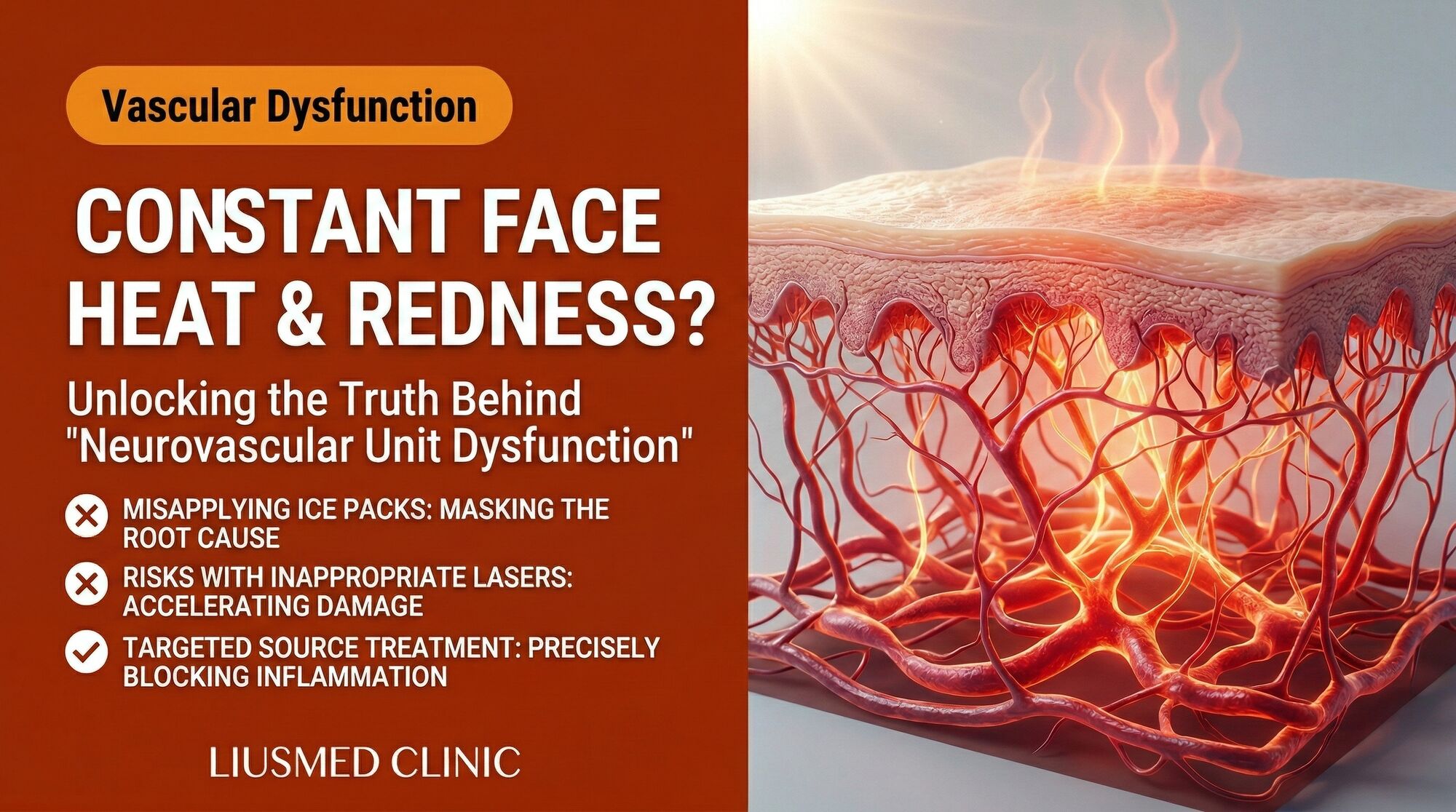
Your face gets red in the heat because the small blood vessels just under the skin widen to carry warm blood to the surface, where it can lose heat. It is part of how your body cools itself, and it usually fades as you cool down in the shade or indoors. The face shows it more than other areas because its skin is thin and richly supplied with vessels.
Heat-related redness is worth a closer look when it is slow to settle, comes with stinging or burning, or leaves redness on your cheeks and nose even on cool days. Those are features of rosacea, a common chronic skin condition in which the nerves that sense heat and the vessels they control (the neurovascular unit) overreact.
This article starts with the practical questions: how to tell ordinary heat flushing from rosacea, how to calm a red face quickly, and when redness in the heat is actually heatstroke or something else. It then explains the science of why rosacea skin reacts so strongly to sun and heat, including TRPV1 (Transient Receptor Potential channels) and neuropeptides, and how that shapes treatment.
Table of Contents
- Is a Red Face in the Heat Normal? How to Tell It From Rosacea
- How to Calm a Red, Hot Face Right Now (and Prevent It)
- When Redness Isn't a Skin Problem: Heatstroke and Other Causes
- Who Flushes More Easily, and Why It Can Start in Adulthood
- What Is the Neurovascular Unit and Why Does It Matter?
- TRPV1 Channels: The Molecular Heat Sensor Gone Haywire
- The Vasodilation Cascade: From Signal to Flush
- Why Rosacea Flushing Gets Worse Over Time
- Sun Exposure: UV Radiation as a Double Threat
- Modern Treatment Approaches Targeting the Neurovascular Unit
- Beyond Treating the Vessels: Repairing the Dermal Environment
- Frequently Asked Questions
- References
- About the Author
- Disclaimer
Is a Red Face in the Heat Normal? How to Tell It From Rosacea
Yes, a red face in the heat is usually normal. The useful questions are whether it fades once you cool down and whether it comes with other symptoms. There is no reliable "normal if it's gone in X minutes" rule: rosacea flushing itself often lasts less than five minutes (Oge' 2015), and the global ROSCO expert panel does not consider flushing on its own enough to diagnose rosacea (Tan 2017).
| What to look at | Ordinary heat flushing | Redness that suggests rosacea |
|---|---|---|
| Trigger | Clear heat: hot weather, sun, exercise, a hot bath | Also mild warmth, hot drinks, spicy food, alcohol |
| After you cool down | Fades as your body cools | Slow to fade, or redness is there even on cool days |
| How it feels | Warm | Stinging, burning, tightness |
| Where | Whole face, often neck and ears too | Mainly the center of the face: cheeks, nose, forehead, chin |
| Anything else | No | Visible fine vessels, acne-like red bumps |
If the right-hand column sounds familiar and it has been happening for months, it is worth seeing a dermatologist. Rosacea is diagnosed by looking at the skin, so photos taken during a flare help if your face is calm on the day of the appointment.
How to Calm a Red, Hot Face Right Now (and Prevent It)
The fastest way to calm heat-related redness is to get away from the heat and cool your body down. The redness is your body shedding heat, so once your temperature drops, the vessels narrow again.
Right now
- Move into shade or an air-conditioned room.
- Hold a cloth soaked in cool water against your face and neck. If you use an ice pack, wrap it in a cloth rather than pressing ice directly on the skin for long.
- Sip a cold drink. With hot drinks, it is the temperature, not the caffeine, that triggers flushing: in one study, coffee and water at 60°C (140°F) both caused flushing, while coffee at 22°C (72°F) did not (Wilkin 1981).
- Skip spicy food, alcohol, and hot showers until the flush settles.
- Wait until your skin has cooled before putting makeup on.
Preventing it
- Plan outdoor activity and workouts for cooler parts of the day.
- Shade your face with a wide-brimmed hat or umbrella.
- Use sunscreen daily. A review in the journal American Family Physician recommends wide-brimmed hats and broad-spectrum sunscreen of at least SPF 30 for people with rosacea (Oge' 2015). If a sunscreen stings, the American Academy of Dermatology suggests trying a mineral one with zinc oxide or titanium dioxide.
- Keep a simple one- to two-week log of when you flush. The pattern usually points to the triggers worth avoiding.
In a National Rosacea Society survey, 81% of patients named sun exposure as a top trigger, so sun protection and cooling down are especially important for people with rosacea.
When Redness Isn't a Skin Problem: Heatstroke and Other Causes
A red face in the heat is an emergency when it comes with hot skin that is not sweating, a very high temperature, confusion, a seizure, or loss of consciousness. The NHS lists these as signs of heatstroke and advises calling 999 (in the US, call 911). It also says to call if someone is still unwell after 30 minutes of resting in a cool place, being cooled, and drinking fluids.
Heat exhaustion, the earlier stage, often looks different: heavy sweating and skin that becomes pale and clammy (NHS). A face that is not red is not proof that someone is fine in the heat.
Other causes can make your face flush, with or without heat:
| Cause | What points to it |
|---|---|
| Sunburn | Appears 1 to 24 hours after sun exposure and usually peaks between 12 and 24 hours (MSD Manual). Heat flushing fades as you cool down; sunburn is often redder the next day |
| Menopausal hot flushes | Face, neck, and chest suddenly feel very hot, sometimes with sweating or palpitations, lasting several minutes, day or night (NHS) |
| Alcohol flushing | About 36% of East Asians flush, feel nauseated, and have a racing heart after drinking, mainly because of an inherited deficiency in the enzyme ALDH2 (Brooks 2009) |
| Medications | Niacin (vitamin B3) and calcium channel blockers such as amlodipine can cause flushing (MedlinePlus, U.S. National Library of Medicine) |
| Other skin or body conditions | Seborrheic dermatitis and contact dermatitis are common skin causes. Rarely, flushing comes from conditions such as carcinoid syndrome or pheochromocytoma that need blood or urine tests to rule out (Izikson 2006) |
See a doctor if flushing comes on without heat, keeps getting worse, or comes with palpitations, diarrhea, wheezing, or hives.
Who Flushes More Easily, and Why It Can Start in Adulthood
People with thin or fair skin flush more visibly because the vessels show through more easily. That alone is a difference in build, not a disease.
The change to pay attention to is flushing that starts, or gets harder to settle, in adulthood. Rosacea is mainly an adult condition: a pooled analysis of 32 studies found it in about 5.5% of the general population, slightly more often in women, and most often between ages 45 and 60 (Gether 2018). The American Academy of Dermatology notes it is most common between 30 and 60, in people with fair skin, in women around menopause, and in those with a family history. It occurs in every skin tone, and in darker skin the redness is harder to see, which can delay diagnosis (Frazier 2024).
If heat that never bothered you now turns your face red, or the redness has started to sting, have your skin checked rather than putting it down to age.
What Is the Neurovascular Unit and Why Does It Matter?
The neurovascular unit (NVU) refers to the functional coupling between sensory nerve fibers, blood vessels, and the surrounding tissue cells (including keratinocytes, mast cells, and immune cells) in the skin. In healthy skin, this unit operates like a well-calibrated thermostat: sensory nerves detect temperature changes, communicate with blood vessels, and vessels dilate or constrict proportionally to maintain thermal homeostasis.
In rosacea-affected skin, this thermostat is miscalibrated. Biopsy studies have observed more sensory nerves in erythematous rosacea, closely associated with blood vessels and mast cells (Schwab 2011); these nerves are more easily activated and release more vasoactive neuropeptides. The blood vessels, in turn, are hyper-responsive to these signals, dilating excessively and failing to constrict back to baseline. The surrounding immune cells amplify the cycle by releasing their own inflammatory mediators in response to neuropeptide stimulation.
This bidirectional communication between nerves and vessels, the neuro-vascular cross-talk, is what distinguishes rosacea flushing from normal physiological blushing. It is not merely a vascular problem or merely a nerve problem; it is a systems-level dysfunction in which each component makes the other worse.
TRPV1 Channels: The Molecular Heat Sensor Gone Haywire
At the molecular level, the story of heat-triggered rosacea flushing begins with Transient Receptor Potential Vanilloid 1, or TRPV1. This is an ion channel expressed on sensory nerve endings in the skin (specifically C-fibers and A-delta fibers) that functions as a molecular thermometer. TRPV1 is activated by heat above about 43 degrees Celsius (109 degrees Fahrenheit), as well as by capsaicin and acid (Tominaga 2005).
In rosacea skin, this heat sensor may become sensitized:
Inflammatory sensitization: Chronic low-grade inflammation produces mediators such as prostaglandins, bradykinin, and nerve growth factor (NGF) that phosphorylate TRPV1 channels, making them open at lower temperatures. This means a rosacea patient's facial nerves can fire "hot" signals at temperatures that would be comfortable for unaffected skin.
Increased channel expression: A biopsy study found higher TRPV1 gene expression in erythematotelangiectatic and phymatous rosacea, alongside changes in related TRPV channels (Sulk 2012). The study looked at TRPV1 on non-nerve skin cells, so it shows the skin is primed differently, not that the nerves themselves carry more channels.
The practical consequence shows up in testing: in a small study of 24 people, rosacea-affected skin began to register heat as painful at lower temperatures than unaffected skin (Guzman-Sanchez 2007). No study has pinned down a specific temperature at which rosacea skin starts reacting, but the same sunny day, warm room, or hot drink is more likely to feel hot and painful on rosacea skin.
The Vasodilation Cascade: From Signal to Flush
When TRPV1 channels open, calcium ions flood into the sensory nerve terminal. This triggers antidromic release of neuropeptides, meaning the nerve releases signaling molecules backward, out toward the skin rather than centrally toward the brain. The key neuropeptides released include:
Calcitonin Gene-Related Peptide (CGRP): A potent vasodilator. In a study of 123 people with rosacea and 68 controls, blood CGRP levels were higher in rosacea (mean 140 vs. 111 pmol/L) (Wienholtz 2025), and CGRP gene expression in erythematotelangiectatic rosacea skin was about 10 times that of normal skin (Helfrich 2015). CGRP acts on receptors in the walls of dermal blood vessels, causing smooth muscle relaxation and profound vasodilation. It also promotes vascular permeability, allowing plasma to leak into surrounding tissue and cause edema.
Substance P: Activates NK1 receptors on blood vessels and mast cells. On vessels, it promotes dilation. On mast cells, it triggers degranulation, releasing histamine, tryptase, and additional inflammatory mediators that further dilate vessels and recruit immune cells.
Pituitary Adenylate Cyclase-Activating Polypeptide (PACAP): An emerging player in rosacea pathophysiology. In a trial in which all 35 participants with erythematotelangiectatic rosacea received a PACAP infusion, it increased facial skin blood flow by 90% and caused prolonged flushing and facial swelling (Wienholtz 2021). The trial had no healthy comparison group, so it shows PACAP can provoke rosacea flushing, not that rosacea skin is more sensitive to it than normal skin.
This neuropeptide release creates the visible flush: arterioles dilate, blood flow to the facial skin increases dramatically, and the surface becomes red and warm. The burning sensation arises both from the continued nerve activation and from the inflammatory soup (prostaglandins, bradykinin, histamine) that further sensitizes nociceptors. It is a feedforward loop: heat triggers nerves, nerves trigger vasodilation and inflammation, inflammation sensitizes nerves further.
Why Rosacea Flushing Gets Worse Over Time
Many patients report that flushing episodes become more easily triggered, more intense, and longer-lasting over months and years. Not everyone follows that path, and it is still unclear whether rosacea's different forms develop one after another or occur independently (Steinhoff 2013). When flushing does worsen, the following changes in the neurovascular unit are thought to contribute.
Vascular remodeling: Repeated and prolonged vasodilation stimulates angiogenesis (new blood vessel formation) through vascular endothelial growth factor (VEGF) release. These new vessels are structurally abnormal, with impaired contractile ability. They also increase the total vascular surface area, making subsequent flushing more visible. Existing vessels lose their elastic recoil and become permanently dilated, clinically visible as telangiectasia.
Neuroplastic changes: Chronic nerve activation may sensitize the nerves themselves, lowering the threshold at which they fire (peripheral sensitization), and possibly the spinal cord neurons that relay their signals (central sensitization). Over time, stimuli that previously caused mild warmth can start to cause burning.
Immune priming: Repeated neurogenic inflammation "educates" local immune cells to respond more aggressively. Mast cells become more numerous and more degranulation-prone. Macrophages adopt a pro-inflammatory phenotype. This immune priming may leave the tissue more reactive after repeated flushing episodes.
This progressive triad of vascular remodeling, neural sensitization, and immune priming explains why early intervention in rosacea is so important. The longer the neurovascular unit operates in a dysregulated state, the harder it becomes to restore normal function.
Sun Exposure: UV Radiation as a Double Threat
Sunlight triggers rosacea flushing through two distinct mechanisms, making it perhaps the most potent trigger for most patients.
Thermal mechanism: Infrared radiation from sunlight warms the skin directly, and in heat-sensitive rosacea skin that warming can set off the nerve-driven flushing described above. This is why even brief sun exposure on a warm day can trigger flushing.
UV-mediated mechanism: Ultraviolet radiation (UVA and UVB) causes direct molecular damage independently of heat. UV photons generate reactive oxygen species (ROS) in the skin, which activate inflammatory signaling pathways including NF-kB and AP-1. UV also directly upregulates KLK5 expression, increasing cathelicidin (LL-37) processing and amplifying the rosacea-specific innate immune cascade. Furthermore, UV radiation damages dermal collagen and the extracellular matrix, reducing structural support for blood vessels and promoting vascular dilation and telangiectasia formation.
This dual mechanism is why photoprotection is a cornerstone of rosacea care: daily broad-spectrum sunscreen of at least SPF 30 plus a wide-brimmed hat (Oge' 2015). Many people with rosacea find mineral sunscreens with zinc oxide or titanium dioxide gentler, though some prefer chemical ones; the National Rosacea Society's advice is that the best sunscreen is the one you will wear every day.
Modern Treatment Approaches Targeting the Neurovascular Unit
Treatment for rosacea flushing and redness combines sun protection and trigger avoidance with topical or oral medication, vascular laser or light, and injection treatments. No single option covers everything; the mix depends on the type of redness and the state of the skin.
Alpha-adrenergic agonists (brimonidine and oxymetazoline gels or creams) narrow the vessels and reduce visible redness for several hours. The effect is temporary. In brimonidine trials, worsening redness or flushing was reported in 5.4% of subjects in phase 3 studies and 15.4% in the long-term study (Holmes 2015); with oxymetazoline, fewer than 1% had rebound redness after stopping (Draelos 2018).
Laser and light-based therapies target hemoglobin in dilated blood vessels. Pulsed dye laser (PDL) and intense pulsed light (IPL) mainly reduce visible vessels and background redness; their effect on flushing varies. One small study found fewer nerve fibers and less substance P in the skin after laser treatment (Lonne-Rahm 2004). Several sessions are usually needed, and new vessels can appear over time if the underlying drivers are not controlled.
Intradermal botulinum toxin ("microbotox") places tiny doses of toxin in the upper skin to reduce the release of nerve signaling chemicals. A meta-analysis of seven studies with 167 patients found improvement in erythema and concluded it "may be an effective treatment," while noting that larger randomized trials are still needed; mild facial weakness and injection bruising were reported in some studies (Yeh 2025). Its use for rosacea is off-label.
Tranexamic acid has limited evidence in rosacea. In a randomized study of 70 people with papulopustular rosacea, adding oral tranexamic acid to standard treatment improved redness and other scores (Xu 2024), but most studies are small.
Rosacea Injection Treatment combines these injected agents by hand, adjusting depth and dose area by area.
| Treatment | What it does | Evidence and limits |
|---|---|---|
| Sunscreen (SPF 30+) and a hat | Reduces the sun trigger | Guideline recommendation; the best sunscreen is one you will use daily |
| Brimonidine / oxymetazoline | Narrows vessels for hours | Temporary; brimonidine worsening 5.4–15.4% in trials, oxymetazoline rebound under 1% |
| Pulsed dye laser / IPL | Treats visible vessels and background redness | Several sessions; effect on flushing varies |
| Anti-inflammatory topicals and oral medication | Calms bumps and inflammation | Weeks to months to show effect |
| Intradermal botulinum toxin | Reduces nerve-driven flushing and redness | Small trials and one meta-analysis; off-label |
| Tranexamic acid | Targets redness and the skin barrier | Few, mostly small studies |
Beyond Treating the Vessels: Repairing the Dermal Environment
The approaches above share a common limit. Sun protection, trigger avoidance, and topical agents all work by reducing stimulation, while vascular laser removes vessels that have already dilated. Both matter, but neither addresses the tissue those vessels sit in.
After prolonged inflammation, the rosacea dermis thins and loses collagen, and the scaffolding that supports the vessel walls weakens. With less structural support around them, vessels dilate more readily and recover more slowly. This is one reason redness can return months after a laser session: the dilated vessel was treated, but the environment that allowed it to dilate was not.
That is why rosacea injection treatment is central to how we approach this condition. The non-laser rosacea skin remodeling injection does not destroy vessels; it uses hand-delivered mesotherapy to rebuild the thinned dermis layer by layer. As the dermis regains thickness, vessels regain support, and nerve endings become less easily driven to maximal response by heat and irritation.
This is structural repair, so it works more slowly than laser, and the degree of improvement varies from person to person depending on how well inflammation is controlled and how much dermal loss has occurred. Whether it suits your situation depends on examining the skin itself.
Frequently Asked Questions
Q1: At what temperature does rosacea flushing typically get triggered?
There is no set temperature. The heat sensor TRPV1 normally switches on above about 43°C (109°F) (Tominaga 2005), and a small study found that rosacea-affected skin starts to feel heat as painful at lower temperatures than unaffected skin (Guzman-Sanchez 2007), but no study has measured a specific trigger temperature for rosacea. In practice, patients often flush in a warm room, in the sun, or with a hot drink that others find comfortable, and the trigger varies from person to person.
Q2: Does wearing sunscreen actually help with rosacea flushing, or just sunburn prevention?
It is part of rosacea care, not just sunburn prevention. Sun exposure is one of the most commonly reported rosacea triggers, and guidelines recommend daily broad-spectrum sunscreen of at least SPF 30 with a wide-brimmed hat (Oge' 2015; Frazier 2024). Blocking UV reduces the inflammation and collagen damage that UV drives in rosacea skin. There are no trials measuring how much sunscreen alone reduces flushing frequency, so think of it as one essential layer alongside cooling down and avoiding heat.
Q3: Why does my face stay red for hours after the heat source is gone?
This prolonged flushing reflects the feedforward nature of neurovascular inflammation. Once TRPV1 activation triggers neuropeptide release, the resulting vasodilation and mast cell degranulation create an inflammatory environment that continues to stimulate nerves even after the original thermal trigger is removed. Clearing this inflammatory milieu takes hours. In advanced rosacea, structurally remodeled vessels may not fully constrict at all, contributing to persistent background redness.
Q4: Is the burning pain I feel during flushing caused by the heat or by the rosacea itself?
The burning pain is primarily generated by the rosacea pathophysiology rather than by the external heat source. Neuropeptides like CGRP and Substance P sensitize nociceptors (pain-sensing nerves), and the inflammatory mediators released during flushing (prostaglandins, bradykinin) further lower pain thresholds. This is why the burning often feels disproportionate to the actual temperature stimulus and why it persists after the heat is removed.
Q5: Can I develop heat-triggered flushing even if I did not have it before?
Yes. Rosacea is mainly an adult condition, most common between ages 30 and 60 (American Academy of Dermatology), and it can show up as new flushing to heat that never bothered you before. People with rosacea can also pick up new triggers over time; someone who first flushed only with alcohol may later flush with heat. Not everyone gets worse (Steinhoff 2013), but new or worsening flushing in adulthood is a good reason to have your skin checked.
Q6: Are cooling sprays or ice packs helpful during a flushing episode?
Yes. Cooling helps the vessels narrow and eases the heat and burning. A cloth soaked in cool water on the face and neck, or a cool mist, is simple and effective. If you use an ice pack, wrap it in a cloth and don't hold ice directly on the skin for long, to avoid irritating sensitive skin.
Q7: How do I stop my face from going red in the heat?
You can't switch off the flushing response itself, but you can keep from overheating. Avoid the hottest part of the day, shade your face with a hat or umbrella, drink cold fluids, and cool your neck. If you do flush, rest somewhere cool and use a cool, damp cloth. If the redness won't settle or it stings, see a dermatologist to check for rosacea or another skin condition.
References
- Oge' LK, Muncie HL, Phillips-Savoy AR. Rosacea: Diagnosis and Treatment. Am Fam Physician. 2015;92(3):187-196. PMID 26280139
- Tan J, Almeida LM, Bewley A, et al. Updating the diagnosis, classification and assessment of rosacea: recommendations from the global ROSacea COnsensus (ROSCO) panel. Br J Dermatol. 2017;176(2):431-438. PMID 27718519 / DOI 10.1111/bjd.15122
- Steinhoff M, Schauber J, Leyden JJ. New insights into rosacea pathophysiology: a review of recent findings. J Am Acad Dermatol. 2013;69(6 Suppl 1):S15-26. PMID 24229632 / DOI 10.1016/j.jaad.2013.04.045
- Tominaga M, Tominaga T. Structure and function of TRPV1. Pflugers Arch. 2005;451(1):143-150. PMID 15971082 / DOI 10.1007/s00424-005-1457-8
- Sulk M, Seeliger S, Aubert J, et al. Distribution and expression of non-neuronal transient receptor potential (TRPV) ion channels in rosacea. J Invest Dermatol. 2012;132(4):1253-1262. PMID 22189789 / DOI 10.1038/jid.2011.424
- Guzman-Sanchez DA, Ishiuji Y, Patel T, et al. Enhanced skin blood flow and sensitivity to noxious heat stimuli in papulopustular rosacea. J Am Acad Dermatol. 2007;57(5):800-805. PMID 17658664 / DOI 10.1016/j.jaad.2007.06.009
- Wienholtz NKF, Christensen CE, Ashina H, et al. Elevated plasma levels of calcitonin gene-related peptide in individuals with rosacea. J Eur Acad Dermatol Venereol. 2025;39(1):181-188. PMID 38558478 / DOI 10.1111/jdv.19954
- Helfrich YR, Maier LE, Cui Y, et al. Clinical, Histologic, and Molecular Analysis of Differences Between Erythematotelangiectatic Rosacea and Telangiectatic Photoaging. JAMA Dermatol. 2015;151(8):825-836. PMID 25798811 / DOI 10.1001/jamadermatol.2014.4728
- Wilkin JK. Oral thermal-induced flushing in erythematotelangiectatic rosacea. J Invest Dermatol. 1981;76(1):15-18. PMID 6450809 / DOI 10.1111/1523-1747.ep12524458
- Gether L, Overgaard LK, Egeberg A, Thyssen JP. Incidence and prevalence of rosacea: a systematic review and meta-analysis. Br J Dermatol. 2018;179(2):282-289. PMID 29478264 / DOI 10.1111/bjd.16481
- Frazier W, Zemtsov RK, Ge Y. Rosacea: Common Questions and Answers. Am Fam Physician. 2024;109(6):533-542. PMID 38905551
- Brooks PJ, Enoch MA, Goldman D, et al. The alcohol flushing response: an unrecognized risk factor for esophageal cancer from alcohol consumption. PLoS Med. 2009;6(3):e50. PMID 19320537 / DOI 10.1371/journal.pmed.1000050
- Izikson L, English JC 3rd, Zirwas MJ. The flushing patient: differential diagnosis, workup, and treatment. J Am Acad Dermatol. 2006;55(2):193-208. PMID 16844500 / DOI 10.1016/j.jaad.2005.07.057
- Holmes AD, Waite KA, Chen MC, et al. Dermatological Adverse Events Associated with Topical Brimonidine Gel 0.33% in Subjects with Erythema of Rosacea. J Clin Aesthet Dermatol. 2015;8(8):29-35. PMID 26345379
- Draelos ZD, Gold MH, Weiss RA, et al. Efficacy and safety of oxymetazoline cream 1.0% for treatment of persistent facial erythema associated with rosacea: Findings from the 52-week open label REVEAL trial. J Am Acad Dermatol. 2018;78(6):1156-1163. PMID 29409914 / DOI 10.1016/j.jaad.2018.01.027
- Yeh MC, Shih YC, Huang YC. Intradermal injection of botulinum toxin for erythema in rosacea: A scoping review and meta-analysis. Indian J Dermatol Venereol Leprol. 2025;91(4):448-454. PMID 39912154 / DOI 10.25259/IJDVL_274_2024
- Xu Z, Yu B, Xu B, et al. Oral tranexamic acid treats papulopustular rosacea by improving the skin barrier. J Cosmet Dermatol. 2024;23(9):2918-2926. PMID 38712728 / DOI 10.1111/jocd.16339
- Schwab VD, Sulk M, Seeliger S, et al. Neurovascular and neuroimmune aspects in the pathophysiology of rosacea. J Investig Dermatol Symp Proc. 2011;15(1):53-62. PMID 22076328 / DOI 10.1038/jidsymp.2011.6
- Wienholtz NKF, Christensen CE, Coskun H, et al. Infusion of Pituitary Adenylate Cyclase-Activating Polypeptide-38 in Patients with Rosacea Induces Flushing and Facial Edema that Can Be Attenuated by Sumatriptan. J Invest Dermatol. 2021;141(7):1687-1698. PMID 33600826 / DOI 10.1016/j.jid.2021.02.002
- Lonne-Rahm S, Nordlind K, Edström DW, et al. Laser treatment of rosacea: a pathoetiological study. Arch Dermatol. 2004;140(11):1345-1349. PMID 15545543 / DOI 10.1001/archderm.140.11.1345
- NHS. Heat exhaustion and heatstroke. nhs.uk
- NHS. Menopause symptoms. nhs.uk
- MSD Manual Professional Version. Sunburn (full review 2026)
- MedlinePlus, U.S. National Library of Medicine. Niacin; Amlodipine
- American Academy of Dermatology. 7 rosacea skin care tips dermatologists recommend; Skin conditions by the numbers
- National Rosacea Society. Sunscreen for Rosacea; rosacea trigger survey
About the Author
Dr. Ta-Ju Liu
- Current Position: Director, Liusmed Clinic
- Experience:
- Board-certified dermatologist in Taiwan
- 15+ years of clinical minimal incision surgery experience
- Approach to rosacea: Turning red in the heat is normal, so the first step is to tell redness that settles when you cool down from redness that doesn't. For redness that doesn't settle, treatment is planned around the dermis that supports the vessels, not only the vessels themselves.
Disclaimer
This article is intended for educational and informational purposes only and does not constitute medical advice, diagnosis, or treatment. The scientific mechanisms described reflect current understanding of rosacea pathophysiology but individual presentations vary. Consult a qualified healthcare provider for personalized evaluation and treatment recommendations. Do not begin or discontinue any treatment based solely on the information provided here.

Specialties
Credentials
- Kaohsiung Medical University, School of Medicine
- Attending Physician, Dermatology, Kaohsiung Chang Gung Memorial Hospital
- Attending Physician, Aesthetic Center, Kaohsiung Chang Gung Memorial Hospital
- Visiting Physician, Dermatology, Xiamen Chang Gung Hospital
- Visiting Physician, Aesthetic Center, Xiamen Chang Gung Hospital
"For every surgery, I strive to achieve a good outcome through a small incision and refined technique. Minimally invasive surgery is not just a technique — it's a commitment of respect to every patient."
Recovery after any procedure needs peer support too


Want to learn more?
Schedule a consultation for professional evaluation and advice