Epidermal Cyst Complete Guide: Causes, Symptoms & Minimally Invasive Treatment
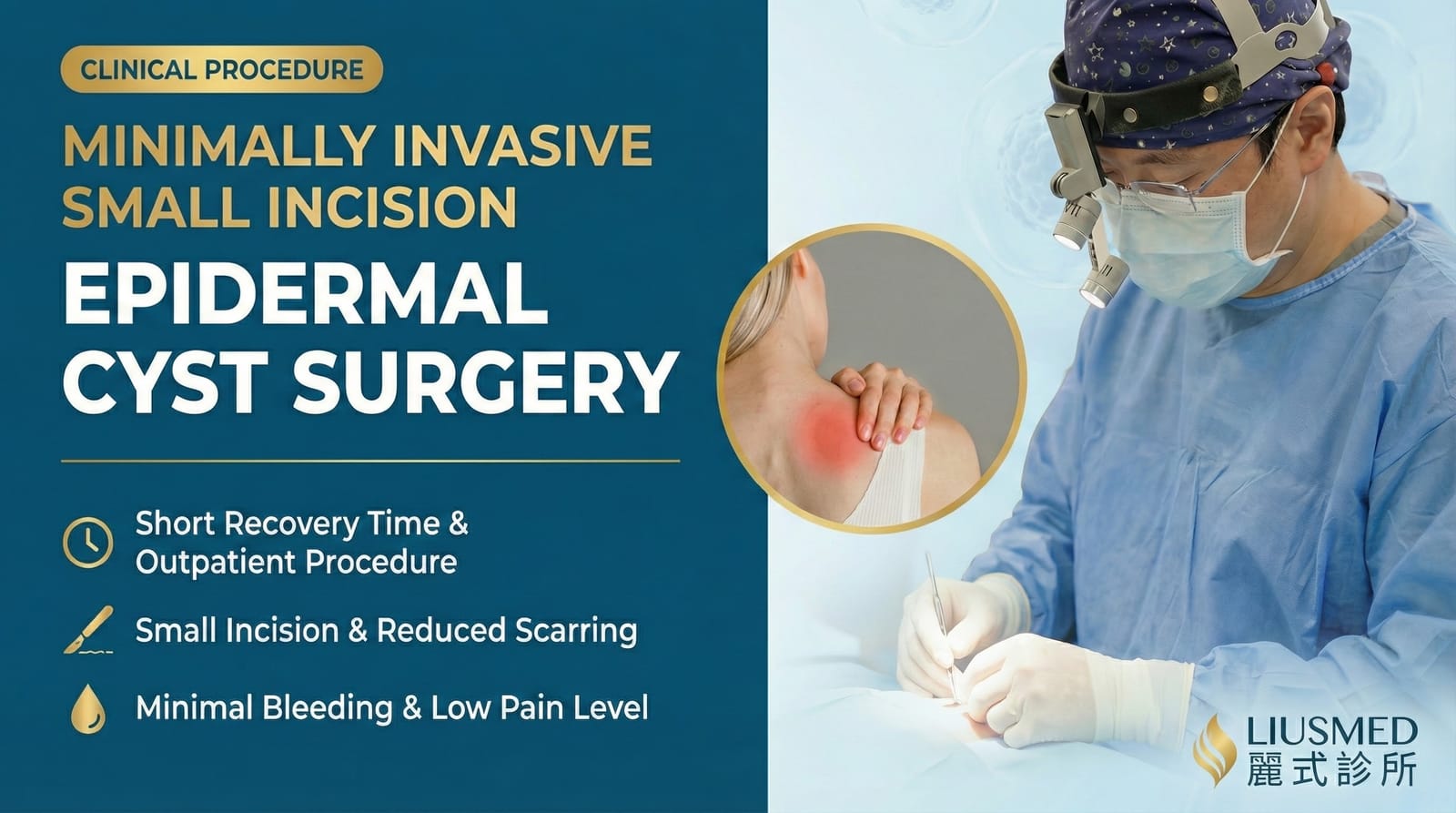
What is an Epidermal Cyst?
An Epidermal Cyst (commonly called a sebaceous cyst) is believed to form when skin injury or acne causes follicular epithelial cells to proliferate, creating a "sac" under the skin. Sebum and keratin secreted by these cells accumulate in the sac, forming a raised lump—essentially a pocket of skin debris.
Important: Simply squeezing out the contents cannot cure the cyst. As long as the sac remains, sebum and keratin will continue to accumulate, causing recurrence.
Epidermal cyst surgery and lipoma surgery are the most common procedures at Liusmed Dermatology Clinic.
Why Do Epidermal Cysts Form?
The exact cause of epidermoid cysts is not yet fully understood. It is generally believed to be related to individual constitution. Skin injury may trigger follicular proliferation, creating a "sac" where dead skin cells gradually accumulate over time, inflating like a balloon and causing the skin to bulge.
Risk Factors
| Risk Factor | Description |
|---|---|
| Oily Skin | Those with oily skin have higher risk |
| Frequent Picking at Acne | Stimulates follicle damage, increasing sac formation |
| Tight Clothing | Repeated friction on buttocks, groin areas |
| Smoking | Affects skin metabolism, increases occurrence |
| Irregular Lifestyle | Impacts overall skin health |
High-Risk Groups & Common Locations
- Age: More common in younger people
- Gender: Higher proportion in males
- Common Sites: Upper chest, upper back, neck, scalp, behind ears, groin area in women
Symptoms of Epidermal Cysts
The main difference between epidermoid cysts and blackheads/pimples is that cysts have a "sac" that encapsulates sebum and keratin metabolic products, slowly accumulating to form a cyst.
Main Symptoms
| Symptom | Description |
|---|---|
| Appearance | Raised skin surface; the lump can slide when pushed |
| Odor | The sac contains dead keratin mixed with oil, may emit a cheese-like smell |
| Texture Changes | After repeated inflammation, surrounding skin becomes fibrous and hard |
| Opening | Some cysts have an opening with a small black dot in the center |
Different Types of Cysts
Some cysts have an opening, while others don't:
- Cysts with Opening: Exposed sebum and keratin oxidize, forming a blackhead-like appearance
- When Squeezed: Toothpaste-like mixture of sebum and keratin may come out, sometimes with a foul odor
⚠️ Warning: Do not squeeze cysts yourself or have beauticians do it—this increases the risk of infection and inflammation.
Epidermal Cyst vs Lipoma vs Acne
While all are common skin conditions, their causes and treatments differ:
| Comparison | Epidermal Cyst | Lipoma | Acne/Blackheads |
|---|---|---|---|
| Cause | Constitutional, oily skin | Constitutional, unrelated to body fat | Oily skin, active sebaceous glands, hormonal changes |
| Location | Skin surface layer | Deep fat layer | Skin surface |
| Appearance | Skin-colored, dome-shaped; opening has black dot | Soft and elastic, gradual elevation | White/blackheads, or red bumps |
| Treatment | Surgical removal of sac for cure | Surgical removal | Topical medications (antibiotics, retinoids) |
When is Surgery Needed?
Observation May Be Appropriate When:
- No infection
- Small size
- Not visually obvious
Surgery is Recommended When:
| Situation | Description |
|---|---|
| Cosmetic Concern | Cyst noticeably affects appearance |
| Recurrent Infection | Repeated redness, swelling, and inflammation |
| Rapid Growth | Concern about larger surgical scar if delayed |
| Inconvenient Location | Located on hands or groin, frequently compressed |
If already red, swollen, and inflamed with signs of infection, oral or topical medications should be used under doctor's guidance first. Surgery can proceed after inflammation subsides.
Minimally Invasive Cyst Surgery
The standard way to clear an epidermoid cyst is surgical removal with complete sac extraction.
Surgical Steps
| Step | Description |
|---|---|
| 1. Local Anesthesia | Anesthetic injection around the cyst |
| 2. Incision | Minimal incision to access surrounding tissue |
| 3. Complete Removal | Extract the entire cyst sac intact |
| 4. Closure | Align skin edges with cosmetic suturing |
Surgery Characteristics
- Duration: Usually completed within one hour
- Hospitalization: Not required; patients go home the same day
- Cyst Size: Can range from a few millimeters to 7-8 centimeters in diameter
Liusmed Minimally Invasive Advantages
| Advantage | Description |
|---|---|
| Minimal Incision | Smaller wounds than traditional surgery |
| Complete Sac Removal | Ensures entire sac is removed, reducing recurrence |
| Cosmetic Closure | Professional cosmetic suturing minimizes scarring |
| Quick Recovery | Normal activities can resume the next day |
Frequently Asked Questions
Q: Which doctor should I see for an epidermal cyst?
A: You can see a dermatologist, who will first confirm whether it's a skin tumor. If confirmed as an epidermoid cyst, the doctor will decide based on the situation:
- If inflamed → Treat inflammation first
- If not inflamed and not affecting daily life → Can be observed
If you have time constraints or want to minimize post-operative scarring, consider visiting a plastic surgery clinic for removal by a board-certified plastic surgeon.
Q: Will cyst surgery leave a scar?
A: Since skin surgery involves cutting the skin, there will be at least a faint mark.
| Area | Scarring |
|---|---|
| Face | Fades over 3-6 months; our clinic cases show virtually no visible marks |
| Body | Usually a faint white scar line |
Noticeable scarring may occur in these situations:
- Very large cyst or unusual location
- Poor post-operative care leading to severe infection
- Patient has keloid-prone constitution
Q: Will the cyst recur?
A: If the cyst sac is completely removed, recurrence is extremely rare. However, a small number of people may experience recurrence due to constitutional factors or incomplete sac removal.
Don't worry too much—recurrent cysts are mostly benign and can be surgically treated again.
Q: Can lasers treat epidermal cysts?
A: Laser treatment can only create a hole in the cyst to help drainage and reduce size. To get the recurrence risk as low as it can go, surgical removal of the entire sac is necessary.
| Method | Result |
|---|---|
| Laser | Can only drain, cannot cure |
| Surgery | Complete sac removal, permanent cure |
Q: How can I prevent epidermal cysts?
A: The exact cause of epidermoid cysts is not fully understood, so there's no definitive prevention method. However, these habits may help:
| Recommendation | Explanation |
|---|---|
| Avoid Greasy Foods | Excessive oil intake increases sebum secretion and blockage |
| Moderate Cleansing | Maintain normal daily cleansing routine; avoid over-cleansing |
| Don't Pick at Acne | Avoid damaging hair follicles |
Q: Will an epidermal cyst disappear on its own?
A: Epidermal cysts generally do not disappear on their own.
- When inflamed: May enlarge
- When not inflamed: Will stay in place and not resolve spontaneously
Post-Operative Care Instructions
After cyst surgery, please follow these care guidelines:
Medication & Wound Care
| Item | Instructions |
|---|---|
| Medication | Take anti-inflammatory drugs and oral antibiotics as prescribed |
| Dressing Changes | Change dressings according to doctor's instructions |
| Wound Cleanliness | Keep the wound clean and dry |
Normal Occurrences
- Watery discharge from the wound is normal
- Clean with saline solution, pat dry with cotton swab, then apply ointment
Warning Signs Requiring Follow-up
| Warning Sign | Action |
|---|---|
| Redness, swelling, or pus appearing 3 days after surgery | Possible wound infection; contact clinic immediately |
| Wound opens or bleeds | Contact medical facility; do not treat yourself |
Recovery Time
| Area | Recovery Period |
|---|---|
| Face | Approximately 1 week |
| Body | Approximately 2 weeks |
Please follow your doctor's instructions for scheduled follow-up appointments.
Conclusion
Epidermal cysts are common benign skin tumors. While they usually don't cause discomfort, you should seek medical evaluation if you experience:
- Cosmetic Concerns: Affecting appearance or confidence
- Recurrent Inflammation: Frequent redness, swelling, and pain
- Continuous Growth: Worry about larger surgical wounds
- Inconvenient Location: Causing daily life difficulties
Remember: Complete sac removal is the only way to cure an epidermoid cyst. If you have any questions, please schedule a consultation!
Related Links
Specialties
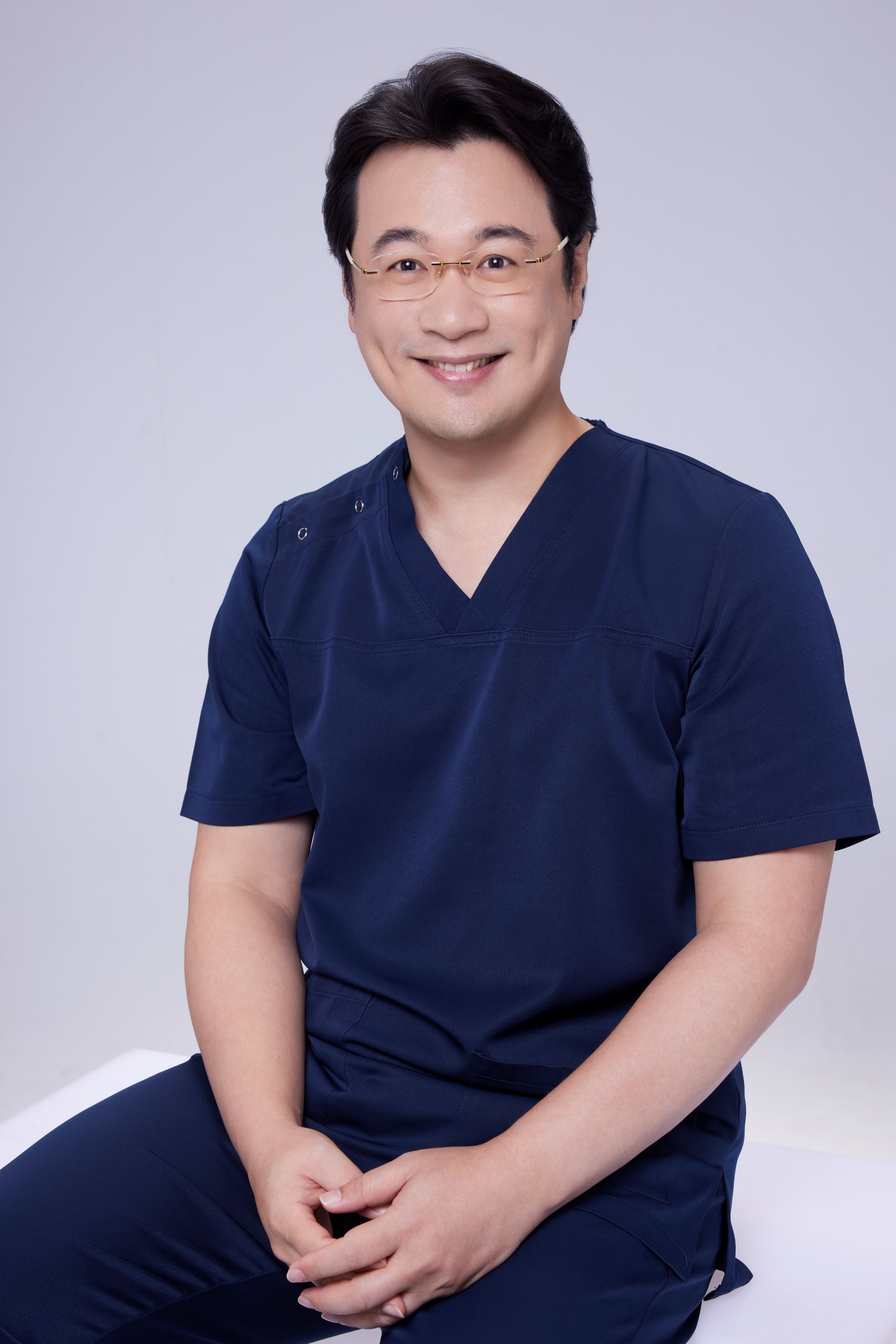
Credentials
- Kaohsiung Medical University, School of Medicine
- Attending Physician, Dermatology, Kaohsiung Chang Gung Memorial Hospital
- Attending Physician, Aesthetic Center, Kaohsiung Chang Gung Memorial Hospital
- Visiting Physician, Dermatology, Xiamen Chang Gung Hospital
- Visiting Physician, Aesthetic Center, Xiamen Chang Gung Hospital
"For every surgery, I strive to achieve a good outcome through a small incision and refined technique. Minimally invasive surgery is not just a technique — it's a commitment of respect to every patient."
Want to learn more?
Schedule a consultation for professional evaluation and advice