Skincare and Sun Protection After Filler Removal
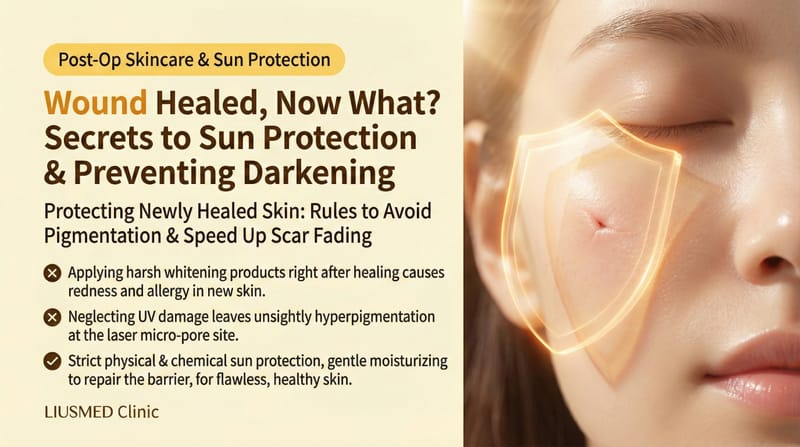
Why Post-Operative Skincare Matters
After filler extraction surgery, your skin undergoes a series of changes: tiny incision sites are healing, tissue is remodeling, and the inflammatory response is gradually resolving. During this process, the skin is in a more vulnerable state with reduced resistance to external irritants.
Proper post-operative skincare not only accelerates recovery but also prevents long-term problems such as hyperpigmentation and scar formation. Conversely, incorrect skincare habits can delay healing or even create new skin issues.
Key Insight: Post-operative skincare does not require a complex routine, but it does require the right product choices and consistent execution. Simple, gentle, and consistent is the best strategy.
Post-Operative Skincare Timeline
Phase 1: Days 1-3 (Acute Recovery)
| Focus Area | What to Do | Notes |
|---|---|---|
| Cleansing | Use a soap-free, gentle cleanser; avoid incision sites | Do not rub or scrub |
| Moisturizing | Gentle barrier-repair moisturizer | Avoid products containing acids |
| Wound care | Apply antibiotic ointment per physician instructions | Keep wounds clean and dry |
| Sun protection | Physical barriers (hat, mask) | Do not apply sunscreen directly on wounds |
Key Insight: The most important principle for the first 3 days is "less is more." Do not rush to resume your full skincare routine — let your skin focus on its most basic repair work first.
Phase 2: Days 4-14 (Early Repair)
| Focus Area | What to Do | Notes |
|---|---|---|
| Cleansing | Resume normal cleansing with gentle motions | Avoid scrubs or exfoliants |
| Moisturizing | Products containing ceramides and hyaluronic acid | Avoid alcohol-based products |
| Repair | Begin centella asiatica-based repair products | Avoid high-concentration vitamin C |
| Sun protection | Start using physical sunscreen once wounds close | SPF 30+, reapply every 2-3 hours |
Phase 3: Weeks 2-12 (Tissue Remodeling)
| Focus Area | What to Do | Notes |
|---|---|---|
| Daily skincare | Gradually reintroduce your normal routine | Introduce products slowly, watch for reactions |
| Antioxidants | Begin using vitamin C serum | Start with lower concentrations |
| Sun protection | Chemical or physical sunscreen acceptable | Continue strict sun protection |
| Targeted care | Use scar-repair products if needed | Follow physician recommendations |
Phase 4: After 3 Months (Stable Maintenance)
| Focus Area | What to Do | Notes |
|---|---|---|
| Full routine | Resume complete skincare regimen | Adjust based on skin condition |
| Advanced actives | May consider retinol, AHAs, etc. | Consult physician first |
| Sun protection | Maintain daily sunscreen habit | Long-term sun protection helps prevent pigmentation |
| Aesthetic treatments | Discuss adjunctive treatments if desired | Requires physician assessment |
Sun Protection: The Most Important Post-Operative Skincare Step
Why Sun Protection Is Especially Critical After Surgery
Reasons post-operative skin is prone to hyperpigmentation:
| Factor | Explanation |
|---|---|
| Post-inflammatory hyperpigmentation | The inflammatory response from surgery can trigger excess melanin production |
| Compromised skin barrier | Post-operative skin is more sensitive to UV radiation |
| Fragile new tissue | Newly formed tissue is more susceptible to light damage |
| Remodeling-phase changes | Skin reacts more strongly to stimuli during tissue remodeling |
Sun Protection Strategies
| Method | When to Use | Recommendation |
|---|---|---|
| Physical barriers | Immediately after surgery | Hats, masks, sunglasses, umbrellas |
| Physical sunscreen | After wound closure (~5-7 days) | Zinc oxide or titanium dioxide formulas |
| Chemical sunscreen | After 2-3 weeks | May be more irritating to healing skin |
| Combination sunscreen | After 2-3 weeks | Provides both types of protection |
Practical Sunscreen Tips
- SPF (Sun Protection Factor) level: SPF 30 is the minimum; SPF 50 is preferable
- Reapplication frequency: Every 2 hours when outdoors
- Application amount: About 1-1.5 mL for the face (roughly half a teaspoon)
- Not just on sunny days: UV rays penetrate clouds and reach you through windows
- Year-round protection: UV radiation is present in all seasons
Key Insight: Sun protection is the single most effective measure for preventing post-operative hyperpigmentation. Even if you skip every other skincare step, sunscreen is the one you should never skip. Strict sun protection for at least 6 months post-surgery is strongly recommended.
Skincare Ingredients and Behaviors to Avoid
Ingredients to Avoid (First 2 Weeks)
| Ingredient | Why to Avoid | Alternative |
|---|---|---|
| AHAs/BHAs (glycolic, salicylic acid) | Too irritating; may impair healing | Gentle moisturizing products |
| Retinol/retinoids | Can cause peeling and irritation | Resume after 3 months |
| High-concentration vitamin C | May irritate new skin | Use low concentration or wait 2 weeks |
| Alcohol-based products | Overly drying; impairs repair | Alcohol-free moisturizers |
| Essential oils | Potential allergens; hinder healing | Fragrance-free products |
| Hydroquinone | Too irritating for healing skin | Consult physician after stabilization |
Behaviors to Avoid
| Behavior | Why to Avoid | Alternative |
|---|---|---|
| Scrubbing/exfoliating | Can damage healing tissue | Wait at least 4 weeks |
| Facial steaming/high heat | Worsens swelling and inflammation | Avoid saunas, steam rooms |
| Vigorous massage | May disrupt tissue healing | Apply products gently |
| Heavy makeup | Clogs pores, increases infection risk | Light coverage or go bare |
| Swimming | Chlorinated water can irritate wounds | Wait until wounds are fully healed |
Recommended Post-Operative Skincare Ingredients
| Ingredient | Benefits | When to Start |
|---|---|---|
| Ceramides | Repair skin barrier | Immediately after surgery |
| Hyaluronic acid (topical) | Hydrate and support repair | Immediately after surgery |
| Centella asiatica extract | Promote wound healing, reduce scarring | Days 3-5 |
| Allantoin | Soothe and promote cell renewal | Immediately after surgery |
| Panthenol (vitamin B5) | Repair, moisturize, reduce irritation | Immediately after surgery |
| Niacinamide (vitamin B3) | Repair barrier, even skin tone | After 1-2 weeks |
Skincare Guidance for Special Situations
If Hyperpigmentation Has Already Appeared
If you notice pigmentation changes after surgery:
- Do not panic — post-inflammatory hyperpigmentation usually fades with time
- Intensify sun protection as the most important response
- Under physician guidance, consider products with tranexamic acid or vitamin C
- Severe pigmentation may benefit from targeted lightening treatments later
- Most cases show significant improvement within 3-6 months
If Skin Is Dry and Flaking
- Increase moisturizing frequency (2-3 times daily)
- Use a repair cream with lipid-rich ingredients
- Do not peel or pick at flaking skin
- Consider using a humidifier indoors
If Skin Is Sensitive and Red
- Temporarily return to the simplest possible skincare routine
- Choose fragrance-free, alcohol-free products
- Avoid washing with extremely hot or cold water
- If the condition persists, schedule a follow-up consultation
Seasonal Sun Protection Considerations
| Season | UV Characteristics | Protection Focus |
|---|---|---|
| Summer | Strongest UV levels | High-SPF sunscreen + physical barriers; avoid midday sun |
| Winter | UVA remains strong | Do not neglect sunscreen; protection still needed outdoors |
| Spring/Fall | Moderate UV levels | Daily sunscreen + awareness of reflected UV |
| Rainy/Cloudy | UVA penetrates clouds | Sunscreen still necessary |
Frequently Asked Questions
Q: How soon after surgery can I wear makeup?
Once wounds are fully closed (typically 5-7 days), you may start with light coverage. Avoid heavy makeup that requires vigorous removal, and be gentle during cleansing.
Q: Can I use beauty devices?
Avoid all beauty devices (LED masks, radiofrequency devices, iontophoresis tools) for at least 4 weeks after surgery. Afterward, gradually resume use only after consulting your physician.
Q: Do I need expensive skincare products?
No. The key to post-operative skincare is correct ingredients and consistent use, not brand prestige or price. Pharmacy-grade repair lines are usually sufficient.
Conclusion: Proper Care Powers Perfect Recovery
Post-operative skincare may seem like a minor detail, but it is a significant factor in your final outcome. The right skincare and sun protection not only speed recovery but prevent long-term issues like hyperpigmentation and scarring.
For more information about post-operative care, read about scar prevention after extraction and the recovery timeline week by week.
For a complete post-operative care guide, see our swelling and bruising aftercare guide to learn how to manage common post-surgical discomfort.
Everyone's skin condition and recovery are different. Specific skincare recommendations should be discussed with your physician during your follow-up appointments, tailored to your individual situation.
Related Services

Specialties
Credentials
- Kaohsiung Medical University, School of Medicine
- Attending Physician, Dermatology, Kaohsiung Chang Gung Memorial Hospital
- Attending Physician, Aesthetic Center, Kaohsiung Chang Gung Memorial Hospital
- Visiting Physician, Dermatology, Xiamen Chang Gung Hospital
- Visiting Physician, Aesthetic Center, Xiamen Chang Gung Hospital
"For every surgery, I strive to achieve a good outcome through a small incision and refined technique. Minimally invasive surgery is not just a technique — it's a commitment of respect to every patient."
Recovery after any procedure needs peer support too


Want to learn more?
Schedule a consultation for professional evaluation and advice