Thread Lift: What Age Is Right? Sagging Severity and Candidacy Guide

"Am I the right age for a thread lift?" is usually the first question patients ask — but it frames the decision incorrectly.
Age is a statistical trend, not a medical criterion. What actually determines thread lift candidacy is the degree and cause of facial sagging — whether the primary driver is ligament laxity, volume loss, or skeletal resorption. Each mechanism responds differently to thread lifting, and knowing the distinction is the key to realistic expectations.
This guide walks you through a clear framework: where you are on the sagging spectrum, what that means for thread lift suitability, and when to consider surgical options honestly.
Facial Sagging Isn't Just Loose Skin — Volume Loss and Ligament Laxity Are the Real Drivers
The most common misconception about facial aging is that it's simply "skin loosening." In reality, it's a multi-layer structural shift:
- Fat pad atrophy and descent: The malar fat pad, periorbital fat, and temporal fat shrink and migrate downward — the structural support disappears, apple cheeks flatten, nasolabial folds deepen.
- Ligament laxity: Retaining ligaments (zygomatic ligament, masseteric ligament) elongate under gravity and repeated movement, allowing fat pads to shift inferiorly, forming jowls and marionette lines.
- Skeletal resorption: The orbital rim, zygomatic arch, and mandible all lose volume with age, shrinking the underlying "scaffold" that soft tissue used to drape over.
Key Insight: Thread lifting works best on ligament laxity causing soft tissue descent. It has limited effect on severe skeletal volume loss or deep compartment deflation. For those drivers, volume restoration (autologous fat grafting or fillers) needs to be part of the plan.
Three Severity Tiers: How They Map to Thread Lift Suitability
Clinical assessment reference points
| Area | Mild (early-stage) | Moderate | Severe (late-stage) |
|---|---|---|---|
| Malar / apple cheek | Full, just beginning to flatten | Clearly flat, shifted slightly inferior | Markedly descended, malar fullness absent |
| Jowls / marionette lines | Visible only with expression | Clearly visible at rest | Deep grooves, tissue stacked inferiorly |
| Jawline definition | Clear, minor fat pockets | Beginning to blur | Lost, mandible-neck boundary unclear |
| Skin elasticity | Resilient, snaps back quickly | Reduced, tightening shows improvement | Severely lax, manual lifting insufficient |
Mild sagging: Thread lifting works best here. Immediate lifting plus collagen stimulation for long-term maintenance. This is the optimal window for intervention.
Moderate sagging: Thread lifting remains effective, with nuance. If volume loss is co-occurring, combining threads with fat grafting or filler gives better results. If ligament laxity is the dominant driver, standalone threads can maintain results for 1.5–2 years.
Severe sagging: Thread lifting can produce temporary improvement, but durability drops significantly (6–12 months) and the required volume of threads increases. Honest recommendation at this stage: evaluate surgical facelift candidacy first, then discuss thread lifting as part of the picture.
Age Is Context; Sagging Grade Is the Decision Driver
Patients at 32 sometimes ask whether they're "too young" for thread lifting. Patients at 55 sometimes worry they've "left it too late." Both framings miss the point.
- A 30-something with congenital ligament laxity, habitual side-sleeping, or significant weight fluctuation may present with moderate sagging — and be an excellent thread lift candidate.
- A 52-year-old who has maintained good tissue health may still have mild-to-moderate sagging with excellent thread lift response.
The clinical framework:
- What sagging grade is present right now?
- What's the dominant mechanism — ligament laxity, volume loss, or skeletal resorption?
- Are expectations for thread lift duration (typically 1–2 years per cycle) aligned with the patient's goals?
Key Insight: Ultrasound-guided pre-treatment assessment lets us measure subcutaneous fat layer thickness, visualize retaining ligament integrity, and localize any previously placed threads — turning candidacy assessment from visual estimation into tissue-layer precision.
Early Intervention (30s–40s): Preventive Lifting at the Optimal Window
This age group most commonly says, "I'm not sure if I've reached the point where I need it yet."
The answer: mild sagging is exactly when thread lifting works best — not a reason to wait.
Why early intervention makes sense:
- Fewer threads needed for effective lift; less structural demand on the tissue
- Collagen stimulation response is stronger in tissue with better baseline quality
- Prevents progressive fat pad descent, maintaining structural position rather than trying to reverse it later
- Minimal recovery (3–5 days of swelling and bruising)
For a comparison of thread lifting versus HIFU and RF energy devices, see thread lift vs. HIFU vs. RF comparison — each modality works at a different tissue depth and they are often complementary.
Later-Stage Patients (45+): Knowing Thread Lift's Ceiling
Past 45, moderate-to-severe sagging becomes increasingly common. The most important service at this stage is honest framing of what thread lifting can and cannot achieve.
Thread lifting appropriate for this age group:
- Moderate sagging with reasonable tissue elasticity remaining
- Preference for minimally invasive over surgical options (shorter recovery, local anesthesia)
- Post-facelift maintenance — fine-tuning results every 1–2 years
When thread lifting will likely disappoint — surgical assessment recommended:
- Severe ptosis with significantly inelastic skin
- Complete loss of mandibular definition with platysmal banding
- Goals requiring long-term durability (surgical facelift: 5–10 years; threads: 1–2 years)
At our clinic, we will directly discuss these limitations in consultation. Helping a patient avoid a result they'll be unhappy with is more important than performing any single procedure.
Ultrasound-Guided Assessment: From Estimation to Tissue-Layer Clarity
Standard thread lift evaluation often relies on visual assessment and pinch tests — subjective, experience-dependent, and unable to image what's underneath.
High-resolution ultrasound adds:
- Fat layer thickness measurement: Areas where the subcutaneous fat layer is < 3 mm are high-risk for thread palpability or visibility — worth avoiding or adjusting placement
- Existing thread localization (revision cases): Clearly identifies undissolved prior threads, assesses adhesion, and guides new thread positioning
- Vascular mapping: Identifies branches of the external carotid and superficial temporal artery to reduce vascular risk during placement
"See before you treat" is not just our principle for skin tumor removal — it's the foundation of our thread lift revision assessment process.
Common Pre-Consultation Questions
Q: How long do threads last?
Depends on thread material and individual metabolism. PDO dissolves in 6–9 months, PLLA in 12–18 months, PCL up to 24 months. Collagen stimulation effects persist beyond the thread's physical presence. See thread lift duration factors for a full breakdown.
Q: Thread lift vs. HIFU vs. RF — which should I choose?
Each works at a different tissue depth and mechanism; they're complementary rather than competing options. See thread lift vs. HIFU vs. RF comparison for a detailed comparison.
Q: Can thread lifting be combined with fat grafting or fillers?
Yes — and this is common practice. Threads address ligament laxity; fat grafting or fillers address volume deficit. They solve different problems and work well together.
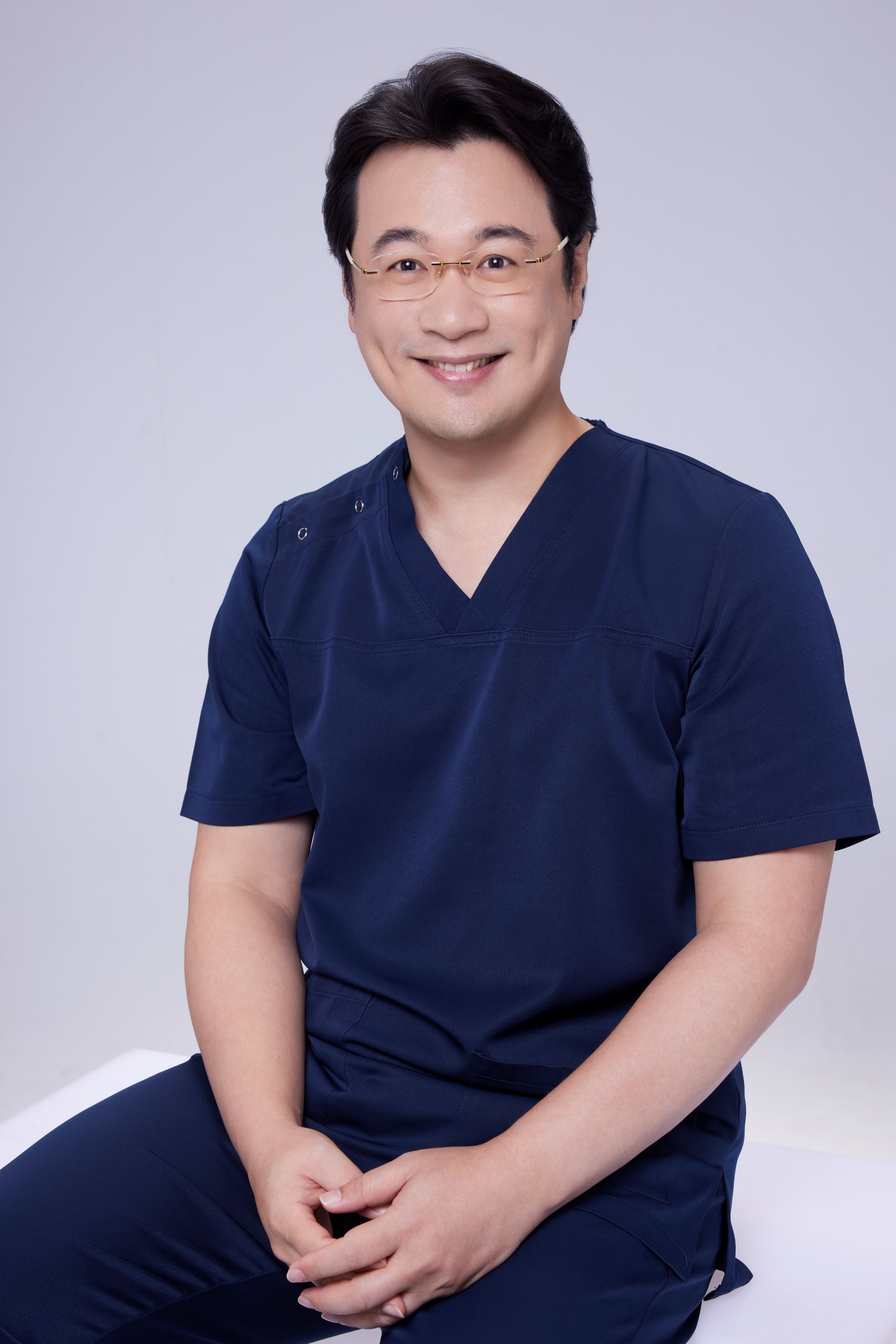
If you're considering a thread lift, accurate candidacy assessment is the most important first step. Book a consultation — Dr. Ta-Ju Liu will assess your tissue layers with ultrasound guidance to determine whether thread lifting is appropriate for you and which approach will deliver the best result.
Related services: Facial Sculpting Overview | Structural Thread Lifting | Thread Lift Revision
Specialties
Credentials
- Kaohsiung Medical University, School of Medicine
- Attending Physician, Dermatology, Kaohsiung Chang Gung Memorial Hospital
- Attending Physician, Aesthetic Center, Kaohsiung Chang Gung Memorial Hospital
- Visiting Physician, Dermatology, Xiamen Chang Gung Hospital
- Visiting Physician, Aesthetic Center, Xiamen Chang Gung Hospital
"For every surgery, I strive to achieve a good outcome through a small incision and refined technique. Minimally invasive surgery is not just a technique — it's a commitment of respect to every patient."
Recovery after any procedure needs peer support too

Want to learn more?
Schedule a consultation for professional evaluation and advice