Does Thermage Hollow Out Your Face? Triaging Thin Faces Before Choosing Energy
Thermage doesn't hollow a face out of nowhere. What actually hollows a face is over-concentrated energy meeting a fat layer that was already thin to begin with. On someone with full cheeks and energy spread evenly, Thermage almost never does this. But take a face that's already lean, with a dip sitting just under the cheekbone, and force energy in, pile it into one zone. That's the setup where a temporary fat atrophy can quietly surface as a gaunt, skeletal look. So honestly, the first thing I'm deciding isn't the energy at all. It's whether your face even passes triage.
Does Thermage Hollow Out Your Face?
Short answer: most people, no. A thin-faced minority with sparse fat pads, possibly, and only when the energy gets over-concentrated.
The mechanism isn't complicated. Thermage uses monopolar RF to heat the dermis and the collagen-rich tissue underneath to roughly 55–65°C. That makes existing collagen contract, then over time pushes new collagen to form, and the skin tightens. What it's aiming at is collagen, not fat. When the energy is even and lands at the depth it's supposed to, the fat layer just gets warmed in passing. Nothing is being selectively destroyed.
The trouble starts when the same spot gets layered again and again, or the depth slips down into the subcutaneous fat without anyone meaning it to. Now the heat is reaching fat cells. On a full cheek that small loss barely registers. On a thin face, where the pads below the cheekbone, at the temples, across the mid-cheek are already running low, that exact same loss gets magnified into something you can see.
Key takeaway: Thermage hollowing isn't a yes-or-no about the machine. It's a triage question: can this face's fat reserve absorb the loss that energy brings? The same single pulse can read as tightening on a full cheek and gauntness on a thin one.
How Does "Looking Skeletal" Happen?
When people in review threads write "skeletal after treatment" or "the cheek caved in," there's a real mechanism under that, not mysticism.
Localized fat atrophy from energy devices comes down to fat cells dying off on a delay. Push the heat past what a fat cell can tolerate and the damaged cell starts releasing DAMPs (damage-associated molecular patterns), which kick off programmed cell death. Here's the part that trips people up: that process keeps going for weeks, sometimes months, after the session is over. So the loss often doesn't show up on the day. It surfaces slowly. That's exactly why someone is "fine right after" and then "looks more hollow the more they look in the mirror, a month down the line."
Put over-concentration and a thin fat layer in the same face, and you've got the whole path to skeletonization.
| Factor | Outcome on a full cheek | Outcome on a thin face |
|---|---|---|
| Evenly distributed energy | Tightening, defined contour | Tightening, but a more conservative lift |
| Energy over-concentrated in one zone | Fat loss buffered by thickness, not obvious | Localized hollowing magnified, may surface |
| Delayed apoptosis in the weeks after | Mostly unnoticed | Subjective sense of "getting more hollow" |
One thing I want to flag here, because people underrate it. The manufacturer notes that mild-to-moderate pain is common during Thermage. And pain pushes the operator in two bad directions: either treat too few pulses just to spare the patient, or over-stack the easy zones to chase a result. Both wreck the even distribution. So pain that isn't managed properly is, quietly, one of the things that drives hollowing risk in the first place. That's the whole reason I lean on a gentle pain-relief process I've refined over years, one that takes the discomfort right down without general anesthesia, so you can actually sit through enough pulses and I can keep the energy balanced instead of dumping it where it hurts least.
Why "Think Twice Before Slimming a Thin Face"?
"Think twice before slimming," "more gaunt after." That's the other line you see all over the threads. To get why people say it, you have to back up and look at what facial aging actually is.
Aging a face isn't just "the skin went loose." A big part of it is volume loss. Facial fat sits in superficial and deep compartments, and it's the deep compartments that drain away the hardest with age. A ten-year follow-up, with the same subjects tracked from 46 to 57, found deep fat volume dropping around 18.4%, against about 11.3% for the superficial fat. The deep foundation goes first, the fat above it loses its support and slides down, and you get the mid-face hollows, the tear troughs, the deeper folds running from nose to mouth. The face looks like it's drooping when really it's deflating.
So for a face that's already in volume loss, with pads running thin, a few things follow:
- The real problem is usually that something is missing, not that something is loose and needs tightening.
- Thermage is good at tightening collagen. It does nothing to put lost volume back.
- Chase tightening on a deflated face and you just press the contracted skin closer to the bone underneath. Drier, more hollow, not better.
Key takeaway: When a thin face looks more gaunt after Thermage, it usually isn't that the machine broke something. It's that the wrong tool got used. A face that needed volume was treated as a face that needed tightening. The first job is deciding which one you actually are.
That's what triage means. Before I touch the energy question, I'm assessing whether the fat support is enough, and whether the thing you're missing is even something Thermage can give back. If you want the anatomy of "hollowing" laid out more fully, The Mechanism of Volume Loss in Facial Aging goes deeper on it.
Point-by-Point Energy Layering: Why Distribution Beats Pulse Count
Once you see that over-concentration is the risk, it follows that how the energy gets spread out matters more than how many pulses you ran.
I've stuck with point-by-point delivery for years, landing the tip spot by spot rather than gliding it continuously across the face. The whole difference between the two is what happens to the energy.
- Glide the tip while it's firing and the energy quietly piles up in the pauses, the turnarounds, the overlaps. You can't really control where it stacks, and the odds of over-concentration go up.
- Go point by point and every pulse lands at a position and depth I've already judged. Deep where it should be deep, shallow where it should be shallow, and steering clear of the thin zones that shouldn't be touched at all.
I'm only explaining the why here, not the operator settings. The point of laying energy down deliberately is that it reaches where it should and doesn't stack where it shouldn't, which pushes the over-concentration risk down before it can ever happen. For a thin face, that zone-avoidance is often the exact line between "we can treat this" and "we shouldn't."
The other thing people get wrong is the timeline. That tightness you feel walking out is the immediate effect — collagen contracts the second it's heated, it's there by default, part of it relaxes back, and honestly it's nothing to write home about. The real lift waits on new collagen, and that comes in gradually, around a month later. So if you want to know whether a session was done well, read the comparison photos starting a month out. How tight it feels on the day tells you very little.
If you're weighing how Thermage, HIFU, and thread lifts actually differ, and what a thin face should pick, How to Choose Between Thermage, HIFU, and Thread Lift walks through the triage in full.
Already Hollowed — Now What? Bridging Into Volume Restoration
If the hollowing has already shown up, the direction is actually pretty clear. What dropped is volume, so what you put back is volume. Not more energy to tighten it.
For most post-energy localized fat atrophy, the repair logic in the clinic is to restore what's missing, not to keep stimulating contraction:
- Autologous fat grafting takes your own fat and places it precisely into the hollow, which is the approach closest to the actual problem when it's a volume deficit. Whether grafted fat survives and lies smooth comes down to how carefully the fat is harvested, purified, and re-injected in layers. That's its own subject, covered in Key Factors in Autologous Fat Survival.
- The reverse-precision idea is that more is not better. The skill is judging where it's missing, how much, and which layer to fill, so the hollow fills in evenly and the contour reconnects without looking patched.
Key takeaway: Repairing a hollow comes down to filling smoothly and precisely, not filling a lot. The answer to a problem caused by energy is almost never more energy. It's putting the missing volume back, carefully.
For the overall planning side of volume restoration, the service page Autologous Fat Grafting lays it out. Though really, the best repair is the one you never needed, which is the whole reason triage up front matters as much as it does.
Are You a Candidate for Thermage First? Candidate Triage
Let me boil all of that down into something you can act on. These are general directions, and the real call still needs an in-person look at your face.
| Your situation | Triage direction |
|---|---|
| Full cheeks, main concern is collagen laxity, contour starting to blur | Thermage is a fitting starting point — tightening collagen |
| Medium face, want preventive maintenance, fine with a staged course | Thermage worth assessing — focus on balanced energy distribution |
| Thin face, dips already below cheekbone/temples, little baby fat left | Think twice — you may need volume restored more than tightened |
| Already developed localized hollowing from energy | Direction is volume-restoration repair, not more energy |
| Pregnancy, local infection in the treatment area, a pacemaker or other electronic implant, metal implants in the treatment area | Not suitable — Thermage contraindications, or must be ruled out first |
Expertise here isn't saying yes to everyone who walks in. It's working out first whether this particular face will genuinely be better for it. For the ones it's right for, I lay the energy down precisely, take the pain down substantially, and run the result in full. For the ones it isn't right for, or who'd come out worse, I'll just tell you straight: you're a better fit for volume restoration than tightening. That's worth more than booking one more Thermage.
For Thermage contraindications, how the pain relief works, and the in-person confirmation of genuine manufacturer-supplied tips, the service page Thermage RF has the full details.
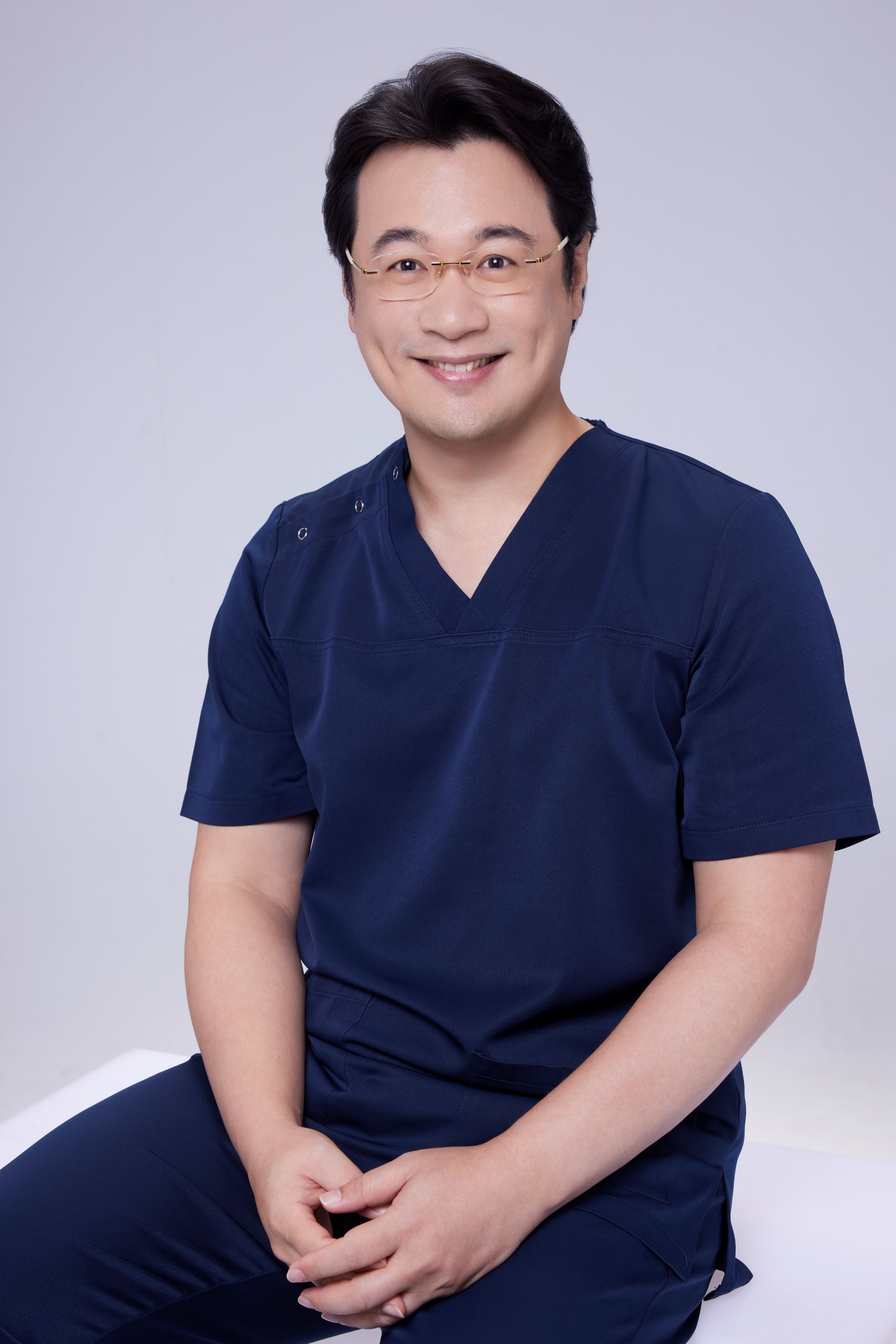
I've worked with Thermage since the first generation, more than 15 years of it now. The feel for it varies from one face to the next. It gets built case by case, on a triage eye and a sense for where the energy should and shouldn't go. My stance is simple enough: make it effective, take the pain down substantially, and tell you honestly when it's not right for you. If you're stuck on "will this hollow my face," or you just want to find out whether your face is suitable in the first place, book a consultation to discuss with Dr. Ta-Ju Liu. We triage first, then talk energy.
Honest risk disclosure: The manufacturer states mild-to-moderate pain is common during Thermage, and it may cause burns, transient nerve symptoms (such as localized numbness or asymmetry of the mouth), nodules, bruising, and localized fat atrophy — mostly temporary, but zero risk is not guaranteed. Actual suitability and risk must be assessed individually in person.
Specialties
Credentials
- Kaohsiung Medical University, School of Medicine
- Attending Physician, Dermatology, Kaohsiung Chang Gung Memorial Hospital
- Attending Physician, Aesthetic Center, Kaohsiung Chang Gung Memorial Hospital
- Visiting Physician, Dermatology, Xiamen Chang Gung Hospital
- Visiting Physician, Aesthetic Center, Xiamen Chang Gung Hospital
"For every surgery, I strive to achieve a good outcome through a small incision and refined technique. Minimally invasive surgery is not just a technique — it's a commitment of respect to every patient."
Want to learn more?
Schedule a consultation for professional evaluation and advice