Thread Lift Gone Wrong? Evaluating Dimpling, Asymmetry, and Thread Extrusion Before Revision
Dissatisfaction after a thread lift is one of the most psychologically difficult post-procedure situations to navigate.
It isn't an emergency like vascular occlusion. It isn't a bruise that will fade. It's a persistent change you notice every time you look in a mirror — a dimple, a ridge you can feel, a side that doesn't match the other, an expression that feels slightly off. And it comes with a set of questions most people can't easily answer: Is this fixable? Do I wait? Do I go back to the same clinic or find someone else?
This guide takes a clinical evaluation perspective: what the five most common thread-lift failure patterns actually are, what causes each, and how to think about revision approach and timing — including why ultrasound assessment of existing thread position is the non-negotiable starting point.
Five Failure Patterns: Knowing Which One You Have
1. No visible result
The most common complaint: a month after the procedure, the face looks no different than before.
Likely causes:
- Insufficient thread count relative to the degree of laxity
- Incorrect vector design — threads placed in a direction that doesn't oppose the actual gravitational sag
- Thread quality issues (inconsistent barb engagement, poor initial tissue fixation)
2. Dimpling or skin puckering
One or several visible skin indentations, sometimes more apparent during expression.
Likely causes:
- Threads placed too superficially, with barbs engaging the dermis rather than the subdermal fat layer (SMAS-superficial plane)
- Excessive local tension causing localized skin bunching
- Uneven tension distribution after post-procedural swelling resolves
Key point: Mild dimpling within the first 2 weeks post-procedure is a normal part of swelling resolution — most cases smooth out within 4–6 weeks. Dimpling that persists beyond 6–8 weeks, or that appears outside the immediate post-operative window, warrants ultrasound evaluation of thread position and depth.
3. Asymmetry
Visible left-right discrepancy after the procedure.
Likely causes:
- Pre-existing asymmetry not documented or communicated before the procedure (every face has baseline asymmetry — the issue is whether it was measured and factored into design)
- Unequal thread counts or vectors on each side
- Unequal swelling resolution creating a temporary discrepancy (usually improves by weeks 6–8)
4. Palpable or protruding threads
A cord-like structure felt under the skin, or — more urgently — a thread emerging through the skin surface.
Likely causes:
- Threads placed in the superficial subcutaneous plane rather than the appropriate sub-SMAS depth
- Thread migration during tissue remodeling
- Localized inflammatory reaction pushing the thread toward the surface
Thread protrusion through the skin is not a situation to observe and wait — an extruded thread is an open pathway for infection, and requires prompt assessment.
For detailed information on ultrasound-guided thread extraction, see Thread Lift Protrusion: Ultrasound Localization and Extraction.
5. Unnatural expression or tethering sensation
A pulling sensation during specific facial movements, or expressions that feel mechanically restricted.
Likely cause: The thread path crosses an underlying muscle slip, creating a tug point that interferes with muscle movement.
Observation vs. Intervention: A Practical Timeline
| Problem Type | Likely to Self-Resolve? | Suggested Wait Time | When to Intervene |
|---|---|---|---|
| Mild dimpling | Usually yes (4–6 weeks) | Observe to 6–8 weeks | Still present beyond 8 weeks |
| Post-op asymmetry | Partially | Observe to 6–8 weeks | Significant difference at 2+ months |
| No result at all | Rarely | 3 months for full swelling resolution | Evaluate redesign after 3 months |
| Palpable threads | Unlikely | Mild: observe; significant: evaluate | Sooner if causing discomfort |
| Thread protrusion | No | Do not wait | Seek evaluation promptly |
| Expression pull | Partially | Observe to 3 months | If persistent beyond 3 months |
The Essential First Step Before Any Revision: Ultrasound Mapping
The most common reason revision procedures fail is blind revision — intervening without knowing where the existing threads are, what state they're in, or what the surrounding anatomy looks like.
High-resolution soft-tissue ultrasound (HRUS) before revision provides:
- Current thread position and depth (is it in the correct tissue plane? Has it migrated?)
- Thread integrity (fractured? barbs disengaged?)
- Evidence of localized inflammation or fluid collection (suggesting infection or foreign body reaction)
- Visualization of surrounding vessels and nerves (to plan a safe extraction or re-threading path)
Key point: Revision does not always mean re-threading. The ultrasound finding may indicate: (1) thread position is acceptable but vector was wrong — correct by supplemental threading; (2) thread has lost fixation — wait for natural absorption then redesign; (3) thread is superficially placed — micro-invasive extraction then repositioning; (4) localized inflammation present — address inflammation first, discuss revision later. Without this evaluation, any revision is guesswork layered on top of a problem.
Structural Thread Lifting in Revision Cases
The clinic's Structural Thread Lifting (結構式埋線) approach — placing threads based on facial anatomy layer mapping rather than surface landmarks — is especially relevant in revision cases.
The added complexity of revision: prior threads have already triggered a fibrotic response (scar tissue formation, fibrous bands) within the subdermal layer. This changes the tissue glide plane and must be accounted for in redesign.
Structural approach applied to revision:
- Pre-procedure ultrasound confirms existing thread location, fibrosis distribution, and vessel paths — new thread paths are planned to avoid anatomical danger zones
- Layer-specific placement based on ultrasound confirmation, not estimation
- Vector redesign from first principles — not "add more threads" but "recalculate the sag direction and place accordingly"
- If deep volume loss is also identified, combined fat grafting may be recommended — a revision addressing only thread support while ignoring volume deficit will produce a limited, incomplete result
Four Revision Pathways
Pathway 1: Watchful waiting (mild dimpling, post-op asymmetry, mild tethering) Observe for 6–12 weeks. If not self-resolved, schedule ultrasound evaluation at the 3-month mark.
Pathway 2: Micro-invasive thread extraction (protrusion, superficial placement with persistent dimpling) Ultrasound-guided extraction through the shortest safe access path. If no infection is present, re-threading may be feasible at the same session; if inflammation exists, allow 1–2 months for tissue stabilization before redesign.
Pathway 3: Supplemental correction threading (vector deficit, partial asymmetry, insufficient lift) Prerequisite: no infection or protrusion. Minimum 3 months after initial procedure. Ultrasound confirmation of existing thread positions before adding new vectors.
Pathway 4: Wait for absorption and restart (fundamental design error, complete non-response) PDO (polydioxanone) and PLLA (poly-L-lactic acid) threads largely absorb within 6–12 months. When the initial design has fundamental problems, a full redesign after absorption is generally more effective than layering corrections onto a flawed framework.
For background on thread lift longevity and the factors that determine it, see How Long Does a Thread Lift Last?. To understand candidacy criteria and what thread lifting can realistically address, see Thread Lift: Who Is the Right Candidate?.
What to Prepare Before a Revision Consultation
- Date of original procedure
- Thread type if known (PDO / PLLA / PCL polycaprolactone / unknown)
- Number of threads and placement areas (if disclosed)
- Photos: pre-procedure, immediately post, and current
- Description of primary concern: where specifically, and what triggers it
- Any signs of infection: fever, redness, discharge
Thread lift revision, done well, begins not with re-threading but with re-understanding — the tissue state, the anatomical layer, and what a realistic revision can actually achieve. That requires seeing the existing situation clearly.
To schedule an ultrasound evaluation for thread lift revision, contact us.
Frequently Asked Questions
Can thread lift threads be removed?
Yes, though it depends on the situation. A thread is solid and runs along a defined path, so once its position and depth can be established there is usually a chance of taking it out through a very small puncture. Localization is what decides it — searching without clear localization risks damaging healthy surrounding tissue. Whether removal is appropriate still needs individual assessment.
I have a bump after my thread lift. Will it go away on its own?
Early swelling settles with time. But a bump in a fixed position whose appearance and feel have not changed, still present beyond three months, should raise the question of a thread rather than something to wait out. These bumps are frequently mistaken for acne, and topical treatment does not help.
An earlier attempt did not get the thread out. Does that mean it cannot be removed?
"It did not come out that time" and "this thread cannot come out" are two different statements. Difficulty depends on the thread type, the plane it was placed in, how much fibrosis surrounds it, and whether imaging localization was available. It is worth re-assessing position and state with ultrasound before concluding there is no other route.
Does every problem thread need to be taken out?
No. Absorbable threads are metabolized along the timeline of the material, and for segments that do not affect appearance or function, observation is often more sensible than forced removal, because removal means another opening. The decision rests on whether symptoms persist, whether the position is clear, and whether the benefit of removal outweighs the cost of another wound.
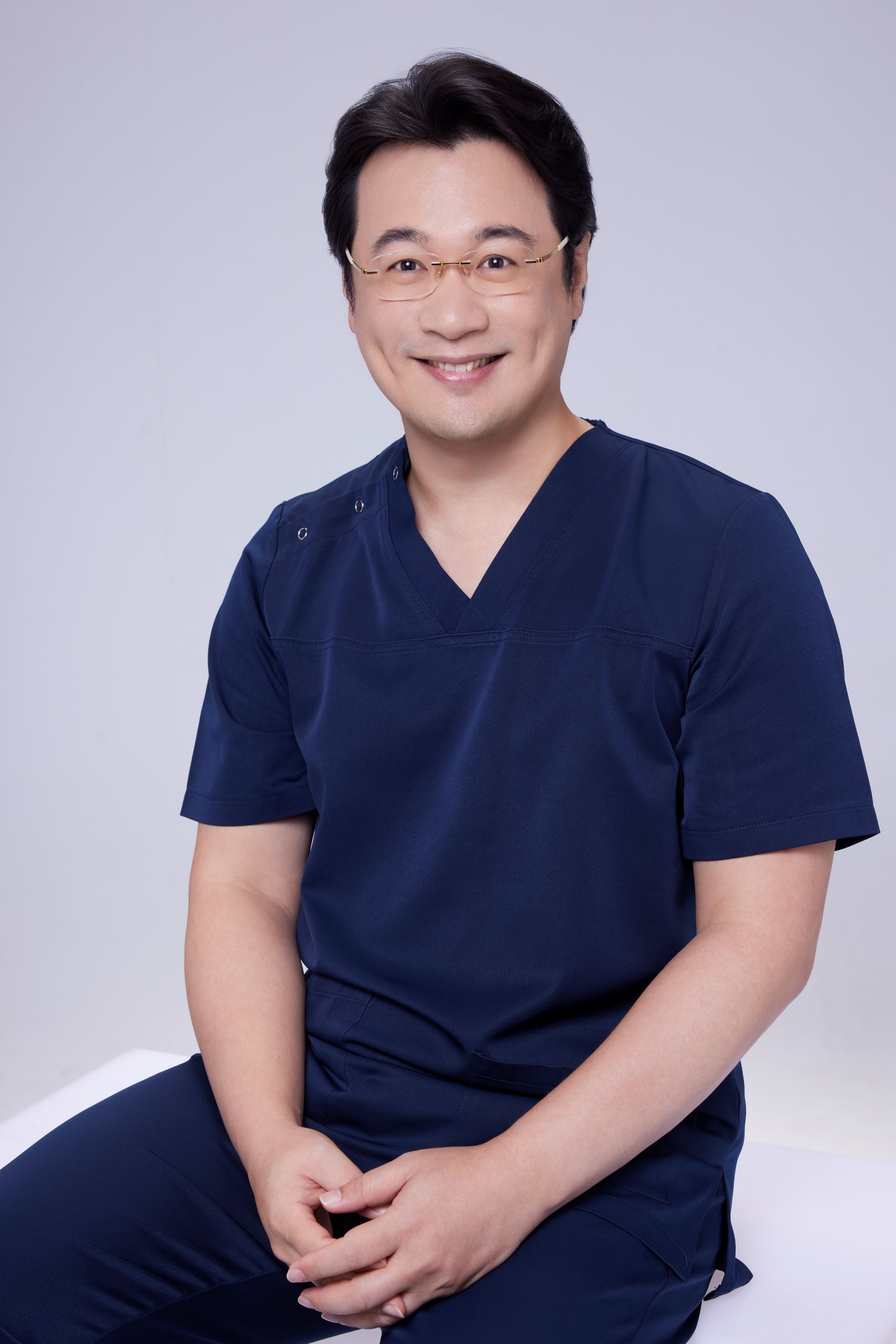
Specialties
Credentials
- Kaohsiung Medical University, School of Medicine
- Attending Physician, Dermatology, Kaohsiung Chang Gung Memorial Hospital
- Attending Physician, Aesthetic Center, Kaohsiung Chang Gung Memorial Hospital
- Visiting Physician, Dermatology, Xiamen Chang Gung Hospital
- Visiting Physician, Aesthetic Center, Xiamen Chang Gung Hospital
"For every surgery, I strive to achieve a good outcome through a small incision and refined technique. Minimally invasive surgery is not just a technique — it's a commitment of respect to every patient."
Recovery after any procedure needs peer support too

Want to learn more?
Schedule a consultation for professional evaluation and advice