Keloid-Prone and Facing Surgery? How to Keep Scar Risk Down When the Procedure Cannot Wait
First sort out whether it is your skin or that one spot
The sentence I hear most often in clinic is "I'm keloid-prone, so I don't dare have surgery." When we look closer, about half of those patients do not have keloids at all. What they have is a hypertrophic scar (a scar that thickens but stays inside the original wound margin).
So how do you tell them apart? Three things.
First, whether the scar has crawled outward. A keloid (scar tissue that grows past the border of the original wound) spreads sideways into normal skin, a bit like crab legs. A hypertrophic scar can be thick and raised, yet it still sits on the original line.
Second, how it behaves over time. Hypertrophic scars usually flatten and fade over six to twelve months. A keloid does not stop on its own. It can keep growing, and some patients are still watching one enlarge two or three years later.
Third, the site and the trigger. The front of the chest, the shoulders, the upper back, the earlobe and the jawline are where trouble shows up. If a single ear piercing left you with a hard lump, or one teenage pimple on your back turned into a raised plaque, the odds of a true keloid tendency go up a lot.
Key point: "Keloid-prone" is a reading of how the small wounds already on your body finished healing. Someone who grew a lump from an ear piercing and someone whose caesarean scar thickened but never spread need completely different levels of preparation before surgery.
Keloid versus hypertrophic scar, in practical terms
| Comparison | Keloid | Hypertrophic scar |
|---|---|---|
| Extent | Grows past the wound into normal skin | Stays within the original wound |
| Over time | Does not resolve on its own, may keep enlarging | Usually flattens and fades over six to twelve months |
| Common sites | Chest, shoulders, upper back, earlobe, jawline | Any wound under high tension or with poor healing |
| Symptoms | Often itchy, stinging, tight | Occasional itch, rarely ongoing pain |
| After simple excision | Tends to return, often larger than before | Once conditions improve, results are usually stable |
| Principle | Surgery only alongside adjunctive treatment | Non-surgical measures often make progress first |
Getting this straight does not change a definition. It changes whether adjunctive treatment has to be scheduled into the plan from the start. I have written up that staging approach separately in a graded strategy for scar treatment.
When the lesion on your body has to be dealt with
The hard situation is something on your body that already needs attention. A lipoma that keeps growing and starts pressing on a nerve. An epidermal cyst that flares, fills with pus, and hurts for a week every time. Choosing not to operate is not a zero-risk option here.
Put plainly, every flare of a cyst leaves another ring of scarring in the same place. For someone who is keloid-prone, repeated inflammation plus home squeezing plus a quick drainage cut somewhere else usually ends up worse than one properly designed incision. Most of the large confluent keloids I see in clinic trace back to a few years of "it will settle down on its own."
So the question needs rephrasing. If this procedure genuinely has to happen, what approach and what aftercare keep it from creating a second problem?
What wound design can change, and what it cannot
Keloid growth is closely tied to skin tension. High-tension areas behave badly, low-tension areas behave reasonably. That is why the same person can have a chest scar that goes wild and a shin scar that quietly flattens.
Four things are within our control.
Wound length. This is what we work on constantly: holding the incision under 20 percent of the lesion diameter and lifting the lesion out through a small opening, the way extreme minimal-incision excision is done, instead of laying the whole lesion open along with the skin above it. A shorter wound means less tension for the edges to carry.
Incision direction. Cutting along skin creases and natural tension lines, staying away from high-tension zones such as the midline of the chest and the point of the shoulder, and moving the incision to a calmer nearby site when that is possible.
Closure. Keeping tension in the deeper layers so the skin surface carries almost none of it, which spares the healing edge from being pulled on for weeks.
The first six months of tension relief and monitoring, which gets its own section below.
Ultrasound guidance matters here for a direct reason. Seeing the margin, the depth and the nearby vessels in advance is what makes it possible to remove the lesion whole through an opening that small. Without that view, working room has to come from a longer incision, and for this skin type a longer incision costs more.
Key point: The tendency cannot be changed, but wound length, direction and tension can. For a keloid-prone patient, a smaller wound is not a cosmetic preference. It is risk management.
The limits deserve the same clarity. Every procedure leaves a mark on the skin, and the question is whether that mark stays controlled. Even with conservative wound design, patients with a clear tendency still need post-operative adjunctive treatment to hold proliferation down. That part is not optional, and results still vary between individuals.
The one thing to raise before surgery
Many people treat a keloid tendency as something slightly embarrassing to mention, so the surgeon finds out on the day by spotting old scars. That is too late, because the aftercare schedule has to be set in advance.
Bring these details and the assessment moves much faster: which sites have formed keloids, what the original wound was (piercing, acne, vaccination, surgery, burn), what age they started, how large they grew, whether relatives have the same pattern, and what treatment has already been tried and how it went. Photographs of the old scars are more useful than description, because the margin shows whether the tissue has been creeping outward.
With that information, the surgeon can choose the incision site, decide whether to address tension during closure, and set which post-operative day adjunctive treatment begins. You can send photos and history through online consultation rather than waiting for the visit.
The first six months, where timing beats product choice
Whether a scar stays controlled is decided in the months after healing, not in the hour on the table.
Suture removal to two weeks. Wound care comes first. Keep it clean, keep it from being stretched, keep it out of the water, and let it close.
Two weeks to three months. This is when proliferation is most active, and the stretch where intervention is most worth the effort. Silicone sheeting or silicone gel plus tension-relieving tape has to run continuously rather than whenever it comes to mind. The practical details are in how to use silicone sheeting properly and scar prevention after surgery. For patients with a clear tendency, this is usually when the surgeon schedules injection treatment, and earlier treatment means a smaller dose and a better response.
Three to six months. Keep watching. If the scar starts thickening, reddening or itching, come back in rather than waiting for it to settle into its final shape. There is far more available at that point than there will be a year later.
One common misunderstanding: massage helps ordinary hypertrophic scars, but rubbing a keloid that is actively growing does little, and sometimes makes the itch worse.
What about the one you already have
Start with size and site. Small, well-defined lesions, especially on the earlobe, leave more options open. Large or confluent ones, or anything on a high-tension area like the central chest, should be approached as a course of treatment rather than a single appointment. For large areas of intralesional injection, we suggest keeping each session to roughly 10% of body surface area. The reason is not a drug ceiling. It is that the treated area is sore for the next few days at home, and covering too much at once makes that hard to get through. The injected medication is mixed with local anesthetic, and we add gentle pain-relief anesthesia on top.
The overall principle is not to send surgery in alone. Cutting a keloid out and closing it tends to bring it back, often bigger than the original, which is the frustrating core of this condition. So surgery earns its place only alongside post-operative adjunctive treatment, and not as a first move.
Injection, pressure therapy, silicone, cryotherapy, and surgery with adjunctive treatment each suit particular situations and carry their own limits, and which comes first depends on the lesion in front of us. The full staging is laid out in a graded strategy for scar treatment.
As for buying a tube of scar cream and applying it for six months, an established keloid will show little change. That tube has a real role in the three-month prevention window, not here.
Common questions
Can keloid-prone patients never have surgery?
Surgery is possible, with a different approach and with aftercare scheduled alongside it. What genuinely deserves avoiding is an unnecessary wound: a new piercing, a tattoo, or insisting on removing a small lesion that could simply be monitored. For something painful, repeatedly inflamed and steadily growing, leaving it alone usually costs more.
Which sites are most prone to keloids?
The chest, shoulders, upper back, earlobe and jawline. These areas sit under higher tension or move constantly, so the wound is pulled on throughout healing. In the same person, scars on the arms and legs may behave perfectly while the one on the chest spreads into a plaque.
Does minimal-incision surgery help if I am keloid-prone?
It helps, though it is not a shield. A short wound under low tension does start from better conditions than a long traditional incision, and recovery tends to look steadier. The underlying tendency has not changed, so the silicone, tension relief and follow-up through the first six months still have to be completed, and results vary between individuals.
When should injection treatment start?
That is a case-by-case judgement for your doctor, but the general rule is that early intervention takes less effort than waiting for the lesion to enlarge. Patients with a known tendency should agree the schedule before surgery rather than going looking for options once the scar is already raised.
My child has a keloid. Treat it now or wait?
It depends on the site, the size, and whether it interferes with movement or causes discomfort. Children's skin tension and tolerance differ from adults', and some treatments are not suitable at a young age. Come in for assessment and let the doctor decide between treating actively now and controlling it conservatively until a better time.
Can laser treat a keloid?
Laser has a role in colour and texture, and it is often combined with other treatments. It is not the way to resolve a raised keloid by itself, and laser alone usually makes limited progress on a thick lesion.
Further reading
- A graded strategy for scar treatment
- Scar prevention after surgery
- How to use silicone sheeting properly
- The extreme minimal-incision standard
- Scar concerns after lipoma removal
Related specialties
Specialties
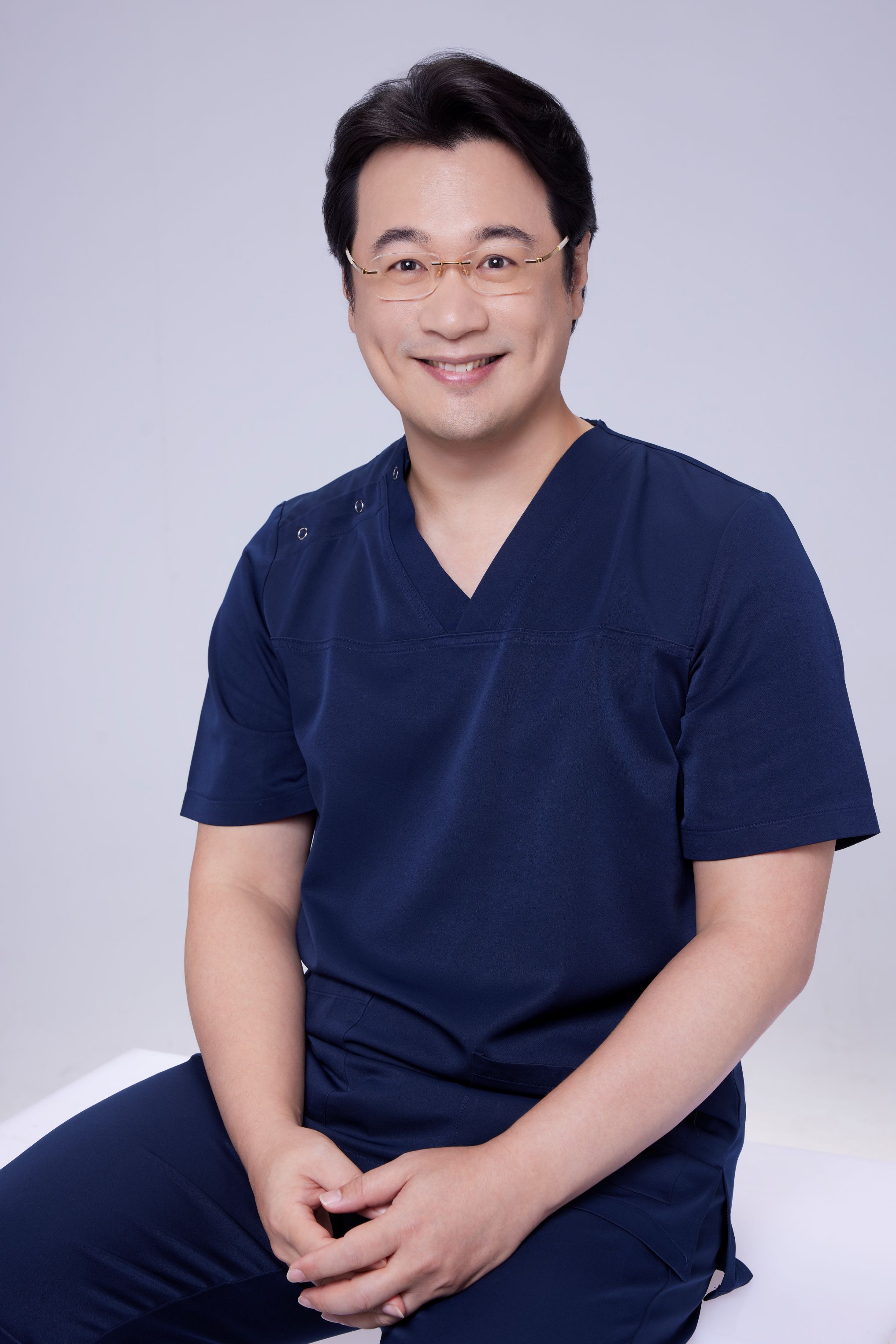
Credentials
- Kaohsiung Medical University, School of Medicine
- Attending Physician, Dermatology, Kaohsiung Chang Gung Memorial Hospital
- Attending Physician, Aesthetic Center, Kaohsiung Chang Gung Memorial Hospital
- Visiting Physician, Dermatology, Xiamen Chang Gung Hospital
- Visiting Physician, Aesthetic Center, Xiamen Chang Gung Hospital
"For every surgery, I strive to achieve a good outcome through a small incision and refined technique. Minimally invasive surgery is not just a technique — it's a commitment of respect to every patient."
Want to learn more?
Schedule a consultation for professional evaluation and advice