Thread Lift Dimpling, Asymmetry, and Exposed Threads
You notice one side of your face looks higher than the other. Or you press along your cheekbone and feel the thread under the skin. Or a small depression appears where no hollow existed before. These are the scenarios patients describe most often after thread lifting, and each has a different cause and a different path forward.
Getting the diagnosis right matters more than the anxiety of wondering what went wrong.
The most common complaint: dimpling
Mild dimpling or skin bunching in the first three to five days is a normal part of recovery. Thread tension hasn't yet distributed evenly through the tissue, and this surface irregularity almost always smooths out within one to two weeks.
Dimpling that persists beyond four weeks needs a closer look. The two most frequent causes are thread placement in too superficial a layer and uneven force distribution along the barbs.
When threads enter the dermis rather than the planned plane just above the SMAS fascia, the barb anchoring tugs the skin surface downward. This is more likely in patients with thin subcutaneous fat, such as those with prominent cheekbones and naturally concave cheeks. Uneven barb distribution, or localized differences in tissue density, can cause the thread's anchoring force to concentrate at one point rather than spread uniformly.
The first step is observation. If dimpling doesn't resolve, ultrasound can locate the thread precisely and guide a decision about whether adjustment is needed.
Uneven results on each side: asymmetry
Most faces are not symmetrical, often more so than people realize. After thread lifting, pre-existing asymmetry sometimes becomes more visible. This happens not because the procedure was performed unevenly, but because threads amplify differences that were already there.
Asymmetry after thread lifting usually traces back to one of three sources: pre-existing skeletal asymmetry that wasn't fully measured in consultation; a slight difference in vector design between the two sides; or differing tissue density on each side, which absorbs tension differently even when thread count and placement are identical.
The tissue integration phase runs for approximately four to six weeks after the procedure. Evaluating asymmetry within that window gives an inaccurate picture of the final result. Wait until the integration period ends before discussing whether additional threads or vector adjustment are warranted.
Thread visibility, migration, and protrusion through skin
Feeling a subtle thread sensation when pressing along the thread's path is a transitional finding. It's not a complication and usually fades as tissue incorporates the thread.
Thread protrusion through the skin surface is a different situation entirely and requires immediate return to clinic. Protrusion typically occurs when threads are placed superficially and then subjected to pressure or stretching: sleeping on the same side, chewing hard foods, or pulling at the face. Once a thread pierces the skin, that opening becomes a bacterial entry point. The risk of infection climbs steadily from the moment of protrusion. The effective treatment window is roughly one week from discovery; within that time, management is usually straightforward and does not require removing the entire thread. Beyond a week, management becomes more complex.
Thread migration (a thread moving in an unintended direction) is a separate finding. It rarely carries immediate risk, but ultrasound confirmation of position is needed before deciding on next steps.
Tightness or pulling with facial movement
A sensation of being pulled or restricted when speaking or smiling is most noticeable in the first one to two weeks. This happens when the thread path runs close to the superficial fascia of expression muscles, so that facial movement tugs on thread tension.
For most patients, this fades over two to four weeks as tissue integrates around the thread. If significant dynamic discomfort remains at six weeks, a clinical assessment of thread trajectory is appropriate.
Infection
Infection is less common than the other risks here, but it progresses faster. The distinguishing features are redness at the entry point, discharge, and local warmth, which differs from standard post-procedure swelling. Risk factors include having other facial treatments too soon after thread lifting, inadequate entry-point wound care, and underlying immune system conditions. Do not observe and wait. Seek care promptly.
How thorough pre-procedure assessment reduces risk
Key point: Thread lift risks cannot be eliminated, but they can be reduced substantially by a careful pre-procedure evaluation. Ultrasound imaging of fat layer thickness, ligament positions, and vascular anatomy before thread placement is a clinical foundation, not an optional extra.
Structural thread lifting is built on the principle of matching thread depth to the actual anatomy at each site rather than using a uniform plane across the face. Seeing the anatomy in real time, before and during placement, changes what is possible in terms of precision and safety.
Thread selection should also match tissue conditions. In areas with thin subcutaneous fat, large barb threads are more likely to cause visible dimpling; finer threads or smooth cog designs are a better fit. Thicker tissue layers can accommodate threads with stronger anchoring geometry. For a comparison of PDO, PLLA, and PCL thread materials, see Thread Material Comparison.
Vector design is more than choosing a direction to pull. The precise angle on each side, matched to that person's specific pattern of tissue descent, is what determines both the lift result and the symmetry of the outcome.
When to wait, when to return
| Finding | Recommended action |
|---|---|
| Dimpling at 1–2 weeks post-procedure | Observe; most resolve without intervention |
| Dimpling persisting beyond 4 weeks | Clinical assessment, ultrasound evaluation |
| Asymmetry within the first 6 weeks | Wait for tissue integration to complete |
| Asymmetry still evident at 6+ weeks | Consult about supplemental threads or vector adjustment |
| Thread protrusion through skin | Return immediately (one-week treatment window) |
| Pulling sensation at 2–4 weeks | Observe; minimize exaggerated facial movements |
| Redness, discharge, local warmth | Return immediately (signs of infection) |
Key point: When something feels off after thread lifting, the hard part is usually not deciding to go back — it is knowing which category your situation falls into. If you are unsure, the most reliable step is returning to the treating clinic or finding a clinic with ultrasound capability and thread removal experience. A photo alone is rarely enough to make that call.
Frequently asked questions
What actually causes dimpling after a thread lift?
Dimpling is most closely related to the plane the threads sit in, how the lifting force is distributed, and how thick your own subcutaneous tissue is, rather than to which thread was used. The same thread can behave very differently across face shapes and placement depths, so what needs assessing is whether the vector design matched your tissue.
Can asymmetry after thread lifting be corrected?
Correction is possible and is typically discussed after the tissue integration phase. Common approaches include supplemental threads or adjusted vector placement. Acting too soon can disrupt the effect of existing threads. For a full overview of revision options after thread lifting, see Thread Lift Revision Guide.
Does thread protrusion always require full thread removal?
Not necessarily. If only a small terminal segment is exposed, trimming and wound management are often sufficient. Full removal is considered when the thread has migrated significantly or when infection is present. Ultrasound localization guides the decision.
When is the right time to assess the final result?
Six to eight weeks is the recommended minimum. Tissue integration is still changing before that point, and the appearance at four weeks may differ meaningfully from the appearance at eight.
For a clinical overview of who is a good candidate for thread lifting and which degrees of tissue descent it can address, see Thread Lift Candidacy and Indications. To discuss your specific situation with Dr. Ta-Ju Liu, book a consultation.
Specialties
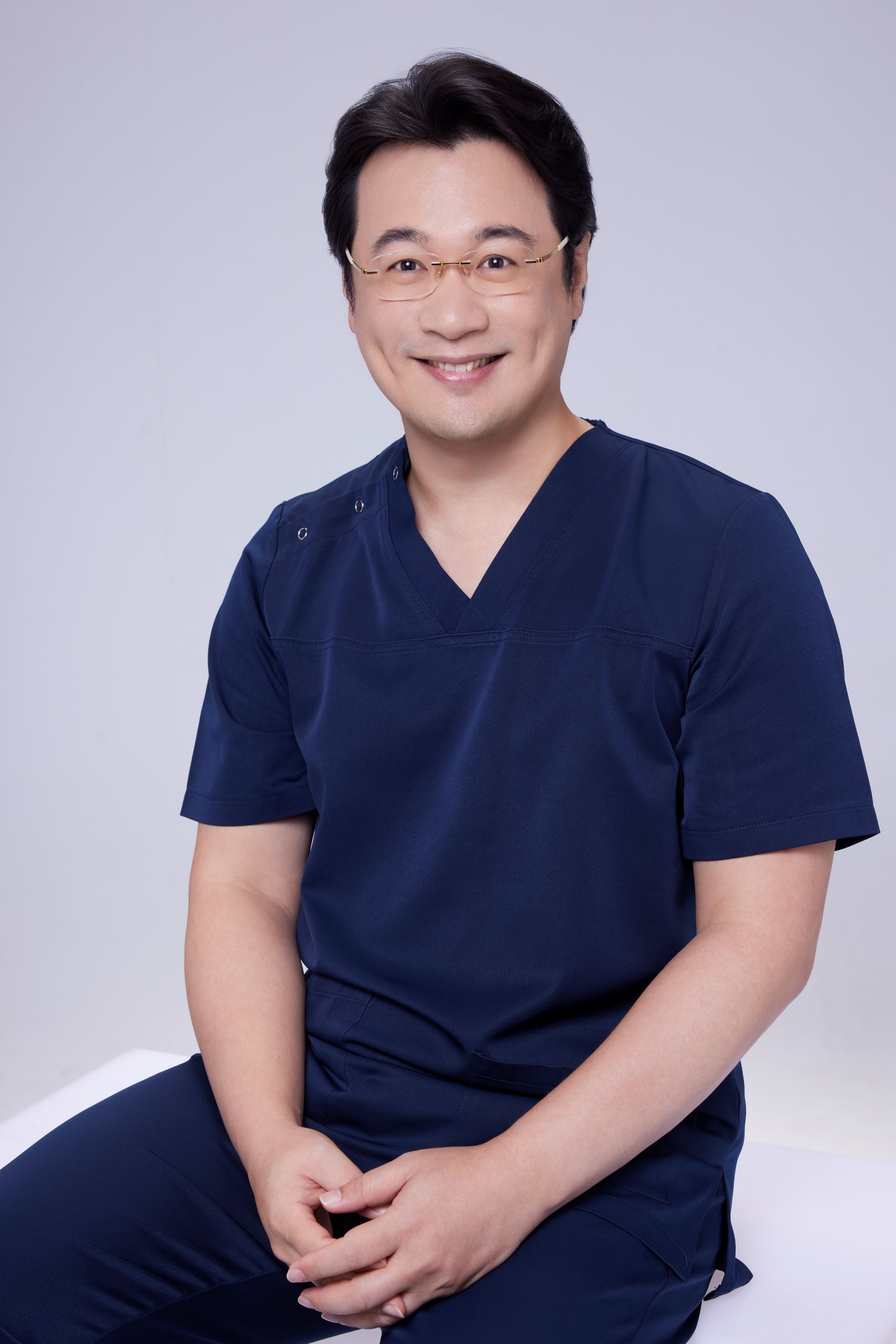
Credentials
- Kaohsiung Medical University, School of Medicine
- Attending Physician, Dermatology, Kaohsiung Chang Gung Memorial Hospital
- Attending Physician, Aesthetic Center, Kaohsiung Chang Gung Memorial Hospital
- Visiting Physician, Dermatology, Xiamen Chang Gung Hospital
- Visiting Physician, Aesthetic Center, Xiamen Chang Gung Hospital
"For every surgery, I strive to achieve a good outcome through a small incision and refined technique. Minimally invasive surgery is not just a technique — it's a commitment of respect to every patient."
Recovery after any procedure needs peer support too


Want to learn more?
Schedule a consultation for professional evaluation and advice