Juvelook or Lenisna Nose Lump? The Removal Problem With Next-Gen Biostimulators

You feel a firm lump inside your nose, go back to check the records, and find out what you had injected wasn’t hyaluronic acid — and wasn’t even the more familiar Radiesse — but Juvelook, or its larger-particle version Lenisna (Juvelook Volume).
The next question is almost always the same one Radiesse patients ask: “Can we just dissolve it?”
Honestly, this one is a little more troublesome than Radiesse. Let me explain why.
What Juvelook and Lenisna Are — and Why “Newer” Calls for More Care
Let’s line up the names and ingredients first. Juvelook and Lenisna (which is Juvelook Volume) are the same line, differing mainly in particle size and the volume they build. Their core component is PDLLA (poly-D,L-lactic acid, an absorbable polymer that stimulates your own collagen), mixed with hyaluronic acid as a carrier. For where this line sits as a material, the filler-revision site has a Juvelook encyclopedia page.
In other words, it isn’t a simple filler — it’s a biostimulator. After it goes in, what holds the nose up isn’t just the material itself, but the collagen it prompts your own body to grow.
Here’s a point that often gets turned upside down. People hear “next generation,” “more natural,” “gets absorbed,” and instinctively assume it’s safer than the older materials. But I want to flag this: the newer a product is, the less long-term follow-up data has accumulated. Juvelook and Lenisna are relatively recent PDLLA products, and the data on how they behave in the nose after three or five years is actually quite thin. That scarcity is itself a reason for caution — not for reassurance.
What the Literature Says About Biostimulator Complications — but Read the Numbers Right
On biostimulator complications, a 2024 paper in the Journal of Cosmetic Dermatology from Brazil (Ianhez et al., PMID 38693639; DOI 10.1111/jocd.16343) collected 55 cases that developed complications after biostimulator injection. Roughly, it found:
- Nodules (palpable lumps) were the most common, at 89.1%;
- Sixty percent (60.0%) were delayed-onset — appearing more than a month after injection, not right away;
- And once a problem started it was hard to clear: complete resolution happened in only 9.1%, with about two-thirds still improving insufficiently even after multiple treatments.
Let me hit a very important brake here so you don’t misread it: these figures — 89.1%, 60%, 9.1% — are proportions within the 55 cases that already went wrong. They are not incidence rates. It does not say “89% of people who get injected develop a nodule.” This is a collection of complication cases (and a selected sample at that), not a study counting how many people out of a thousand run into trouble.
So what does this data mean for you? The point isn’t “how likely,” it’s two other things: first, when this kind of material goes wrong, the most common form is a lump; second, it often takes a long time to surface and is hard to clear once it does. Put plainly, it doesn’t test “whether you’ll be unlucky” — it tests “how hard it is to clean up if you are.”
One more honest note. The products listed in that study were mainly PLLA (poly-L-lactic acid, the Sculptra family) and CaHA (calcium hydroxylapatite, the Radiesse family), with a few PCL cases. It did not specifically study Juvelook or Lenisna — because those are newer and weren’t even in this kind of dataset at the time. So I won’t tell you “research proves Juvelook has an 89% nodule rate” — that’s a different claim entirely. I cite this paper because Juvelook and Lenisna belong to the same biostimulator family, and the shape of the complications (delayed, nodular, hard to resolve) is a shared trait.
The authors also made an observation I think matters to patients: they considered these complications more related to the product’s own characteristics than to the injector’s technique. Meaning even with a steady hand, the material’s nature is still there.
Key point: Don’t panic at “89% nodules” — that’s a proportion within complication cases, not an incidence rate. What to actually remember is its personality: delayed, lump-dominant, and hard to fully clear.
It Has No Ready Antidote Either — How Removal Works
Back to what everyone asks: can it be dissolved?
Juvelook and Lenisna do contain hyaluronic acid as a carrier, so in theory the dissolving injection (hyaluronidase) can melt that HA portion. But the trouble is, what actually forms the lump usually isn’t that bit of HA — it’s the PDLLA particles plus the mass of new collagen and fibrosis they trigger. That part has no matching antidote, and the dissolving injection can’t help. So, just like Radiesse, once it’s genuinely stuck and a nodule has formed, the practical route is physical removal.
Our approach follows the same principle as handling nasal Radiesse: use ultrasound first to map the lump’s position, depth, and relationship to nearby vessels, then go in through a small pinhole and take the nodule out piece by piece. This is what Liusmed has always done — precise removal in reverse, not opening the nose up with a large incision to go looking.
But I won’t give you the pretty version. An old biostimulator nodule that has fibrosed and bound to the tissue can usually be removed at around 80 to 90 percent, not all of it. Some tiny bits hide inside fibrous tissue or sit against an important structure, and forcing every last piece out would risk the surroundings. How much comes out depends on how much accumulated and how tightly it’s bound — that varies from person to person, and it takes a consultation to know. This is usually reached over two or three sessions; the first typically removes about 30–50%.
Key point: The goal of removing a biostimulator nodule is to safely clear the lump that bothers you and let the nose look natural again — not to chase down every last grain. Telling you honestly how much can come out matters more than thumping my chest with a guarantee.
To understand fully why these collagen stimulators form lumps and where that nature comes from, see collagen stimulator mechanism and risks. And if what you actually had was pure CaHA like Radiesse, the management logic differs a little — I cover it in removing a Radiesse nose lump.
Why the Nose Calls for More Care
A quick word on different products. If what you had wasn’t Juvelook or Lenisna but HarmonyCa, that’s a CaHA-plus-hyaluronic-acid hybrid, and the trade-off is a little different — it has a dissolvable HA portion and a non-dissolvable CaHA portion. That “half-dissolvable, half-not” judgment has its own article on our filler-revision specialty site: what to do about HarmonyCa lumps.
Back to the nose. The way blood vessels run in the nose makes it a high-risk area for injection complications to begin with, so removal there has to be more careful too. At consultation I do ultrasound first to confirm three things: where the lump actually is, whether it’s against a vessel, and how stretched or fibrosed the surrounding tissue has become. Only after seeing that do I decide whether to remove, how, and how much. In a place like the nose, knowing where to stop matters as much as knowing how to remove.
If you’re thinking about redoing a rhinoplasty and there’s still old biostimulator in the nose, the sequence is a separate question — I cover it in clearing old filler before rhinoplasty. For the full “dissolve vs remove” comparison across materials, start from the nasal filler residue & lumps hub.
Frequently Asked Questions
Can a Juvelook or Lenisna lump in the nose be dissolved with an injection?
Only partially, and not where it matters. These products do contain hyaluronic acid as a carrier, so the dissolving injection (hyaluronidase) can in theory melt that HA portion. But what actually forms the lump is usually the PDLLA particles and the new collagen and fibrosis they trigger — and that has no matching antidote. So an established nodule realistically needs physical removal.
The literature says nodules made up 89% of biostimulator complications — does that mean lumps are very likely?
No. That 89% is the share within cases that already went wrong — it’s not an incidence rate, and it doesn’t mean 89% of people who get injected develop a nodule. What it really tells you is the personality of this material: it tends to appear late, it shows up mainly as a lump, and once a problem starts it’s hard to fully clear.
Juvelook and Lenisna are newer and more natural — aren’t they safer?
Newer doesn’t mean safer. The newer a product is, the less long-term follow-up data exists. There is still very limited data on how these behave in the nose after three or five years, and that scarcity is itself a reason for caution, not reassurance. They belong to the same biostimulator family as older products and share the same complication pattern.
How completely can a biostimulator nodule be removed from the nose?
An old nodule that has fibrosed and bound to the tissue can usually be removed at around 80 to 90 percent, not all of it, and it varies from person to person. We use ultrasound first to map the lump’s position, depth, and nearby vessels, then take it out piece by piece through a small pinhole. How much can come out is judged at consultation.
Wrapping Up
If the lump you feel comes from a next-gen biostimulator like Juvelook or Lenisna, hold onto a few things:
First, “newer and more natural” doesn’t mean safer — if anything there’s less long-term data. Second, the scary numbers in the literature are proportions within complication cases, not incidence rates, but they do warn you this kind of material often appears late and is hard to clear. Third, it has no ready antidote; once it’s genuinely stuck it mostly needs ultrasound-guided removal, and you should go in expecting around 80 to 90 percent out, not all of it.
Biostimulators aren’t bad products. In the right area, the right dose, and the right hands they’re useful materials. The trouble usually comes from too much of it, the wrong plane, or placement in a spot like the nose that is both high-risk and hard to revise. To deal with it, get the material identified correctly, set your expectations correctly, then take it one step at a time. How it’s actually handled still depends on assessing your nose in person.
Specialties
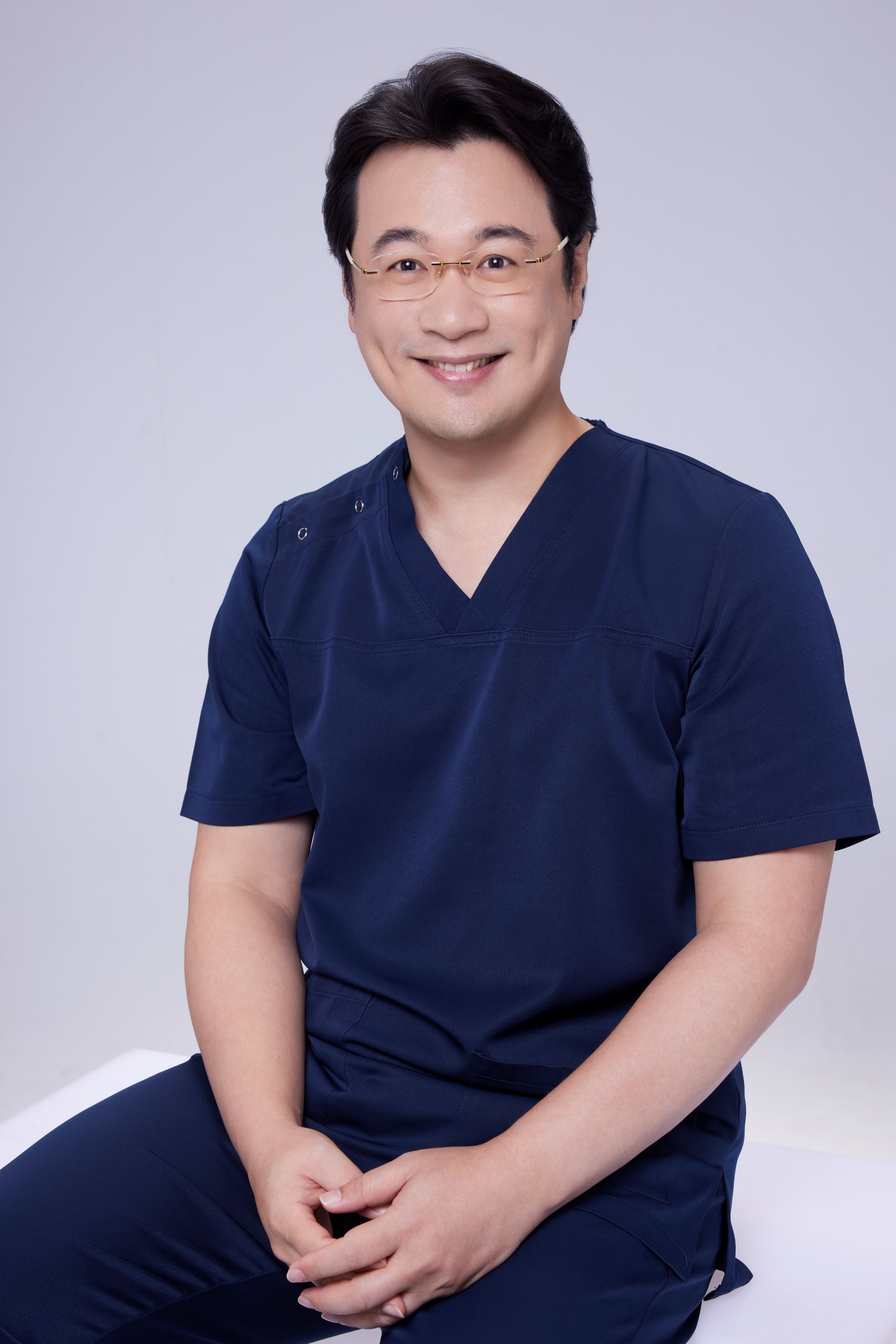
Credentials
- Kaohsiung Medical University, School of Medicine
- Attending Physician, Dermatology, Kaohsiung Chang Gung Memorial Hospital
- Attending Physician, Aesthetic Center, Kaohsiung Chang Gung Memorial Hospital
- Visiting Physician, Dermatology, Xiamen Chang Gung Hospital
- Visiting Physician, Aesthetic Center, Xiamen Chang Gung Hospital
"For every surgery, I strive to achieve a good outcome through a small incision and refined technique. Minimally invasive surgery is not just a technique — it's a commitment of respect to every patient."
Recovery after any procedure needs peer support too


Want to learn more?
Schedule a consultation for professional evaluation and advice